Contact
Commonwealth Building (10.N12A),
Hammersmith Campus,
Du Cane Road,
London, W12 0NN
What we do
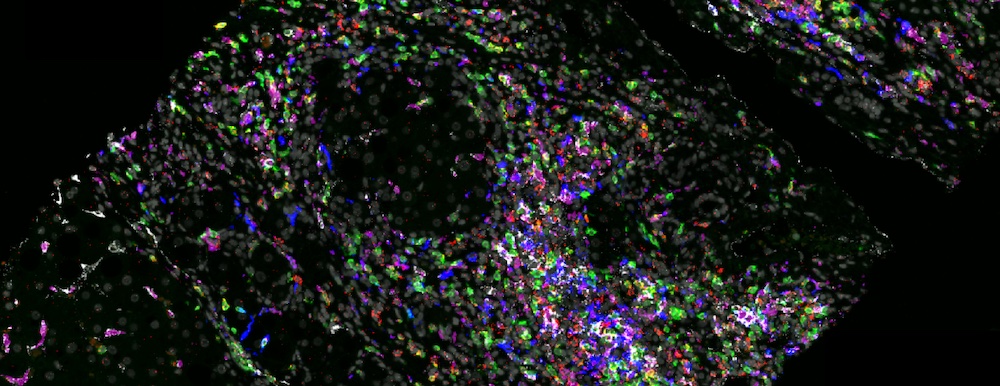
The Liver Immunology Group is located on the Hammersmith (Commonwealth Building, 10th floor) and St Mary’s (QEQM Building, 10th floor) campuses. The lab investigates the microbial, metabolic, molecular and cellular mechanisms underlying immune dysregulation during acute and chronic liver injury. To determine this, we study both human tissue samples and in vivo disease models and employ flow cytometry, intravital imaging, single-cell and spatial multi-omics. Throughout our work, we seek to advance our immunological understanding of liver disease pathogenesis and identify targets for developing immunomodulatory therapeutic approaches. One part of our research focuses on the dysregulated and often ineffective immune responses to infection in acute (e.g., APAP overdose) and chronic (e.g., MASLD) liver disease. Another significant area of interest in the lab is determining the mechanisms through which different checkpoint pathways such as the PD-(L)1 and TIGIT axes, control peripheral and hepatic immune responses, at steady state and during liver inflammation, with the aim of exploiting this to produce new immune-directed therapies.
Summary of current research
- Immunomodulatory therapeutic approaches in acute and chronic liver failure
- Myeloid cell functional heterogeneity in decompensated cirrhosis
- Checkpoint pathways and immune (dys-) regulation in liver disease
- Dysregulated lipid metabolism and immunity in liver failure syndromes
Information
- Funders and related centres
- Collaborators
- Selected Publications
- Clinical trials
- Current BSc/MSc/MRes students
- Alumni students
Research Articles
- Suppressor CD4+ T cells expressing HLA-G are expanded in the peripheral blood from patients with acute decompensation of cirrhosis
- Dysregulation of the Lysophosphatidylcholine/Autotaxin/Lysophosphatidic Acid Axis in Acute‐on‐Chronic Liver Failure Is Associated With Mortality and Systemic Inflammation by Lysophosphatidic Acid–Dependent Monocyte Activation
- PD-1 blockade improves Kupffer cell bacterial clearance in acute liver injury
- Activation and transcriptional profile of monocytes and CD8+ T cells are altered in checkpoint inhibitor-related hepatitis
- MerTK expressing hepatic macrophages promote the resolution of inflammation in acute liver failure
- CD14+ CD15− HLA-DR− myeloid-derived suppressor cells impair antimicrobial responses in patients with acute-on-chronic liver failure
- Increased Expression of Cytotoxic T-Lymphocyte−Associated Protein 4 by T Cells, Induced by B7 in Sera, Reduces Adaptive Immunity in Patients With Acute Liver Failure
Review Articles
- Chioma Emenike (BSc Gastroenterology and Hepatology)
- Khushi Srivastava (BSc Gastroenterology and Hepatology)
- Defne Erel (MRes Biomedical Research)
- Bryan Liu (MRes Biomedical Research)
- Marcus Essam (BSc Gastroenterology and Hepatology)
- Ruby Lee (BSc Medical Biosciences)
- Sarah Morel (MSc Immunology)
- Georgina Hagger (BSc Gastroenterology and Hepatology)
- Anya Turic (iBSc Gastroenterology and Hepatology)
- Thomas O' Connor (BSc Gastroenterology and Hepatology)
- Hannah Husbyn (MSc Immunology)
Our researchers
Dr Evangelos Triantafyllou
/prod01/channel_3/media/images/people-list/et_1666995208727_x1.jpeg)
Dr Evangelos Triantafyllou
PI and Lecturer in Liver Immunology
Eoin Mitchell
/prod01/channel_3/media/images/people-list/Eoin-Mitchell.jpeg)
Eoin Mitchell
Research Technician
Victor Konstantellos
/prod01/channel_3/media/images/people-list/Victor-Konstantellos.jpg)
Victor Konstantellos
Research Assistant
Dimitris Patseas
/prod01/channel_3/media/images/people-list/Dimitris-Patseas.jpeg)
Dimitris Patseas
PhD student
Bryan Liu
/prod01/channel_3/media/images/people-list/Bryan-Liu.jpeg)
Bryan Liu
PhD student
Dr Roosey Sheth
/prod01/channel_3/media/images/people-list/Roosey-Sheth.jpg)
Dr Roosey Sheth
PhD student, King's College London
Dr Joseph Delo
/prod01/channel_3/media/images/people-list/Joe-Delo.jpg)
Dr Joseph Delo
PhD student, St George's University London