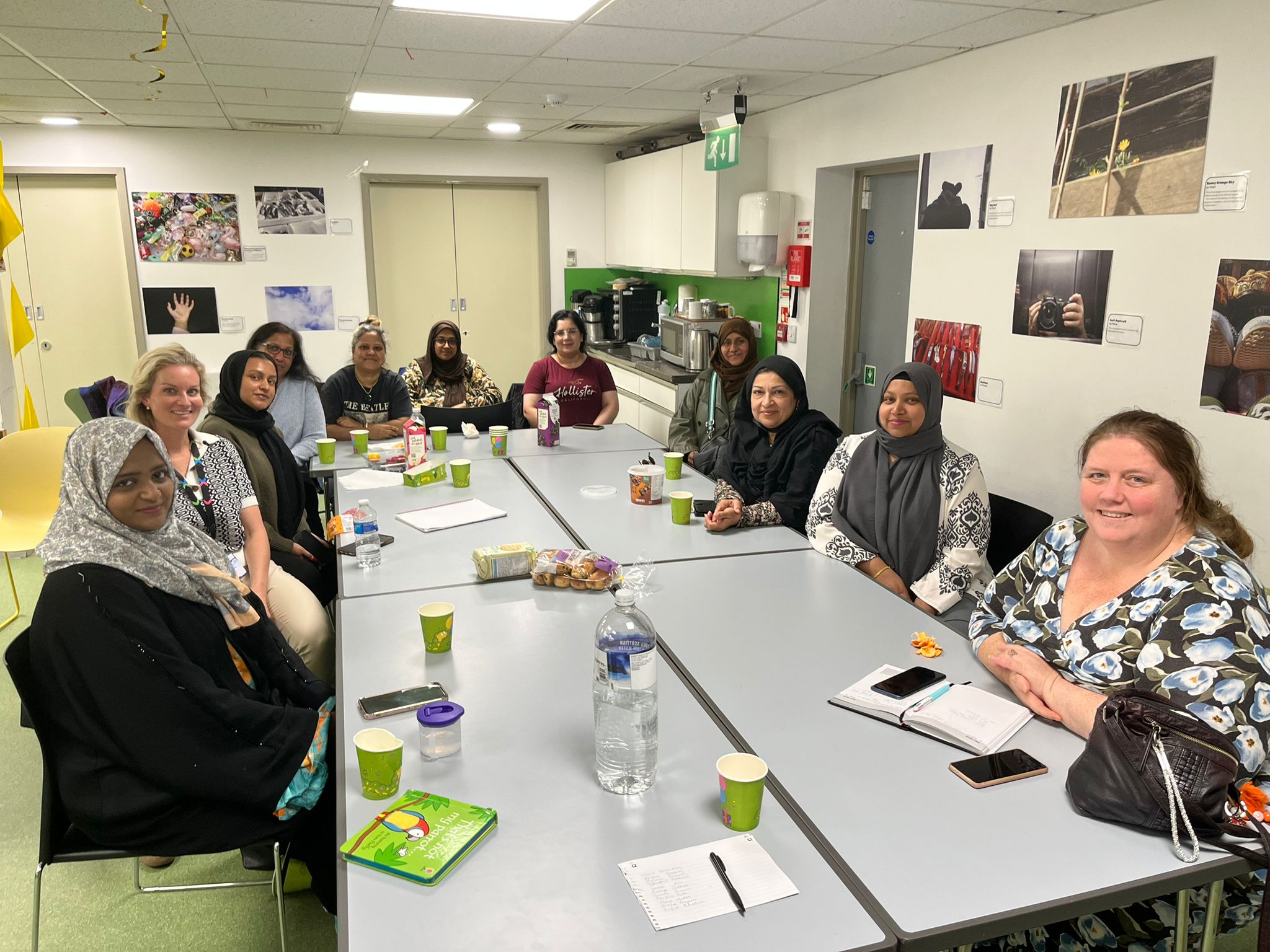
Pictured above: A PPIE group session.
Introduction
From the outset, the COLLABORATE study has been shaped by the voices and experiences of parents and patients. We have prioritised meaningful PPPIE involvement at all stages of the study’s development, with a focus on making it accessible, inclusive, and transparent.
We have a dedicated PPPIE group made up of 10 parents from a range of backgrounds. In addition, parents are represented on the COLLABORATE Trial Steering Committee, Trial Management Group, and Data Monitoring and Ethics Committee, ensuring their voices are heard at every level.
Below we outline the key PPPIE activities undertaken so far, demonstrating our commitment to working in partnership with families and patients to address important questions about the care of very preterm babies.
1. Pre-planning stage: Initial perspectives on study design
Before the COLLABORATE study was funded, we engaged parents, former patients, and clinicians in a series of focus groups and interviews to explore their thoughts, potential concerns, and feelings about our study plans.
The results of this work have been published (link). In summary:
- Families supported the study aims and planned methods
- Parents emphasised that research should be a partnership between families, clinicians, and researchers
- Parents provided advice on the language to use when describing the study
- Families highlighted the importance of information being provided in a format that allows them to absorb it at their own pace
- A recurring theme was the wish for relief from the pressure mothers feel to breastfeed
- Parents feel anxious when they realise clinicians do not necessarily agree but feel relief when they learn that the uncertainties will be resolved by a randomised study
- Several clinicians reported the discomfort they felt when they realised the evidence justifying COLLABORATE conflicted with their own strongly held views
2. Study name
We also worked with families to choose the name COLLABORATE, reflecting the partnership between families, researchers, and clinicians.
3. Supporting parent understanding of randomisation
Recognising that randomisation is often unfamiliar or difficult to understand, we hosted a series of workshops with parents from diverse backgrounds, with a particular focus on those for whom English is not the first language. These sessions aimed to:
- Explain what randomisation means in the context of neonatal research and why this gives every baby a fair and equal chance of receiving the optimal (unknown) treatment
- Gather parent input on how best to explain this concept clearly to other parents
- Understand concerns and ways to address them
Parents also said that terms like “trial” or “research” are unfriendly and suggest experimentation in an unhelpful way. However, a key finding from these workshops was that parents felt reassured once they understood that studies like COLLABORATE compare treatments or interventions already in routine practice. It is therefore vital that information makes clear that COLLABORATE compares treatments already in use across hospitals in UK.
4. Video information
Building on these findings, we worked with parents to create short explainer videos about the COLLABORATE study and randomisation. Parents contributed to:
- Developing scripts to ensure the language used was easy to understand and resonates with families
- Providing voice-overs so that families could hear these concepts explained by people with lived experience of neonatal care.
The outputs can be found below:
Parent Explainer video for COLLABORATE
Parent Explainer video for "Randomisation"
5. Co-design of the Participant Information Sheet
Workshops also informed our first draft of the Participant Information Sheet, based on feedback that families preferred a simple two-page format: key points on one page, with more detailed information overleaf.
During an in-person workshop with parents from diverse backgrounds, we revisited the draft Participant Information Sheet. Parents highlighted words that were difficult to understand and worked in groups to re-write sections in clearer, more relatable language. The participant information sheet will be made available after research ethics approval has been received.
6. COLLABORATE-specific PPPIE group
In May 2025, we recruited PPPIE members with a particular focus on diversity. We established a COLLABORATE PPPIE group and held an introduction session where we explained the study and what the PPPIE role involves. We were pleased that more parents than needed came forward to be involved.
7. Rights of parents to be informed about research studies
Parents provided a letter of support indicating they have a right to receive information about studies of relevance to their babies so that they can make their own choice about participation (Appendix A). Parents also provided personal experiences and reflections in relation to the COLLABORATE study (Appendix B).
Summary
Involving parents meaningfully in the design, communication, and delivery of the COLLABORATE study has been a central priority. The activities described illustrate our ongoing commitment to co-production, inclusivity, and ensuring that families are at the heart of decisions about research that affects them. We continue to engage parents at every stage of the study and remain open to feedback to strengthen this work further.
Appendix A
Click here for the PAG Support Letter
Appendix B
Voices from Parents
“My twins were born at 24 weeks and my son passed away at 8 days. My daughter weighed 500g at both and was still only 700g 6 weeks later – growing her in order to grow her lungs was of the utmost importance. I was shocked and un-nerved by the clear lack of consensus on how to achieve this. I was producing enough milk but when fortifier was suggested as well, nobody was able to tell me whether or not this would be for the best – that unknown added significantly to my anxiety and kept me awake at night. If the experienced medics didn’t know, how could I be expected to make a decision? I was terrified of making the wrong choice. Please please please buy into this study – it is so overdue. Why, when there is the opportunity to find out what works best wouldn’t you take it? The answer to these questions is so important and within reach.” (Mother of preterm born twins)
“I'm really sad that staff are discouraging people in such a way”. (Adult born at 26 weeks)
“Day after day we are present at our child’s cot side, and work in a collaborative manner with staff. We partake in dialogue during ward rounds and think long and hard about what is presented. This is modern NICU life. Moreover, in 2025, parents demand and deserve total transparency from medical staff. It is not acceptable to obfuscate clinical research and findings in a way that is possibly to the detriment of our children and their futures.” Parent of a baby born at 24 weeks in 2023
“It’s confusing and anxiety-provoking to know that feeding practices are not evidence-based, and that even within the same unit, healthcare professionals sometimes have different opinions about them. We understand that if a healthcare professional strongly believes a certain type of feeding is not optimal for their patients, it can feel quite nerve-racking to introduce it in their unit. But the point is, this belief isn’t currently supported by evidence. We should aim to resolve this uncertainty” Parent of a baby born at 26 weeks, Year 2016.
“My Mum was given no information or choice and was just given formula for me when she was able to feed me. She and I support this study as she wished to have all the information and options given to her but she was felt that they were taken away unnecessarily.” Adult born preterm
