Imperial engineers honoured by Royal Academy
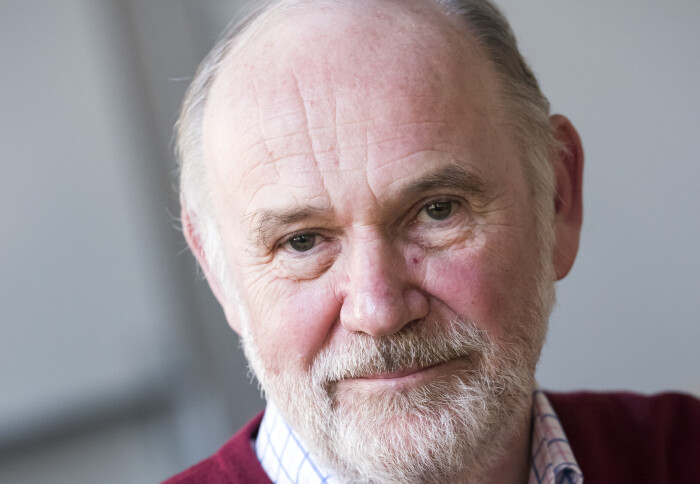
Professor John Kilner
Multiple Imperial academics have been honoured by the Royal Academy of Engineering, including the election of new Fellows.
The Royal Academy of Engineering has elected 74 leading figures in the field of engineering and technology to its Fellowship in 2025.
The Fellowship of the Academy are the most esteemed engineering and technology professionals from energy and defence to new materials. In becoming a Fellow, they pledge to use their expertise to engineer better lives in the UK and internationally.
Fellowship
Professor John A. Kilner is Senior Research Investigator in the Department of Materials, where he previously held the BCH Steele Chair of Energy Materials. He has also served as Head of the Department of Materials and Dean of the Royal School of Mines and is a Professor at the International Institute for Carbon Neutral Energy Research (I2CNER) at Kyushu University in Japan.
His research has helped explain how oxygen moves through the ceramic materials used in fuel cells and other clean energy technologies. This understanding has made it possible to build more efficient fuel cells and electrolysers that generate electricity with lower emissions.
Beyond academia, Professor Kilner co-founded Ceres Power Ltd, a company whose technology underpins cleaner power generation and the production of green hydrogen.
Professor Kilner has been recognised with awards including the IOM3 Platinum Medal, the Imperial College Medal, and the Senior Scientist Award of the International Society for Solid State Ionics.
Professor Kilner said: “I’m delighted to have been elected a Fellow of the Royal Academy of Engineering. This is the culmination of many years of sustained research. I have been part of the scientific effort at I2CNER focussed on this topic since its inauguration in 2010, and my work here, and in my home base in Materials at Imperial, has been important in the successful development of these devices. I look forward to a long and continued association with Kyushu University and I2CNER.”
Fellowship was also granted to Professor David Gann, who was Imperial’s Vice-President (Innovation) from 2013-2019 playing a central role in developing the vision, strategy and innovation agenda for our 25-acre White City Campus and the development of the Imperial ThinkSpace . He is now Emeritus Professor of Innovation and Technology Management at Imperial Business School.
An Honorary Fellowship was granted to Dame Maggie Aderin-Pocock, Imperial Alumna (Physics 1990, PhD Mechanical Engineering 1993). A space scientist, science communicator, business founder and long-term presenter of BBC’s The Sky At Night, she was also awarded our Distinguished Alumni Award in 2025.
Young Engineer of the Year 2025
There are four outstanding winners of the RAEng Engineers Trust Young Engineer of the Year competition. Each will also receive a £3,000 prize awarded by the Academy with support from the Worshipful Company of Engineers.
The awardees from Imperial are:
- Miguel Martinez Paneda, Principal Structural Engineer, Arup
- Dr Calvin Tsay, Lecturer, Department of Computing, Imperial College London
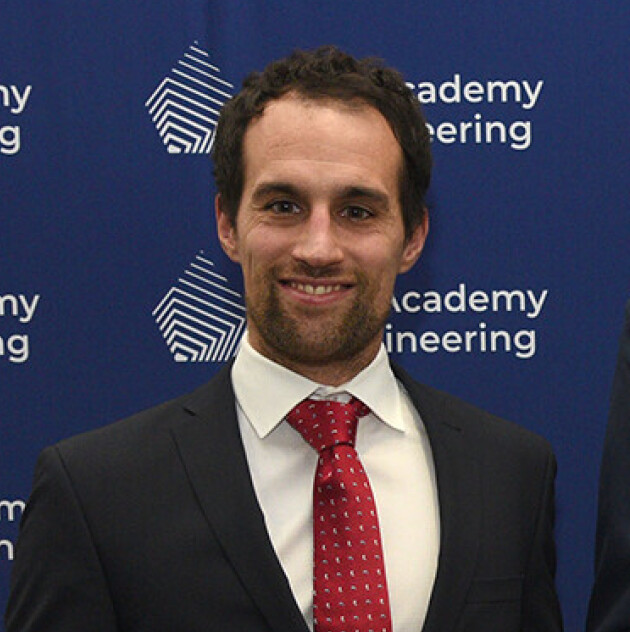 Miguel Martinez Paneda is a Principal Structural Engineer at Arup and PhD student in the Department of Civil and Environmental Engineering.
Miguel is an expert in structural dynamics, earthquake and wind engineering and has worked for two of the UK’s top design firms: Foster & Partners and Arup. His path to becoming a structural engineer was unusual in that his first degree was in Architecture. That hasn’t hindered him from winning numerous design competitions and creating prize-winning designs for a series of iconic tall buildings around the world.
He has made innovative contributions to research that have led to the development of a new damper design for super tall buildings that uses part of their own mass to dampen their movement and is awaiting patent approval. He has also convened academics from within the disciplines of Civil Engineering and Aeronautics with practitioners from industry to consider these new approaches to the design of tall buildings.
Miguel said: “I am deeply honoured to receive this award and thankful to all my colleagues at Arup and Imperial for their support. I have aimed to bring research and professional practice together with bold ambitions and believe this award recognises how structural engineering can contribute to advancing design and creating more sustainable, innovative solutions.”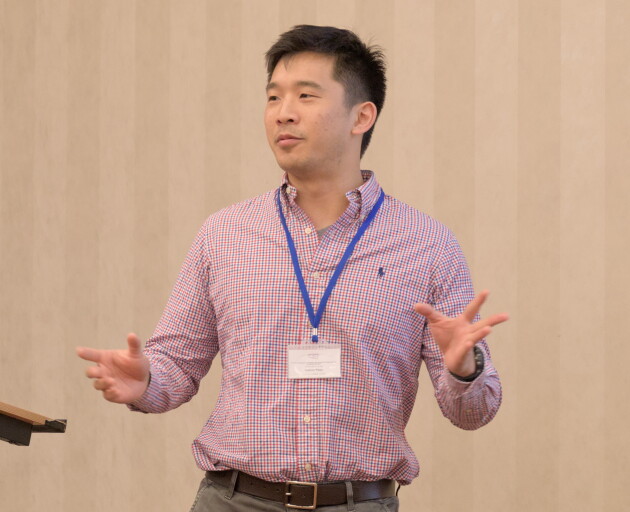 Dr Calvin Tsay is an Associate Professor in the Department of Computing.
Calvin is a leading interdisciplinary engineer at Imperial, building new computing tools in optimisation and machine learning. He is deploying these tools to tackle large-scale problems in energy systems and sustainability.
He leads an independent research group that contributes industrially relevant research such as OMLT, an award-winning open-source software, and tools for green hydrogen system design. He has authored 50 peer-reviewed publications and collaborated with industry on energy flexibility and AI security and privacy.
Calvin is an exceptional ambassador for engineering education, lecturing in the Girls Who ML programme and volunteering with the Great Exhibition Road Festival.
Calvin said: “With all the impressive advances in AI models in recent years, I’m most excited by how AI tools can help address longstanding challenges in process and energy systems: how to design more sustainable processes, integrated energy systems, and resilient engineering systems.”
Royal Academy Research fellowship
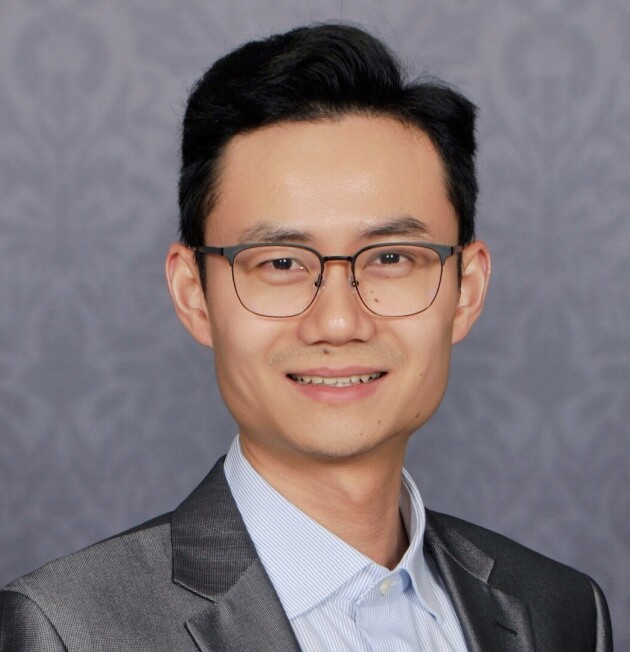 Dr Tian Yuan from the Department of Mechanical Engineering was awarded the Royal Academy of Engineering Research Fellowship to develop a new computational framework that can visualise fluid and substances transport in the brain directly from MRI scans.
Supported by this fellowship, Dr Yuan will investigate how fluids and molecules move through the narrow spaces between brain cells - a process called interstitial transport. This process is essential for brain functions such as sleep and memory, and when it breaks down, it can lead to serious neurological conditions including Alzheimer’s disease. It also plays a key role in emerging methods for targeted drug delivery to the brain.
His research will create a predictive platform that combines mathematical and physical modelling with medical imaging to visualise these hidden processes for the first time. The long-term goal is to develop early-detection techniques for Alzheimer’s disease and open new avenues for brain therapies, providing unprecedented insights into brain health.
Dr Yuan said: "I am deeply honoured to receive this fellowship. It is not only a significant milestone in my career, but also an opportunity to advance research in brain biophysics, biomechanics, and modelling, while building my research independence as an early-career researcher. This fellowship enables me to develop novel engineering approaches to better safeguard human health."
Article text (excluding photos or graphics) © Imperial College London.
Photos and graphics subject to third party copyright used with permission or © Imperial College London.
Reporter
Sanjana Kakar
Department of Materials
Simon Levey
Communications Division
Helen Wilkes
Faculty of Engineering