Imperial-led AI project delivers net zero breakthroughs in key sectors
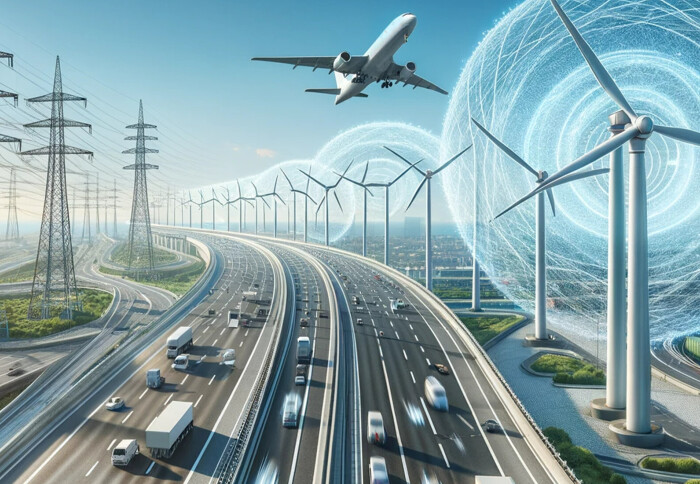
Imperial-led AI project delivers breakthroughs in energy and transport, supporting UK net zero goals with innovations in wind, hydrogen, and emissions
A major research initiative led by Imperial College London has concluded with significant breakthroughs in the application of artificial intelligence (AI) to accelerate the UK’s transition to net zero emissions in the energy and transport sectors.
Funded by UK Research and Innovation (UKRI), the project brought together researchers from Imperial College London, the University of Cambridge, the University of Edinburgh, and the University of Oxford, working alongside industry partners including Atkins Realis, Engys, NVIDIA, and Ansaldo Energia. The project was led by Dr Georgios Rigas, Professor Luca Magri, and Professor Sylvain Laizet, and drew on expertise from aeronautical engineering, physics, mathematics, and policymaking to ensure both scientific rigour and real-world relevance.
The team’s work focused on three key areas. In wind energy, researchers developed AI-controlled wake steering technology to optimise turbine performance, with early trials showing potential increases in power output of up to 15%. In road transport, adaptive aerodynamic systems were designed to reduce drag and fuel consumption in heavy vehicles, achieving fuel savings of up to 5%. For hydrogen safety, the team created digital twins – virtual models of physical systems – to improve safety protocols and support the expansion of hydrogen infrastructure.
The project also delivered measurable environmental benefits, including reduced emissions from heavy goods vehicles and improved operational efficiency in wind farms. Recognising the environmental footprint of AI itself, the team prioritised sustainable computing practices, quantifying the energy consumption of machine learning algorithms to ensure that computational costs did not outweigh environmental gains.
As the project concluded earlier this year, its legacy is clear: it has demonstrated the transformative potential of AI in tackling complex sustainability challenges and laid the groundwork for future research and deployment. The team now aims to scale these innovations and test them in real-world environments to further support the UK’s net zero ambitions.
The full findings and outcomes of the project are detailed in the AI for Net Zero: Energy & Transport white paper.
For more information or to explore future collaboration and funding opportunities, visit the AI for Net Zero project website or contact the team at AIforNetZero@imperial.ac.uk.
Article text (excluding photos or graphics) © Imperial College London.
Photos and graphics subject to third party copyright used with permission or © Imperial College London.
Reporter
Meg Orpwood-Russell
Department of Aeronautics
