.jpg)
Campus and community
by Ryan O'Hare
/prod01/channel_4/imperial-news/media/news-images/3000X2000-main-article-images/20260505__Patient___shutterstock_2732980977___3000X2000__.jpg)
Scientists are developing a test which could one day be used to predict how a patient’s illness will progress, and even how well they will respond to treatment.
The international team, led by researchers at Imperial College London, has already tested their method (called VeloCD) to successfully predict patients’ outcomes for a range of health conditions, including the likely progression of infectious and chronic disease.
In a proof-of-concept study they were able confidently predict whether children with acute fever were likely to recover or deteriorate, and whether healthy adults were likely to go on to develop flu or COVID-19 after exposure to the viruses.
The method, based on state-of-the-art bioinformatics techniques, was even able to predict how well patients with inflammatory bowel disease would respond to a course of therapy, just from analysing blood samples after their first dose of treatment.
By measuring key markers in the blood – which reveal the levels of gene expression in response to an illness – it can be used to predict the likely trajectory of disease.
According to the Imperial team, the findings demonstrate how VeloCD can be used to make clinically meaningful predictions of future clinical states. Their findings, published in the journal Nature Communications, lay the vital groundwork for a future prognostic test.
They have filed a patent for the method and believe it has the potential to be developed into a commercially available test for use in hospitals.
Ultimately, the hope is that the approach could be used to rapidly triage patients, helping clinical staff to identify who will need further care and who could be safely sent home with treatment.
Professor Aubrey Cunnington, Head of the Department of Infectious Disease at Imperial College London, Honorary consultant in paediatric infectious diseases at Imperial College Healthcare NHS Trust, and senior author of the study, said: “We think this type of test could be hugely beneficial for patients and healthcare staff. By offering medics a test which can predict the course of illness it could help them to triage patients much faster, getting the right treatment to the right patient at the right time.”
When we become ill, combinations of genes are switched ‘on’ and ‘off’ in response. This produces RNA markers which can be detected in the blood. Previous research has shown that patterns of markers can be used to identify the cause of illness, such as whether a fever is caused by a bacterial or viral infection.
In this study, the team used a method called RNA velocity, originally developed for studying single cells. The Imperial-led team adapted and enhanced the approach to test whole blood samples to find out whether the markers could also indicate prognosis; whether a patient was likely to get better or worse, and how they would respond to treatment.
The patterns of gene expression we see in the blood offer clues as to what is happening...not just where someone is right now, but where they are going to be in next few hours or days. Dr Claire Dunican Department of Infectious Disease
It enabled them to see not only which genes were switched on and off, but whether their activity was ramping up or winding down –without having to make repeated measurements over time. From this they could learn information about a person’s future clinical state and the course of their illness.
To take advantage of this complex data, they developed a computational method to predict whether the changes in the patterns of gene expression in an individual’s blood were becoming more like or less like those of other individuals with the outcomes of interest – for example, severe illness or mild, self-resolving illness.
Dr Claire Dunican, Research Associate and Bioinformatician in the Department of Infectious Disease at Imperial College London, who developed, adapted and tested the method, and first and co-corresponding author of the study, said: “Our approach uses cutting-edge methods to provide a glimpse into a patient’s future, based on how their body is responding to illness at that moment in time.
"The patterns of gene expression we see in the blood offer clues as to what is happening. By identifying key patterns, we can essentially predict the trajectory of illness – not just where someone is right now, but where they are going to be in next few hours or days. In practice, this could tell us whether they will get better or deteriorate, and how they might respond to treatment.”
To validate the approach, the team looked at real world data from several large studies, including the EU-funded PERFORM study. This included blood samples from almost 400 children across nine European countries who were admitted to hospital with a fever.
Whole-blood RNA sequencing showed that more than 2300 markers produce reliable patterns for mild, moderate and severe illness. By focusing VeloCD on a subset of just 59 of these markers, the team could predict whether a child was likely to progress to mild, moderate or severe illness. Crucially, the approach flagged individuals most likely to deteriorate, who would require intensive care.
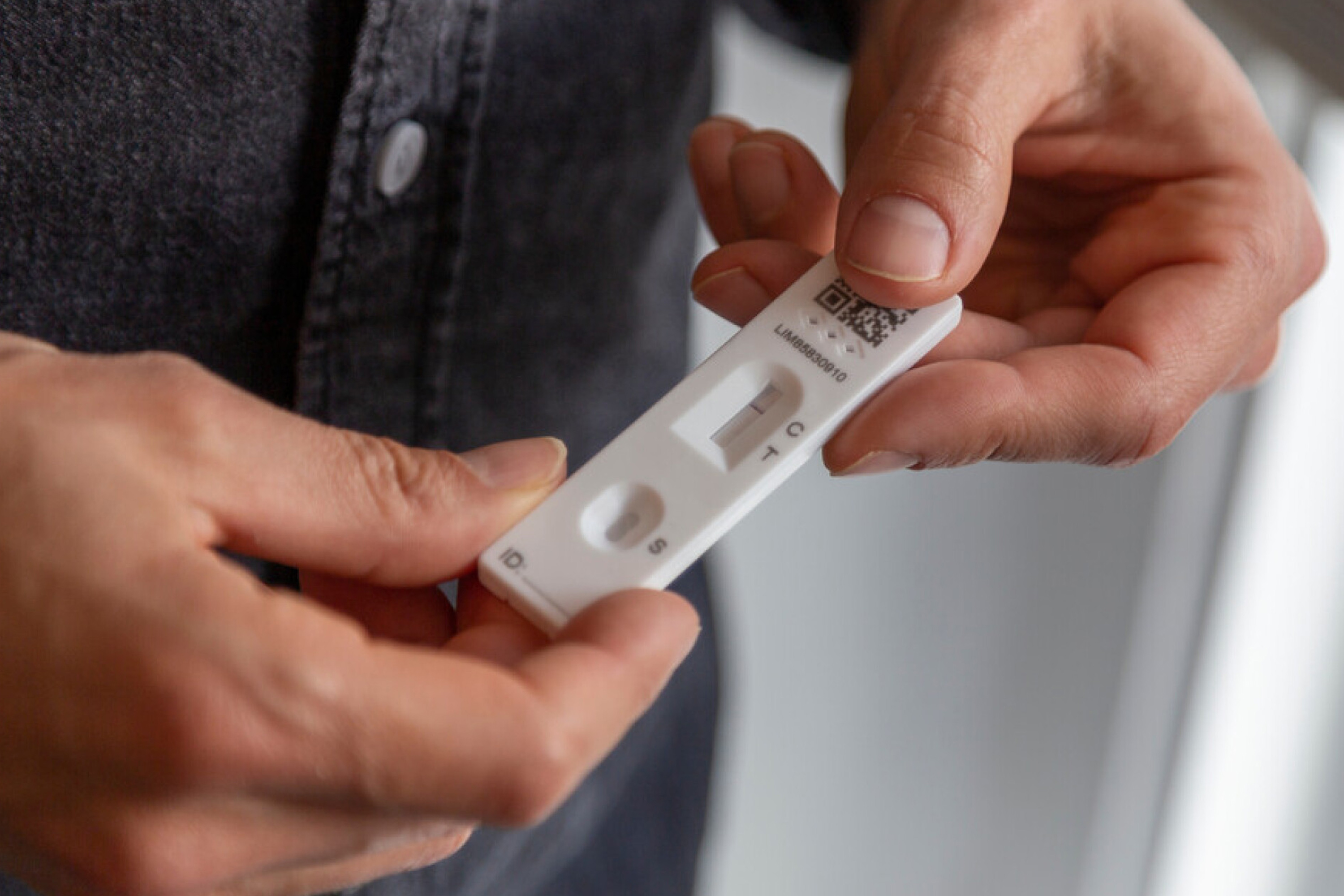 In another test of the approach, the team used VeloCD to predict whether people would develop flu or COVID-19 after viral exposure. For this, they used the wealth of data generated by the landmark human challenge programme at Imperial College London, in which healthy adults were exposed to influenza or SARS-CoV-2 under controlled conditions. Blood samples collected early in the study (Day 2) could be used to accurately predict whether a person would go on to become infected or not, even before infection could be confirmed via PCR test.
In further validations, the team showed the potential of VeloCD as a tool to highlight complications of HIV and tuberculosis, and response to treatment in inflammatory bowel disease, all based on the RNA markers in the blood.
Dr Myrsini Kaforou, Associate Professor in Bioinformatics in the Department of Infectious Disease at Imperial College London, and co-author of the study, said: “Clinical teams often have to make informed decisions based on limited evidence within a narrow window of time. A test based on this approach, which relies on state-of-the-art bioinformatics techniques to decode dynamic information within a patient’s blood, could be revolutionary.
"It could enable us to get ahead of disease and predict in a clinical setting whether a patient is heading towards recovery or deterioration, providing the foresight needed to deliver truly personalised and proactive medicine.”
Professor Mauricio Barahona, Chair in Biomathematics in the Department of Mathematics at Imperial College London, and co-author of the study, said: “This is one of those very rewarding instances of a true cross-disciplinary collaboration, where the application to biomedical data of what was originally a set of quite involved mathematical ideas linking high-dimensional geometry and dynamics can hopefully help make sense of the complex signatures linked to disease progression in individuals.”
The researchers say further work is now needed to develop and validate predictive tests based on this approach. But if the work is successful, with a focused programme of development, a working clinical test could be available within as little as five years.
The team has made the VeloCD tool available on GitHub.
The work was carried out with a number of Global partners, including key collaborators at UCL, University of Cape Town, Queen Mary University of London, the PERFORM consortium, and the human challenge programme at Imperial College London.
The research was supported by the European Union’s Horizon 2020 Research and Innovation programme, the UK Research and Innovation (UKRI) Medical Research Council (MRC) and Engineering and Physical Sciences Research Council (EPSRC), and the UK Department for International Development (DFID), and others.
The work was also supported by the NIHR Imperial Biomedical Research Centre, a translational research partnership between Imperial College Healthcare NHS Trust and Imperial College London.
-
‘Predicting trajectories of illness using RNA velocity of whole blood’ by Claire Dunican, Clare Wilson, Dominic Habgood-Coote, et al. is published in Nature Communications. DOI: https://doi.org/10.1038/s41467-026-71685-5
Image credit: Shutterstock / PeopleImages
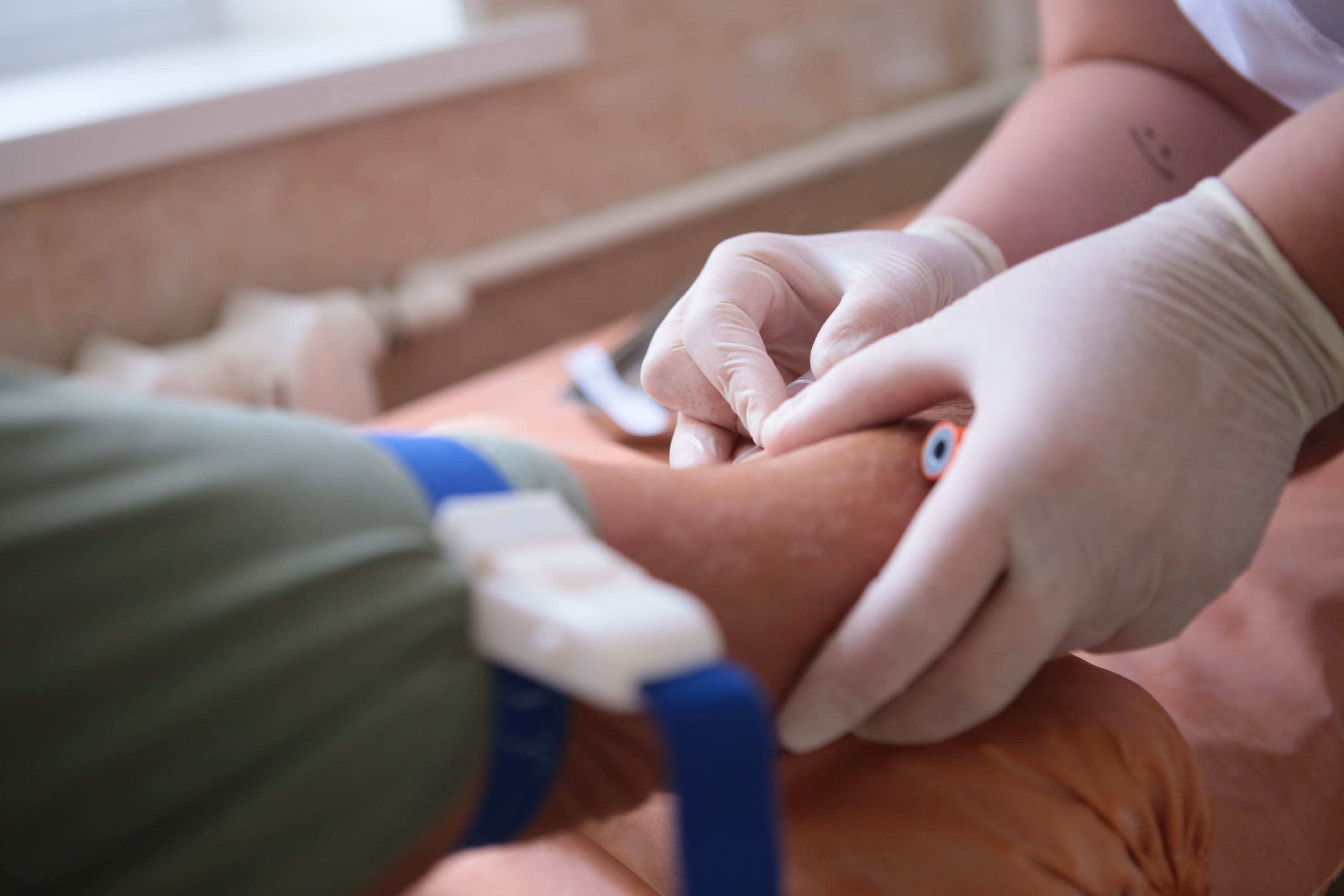 When we’re sick, our cells jump into action, switching genes on and off in a highly coordinated immune response. We can detect which genes are being ‘switched on’ (or transcribed) based on molecules of messenger RNA, which can be detected in the blood.
Previous studies have shown that different illnesses produce different patterns – where the RNA markers provide a ‘fingerprint’ in the blood which can point to what’s causing the illness. Several large international studies, including DIAMONDS, PERFORM and EUCLIDS, have shown this approach can be used to diagnose whether a child’s fever is caused by a bacterial or viral infection, which could help to get them the right treatment earlier.
In the latest study, the international team progressed this beyond diagnosing the cause of illness to see if they can answer critical clinical questions – what will happen to an unwell patient? Will they get better or worse? And how will they respond to treatment?
To do this, they adapted an existing method first developed to map the fate of single cells. The approach, called RNA velocity, enables scientists to predict whether stem cells will go on to become skin cells, blood cells etc., based on their changing pattern of gene expression.
As genes are activated, their double-stranded DNA is unzipped, read and then transcribed, producing an RNA copy of the information. But this initial ‘raw’ RNA also contains non-coding regions (introns) and needs to be processed to remove these before it can be used by cells.
By measuring the amount of raw RNA versus processed (mature) RNA for a gene, we can show where abouts we are in the process. For example, if there’s more raw RNA than processed RNA, it means transcription is increasing. But if there’s more processed RNA than raw RNA, it suggests activity is ramping down.
In the latest study, the team adapted and enhanced this single cell approach to analyse the RNA in blood samples made up of millions of cells, to predict the clinical fate of people rather than individual cells.
Using cutting edge bioinformatics techniques, the team developed a computational method to predict whether the changes in gene expression in an individual’s blood were becoming more like or less like those of other individuals with the outcomes of interest – for example, severe illness mild illness, or self-resolving illness.
Currently, the approach (called VeloCD) requires whole-blood RNA sequencing, which can be time-consuming. But with dedicated development, they believe the method could be fine-tuned and scaled down to focus on a handful of key markers, enabling it to form the basis of a reliable test.
The hope is that this could one day be used as a point of care prognostics test to help clinical decision making. By taking a blood sample, it could stratify patients based on risk and predict their future clinical state. This could tell healthcare staff whether a patient who may be stable now, is likely deteriorate and so need to be kept in hospital, or whether they are likely to progress to mild or self-resolving illness state, and could potentially return home with treatment.
Article text (excluding photos or graphics) © Imperial College London.
Photos and graphics subject to third party copyright used with permission or © Imperial College London.
Administration/Non-faculty departments

Campus and community

Engineering

Engineering

Engineering
Imperial Global
Cross-faculty
Campus and community
Discover more Imperial News
Search all articlesDiscover more Imperial News
Search all articles