Imperial showcases Global Biosecurity Network ahead of UNGA
by Press Office
/prod01/channel_4/imperial-news/media/news-images/3000X2000-main-article-images/New-york-biosecurity.jpg)
As world leaders gathered in New York for the United Nations General Assembly (UNGA) Imperial showcased its new Global Biosecurity Network which will tackle growing threats to human, animal and plant health.
The Network brings together expertise from across disciplines, organised around three core themes: threats, surveillance, and response.
Academics from the Network and Imperial leadership were in New York and Boston to host a series of events around biosecurity, engage with policymakers, tech companies, research collaborators, and funders, and meet with Imperial's growing alumni community in the US.
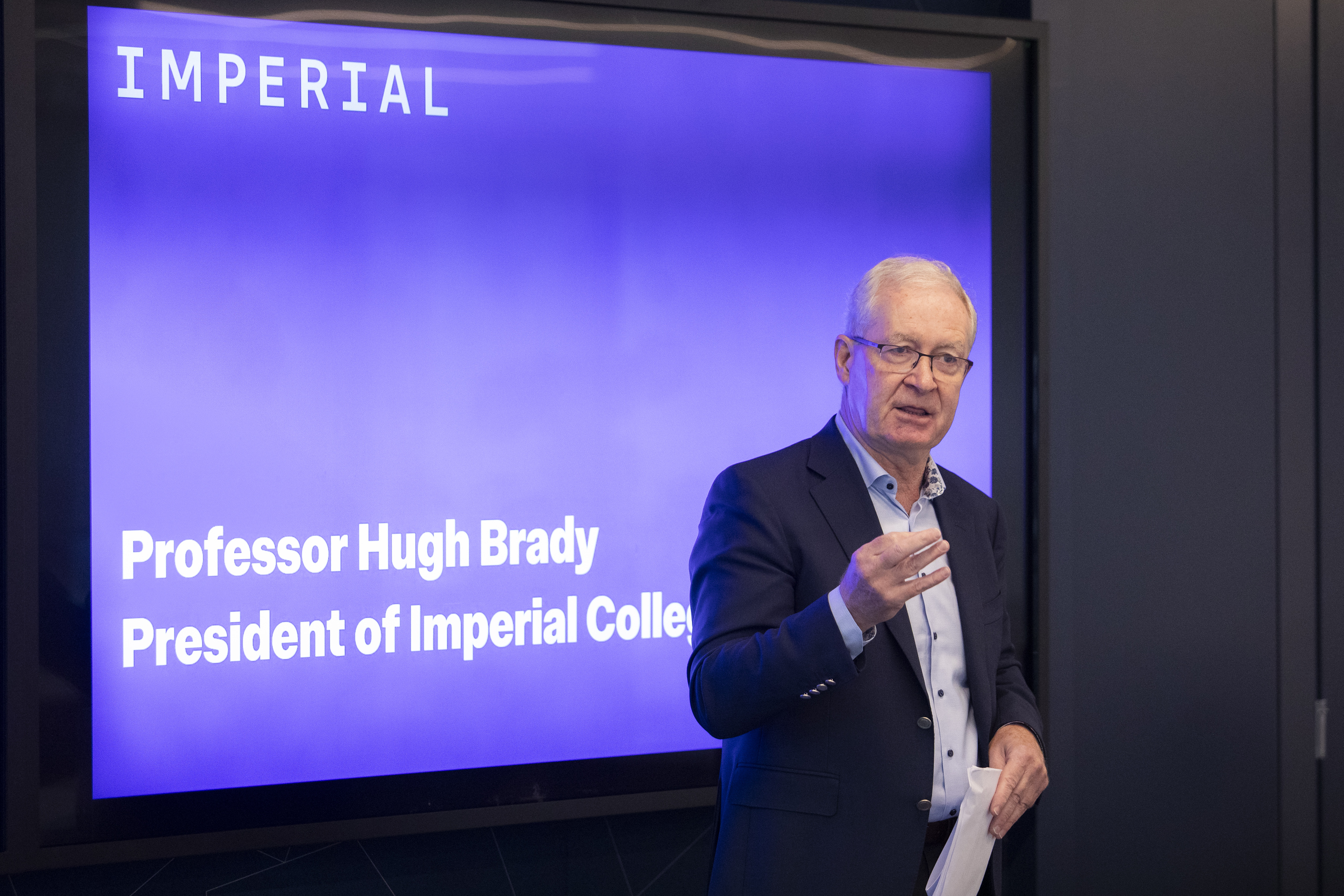
President Brady speaking in New York.
Rising biosecurity threats
Ahead of the UNGA High-Level Meeting on Pandemic Prevention, Preparedness and Response, Imperial convened a roundtable to explore how the world can better anticipate and respond to emerging biological threats.
The Biosecurity in the Age of Engineering Biology session brought together leaders from science, health, AI, biotechnology, industry, government and international organisations.
President Hugh Brady, Professor Karen Polizzi and Professor Azra Ghani spoke about rapid countermeasure design, early warning and threat intelligence, getting the response right, governance and coordinated action. Imperial’s Biosecurity Network will harness the latest technology in engineering biology, AI and computational science, combined with existing and in-depth disciplinary expertise, to deliver faster surveillance, characterisation, detection and countermeasures.
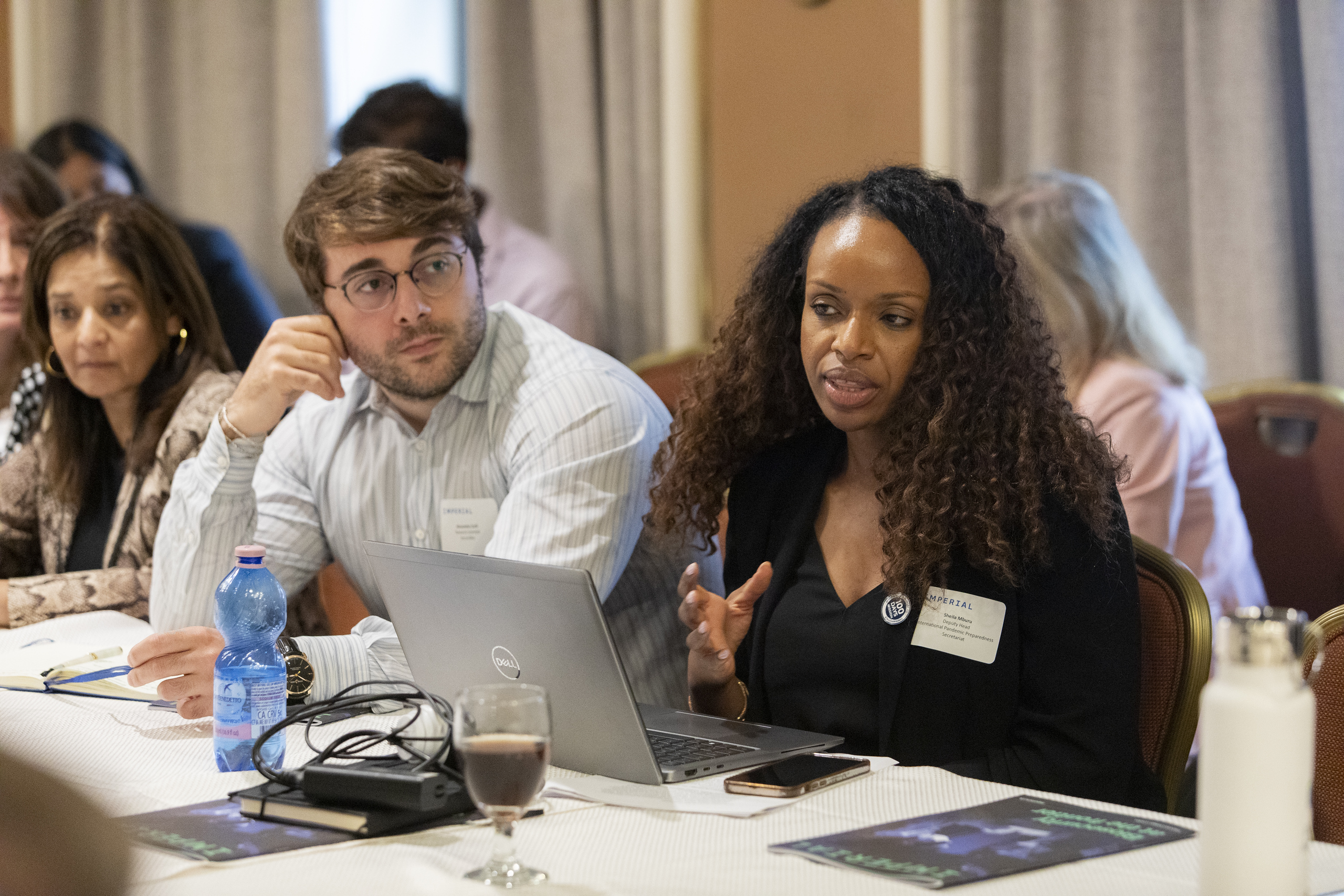
The Biosecurity high-level roundtable brought together leaders from science, health, AI, biotechnology, industry, government and international organisations.
President Brady said: "The risks have grown alongside our capabilities. Whether a threat arises in nature or is deliberately engineered, its likelihood and its potential impact are both increasing.
"Environmental disruption, changing patterns of contact between humans and animals, the pace of technological change, and the ordinary evolution of microbes are all pushing in the same direction. And now that landscape includes not only natural spillover, but engineered pathogens, novel toxins, and threats built using tools that have the potential to be more accessible than ever before."
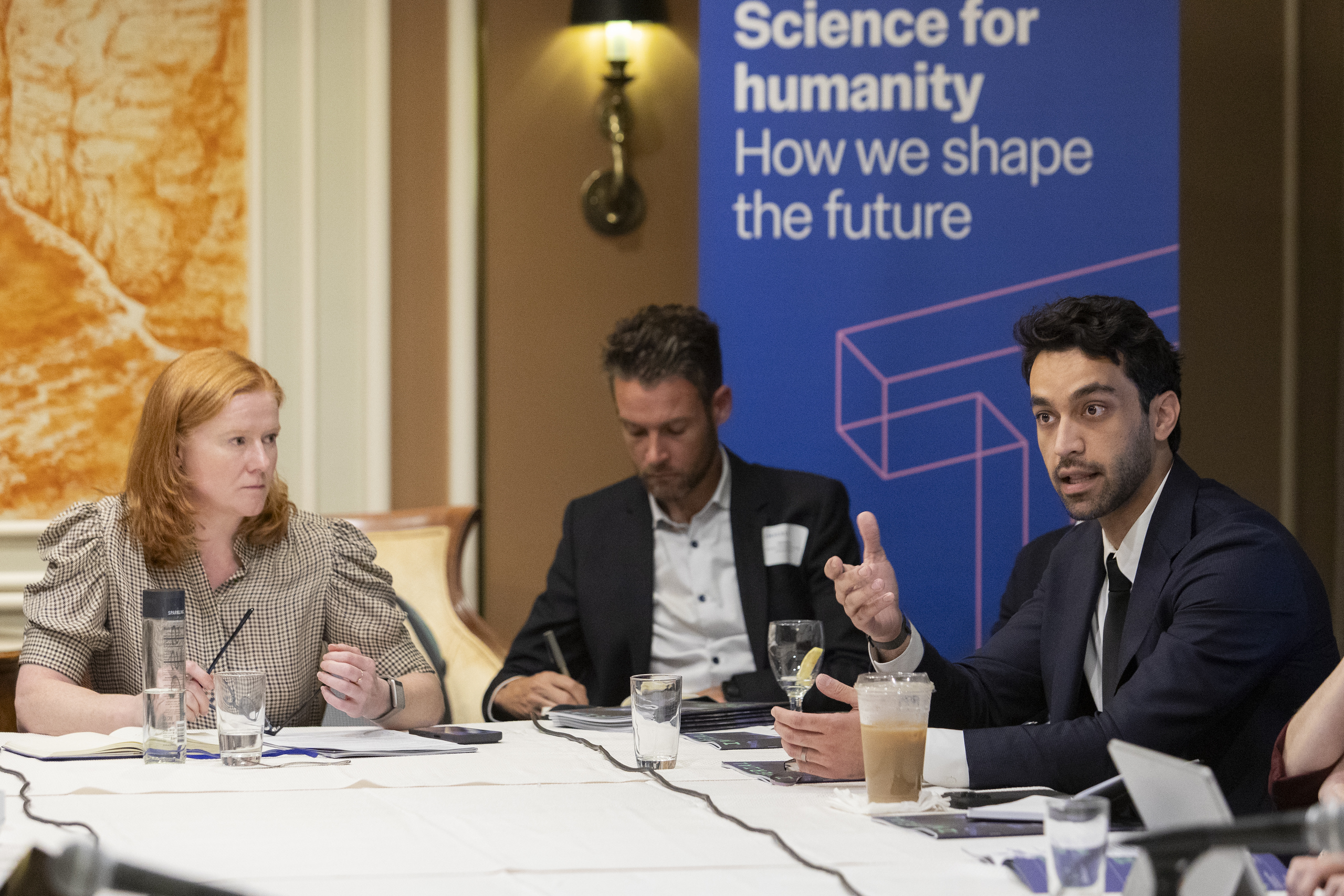
The Biosecurity in the Age of Engineering Biology session explored how the world can better anticipate and respond to emerging biological threats.
The roundtable was chaired by Amanda Wolthuizen, Vice-President (Strategy). The Vice-President wrote for the World Economic Forum this week about the need for strong, coordinated governance across government, industry and academia, to prevent biological threats.
The emerging risks and threats were also explored by some of Imperial’s leading Biosecurity experts ahead of UNGA.
Experts from the recently launched Biosecurity Network of Excellence showcased Imperial’s world-leading expertise across epidemiology, international biosecurity, virology, analytical chemistry and synthetic biology.
Professor Azra Ghani, Academic Director of Imperial Global Singapore, was part of the Imperial delegation in New York this week contributing to discussions on pandemic preparedness and AI, hoping to influence what the emerging global picture on biosecurity could look like.
Professor Ghani said: “We've had several discussions – and those will continue [this] week in New York – to think about not only the guardrails, but the benefits and the way that the frontier labs can help respond scientifically as well to make us better prepared."
Synthetic biologist, Professor Karen Polizzi, from the Department of Chemical Engineering, was also part of the delegation in New York and a member of the Biosecurity Network.
Professor Polizzi said: “Biosecurity is a multi-faceted problem, with a wide range of stakeholders. Getting all these together in a single conversation needs to happen more often.”
Funding Future Science
In New York, Frontiers Science House hosted a roadshow event as part of the Science Summit 2026 during UNGA.
Imperial’s President took part in a panel to discuss how public institutions, private foundations, and global research networks shape the trajectory of innovation from early discovery to large-scale societal impact in climate, health, and technology.
President Brady said: “At Imperial, we see science and technology as pivotal to the great challenges of our time. Biosecurity, climate change, food security: these are the problems that will define this century, and we believe they can only be met by leveraging the extraordinary potential of computational science, artificial intelligence and emerging technology. That conviction sits at the heart of what we call our Science for Humanity mission.”
Transforming pandemic readiness
Imperial researchers from the George Institute for Global Health, led by Professor Helena Legido-Quigley, and international partners launched the National University of Singapore-Lancet PRIME Commission Report “Transforming Pandemic Readiness for Equity”.
The Commission has worked over three years to rethink pandemic readiness around equity, trust, whole-of-society action, health-system resilience and the lived realities of people and communities. Its evidence base includes community and stakeholder research across 20 countries, governance analysis, foresight scenarios and epidemiological modelling.
The Commission links Imperial's School of Public Health with the NUS and wider Singapore partnerships including through Imperial’s research and innovation hub Imperial Global Singapore.
Connecting with our US alumni
Imperial celebrated our US-based alumni with special events in New York and Boston which provided the opportunity to connect and network with fellow alumni, Imperial staff, and friends of the university.
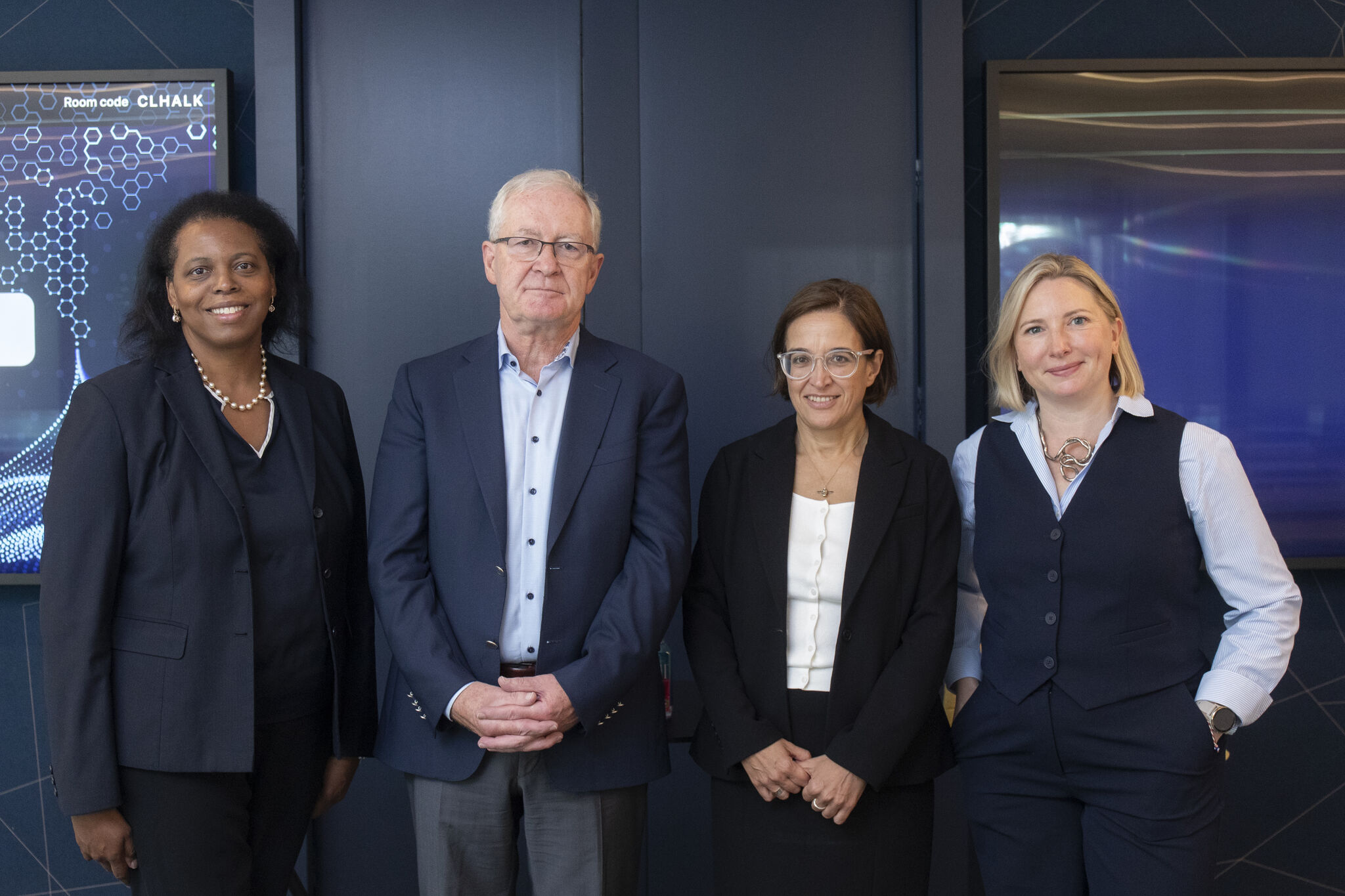
From left to right: Karen Akinsanya, President Hugh Brady, Professor Azra Ghani, Nicole Kempton.
The New York event featured a discussion between Professor Ghani and Imperial alumna, Karen Akinsanya, President, Head of Therapeutics R&D and Chief Strategy Officer, Partnerships at Schrödinger. They discussed the predictive future of health and scientific discovery.
In Boston the event included a fireside chat between Andrew Rees (Chemistry 1988), CEO of Crocs, Inc and Imperial’s Nicole Kempton.
Speaking at the event, President Brady said: “As alumni, you play a major role in our success, you are all wonderful, passionate advocates for Imperial.”
Imperial Inspires launches in USA
Imperial launched a major scholarship programme to students in the US at the alumni event in Boston.
The scholarship is part of Imperial Inspires - a new funding initiative designed to support talented students pursuing undergraduate or postgraduate taught study at the university.
At least 300 scholarships worth £15,000 per year will be available to students from across the world joining Imperial from 2027, helping talented students from around the world access an Imperial education.
Article text (excluding photos or graphics) © Imperial College London.
Photos and graphics subject to third party copyright used with permission or © Imperial College London.
Article people, mentions and related links
Press Office
Administration/Non-faculty departments