
Health
by Ian Mundell
/prod01/channel_4/imperial-news/media/news-images/3000X2000-main-article-images/2026-06-05-Cardiovolt.AI-team.jpg)
A spinout from Imperial College London is teaching artificial intelligence to read electrocardiograms, producing new insights into heart disease and other conditions. It has just raised £1.4 million in funding.
A routine electrocardiogram, or ECG, takes ten seconds to record. It measures the electrical activity of the heart and is one of the most common tests in medicine. Doctors use it mainly to check heart rate and rhythm, but have long regarded it as a relatively blunt instrument. For a detailed picture of the heart’s structure and blood supply, they turn to more sophisticated techniques such as echocardiography.
We looked at the ECGs to see if we could do things that are superhuman. Not things that clinicians can already do, but things that no cardiologist, no matter how expert, can do. Dr Arunashis Sau Cardiovolt.ai and NHLI
But what if those ten seconds of data contained far more information than any human could read? A system developed at Imperial’s National Heart and Lung Institute (NHLI) uses artificial intelligence to unlock it. The result is a set of AI models that can diagnose hidden heart conditions, flag non-cardiac diseases such as diabetes and kidney disease, and predict a patient’s risk of death, all from a standard ECG trace. None of these things are possible for even the most experienced cardiologist working without AI.
“We looked at the ECGs to see if we could do things that are superhuman,” says Dr Arunashis Sau, Chief Scientific Officer of Cardiovolt.ai, the spinout created to commercialise the method, who is also a lecturer at NHLI and cardiology registrar at Imperial College Healthcare NHS Trust. “Not things that clinicians can already do, but things that no cardiologist, no matter how expert, can do.”
AI needs data at scale to learn, so Dr Sau and his colleagues at NHLI went looking. A research group in Brazil offered a collection of over 1.6 million ECGs, each linked to the patient’s medical history. A similar collection of several million ECGs was found in the United States. Together, this was enough to begin.
The team first asked whether AI could sort patients into high-risk and low-risk groups, and then whether it could estimate when each person might die. “That’s not something we want to use in a general sense,” Dr Sau says, “but in a hospital you might use it to identify people at high risk and intervene early.” From there, the researchers tested whether the models could predict specific heart diseases and even non-cardiac conditions.
The models performed strongly across the board: for heart disease, diagnostic accuracy reached 83-93%, and for non-cardiovascular conditions such as diabetes and kidney disease, 70-80%, all from a single ten-second ECG, validated across international datasets.
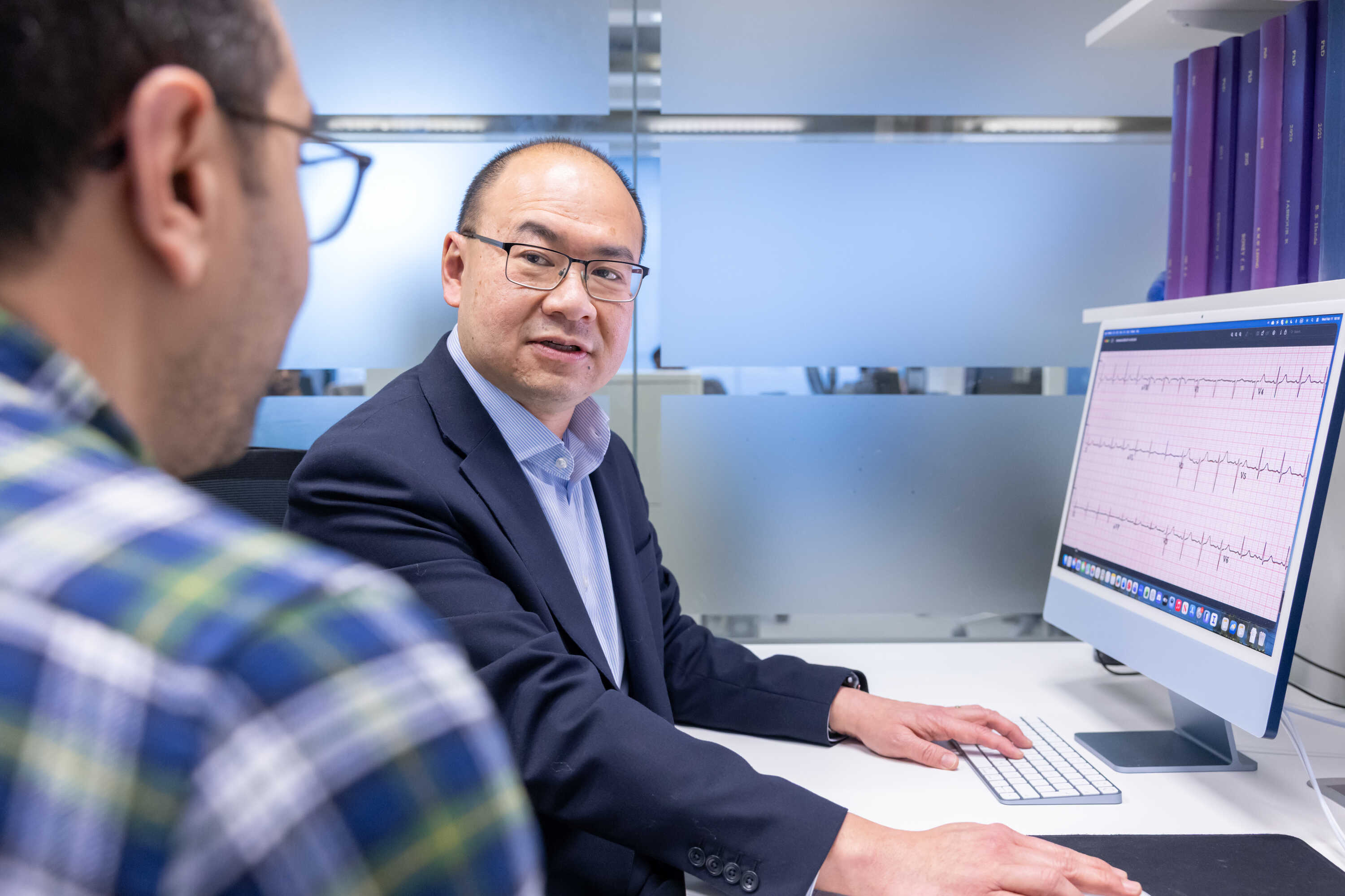
What the AI detects is, in effect, a digital biomarker: a signal that disease processes are underway, embedded in the electrical trace of the heart. To understand what drives these signals, the team turned to the UK Biobank, where ECGs are accompanied not just by medical histories but also by imaging data and genetic and protein profiles not usually available in larger collections.
“For example, are there genetics that determine you are at risk of a certain disease as picked up by this biomarker? Are there protein changes? Are there structural changes in the heart?” says Dr Libor Pastika, Chief Technology Officer of Cardiovolt.ai.
Translating this research into everyday clinical practice is the mission of the spinout company Cardiovolt.ai, which is commercialising AI models developed in Professor Fu Siong Ng’s group at NHLI with longstanding support from the British Heart Foundation.
“We have chosen this path because it is the one most likely to see the technology used in hospitals,” says Professor Ng, who oversaw the research and serves as Cardiovolt.ai’s Chief Medical Officer, alongside his role as a consultant cardiologist at Chelsea and Westminster Hospital NHS Foundation Trust and Imperial College Healthcare NHS Trust. “We are the people who are happy to take the risk, and devote our time and energy to making that happen.”
The initial clinical focus is on diagnosis: detecting conditions that would otherwise go unnoticed. “If someone comes in to have an ECG, we want to pick up underlying heart failure or valve disease that would never be picked up by a human doctor,” Professor Ng explains. “If there is any suspicion, then we will do an echocardiogram to confirm it right away.”
The company has closed a pre-seed round led by Twin Path Ventures. Additional grant funding from Innovate UK, prize money and accelerator support from Imperial Enterprise, and investment from Imperial’s DT Prime brings its total funding to £1.4 million. Its immediate priority is securing regulatory approval in the UK, EU and US.
“Our primary market is healthcare providers—hospitals, health systems and cardiology practices that already perform millions of ECGs every year,” says Boroumand Zeidaabadi, Chief Executive Officer of Cardiovolt.ai.
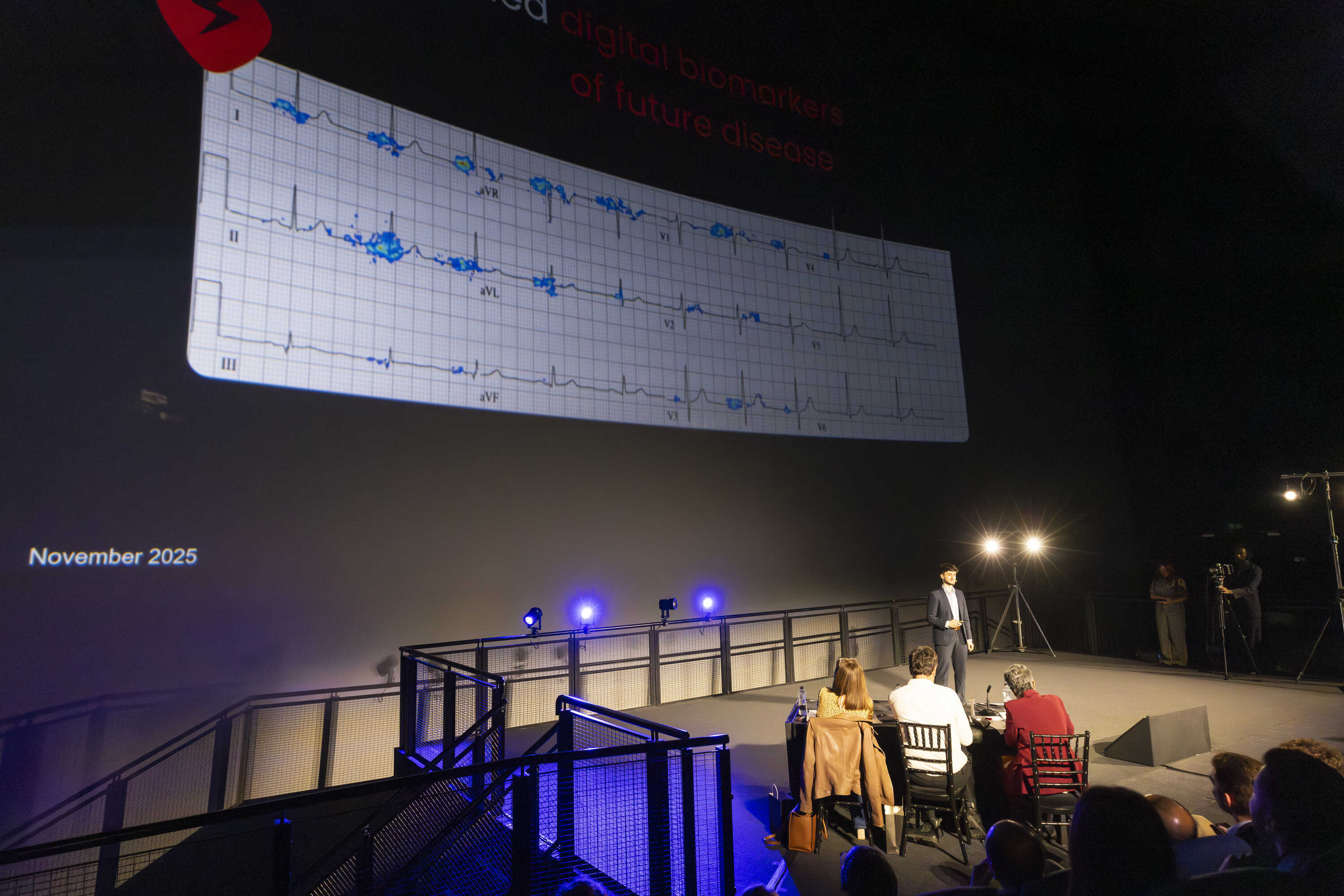
Development of the company has been supported by Imperial’s enterprise ecosystem. The team took part in the AI SuperConnector, an accelerator programme run by Imperial, before going on to win the 2025 AI and robotics track prize in the Venture Catalyst Challenge, Imperial’s flagship entrepreneurial competition.
Beyond regulatory clearance and deploying the models in partner hospitals, Cardiovolt.ai’s longer-term ambition is broader.
“Our goal is to have these AI models eventually deployed in all our local hospitals and beyond,” says Professor Ng. “A ten-second ECG, once a blunt screening tool, may soon become one of the most informative tests in medicine.”

Article text (excluding photos or graphics) © Imperial College London.
Photos and graphics subject to third party copyright used with permission or © Imperial College London.
Administration/Non-faculty departments


Imperial Global
.jpg)
Campus and community

Engineering

Engineering
Engineering
Imperial Global
Cross-faculty
Discover more Imperial News
Search all articlesDiscover more Imperial News
Search all articles
