
Imperial Global
by Ian Mundell
/prod01/channel_4/imperial-news/media/news-images/3000X2000-main-article-images/2026-02-25-CIRA-signing-group.jpg)
A new agreement will see Imperial and the Italian Aerospace Research Centre CIRA explore opportunities for joint research projects in sustainable aviation, computational science and next-generation air mobility.
New collaborations in sustainable aviation research and innovation are to be explored under an agreement signed recently by Imperial and the Italian Aerospace Research Centre, CIRA.
“This agreement brings together a unique combination of expertise and experience to target sustainable aviation challenges, which we hope will lead to innovative new ways to reduce the environmental impact of flying,” says Professor Laura Mainini of the Department of Aeronautics at Imperial.
This agreement brings together a unique combination of expertise and experience to target sustainable aviation challenges, which we hope will lead to innovative new ways to reduce the environmental impact of flying. Professor Laura Mainini Department of Aeronautics
CIRA is a public-private research institute set up by the Italian government in collaboration with the country’s aerospace industry. Since 1989, it has been responsible for managing and implementing Italy’s national aerospace research programme, and it has built an impressive track record in collaborative R&D. “CIRA is a very prominent actor in Europe when it comes to aerospace research and international collaborations, with some of the most advanced facilities for experimentation and testing,” says Professor Mainini.
On the Imperial side, the Department of Aeronautics brings world-class aerospace research with acknowledged leadership in advancing computational engineering capabilities, and experience in experimental testing thanks to leading edge facilities such as its bespoke wind tunnels and flight arena. Meanwhile, the Brahmal Vasudevan Institute for Sustainable Aviation is establishing itself as the home for a cross-disciplinary approach to research, training and evidence-based decision-making for greener air transport.
“We are acutely aware of the challenges posed by the net-zero transition for the aviation sector,” says Professor Mainini, who is associate director of the Institute. “Consequently our research rethinks the way aerospace vehicles and aviation operate by adopting a holistic approach that encompasses the multifaceted nature of air transport.”
This ranges from ultra-efficient design solutions and new power architectures for the aircraft of the future to light-weight structures for airframe, from the exploration of pathways to new fuels and energy solutions to power aviation, to the study of the associated carbon footprint, non-CO2 emissions and contrails. It also takes in the investigation of novel operational paradigms and flight paths, and the impact of regulatory practices, policy, and societal and economic changes.
The memorandum of understanding also covers the joint interest in core research on computational science and machine learning, which can lead to novel methods, algorithms and tools to advance digital engineering for aerospace applications.
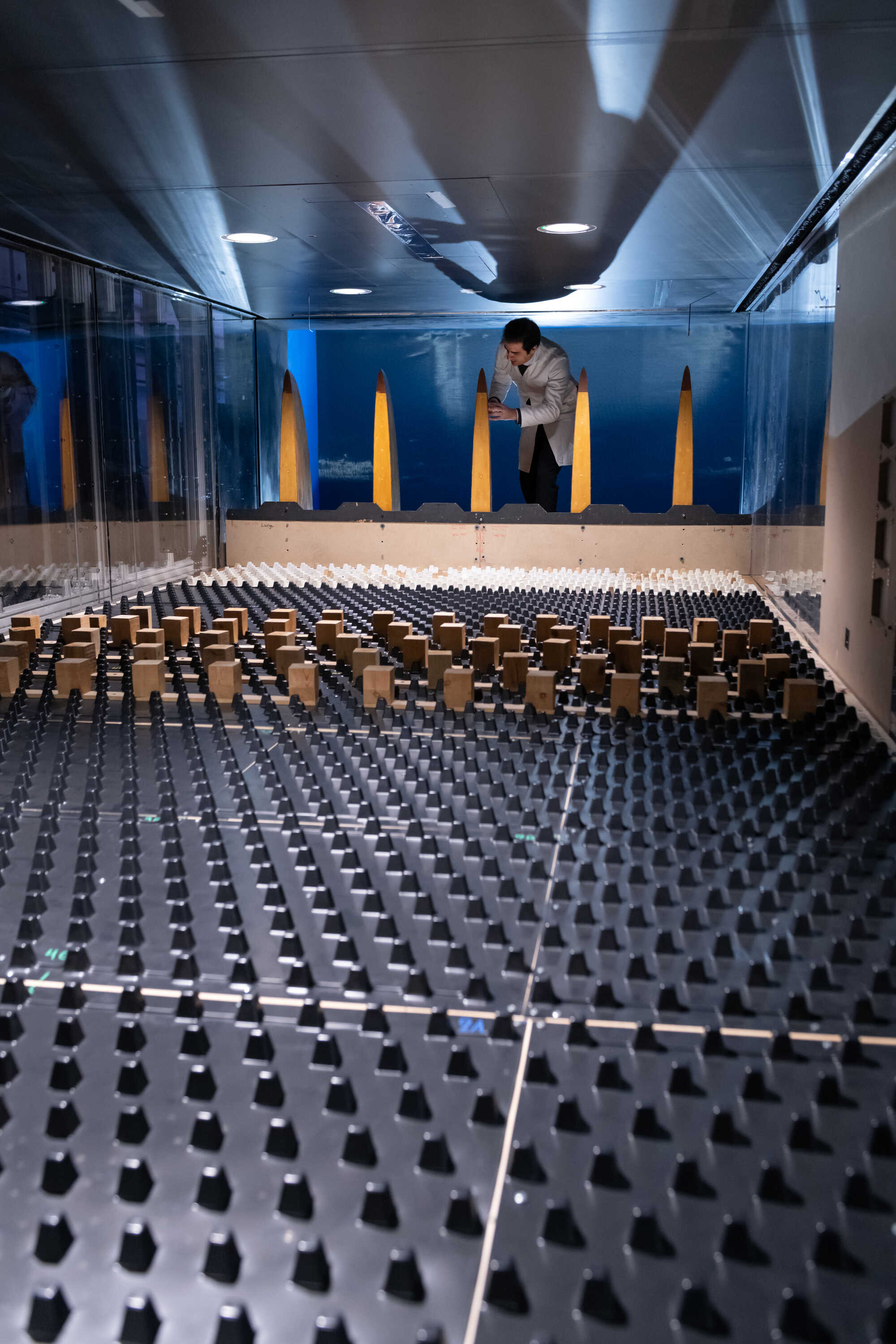
“Advances in computational science and developing new computational strategies, methods and digital capabilities can have a transformative impact on the design of novel technology solutions leading to net zero and sustainable aviation,” says Professor Mainini. “These may also be integrated into novel aircraft for zero environmental impact aviation in the future.”
For instance, advancing computational and digital capabilities also have applications in monitoring the health of on-board systems and structures, with the potential to transform future approaches to aircraft maintenance.
An additional area of interest covered in the agreement is next-generation air mobility, which looks at new technologies and configurations for flying vehicles and urban transport including aerial robotics and electrical vertical take-off and landing solutions. These technologies will also be regarded within the context of transitioning to more sustainable solutions for air-transport.
One goal of the three-year agreement is to find opportunities for the partners to collaborate on international programmes and funding schemes. Meanwhile, options will be explored for staff and student exchanges, co-supervision of doctoral programmes and the promotion of shared activities such as seminars, workshops and advanced training programmes.
Professor Mainini sees great potential for other agreements like this to be signed. “We are really open to collaborating with external partners, in industry or in the public sector, where we have the shared goal of moving towards sustainable aviation,” she says.
Article text (excluding photos or graphics) © Imperial College London.
Photos and graphics subject to third party copyright used with permission or © Imperial College London.
Administration/Non-faculty departments


Engineering

Health

Health

Health
Science
Science
Campus and community
Discover more Imperial News
Search all articlesDiscover more Imperial News
Search all articles
