
Health
/prod01/channel_4/imperial-news/media/images/landscape-3000X2000/8E2E8DC8-6D8A-4B3D-9791-0BD92294DF7D.jpeg)
Three Design Engineering projects secure prizes during the international competition.
Students and alumni from the Dyson School of Design Engineering were recognised at the 2025 Design Intelligence Award (DIA), a global design competition judged by an international panel of experts in design, engineering, and technology.
The 2025 edition attracted more than 7,000 submissions from over 70 countries. Three student projects received awards in the Concept Category, winning one Young Talents Award and two Future Talents Awards, with a further seven projects receiving honourable mentions. The results follow the department’s success at last year’s competition.
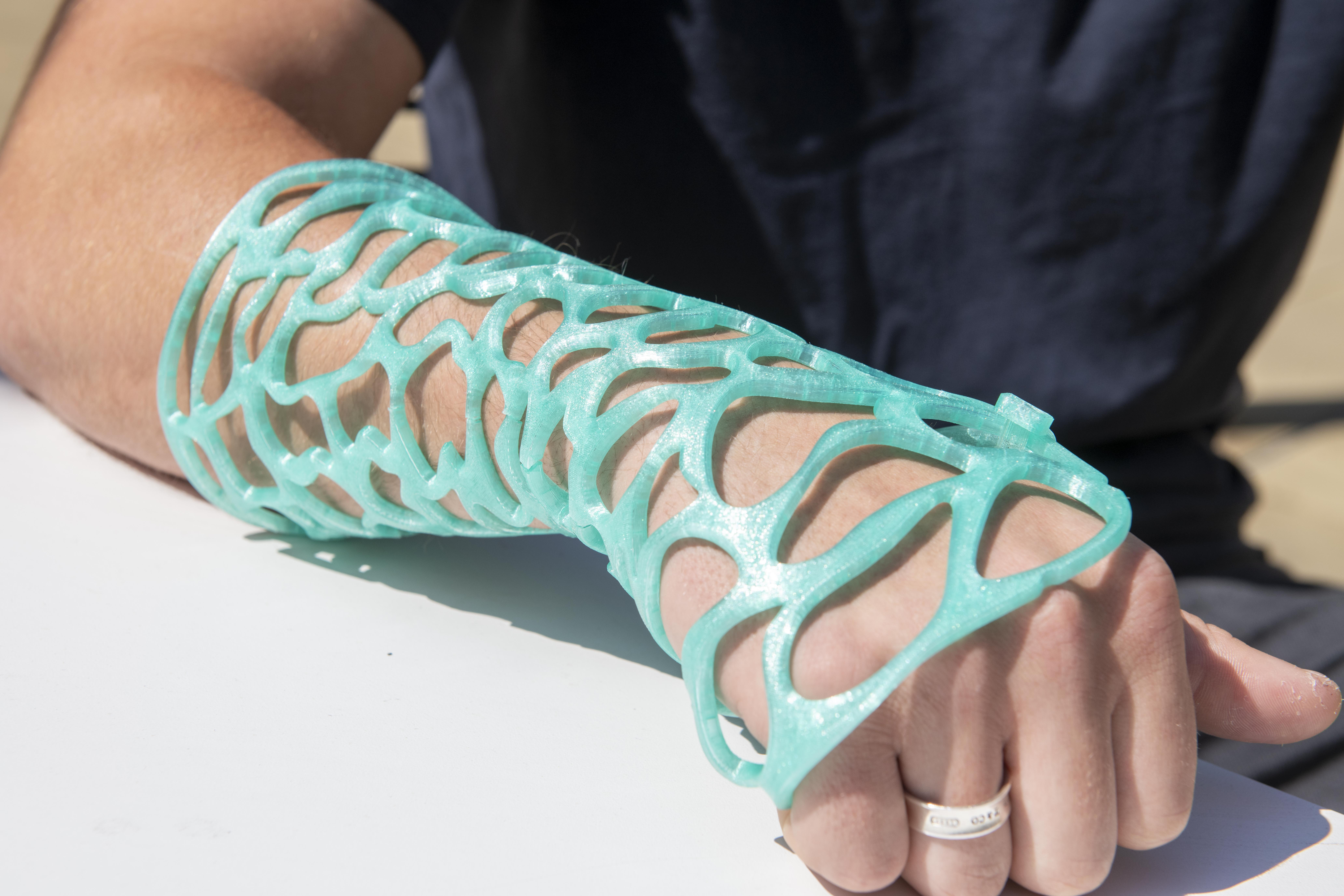
Author: Jake Inglis (MSc Design Engineering)
Morphopaedics received a Young Talents Award for its innovative approach to personalised orthopaedic support. The project addresses limitations of traditional casts, which are rigid, bulky, and uncomfortable, often causing skin irritation, poor ventilation, and reduced quality of life during recovery.
The proposed solution uses a lightweight, anatomically optimised lattice design that increases breathability, reduces pressure points, and enhances clinical efficiency. It is designed to improve patient comfort, hygiene, and overall recovery experience.
Commenting on the award, Jake said: “The DIA Young Talent Award is recognition not only of the technical depth behind Morphopaedics, but also of the ambition to challenge established norms in healthcare design. Professionally, it reinforces my confidence to pursue innovation at the intersection of engineering and human-centred design. Personally, it’s a motivating milestone, a reminder that pushing boundaries and committing fully to an idea can lead to meaningful impact beyond a university project.”
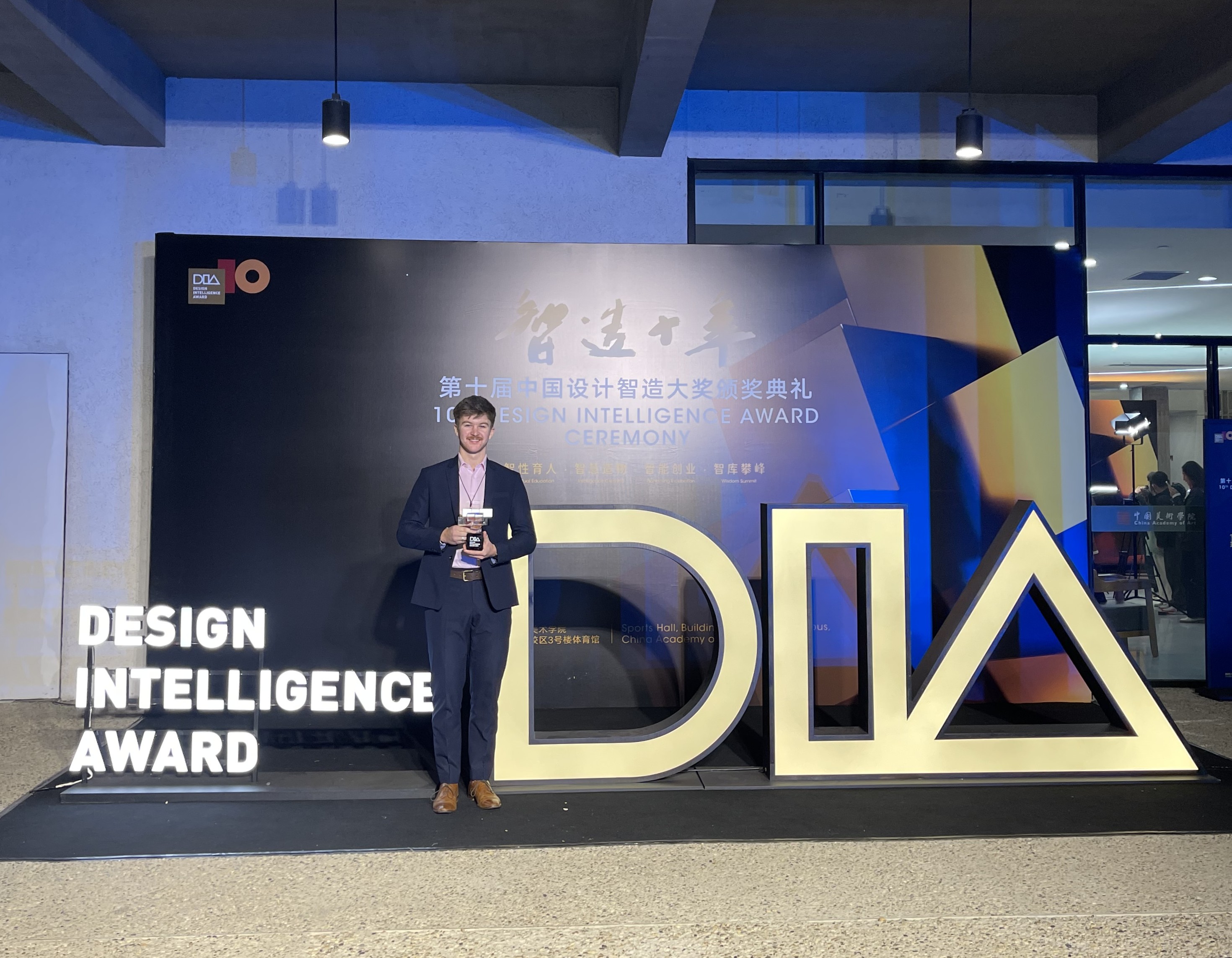
Authors: Lu Afolayan, Yuchen Cai, Alex Clark, and Ocean Hu (MSc/MA Innovation Design Engineering, Imperial College London/Royal College of Art)
The Aeropod project employs biodegradable capsules that activate in response to heavy rain to aerate and enrich soil. The project provides a climate-resilient alternative to conventional intensive farming, helping improve soil health and support more sustainable crop production.
Aeropod was also a winner of Imperial’s WE Innovate 2025 award.
Author: Saffan Firdaus (MSc/MA Innovation Design Engineering, Imperial College London/Royal College of Art)
Cogni is an early dementia pre-screening tool designed for use at home with family. It includes a physical device with large soft buttons that connect to a simple game interface on a tablet or computer. Users complete memory and attention-based tasks, with results shared securely with healthcare professionals where appropriate. The system is designed to identify early warning signs and help users fast-track high-risk individuals into the healthcare system.
The recognised projects span healthcare, sustainable systems, and assistive technologies, reflecting the breadth and interdisciplinary nature of work at the Dyson School of Design Engineering, demonstrating the department’s commitment to translating creative ideas into engineering solutions capable of addressing real-world challenges.
Article text (excluding photos or graphics) © Imperial College London.
Photos and graphics subject to third party copyright used with permission or © Imperial College London.
Centres

Health

Business

Health

Health
Health
Imperial Global
Imperial Global
Discover more Imperial News
Search all articlesDiscover more Imperial News
Search all articles