FIA delegation visits Imperial to explore the future of mobility and motorsport
/prod01/channel_4/imperial-news/media/images/landscape-3000X2000/Edits-3000X2000---colour-etc-3.jpg)
A delegation of senior FIA representatives took part in “Mobility Futures”, an executive education programme examining how technological transformation is reshaping mobility and racing.
A delegation of 35 senior representatives from the Fédération Internationale de l'Automobile (FIA) visited Imperial for an executive education session organised by the Dyson School of Design Engineering and hosted at the Centre for Sectoral Economic Performance.
The programme brought together FIA representatives working across different areas of motorsport to hear from Imperial specialists about the technological, environmental and strategic changes transforming mobility and what these changes could mean for the future of auto racing.
The session was structured around four core themes: disruption; mobility transformation; motorsport reinvention; and leadership action.
Leading through technological disruption
The visit opened with welcome remarks from Professor Omar Matar, Dean of the Faculty of Engineering, who introduced Imperial and its mission, before moving into a series of sessions examining how leaders can navigate and harness recent technological changes reshaping the automotive sector.
The first session, led by Dr Nigel Steward, Director of the Centre for Sectoral Economic Performance, and Dr Pelin Demirel, Reader in Innovation and Sustainability at the Dyson School of Design Engineering, focused on executive leadership in an era of disruption. Participants explored how leaders can identify emerging opportunities and respond effectively to technological uncertainty.
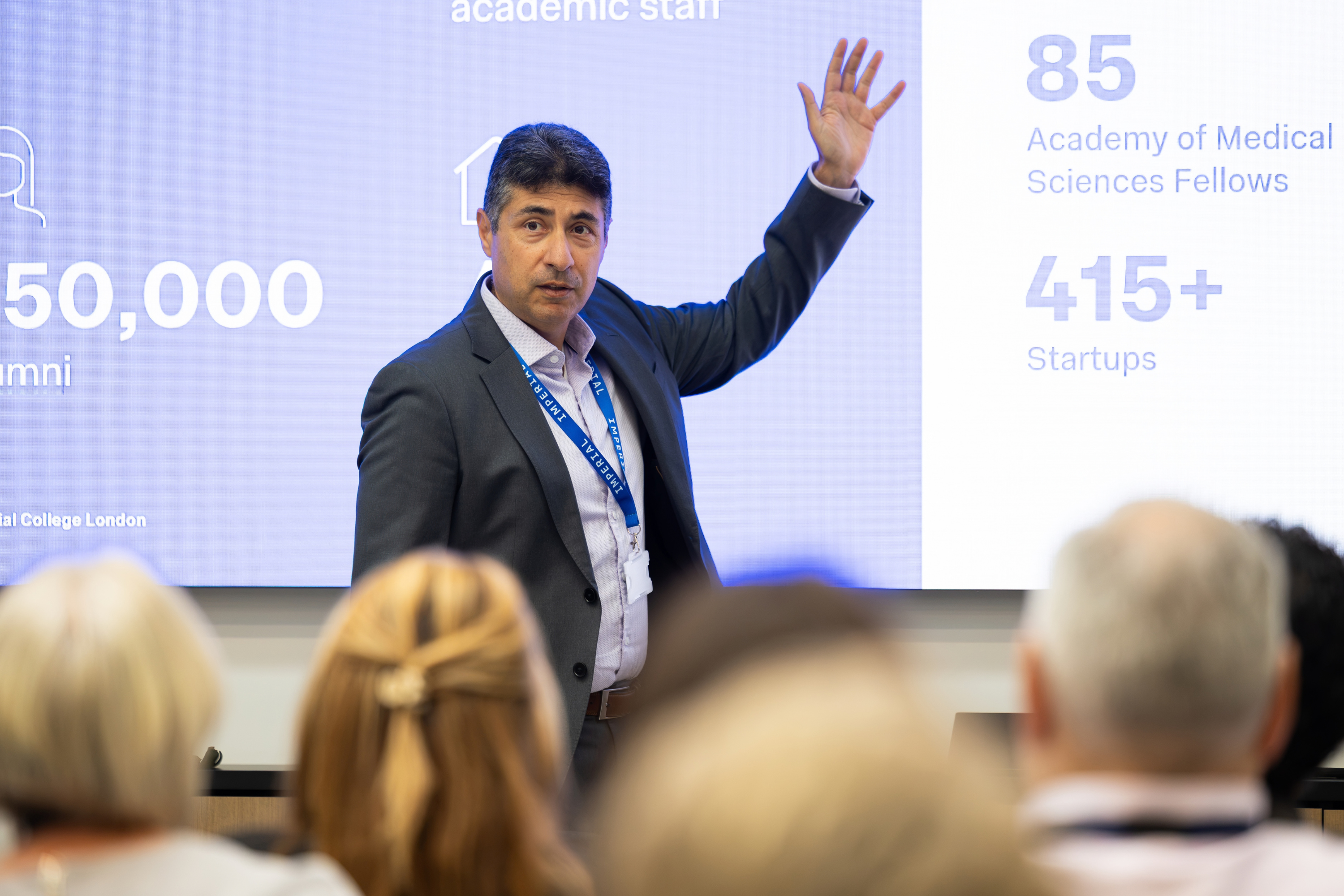 Professor Omar Matar during the Opening Remarks.
The future of mobility
The second module, led by Professor Robert Shorten, Head of the Dyson School of Design Engineering, and Dr Juan Bernabe Moreno, Director of IBM Research for Europe, examined the major technological, social and regulatory disruptions expected to shape the automotive sector over the coming decade.
The session explored the historic relationship between motorsport and mainstream mobility, and the role Formula One has played in developing technologies that have subsequently influenced wider society. Alongside this historical context, discussion covered the impact of artificial intelligence, the emergence of software-defined vehicles, and growing concerns around vehicle weight, tyre emissions and environmental constraints.
Professor Shorten and Dr Bernabe Moreno also examined emerging concepts, such as intelligent driver assistance; the potential for a “companion driver” to reshape the relationship between people and vehicles; and the role of quantum-powered design in developing high-performance vehicles, illustrating the breadth of technologies that could influence future mobility.
From mobility disruption to the future of racing
The final module, led by Dr Joachim Taiber, Advanced Research Fellow at the Centre for Sectoral Economic Performance, brought these developments directly into the world of motorsport.
Participants examined motorsport's historic role as an innovation platform and considered how the disruptions affecting mobility could increasingly influence racing strategies, technologies and formats. A particular focus was the strategic implications of artificial intelligence for Formula One, as well as the opportunities and challenges created by sustainability and decarbonisation.
The discussion also considered how changes in technology could create new forms of racing and spectator experience: from more immersive viewing and mixed reality engagement to entirely new ways for audiences to interact with the sport.

Dr Nigel Steward with the FIA delegation.

Professor Robert Shorten.

Dr Pelin Demirel.
From innovation to leadership action
The visit formed part of the FIA University’s education programme, which supports the development of leadership and professional capabilities across the FIA community. Throughout the day, participants were encouraged to look beyond individual technologies and consider the broader strategic implications of technological transformation and what it means to lead through it. The delegation also had the opportunity to meet with Professor Peter Haynes, Provost and Deputy President of Imperial College London, who delivered closing remarks at the end of the event.
Professor Omar Matar said: “It was a real pleasure to welcome the FIA to Imperial for such a stimulating and enjoyable workshop. The energy, ideas and conversations throughout the day were fantastic, and I’m excited about the opportunities this creates for future collaboration.”
Professor Robert Shorten added: “It was fantastic to welcome FIA delegates from 24 countries to Imperial, Dyson School of Design Engineering, and Centre for Sectoral Economic Performance, and to discuss sustainable mobility with such an influential and industry shaping organisation.”
Article text (excluding photos or graphics) © Imperial College London.
Photos and graphics subject to third party copyright used with permission or © Imperial College London.
Article people, mentions and related links
Wiktoria Tunska
Centres