
UK DRI Centre at Imperial researchers inspire minds at the Great Exhibition Road Festival
On 7–8 June 2025, UK DRI researchers returned to South Kensington to take part in the annual Great Exhibition Road Festival, joining over 60,000 visitors for a vibrant weekend celebrating science and creativity.
Across four interactive stalls, our researchers showcased the latest research in healthy brain ageing, engaging audiences of all ages with hands-on activities and demonstrations. From colourful EEG brain hats exploring non-invasive brain stimulation, to interactive LED circuits illustrating how neurons connect and communicate, visitors were invited to discover the fascinating world of neuroscience.
Thanks to all the fantastic volunteers who helped share our pioneering research!
The science behind our stalls
Stall led by Dr Sara Wong (Wisden lab)
At this interactive stall, visitors explored the science of sleep and the brain through three hands-on activities. The centrepiece was a returning favourite: cat-ear EEG headsets that respond to brain activity in real time, highlighting how our brain’s electrical signals shift between states of alertness and relaxation. Participants could observe how the ears moved depending on their level of excitement or calm, helping to visualise how brainwaves change when we're awake or preparing to sleep.
Alongside this, a creative “build your own bedroom” activity invited younger visitors to select from a range of objects, from books and cuddly toys to tablets and sweets, to decide what belongs in a sleep-friendly environment. The activity offered a playful way to learn about healthy sleep habits, encouraging choices that promote relaxation and better sleep hygiene.
To round off the experience, a fun animal sleep quiz challenged attendees to match different animals with surprising sleep facts providing a light-hearted way to deepen understanding of sleep across the animal kingdom and spark curiosity about how and why we rest.
Read more about the Wisden labs work in sleep research and the role it plays in Alzheimer's disease.
Stall led by Dr Danielle Kurtin and Kaarin Sabad (Grossman lab)
At this year’s stall, visitors explored Temporal Interference (TI) stimulation through three interactive stations, highlighting how this emerging technology can target deep brain regions and its potential applications in Alzheimer’s disease and addiction.
The first station featured a hands-on demo showing how electrical waves can be combined to modulate brain activity. Visitors could try applying EEG caps and TI electrodes to head models, take part in a head measurement activity, and design their own colourful brain hats.
At the Alzheimer's disease station, guests tested their memory with cognitive tasks used in clinical studies, offering insight into how TI might improve memory function in people with Alzheimer’s.
The addiction station featured an interactive mural where visitors could share drawings and messages, alongside a “Future of TI” space inviting people to imagine how the technology could support brain health in years to come.
Visit the Interventional Systems Neuroscience page.
Stall led by Dr Sabina Cerullo (Barnes lab)
Visitors were introduced to the brain’s complex connectivity through an interactive LED brain map, which illustrated how different brain regions communicate and how these networks change with healthy ageing and in disease.
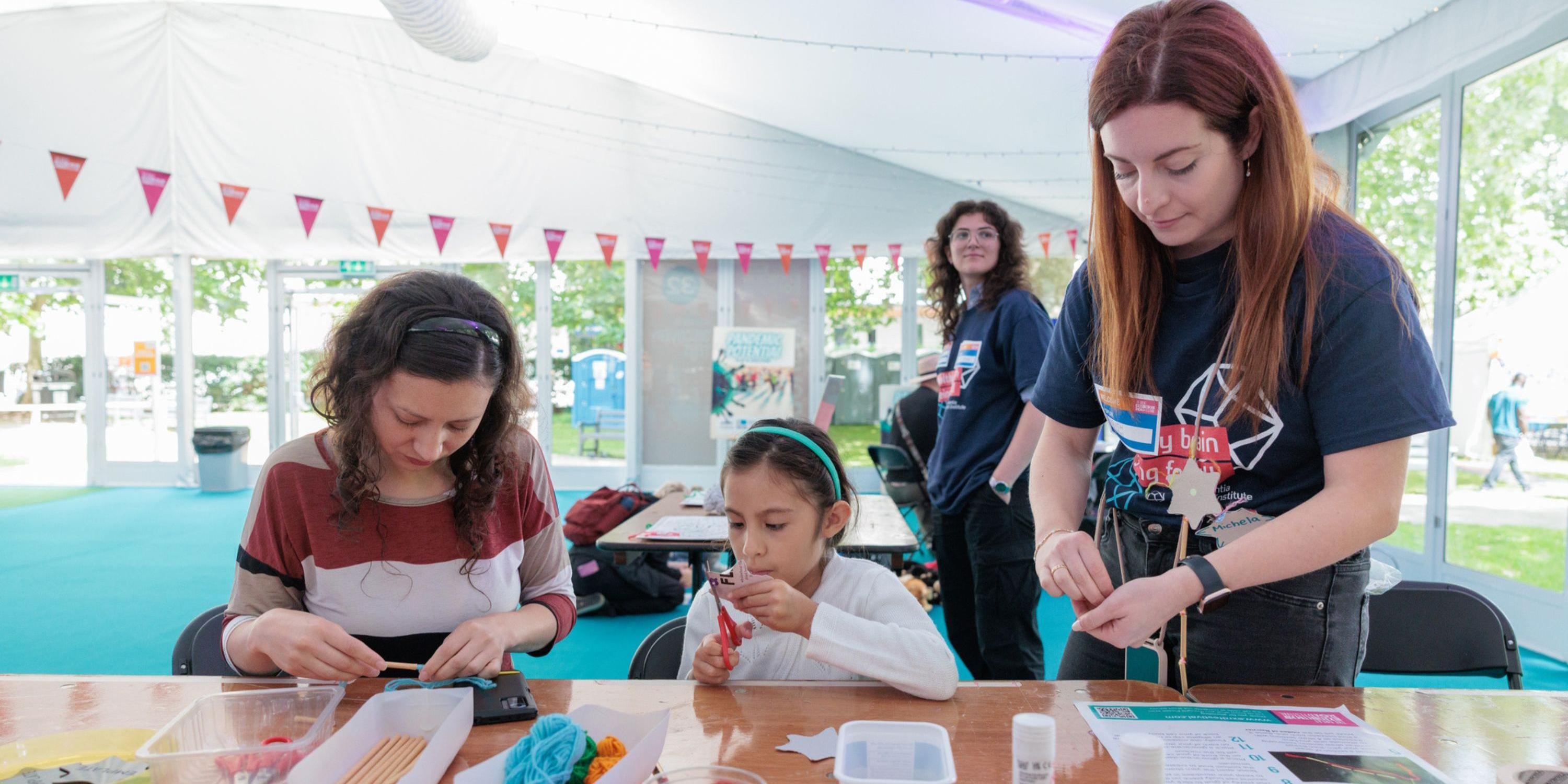
Families, especially those with young children, took part in a hands-on workshop where they built their own wearable neurons while learning about the structure and function of nerve cells. The finished creations featured UV-reactive stickers that glowed under blacklight, helping to visualise how neurons transmit signals.
In another activity inspired by real lab techniques, participants used UV torches to explore a “black box” model of the brain, searching for fluorescent neurons hidden inside, just like scientists do when studying the brain under a microscope.
Read more about the Barnes lab's work investigating neural-circuit plasticity in neurodegeneration.
Stall led by Anastasia Ilina and Cecilia Rodriguez (Sandor lab)
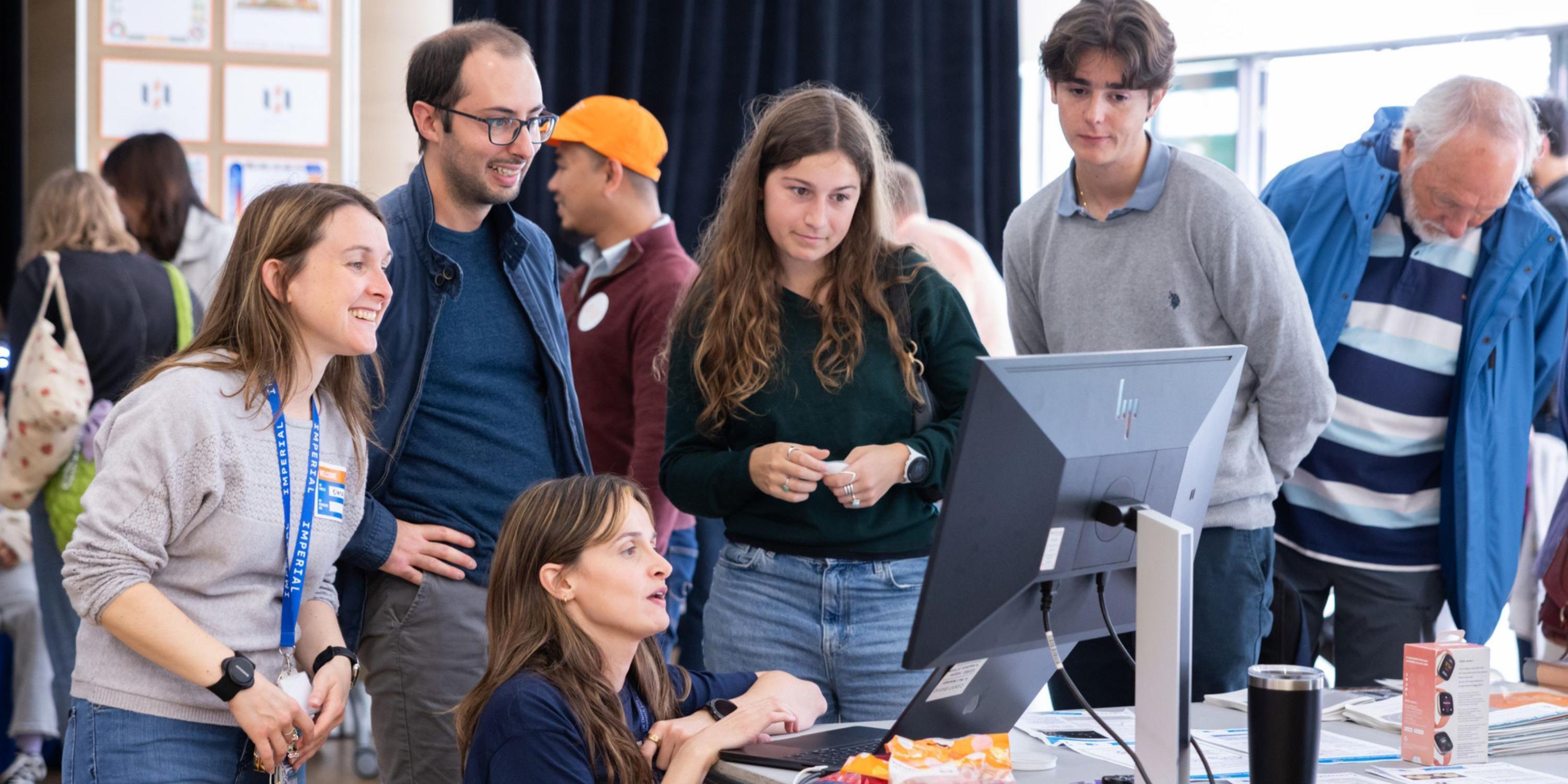
This stall was dedicated to Parkinson’s disease, how it affects the brain, and how research is helping to improve diagnosis and treatment. With brain models and plush neurons, visitors explored areas most affected by the disease and its progression, from early chemical changes and dopamine loss to disrupted brain circuits and symptoms. Having learnt more about the devastating impact of this disease, the team shared the latest advances in treatment, such as deep brain stimulation, and introduced their work using wearable devices to monitor movement and detect early Parkinson's symptoms.
Next, visitors got hands-on to discover how the wearables record and analyse activity, taking part in a challenge to match movement data to specific actions. A group of medical students joined to add another sensory twist with smell tests, revealing how loss of smell can be an early warning sign of Parkinson’s and inviting participants to join a live hyposmia study.
Read more about the Sandor lab's research into digital biomarkers for Parkinson's disease.
The festival in photos



(c) David Guttridge

