
Course details
- Duration: 10/15 days
- Dates: 20 - 31 July 2026 or 20 July - 7 August 2026
- Fees: Two week programme £2,950
Three week programme £3,950 - Contact us
Explore the cutting-edge science and technologies driving the transformation of industrial production towards greater efficiency and sustainability
The AI & Autonomous Industrial Systems Summer School offers a unique opportunity to delve into the transformative role of artificial intelligence and machine learning in advancing industrial systems toward autonomy, efficiency, and sustainability. In an era defined by rapid technological advancements, understanding the core principles of data-driven decision-making and intelligent system design is essential for tackling the challenges of modern industrial processes.
The remarkable progress in AI and machine learning over the past decades has fundamentally reshaped industries, from manufacturing and energy systems to healthcare and transportation. With growing demands for efficiency, resilience, and environmental responsibility, the integration of intelligent systems into industrial processes is no longer a vision of the future—it is a necessity.
This summer school programme has been meticulously designed to align with the cutting-edge research and educational expertise of the Autonomous Industrial Systems Lab (AISL) at Imperial College London. The programme will equip participants with the foundational skills and hands-on experience required to address real-world industrial challenges through intelligent, data-driven approaches.
This intensive two-week programme is open to undergraduate and early postgraduate students across a range of disciplines who are keen to explore the science and technologies underpinning autonomous systems. Participants will gain exposure to the fundamentals of AI and machine learning, engage with real-world industrial problems, and collaborate on projects that simulate the challenges faced by today’s industries.
The optional add on third and final week is presented by the Department of Chemical Engineering. On the final day of the course participants will celebrate their Finale dinner together with attendees on the Carbon Capture Theory and Pilot Plant Operation course.
Topics covered include:
Introduction to Statistics and Linear Algebra: Building the mathematical foundation for data science and machine learning.
Machine Learning Fundamentals: Exploring the key concepts and techniques that drive AI applications.
Optimization Fundamentals: Understanding the role of optimization in decision-making and intelligent system design.
Supervised and Unsupervised Learning: Applying models to tasks such as prediction, classification, and clustering.
Active Learning: Advanced topics in Bayesian Optimization and Reinforcement Learning for decision-making under uncertainty.
Project-Based Learning: Participants will apply their knowledge through engaging, hands-on projects
More information
- Programme structures & format
- Learning Objectives
- Team learning through group projects on industry relevant applications
- Session Descriptions
- Teaching Faculty
- Cutting Edge Industrial AI Research
- Visit to the Imperial College London Carbon Capture Pilot Plant
- Entry requirements
- Certification
60 contact hours spread over 2 weeks covering lectures, workshops, tutorials, project work, social activities and relevant visit. Classes will be delivered on weekdays.
Students will be allocated in small groups for Project work which will be done through team-based learning with supervision. Final project will be presented in groups to a panel of experts on the last day of the programme. A prize will be awarded to the team with the best project.
The entire programme will be taught in English.
On completion of this summer school, students will be able to understand, define and place in the wider context:
- Grasp the fundamental concepts of statistics, linear algebra, and machine learning as they apply to industrial systems.
- Define and address optimization problems in real-world scenarios.
- Understand and apply key machine learning techniques, including supervised and unsupervised learning.
- Explore advanced AI topics, such as Bayesian Optimization and Reinforcement Learning, for decision-making under uncertainty.
- Develop data visualization and presentation skills, communicating findings to expert panels.
- Collaborate effectively within a team to address complex, multidisciplinary challenges.
In addition, students will have an opportunity to make new friends, get to know student ambassadors from Imperial College London through social activities and discuss opportunities for future study and experience what it is like to study in a world class university.
Participants will apply the foundational knowledge gained during the summer school to real-world scenarios through a series of carefully designed, hands-on projects. These projects provide an opportunity to bridge theory and practice, empowering students to tackle industrial challenges using state-of-the-art AI and machine learning techniques. The projects focus on three key areas, each reflecting a critical aspect of modern industrial systems:
Image Recognition-Based Anomaly Detection:
Participants will explore how machine learning models can be employed to detect irregularities in visual data, a crucial capability in manufacturing for quality control, assembly line monitoring, and packaging inspection. Through this project, students will:
- Work with image datasets to identify patterns and classify anomalies.
- Learn to preprocess, augment, and analyse image data for model training.
- Understand the importance of anomaly detection in ensuring operational safety, reducing downtime, and improving system reliability.
Time Series Forecasting:
This project emphasizes the development of predictive models to anticipate trends and patterns in industrial operations. Time series data is ubiquitous in industrial systems, capturing critical information such as equipment performance, energy usage, and production rates. Students will:
- Apply statistical and machine learning methods to forecast future values based on historical data.
- Address challenges such as noise and process disturbances in datasets.
- Discuss the implications of accurate forecasting for proactive maintenance, resource planning, and energy optimization.
Reinforcement Learning:
Participants will dive into the world of reinforcement learning, designing intelligent agents capable of making optimal decisions in dynamic and complex environments. Reinforcement learning has transformative potential in areas like process control, robotics, and supply chain optimization. In this project, students will:
- Define reward functions and explore how agents learn to maximize performance.
- Experiment with training models in simulated environments to achieve desired outcomes.
- Understand the role of reinforcement learning in autonomous system design, enabling adaptability and resilience in uncertain conditions.
Days 1 to 5: Foundations and Skill Development
Each day will include lectures, interactive discussions, and practical sessions to ensure participants develop a comprehensive understanding of key topics.
Day 1: Foundations of AI and Machine Learning
Introduction to statistics and linear algebra as the mathematical foundation of AI.
Day 2: Optimisation and Machine Learning
What is optimization? Key concepts and applications in industrial systems. Solving optimisation problems.
Day 3: Supervised Learning
Concepts and models. Introduction to neural networks. Applications: Dynamic modelling of industrial systems.
Day 4: Unsupervised Learning
Principal component analysis and dimensionality reduction techniques. Clustering methods Applications: Anomaly detection and pattern recognition.
Day 5: Active Learning
Bayesian Optimization: Using probabilistic models for decision-making under uncertainty. Reinforcement Learning: Training agents to learn policies through interaction with the environment.
Days 6 to 10: Project-Based Learning
Day 6
Students will form groups based on their interests and begin project work, selecting from themes such as image recognition-based anomaly detection, time series forecasting, or reinforcement learning.
Days 7 to 9
Teams will focus on developing solutions, incorporating a hands-on component that utilizes experimental apparatus or actual industrial data to ensure practical relevance. Throughout these days, teaching assistants will supervise the students, providing guidance, answering questions, and assisting with technical challenges as needed.
Day 10
The programme culminates with project presentations to a panel of experts, where teams will showcase their findings, methodologies, and insights, receiving feedback and recognition for their efforts.
Optional Week 3: Project based learning - Part 2
Day 11: Review of previous 2 weeks
Discussion on uses of AI in real life engineering work.
Guest speaker from industry presents use of AI in their organisation and sets project using real life issues: divide into groups to solve new project, building on previous week.
Day 12: Project working/solving
Day 13: Day visit to Bletchley Park, Britain’s wartime codebreaking and intelligence gathering centre. Coach journey and entrance fees paid for.
Day 14: Project resolution from Day 11.
Day 15: Final day. Farewell Dinner: presentations, certificates, souvenirs, goodbyes
The programme will be taught by a multi-disciplinary teaching team from the Department of Chemical Engineering of Imperial College London.
Dr Anto nio Del Rio Chanona, Head of the Optimisation and Machine Learning for Process Systems Engineering Group.
Dr Antonio Del Rio Chanona is a faculty member at Imperial College London Department of Chemical Engineering. He is also associated with the Sargent Centre for Process Systems Engineering.

Dr Mehmet Mercangöz, Director of the ABB Autonomous Industrial Systems Lab
Dr Mehmet Mercangöz is a faculty member at Imperial College London Department of Chemical Engineering. He is also associated with the Sargent Centre for Process Systems Engineering.
The ABB Autonomous Industrial Systems Lab (AISL) brings together Imperial’s expertise in process modelling, optimisation, and artificial intelligence to redefine how industrial systems operate—advancing toward safer, more reliable, and more sustainable production processes. AISL provides a focal point for innovation, serving as a catalyst for addressing some of the most pressing challenges facing industries today. Supported by ABB, a global engineering leader in automation and electrification, the Lab develops intelligent systems that operate with minimal human intervention, aligned with global sustainability goals and industrial transformation.
Industrial systems are at the heart of modern society, but they face critical challenges, including rising energy demands, the need to reduce greenhouse gas emissions, and increasing operational complexity. The Lab’s mission is to develop and deploy intelligent, autonomous systems guided by cutting-edge science and technology—a hallmark of Imperial College London. Key areas of focus include machine learning integration with model predictive control, real-time optimisation, and zero-emission process technologies.
The OptiML PSE Group focuses on developing advanced optimisation and machine learning algorithms for solving general systems engineering problems, while also applying state-of-the-art techniques to current challenges in process engineering. The group has made significant contributions to areas such as data-driven optimisation, reinforcement learning, and Bayesian optimisation. These methods are applied across a range of domains including supply chain optimisation, bioprocesses, fluid dynamics, photonic mirror design, and superstructure optimisation. The group bridges theoretical innovation with practical application, advancing the frontiers of process systems engineering in both academia and industry.
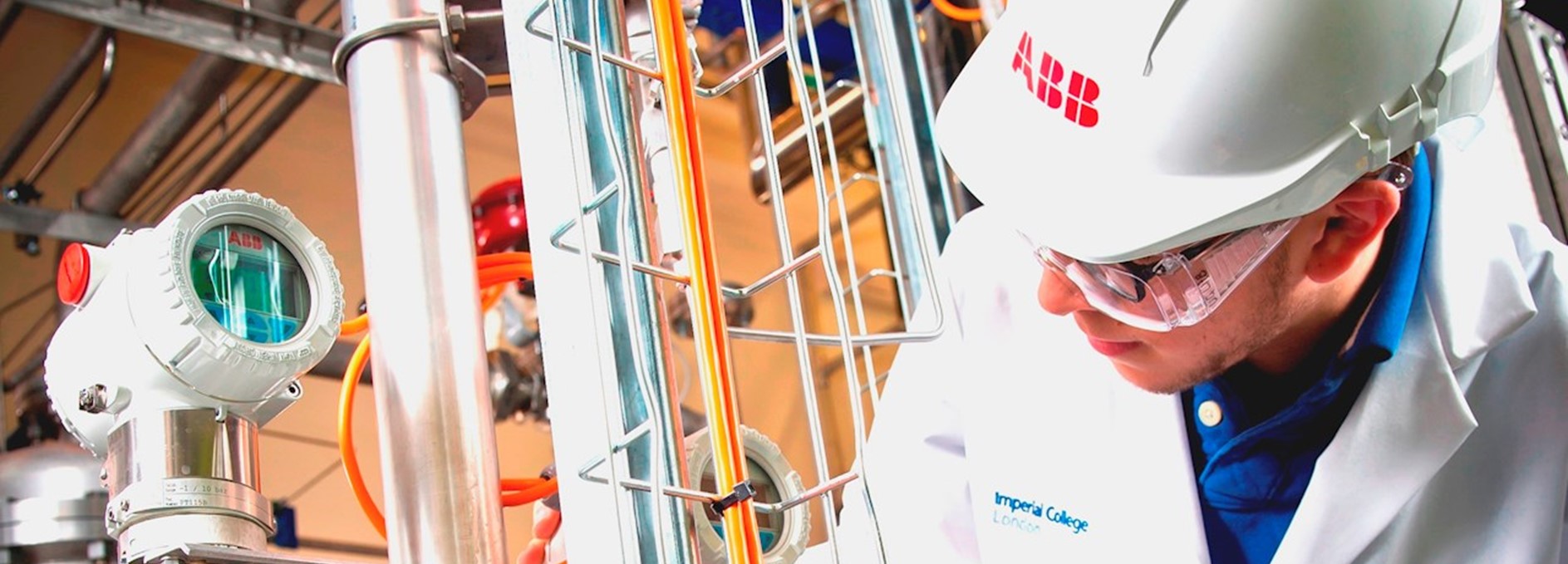 As part of this summer school, students will have a unique opportunity to visit the state-of-the-art carbon capture pilot plant at Imperial College London’s Department of Chemical Engineering. The pilot plant visit offers a real-world glimpse into how intelligent systems are transforming industries to address pressing challenges such as reducing carbon emissions and achieving net-zero targets. It’s a chance to see first-hand how theoretical principles translate into practical solutions with a significant global impact.
Student expectation :
- Studying an undergraduate degree in years two or three within one of the following subjects:
- Engineering
- Chemistry
- Physics
- Proficiency with Python programming is a prerequisite.
- Applicants must be at least 18 years old before the start of the summer school.
- All students are required to have a good command of English, and if it is not their first language, they will need to satisfy the College requirement as follows:
- a minimum score of IELTS (Academic Test) 6.5 overall (with no less than 6.0 in any element) or equivalent.
- TOEFL (iBT) 92 overall (minimum 20 in all elements)
- Students will be asked to bring along a laptop computer for project work.
Students will receive a Imperial College London certificate of attendance on successful completion of this programme and a prize will be awarded to the best project team.
Each student will also receive a document for their project marks.