
From AI to Sustainable Smart Cities and Natural Environments.
Course details
- Duration: 10 days
- Dates: 20 - 31 July 2026
- Fees: £2,950
- Contact us
Discover the science and cutting-edge technologies that underpin global security and resilience.
This immersive Summer School is your opportunity to explore the cutting-edge research and real-world challenges at the heart of global security and resilience. Designed by Imperial’s Centre for Active Resilience & Security (CARS), the programme blends science, engineering, social science, and innovation to address pressing global issues—from cyber threats and climate risks to smart cities and space security.
Through a mix of interactive lectures, hands-on workshops, team projects, and discussions with leading experts, you’ll build the skills and knowledge needed to tackle tomorrow’s most urgent challenges. You’ll also develop core transferable skills valued across industry, government, and academia, boosting your future career prospects.
More than just war and conflict, security today is about building resilience across every part of society. You’ll learn how the five threat vectors: cyber, physical, environmental, biological and social intersect and compound, and how new technologies—from AI to sensors—can be both risks and solutions, and how human behaviour plays a critical role in making systems safer and stronger.
Who is this summer school programme for?
This Summer School is open to undergraduate students from all disciplines who are curious about global challenges and motivated to make an impact. Whether your background is in science, engineering, social sciences, or humanities, you’ll gain an interdisciplinary perspective on security and resilience that connects directly to real-world issues.
Highlights include:
- Cybersecurity and cyber-physical systems
- Chemical, Biological, Radiological, Nuclear and Explosives (CBRNE) challenges
- Machine Learning and AI in security
- Behavioural security science
- Smart cities, transport and infrastructure
- Space and environmental security
By the end of the programme, you’ll have expanded your global outlook, sharpened your problem-solving skills, and collaborated on a group project tackling a real security or resilience challenge—preparing you to play your part in shaping a safer, more sustainable future.
More information
- Programme structures & format
- What You'll Experience
- Team learning through scenario-based group project
- Session descriptions
- Leadership Team and Teaching Faculty
- The Centre for Active Resilience and Security (CARS)
- Entry requirements
- Certification
60 contact hours spread over two weeks covering lectures, workshops, tutorials, project work, social activities and relevant visits. Classes will be delivered on weekdays.
Students will be placed in small groups for project work which will be undertaken through team-based learning with supervision. A final project will be presented in groups to a panel of experts on the last day of the programme. A prize will be awarded to the team with the highest-scoring project.
The entire programme will be taught in English.
Over two intensive weeks, the programme combines academic teaching, practical exercises, and experiential learning, including demonstrations and site visits.
- Week 1 introduces the foundations of security and resilience, alongside a scenario-based group project. Working in teams, you will tackle a systems-engineering challenge: designing a security and resilience architecture for Connected and Autonomous Vehicles (CAVs) with a focus on situational awareness technologies and operational transport networks. This project will help you apply your knowledge in practice while developing essential skills in teamwork, project management, and communication.
- Week 2 takes a deeper dive into emerging and disruptive technologies and their interplay with security and resilience. You will explore CBRNE threats (chemical, biological, radiological, nuclear, and explosives) and their mitigation, as well as the social dimensions of security, including human cognition and behaviour. You will then apply these insights to challenges faced by smart and sustainable cities.
The programme concludes with a forward-looking discussion on global security challenges, including those linked to the UN Sustainable Development Goals. You will present your group project outcomes to an esteemed judging panel, gaining feedback and showcasing your skills in a professional setting.
Students will work in small teams on a scenario-based project that mirrors real-world security challenges. Each group will be presented with a specific security threat or risk and will be expected to analyse and understand:
- How and why the threat or activity occurs
- The controls and resilience measures that were in place
- How the situation was managed or contained
- The failures, oversights, and lessons learned
- Effective mitigation strategies for the future
- The broader societal impact of the incident
Guided throughout by Imperial academics, students will develop their analysis collaboratively and present their findings to a panel of experts on the final day of the programme.
Led by academic, technical, and professional staff from the Centre for Active Resilience & Security (CARS) and its partners, this course offers a unique opportunity to explore the full spectrum of modern security challenges — cyber, physical, environmental, natural, and social — and to understand the vital role of science and technology in addressing them.
From organisations and critical infrastructure to cities, nations, and global systems, the demand for security and resilience expertise has never been greater. This programme will equip you with the knowledge and skills to meet that demand, preparing you for future roles across industry, government, academia, and society at large.
You will examine how emerging and disruptive technologies both create risks and enable solutions, while studying threats to critical national infrastructure such as transport, energy, and healthcare. Alongside the technical dimensions, you will also gain insight into the human and social aspects of security, including ethics, cognition, and behaviour.
Leadership Team: The Summer School Co-Directors are Professor Washington Yotto ochieng, Professor Mireille Elhajj and Dr Bill Proud.
Pro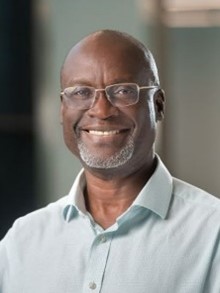 fessor Washington Yotto Ochieng CBE, EBS, CEng, FREng
Professor Washington Yotto Ochieng is the Director of the Centre for Active Resilience and Security (CARS) and lectures on the Master of Science (MSc) Programme in Security and Resilience. He is also the Head of the Department of Civil and Environmental Engineering and Chair in Positioning and Navigation Systems at Imperial College London. His research interests cover positioning, navigation and timing systems; infrastructure security and resilience; and trans-modal mobility and transport systems.

Professor Mireille Elhajj, PhD, FRIN
Professor Mireille Elhajj is a Visiting Professor at Imperial College London, and Founder and CEO of Astra-Terra Limited, a consultancy based in London specialising in smart cities and mobility solutions; positioning, navigation, and timing (PNT) systems design and applications; security and resilience and Earth Observation. Professor Elhajj lectures on the Master of Science (MSc) Programme in Security and Resilience. She is a Fellow of the Royal Institute of Navigation.
 Dr William Proud
Dr Bill Proud is Reader in Shock Physics at the Department of Physics. His main research interest is in high strain rate properties of a wide range of materials, both inert and energetic. Bill is the Academic Course Director for the Master of Science Programme in Security and Resilience.
Teaching Faculty: In addition to Professor Ochieng, Professor Elhajj and Dr Proud, the programme will be taught by a multi-disciplinary teaching faculty from the Centre for Active Resilience and Security, other departments of Imperial College London and Astra-Terra Limited.
CARS is a major Imperial College London initiative that brings together Imperial’s existing relevant activities and expertise to to build a more secure and resilient society, working together to address the increasingly occurring and intersecting threats in cyber, biological, environmental, physical and social domains.
Individuals, organisations and nations experience insecurity in diverse ways, ranging from scarcity of water, nutrition and natural resources through to economic hardship, political instability, health crises and exposure to hostile threats from criminals, terrorists and nation states. Our goal is to understand and solve these complex, interrelated global challenges through the development and application of world-leading science and technology; a hallmark of Imperial College London.
As our societies and infrastructures become ever more interconnected, slow formulaic security reactions will need to give way to predictive analysis, agility and continual learning. In an imperfect socio-technical world, we believe that science and technology guided by the values of inclusivity, stability, peace and equity for all, as described by the UN Sustainable Development Goals, is the best way to strive for global security and that these values are worth defending.
As humanity extends its presence beyond the surface of the planet, moves towards the birth of true artificial intelligence and harnesses the quantum scale, we are committed to working with the best minds from academia, industry and government who share our view that science and technology can deliver a more secure and resilient world for everyone.
Applicants should:
- Be studying an undergraduate degree and preferably in the final two years in:
-
- Any subject discipline
- Be at least 18 years old before the start of the summer school.
- Have a good command of English, and if it is not their first language, they will need to satisfy Imperial's requirement as follows:
- a minimum score of IELTS (Academic Test) 6.5 overall (with no less than 6.0 in any element) or equivalent.
- TOEFL (iBT) 92 overall (minimum 20 in all elements)
- Provide their own laptop for project work
Students will receive an Imperial College London certificate of attendance on successful completion of this programme. Each student will also receive a document with their project mark.