Course Details

  • Duration:  10 days
  • Dates: 20 - 31 July 2026
  • Fees: £2,950
  • Contact us
Apply Now

Build your skillset for a career in sustainable biotech innovation, and future-ready food systems.

Food is at the heart of some of the greatest challenges of our time: climate change, health, biodiversity loss, and global food security. The way we produce, process and consume protein is central to solving them.

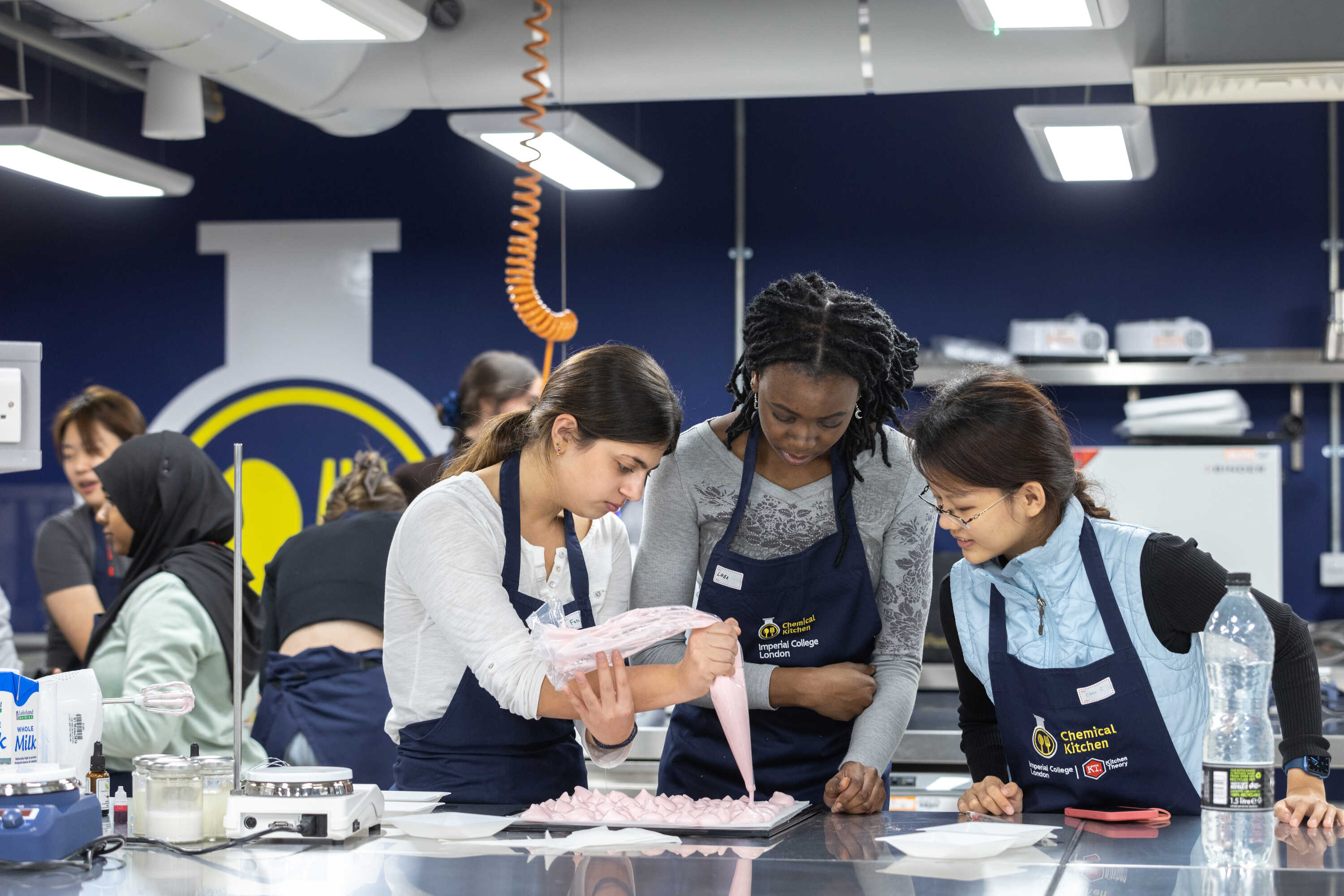
This Summer School explores sustainable proteins, alternative food systems, and the science behind future foods. Students will learn through a unique blend of bioengineering, chemistry, gastronomy, and hands-on experimentation in Imperial’s Chemical Kitchen, combined with lectures, workshops, and real-world case studies led by the Bezos Centre for Sustainable Protein.

Over two weeks, students will:

  • Work on team-based projects addressing real-world challenges in alternative proteins and food innovation.
  • Gain insights into the science, technology, and market forces shaping the food of tomorrow.
  • Experience the intersection of research, entrepreneurship, and gastronomy.
  • Develop practical lab, innovation and communication skills that will prepare them for careers in science, industry, and policy.

Bezos Centre for Sustainable Protein

The Bezos Centre for Sustainable Protein and the UKRI Microbial Food Hub, both based at Imperial College London, are at the forefront of transforming the future of food. Supported respectively by the Bezos Earth Fund and UK Research & Innovation, these flagship initiatives accelerate the discovery, development, and deployment of next-generation protein solutions to build healthier, more sustainable and resilient food systems.
Together, they bring world-class expertise in bioengineering, advanced fermentation, microbial food innovation, and food systems research, while connecting science with society through industry collaboration, entrepreneurship, and education. Learn more about the Bezos Centre here.

The Chemical Kitchen

A distinctive feature of this Summer School is the integration of The Chemical Kitchen (Department of Chemistry), Imperial’s award-winning teaching laboratory focused on evidence-based teaching and learning innovation, that utilises the transdisciplinary parallels between professional gastronomy and STEMMB subjects. This unique setting enables students to explore the science of food through hands-on, sensory experiences alongside cutting-edge research and innovation. You can learn more about the Chemical Kitchen here.

More Information

Target audience and approach to teaching

This programme is designed for undergraduates (in any STEMMB discipline) who are:

  • Curious about the future of food and nutrition.
  • Considering careers in biotechnology, food science, sustainability, entrepreneurship, or policy.
  • Interested in how science and innovation can deliver healthier, more sustainable, and more resilient food systems.
Sample Topics:
  • The science and engineering of sustainable proteins (plant-based, fermentation-based, cell-cultivated).
  • Food systems innovation: how to scale sustainable solutions globally.
  • Gastronomy & consumer insights: food experience, taste and acceptance.
  • Future-proofing nutrition: addressing health and climate challenges.
  • Entrepreneurship and commercialisation in food biotech.
  • Policy, safety, and regulation of next-generation foods.
Team learning, in-class exercises and a scenario-based group project:

Students will learn through interactive lectures, in-class exercises, and a scenario-based group project designed to mirror real-world challenges in sustainable food systems. Working in small, interdisciplinary teams, participants will explore how science, innovation, and creativity can help tackle issues such as sustainable protein production, resource use, and food resilience.

In the second week, an invited guest from the food industry or research community will introduce a live challenge based on a real situation or emerging opportunity. Teams will be asked to develop a response that:

  • Explores and defines the food system challenge
  • Proposes imaginative and practical solutions
  • Uses sound research and data analysis
  • Presents key findings clearly using visuals and evidence,
  • Tells a compelling story that connects science and impact, and
  • Shares realistic recommendations for action

Throughout the project, teams will be guided by Imperial academics and external mentors. The programme concludes with a group presentation to a panel of experts, where students will share their ideas and outcomes on how to build a more sustainable, equitable, and innovative food future.

Learning objectives

On completion of this summer school, students will be able to:

  • Understand the science and innovation landscape of sustainable proteins.
  • Be able to apply critical thinking and problem-solving to real-world food challenges.
  • Gain hands-on experience in lab and gastronomy settings.
  • Develop skills in data analysis, storytelling, and pitching solutions.
  • Experience team-based learning and international collaboration.
  • Be inspired to pursue careers or further study in this fast-growing field.
Programme Structure and Format

60 contact hours spread over two weeks covering lectures, in-class exercises, workshops, project work, social activities and relevant visits.  Classes will be delivered on weekdays.

Students will be allocated to small groups for in-class exercise work which will be delivered through team-based learning with supervision. The final project will be presented in teams to a panel of experts on the last day of the programme. A prize will be awarded to the team with the best project.

The entire programme will be taught in English.

  • Combination of lectures, workshops, lab-based activities, gastronomy sessions, and group projects.
  • Supervision from leading academics in Bioengineering, Chemistry, and Food Systems.
  • Guest lectures from industry, start-ups, and policy leaders in alternative proteins.
  • Final team project presentation to a panel of academic and industry experts.
Session Description
Introduction to the global food challenge

This foundational session moves beyond headlines to unpack the complex, interconnected challenges facing our global food system. We will analyse the drivers of the crisis, from climate change and biodiversity loss to nutritional security, and establish why protein innovation is a critical lever for change. Students will get a comprehensive overview of the three pillars of alternative proteins: plant-based, fermentation-derived, and cell-cultivated foods, mapping their scientific foundations and potential planetary impact.

Microbial Food Innovation

Delve into the powerhouse of microbial food production. Guided by experts from the UKRI Microbial Food Hub, students will explore the science of biomass and precision fermentation. This session covers everything from strain development and metabolic engineering to the design of bioreactors, learning how microorganisms can be programmed to create a vast range of sustainable, high-value proteins and ingredients.

From Science to Scale: Translating Innovation

An idea is not a business. This session provides a candid look at the "lab-to-market" pathway, focusing on the real-world hurdles of scaling a food tech venture. Using case studies from successful start-ups and corporate innovators, we will cover technology de-risking, building a compelling business case, navigating the investment landscape, and the critical importance of strategic industry partnerships.

Structured Approaches to Food System Challenges

Move from complex problems to actionable solutions. This workshop introduces students to systems thinking, stakeholder mapping, and other structured problem-solving frameworks used by top strategy consultants. In teams, students will learn to dissect multi-faceted challenges, synthesise complex research, and propose robust solutions that balance environmental, social, and economic trade-offs.

Future Careers in Food and Biotech

Discover the diverse and rapidly growing career opportunities in the sustainable food sector. This session provides a roadmap of potential pathways, from R&D Scientist and Bioprocess Engineer to Product Manager, Venture Capital Analyst, and Policy Advisor. We will discuss the essential skills employers are looking for and how students can strategically position themselves for leadership roles in this dynamic global field.

Introduction of the Industry Challenge

At the start of week two, an external partner from industry will set a live challenge related to sustainable proteins or food system transformation. Students will work in teams to develop solutions, guided by feedback and supervision from academic and industry mentors.

Sustainability Deep Dive: Measuring Real Impact

How do we know if a new food is truly "better" for the planet? This session introduces the core principles of Life Cycle Analysis (LCA), the scientific method for quantifying environmental impact from farm to fork. Students will learn how to critically evaluate sustainability claims and understand the key metrics, from carbon footprint to water and land use, that define a genuinely sustainable product.

Exploring Protein Innovation in the Lab and the Kitchen

This is where science meets the senses. In the state-of-the-art Chemical Kitchen, students will get hands-on experience in product formulation. The session goes beyond recipes to explore the scientific principles of food chemistry and molecular gastronomy. You will learn how to deconstruct flavour, engineer texture, and understand the art and science of creating delicious and desirable food prototypes.

Data Analysis and Communicating Insights

Great ideas need compelling data. This practical workshop equips students with the skills to analyse and interpret scientific, market, and consumer data. You will learn techniques for market sizing, trend analysis, and, crucially, how to use visual storytelling to weave data into a clear, persuasive, and memorable narrative for any audience.

Professional Presentation and Tasting Showcase

The programme culminates in team presentations to a panel of academic and external experts. Students will pitch their solutions to the industry challenge, supported by data-driven insights and, where relevant, food prototypes developed in the Chemical Kitchen. This final showcase tests their ability to communicate science and innovation with clarity and impact.    

Entry Requirements

All students are expected to be studying an undergraduate degree, preferably in the final two years of their undergraduate studies, in any STEMMB subject discipline.

English requirements:

All students are required to have a good command of English, and if it is not their first language, they will need to satisfy the College requirement as follows:

  • A minimum score of IELTS (Academic Test) 6.5 overall (with no less than 6.0 in any element) or equivalent.
  • TOEFL (iBT) 92 overall (minimum 20 in all elements)

Students will be asked to bring along their computer for project work.

Teaching Faculty

The summer school is directed by:

Professor Rodrigo Ledesma-Amaro Professor in Engineering Biology, Director of the Bezos Centre for Sustainable Protein and the UKRI Microbial Food Hub

Professor Ledesma-Amaro is an expert in microbial food and synthetic biology, leading one of the largest precision fermentation laboratories in Europe. His research focuses on developing microbial systems to produce valuable compounds, such as food ingredients, from renewable sources, driving innovation in sustainable bioproduction and biotechnology.

He will be joined by colleagues from the Department of Bioengineering, whose expertise spans systems biology, bioprocess engineering, microbial physiology, and sustainable food innovation. Together, the teaching team brings a wealth of experience in translating cutting-edge science into real-world applications, offering students a unique insight into the future of food and biotechnology.


Dr Jakub Radzikowski, Culinary Education Designer (Senior Teaching Fellow), Department of Chemistry.

Dr Radzikowski combines a PhD in Molecular Biology with culinary training from Le Cordon Bleu and experience in Michelin-starred restaurants. He first leveraged this hybrid expertise at Imperial College London to co-create the Chemical Kitchen project, an innovative educational program teaching science and technology skills through gastronomy. His work has since scaled to focus on radical industrial innovation; as Chief Science Officer at Kaikaku.ai, he applies AI, robotics, and automation to the food sector, while simultaneously leading the Gastronomy Impact Unit at the Bezos Centre for Sustainable Protein.

The programme will be led by the Bezos Centre for Sustainable Protein (Department of Bioengineering) and The Chemical Kitchen (Department of Chemistry), with contributions from:

  • Leading Imperial College London academics.
  • Industry partners (biotech start-ups, global food companies, investors).
  • Policy, safety and regulatory experts.
Certification

Students will receive a Imperial College London certificate of attendance on successful completion of this programme and a prize will be awarded to the best project team.

Each student will also receive a document for their project marks.