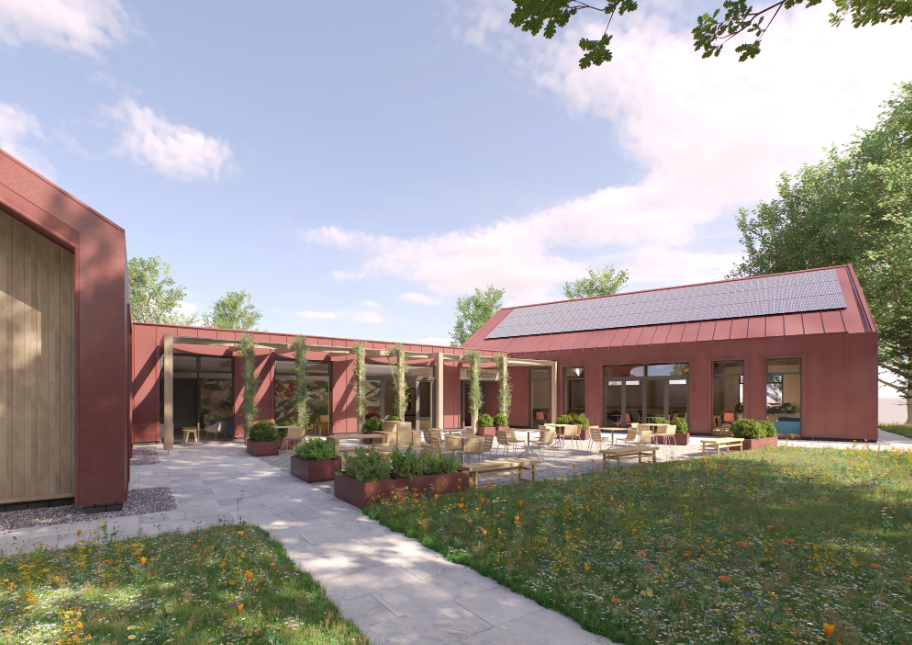
In March 2026, final approval was given for a purpose-built community hub at Imperial’s Silwood Park campus. The project will deliver a transformational, timber frame building that becomes a focal point for campus life. It will provide a place to eat, meet, study and relax, all under one roof.
Why we’re replacing the current refectory
The current refectory buildings date back to the early 1940s, originally built as a sergeants’ mess during the Second World War. Despite periodic adaptations, the buildings have reached the limits of what refurbishment can achieve. Spread across several single-storey structures, the current buildings are physically segregated and built from modest materials, including a patchwork of brick and timberclad elements with PVC windows and doors. These no longer meet modern expectations for durability or comfort.
Ongoing maintenance issues have also been a significant problem. Persistent leaks, damp, ageing plumbing and minimal insulation make the buildings hard to heat, uncomfortable in winter and inefficient to run. Many windows and doors are ill-fitting, and the servery is undersized for current and future demand. Accessibility is also constrained by narrow corridors, stepped thresholds and a lack of inclusive amenities.
Replacing this collection of buildings with a single, modern facility allows these issues to be resolved and enables the campus to be better supported in the long term. Additionally, it provides the Silwood community with a far better and more enjoyable quality of facility.
What the new hub will offer
The existing buildings will be demolished and replaced with one integrated community hub designed to serve Silwood Park for years to come. The new purpose-built space will include a modern dining area and bar, along with more room for activities and dedicated student spaces, improving how students work, study, and spend time on campus.
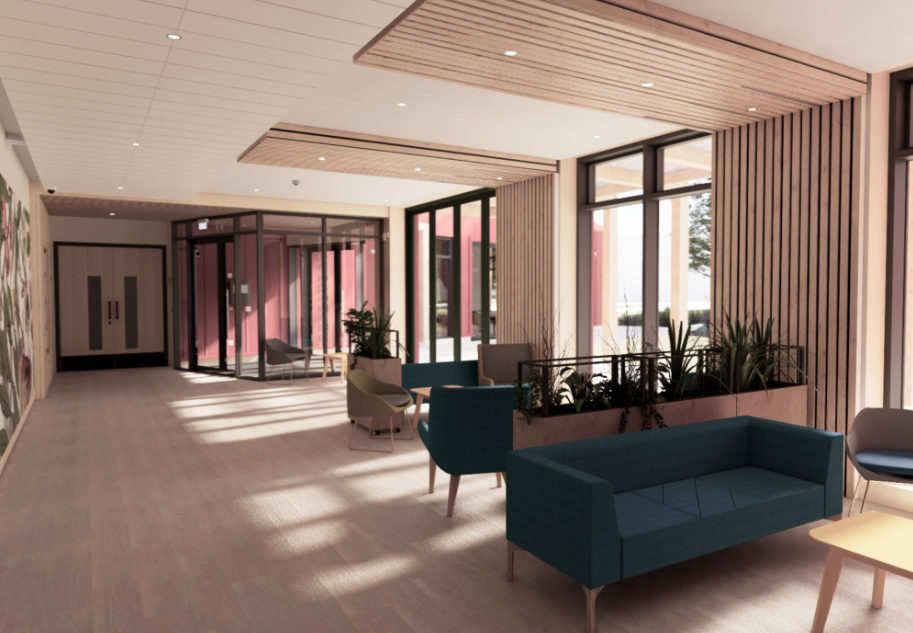
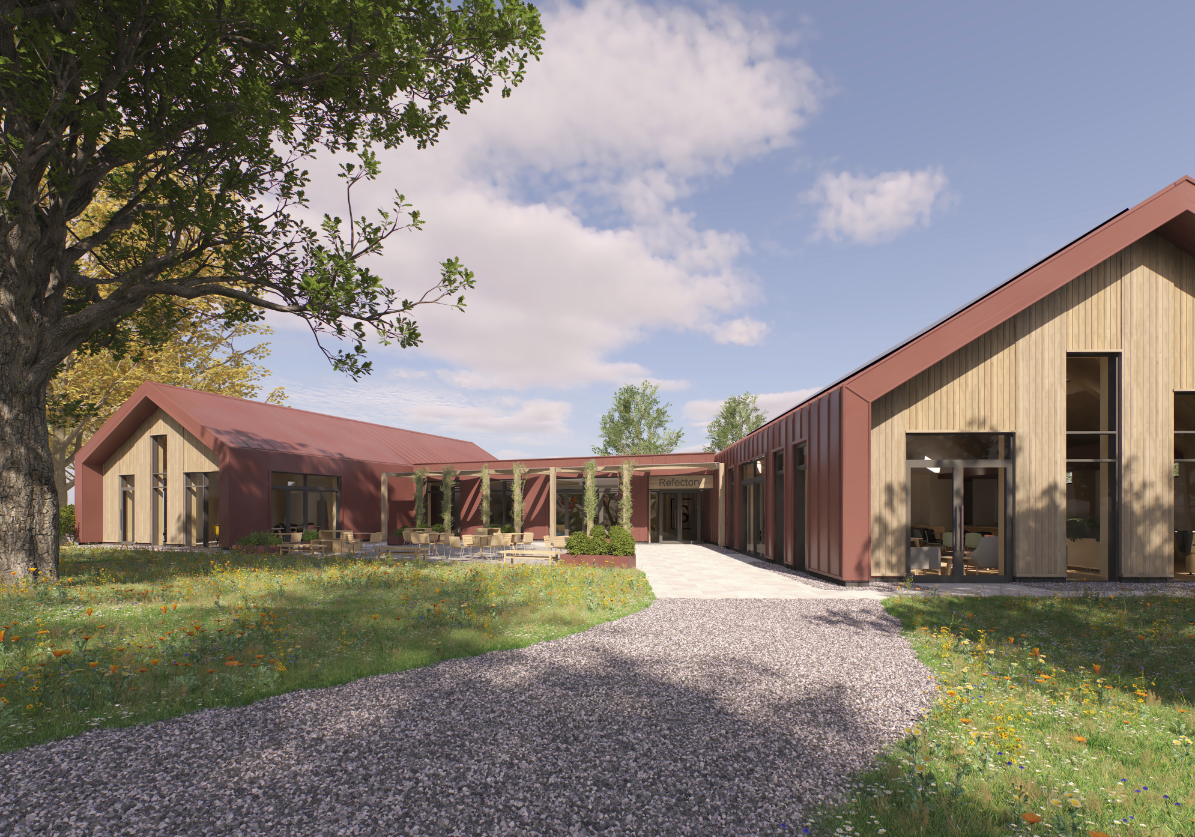
At its heart is a generous central entrance space that doubles as a breakout area for informal study, meetings and social time. From here, two adaptable wings arranged around a shared courtyard accommodate the primary uses.
Key design features:
- A new servery and bar will improve food and drink options, whilst bespoke dining and social areas create more opportunities for socialising and fostering strong campus connections
- Accessible and inclusive, designed to meet current accessibility standards throughout
- Operationally efficient, with back-of-house functions planned so the building works seamlessly from day one
- The timber frame building fits within its setting, with numerous large windows that bring light into the internal rooms and frame views of the surrounding landscape
- Materials that complement Silwood, using a carefully considered palette of red-toned metal cladding and timber that draws on the Manor House and wider context, balancing robustness with warmth
- Celebrating identity, with a feature wall highlighting Silwood Park’s global research impact and rooting the building in campus life
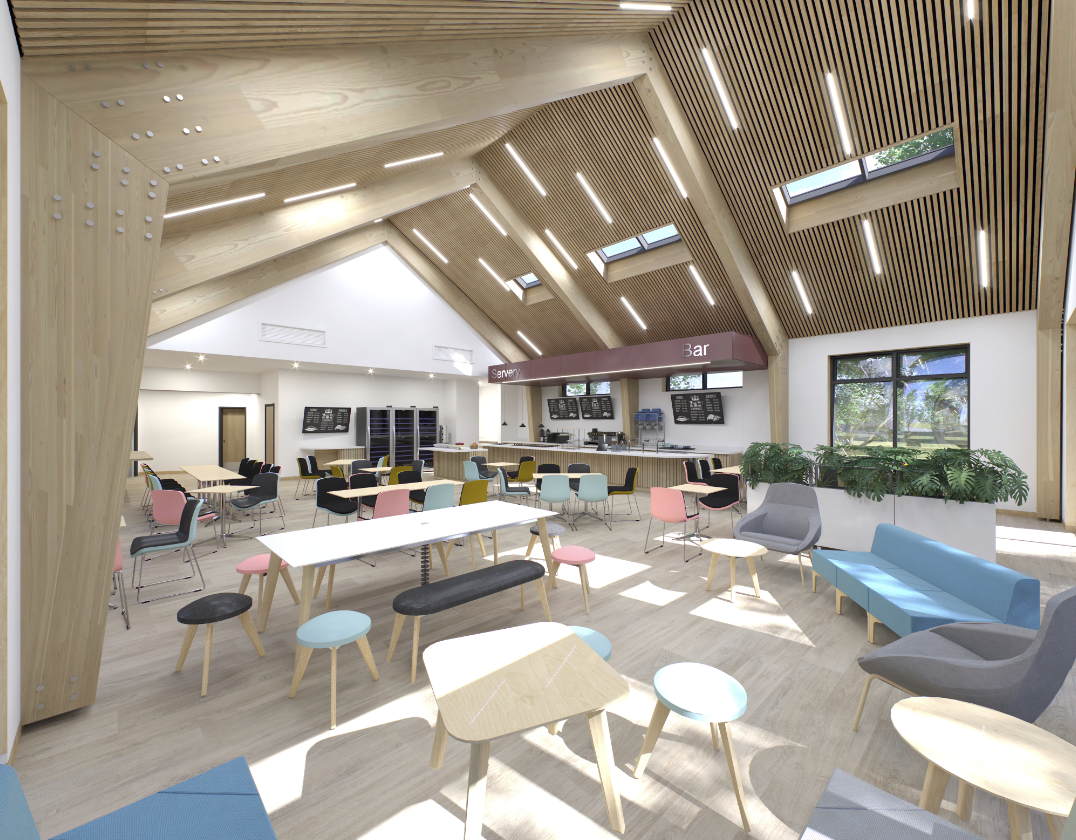
Functionally, the Hub will provide a far expanded food and drink offering and include both café and bar service.
Together, these elements create a contemporary yet grounded building, fully equipped to play a central role in Silwood life.
Sustainability at the core
Sustainability has shaped the project from the outset. The building is being developed in line with BREEAM ‘Excellent’ principles and is designed to operate at net zero carbon to align with Imperial’s overarching Sustainability strategy.
Key sustainability features:
- Lower embodied carbon, achieved through a timber frame structure that offers a significant reduction compared to a steel framed alternative
- Efficient all electric services, including air source heat pumps and roof-mounted solar panels
- A target of at least 80% of construction waste to be recycled, reused or recovered
- Water and ecology measures, aiming to reduce potable water use by up to 40% and deliver a minimum 10% biodiversity net gain in the courtyard and surrounding area
Project timeline overview
The programme has been planned to keep the community informed and disruption to a minimum.
- 2024–2025: Design development and stakeholder engagement, with the full planning application submitted in summer 2025
- February 2026: Enabling works on site, including vegetation clearance
- March 2026: Official project funding approval
- April 2026: Demolition surveys to be conducted
- May 2026: Main construction expected to start
- Summer 2027: Construction targeted to complete, followed by commissioning and final preparations
- Academic Year 2027/28: The new community hub is expected to open
Updates will be shared at key stages as the project progresses.
Frequently asked questions
- Why is the existing refectory being redeveloped?
- What will replace the existing buildings?
- Will the new building be accessible?
- What construction impacts should we expect?
- Will there be alternative food and drink during construction?
- How is sustainability being addressed?
- What do we mean by carbon net zero in use?
- How has the community been involved?
- Is Silwood Community Hub the name?
- Where can I find out more about Silwood Park Campus?
- Who should I contact with questions or concerns about this project?
A new integrated community hub bringing together dining, social, study and activity spaces under one roof. The building will be flexible and welcoming throughout the day and evening.
Yes. The design meets current accessibility standards, including step free access and accessible toilet provision.
Yes. The project team has been working closely with Taste Imperial to ensure suitable and convenient food and drink provision will be available throughout the construction period. Details will be confirmed and communicated directly to the Silwood community shortly.
The building is designed to be carbon net zero in use and developed to BREEAM ‘Excellent’ principles. Timber construction reduces embodied carbon, while low carbon technologies like solar power and air source heat pumps and water efficiency are built into the design.
Carbon net zero in use (operational net zero) refers to buildings with zero or negative annual carbon emissions from energy consumption.
Silwood Community Hub is the running name of this project, but will not be the final name of the structure. This is a project which has involved the Silwood community from the start, and we are looking into how best to involve the community in the branding of the structure.
Please reach out to Monika Kojak, Capital Projects Programme Manager.
Email: m.kojak@imperial.ac.uk