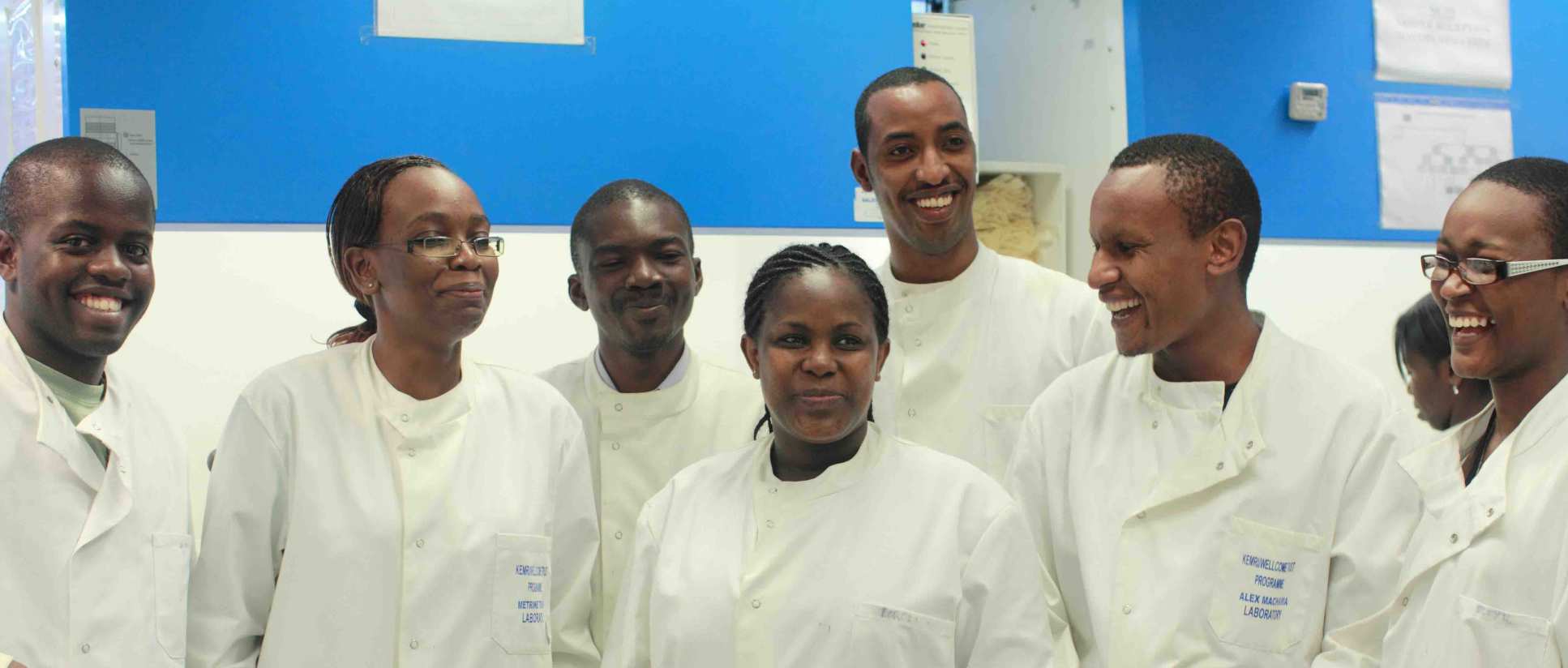
 Imperial’s extensive research portfolio encompasses the whole cycle of malaria transmission from the mosquito to the bedside of the critically sick child in Africa with the life-threatening infection and how human genetic adaptation has evolved to protect against this disease. Our regional links with ministries of health and international engagement underpin research translation into policy and practice.
Severe malaria
- Epidemiology and public health
- Human genetic resistance to malaria
- Imperial College Network of Excellence in Malaria
- Mosquitoes/Entomology
- Severe malaria
Despite encouraging declines in disease over the past decade, malaria remains a leading cause of morbidity and mortality worldwide. The Malaria Modelling Group’s research takes a biological approach to constructing models to understand the transmission dynamics of malaria better both within the human and vector hosts and between hosts. From a public health perspective, they are using these models to consider how interventions can be optimally combined to reduce transmission and ultimately to lead to local elimination.
Malaria has been the strongest of all known evolutionary forces on the human genome in recent history. The intense pressure of malaria-specific mortality has led to the selection of a vast number of resistance genes of which the best documented are those that affect the red blood cell – the primary target of the parasite life-cycle in humans. Classic examples include the sickle cell trait, the thalassaemias and the red blood group antigen systems. The main focus of Professor Tom Williams' work over the last 20 years has been to identify the genes involved, describe the ways in which they affect the risk of human malaria, and to try to understand their mechanisms of action. He collaborates extensively in this work with networks that include MalariaGEN and INDEPTH.
The Imperial Centre of Excellence in Malaria is an interdisciplinary network of researchers at Imperial College London, united in the common aim of malaria eradication. The Centre has a unique capacity to combine Insight, Innovation and Impact to achieve this aim: new scientific insights from studying malaria at every scale from molecules to populations; new technological innovations to develop the diagnostic tools and treatments we need to achieve our goal; and expertise in translation science, modelling and assessment to evaluate potential and actual impact. The Centre brings together scientists working across the Imperial College Faculties of Natural Sciences, Engineering, Medicine and the Business School, together with a global network of research, industry and field partners including many in disease-endemic countries.
Read more about the Centre here.
Blagborough lab
If we are to contemplate control or elimination of malaria we must attack Plasmodium directly on two fronts; we must reduce the impact of disease upon the infected individual, and at the population level we must lessen the number of new infections. To reduce new infections, potentially the most efficient point to attack the parasite is during its transmission through the mosquito vector, a process that in the field, commonly results in infection of fewer than five parasites per mosquito. It is now unquestionable that transmission of Plasmodium to the mosquito is reduced by transmission-blocking drugs (e.g. mefloquine, primaquine, ACTs and atovaquone); and by transmission-blocking vaccines, targeting parasite stages that establish infection within the mosquito (e.g. gametocytes, gametes, zygotes and ookinetes).
Dr Andrew Blagborough's research team's activities involve performing internationally recognised research on the sexual stages of the Plasmodium parasite, with emphasis on gamete/ookinete cell biology and the assessment and blockade of transmission in the lab and field. Our primary interests focus on three individual but complementary and overlapping streams:
- The identification and characterisation of novel anti-malarial transmission-blocking vaccine (TBV) targets;
- Effective delivery of these vaccines to induce maximal efficacy;
- The development of biological models to examine transmission-blocking intervention (TBI) efficacy with enhanced field relevance.
Over the last 15 years, Professor Kath Maitland has been based full-time at the East Africa, where she leads a research group whose principal research portfolio includes severe malaria, bacterial sepsis and severe malnutrition in children and clinical trials in emergency care.
Her work has also contributed to the development of national and international guidelines. Her team conducted the largest trial of critically sick children ever undertaken in Africa (FEAST). This trial examined fluid resuscitation strategies in children with severe febrile illness. The trial demonstrated that fluid boluses increased mortality compared to no-bolus (control), with the most adverse outcome in children with the most severe forms of shock (NEJM 2011) and won the prestigious BMJ Research Paper of the Year award.
"A century of research has not produced a clear understanding of how malaria kills, or more importantly how to stop it killing – we are working to change this, right now."
The main focus of Professor Aubrey Cunnington's research is understanding how malaria causes life-threatening disease, and in finding new ways to save the lives of children with severe malaria. His research integrates data from patients, from experimental models, and from mathematical models, to identify causative biological mechanisms. His team places particular emphasis on using transcriptomics to understand differences in parasite behaviour and host response during different manifestations of severe malaria. They work in close collaboration with The MRC Gambia Unit, and other malaria researchers at Imperial College, London School of Hygiene and Tropical Medicine, and Yale University. Dr Cunnington's additional research interests include: finding new ways to prevent malaria; finding ways to prevent the susceptibility to bacterial infections which occurs as a consequence of malaria; and reducing susceptibility to infection in children with sickle cell disease.
--tojpeg_1460985163129_x4.jpg)
