Surface Plasmon Resonance
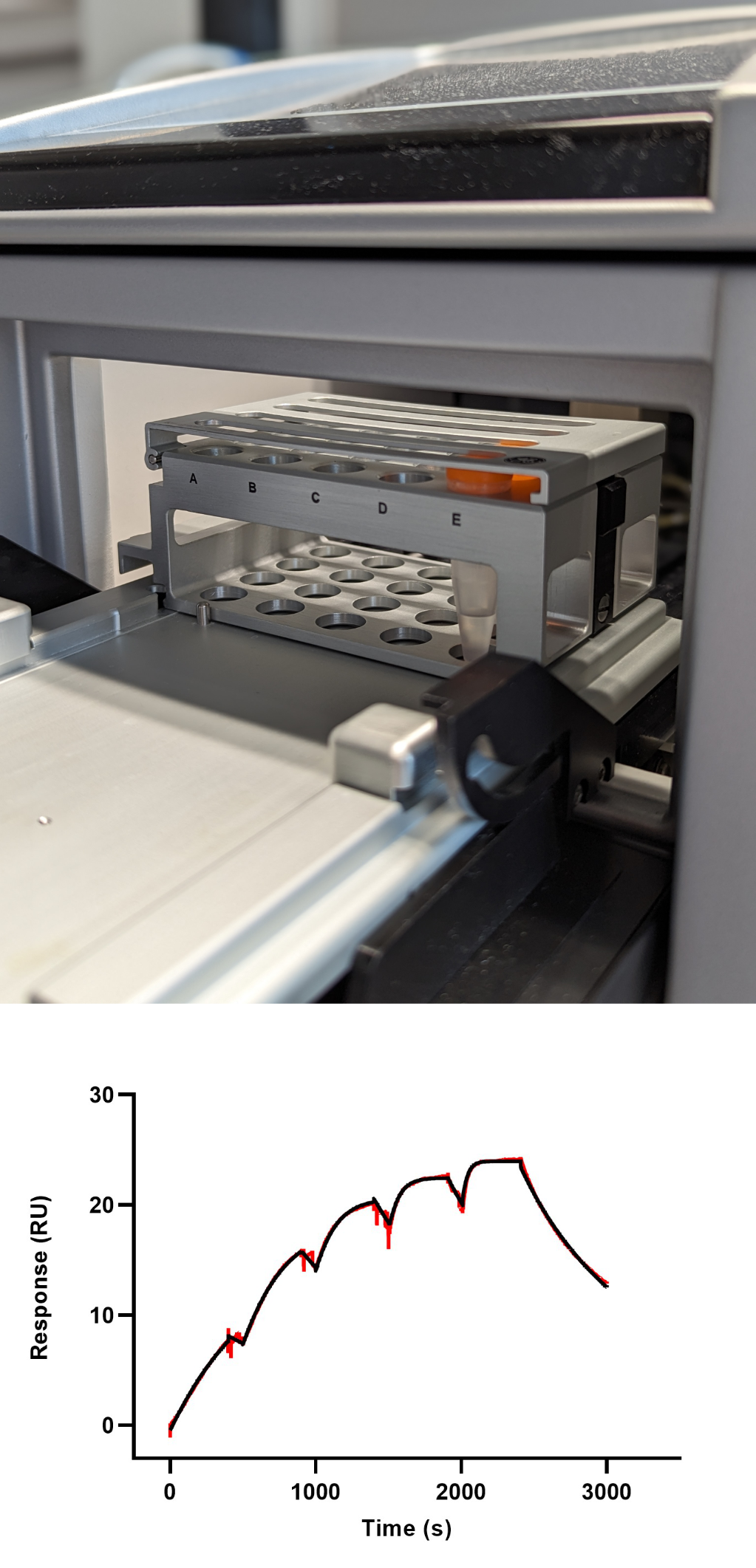 The Surface Plasmon Resonance facility at the Molecular Sciences Research Hub operates a Cytiva Biacore S200 that is available for booking for trained users to determine affinity and kinetics.
The Biacore S200 has a very sensitive SPR sensor which enables work with difficult to procure targets, such as low volume samples.
The Biacore S200 can also inject samples from 96 or 384 well plates facilitating fragment drug discovery.
How to access the SPR facility
Contact Dr Edward Bartlett e.bartlett@imperial.ac.uk for an induction to the SPR instrument (~1hr). Upon completion, PPMS booking access to the SPR will be granted.
Imperial College staff and students must be registered on the PPMS system to make a booking. Please use the link to create an account:
https://ppms.eu/imperial/login/?pf=6
Charges
The SPR facility costs £40 per hour for Imperial staff and students.
External users can contact Dr Edward Bartlett e.bartlett@imperial.ac.uk to discuss instrument availability and project costing.
Circular Dichroism (CD) Spectrometer
The Chemistry CD facility is located at B05 in the Molecular Sciences Research Hub (MSRH) in White City. It can measure the difference in absorbance of right- and left-circularly polarized light.
Contact: Oscar Sanderson o.sanderson@imperial.ac.uk
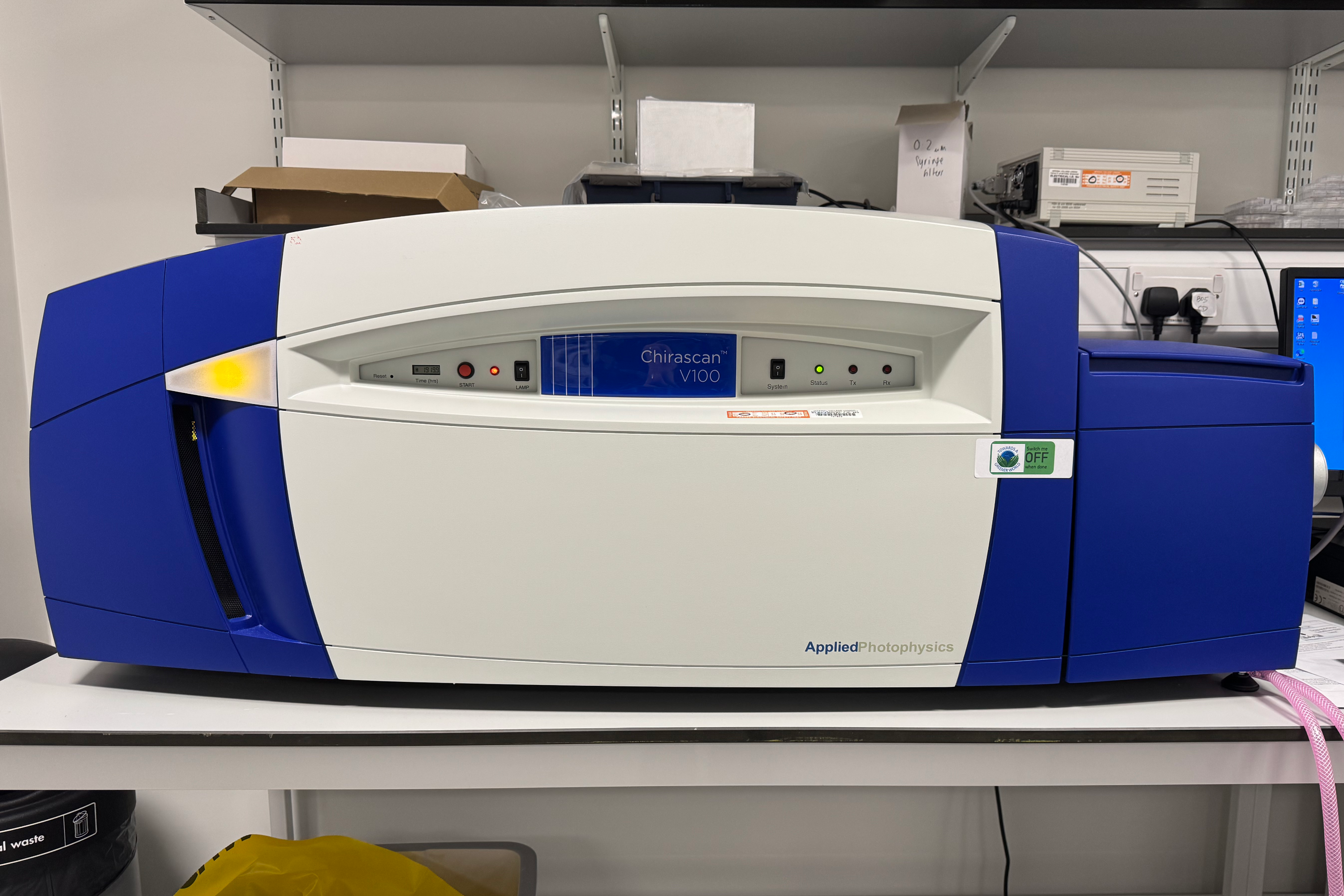
How to use the CD spectrometer Facility
(Imperial College Only)
In order to use the CD spectrometer facility you must be registered on the PPMS system. Registration may take up to 72 hours.
For training, there is a 'request for training' option available. Once requested, you will receive an email with a date and time for training, please confirm whether or not you can attend. Training courses take 1-2 hours and include a safety induction. Training open to MRes, PhD status and above.
Charges
Are available on PPMS when placing an order.
External samples are considered, please email, costing will be done on a case-by-case basis.
Work with us
We welcome requests from industry and academia to collaborate with us.
Air pollution simulation chamber
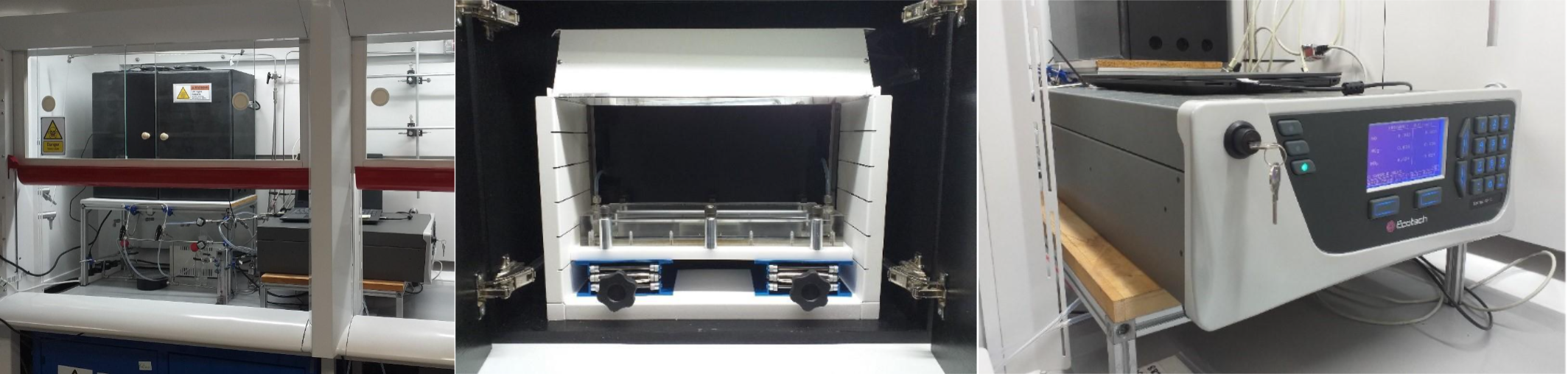 A purpose-built, state-of-the-art facility for examining the photocatalytic activity of materials towards nitrogen oxide gases. The facility is built in line with the specified ISO for examining photocatalytic materials (glass, tiles, concrete, filters) towards nitric oxide (NO) gas (22197-1:2016), with the additional capability of studying nitrogen dioxide (NO2). The conditions inside the testing chamber can be adjusted to simulate an outdoor environment, where the pollution level (10's of ppb up to 5 ppm), light source (UV, visible, UV+visible) and intensity (mW regime), humidity (0 to 100%) and wind speed (1 to 5 L/min flow rate) can all be controlled. Samples should be 5 x 10 cm in size, as specified by the ISO.
Protein Production
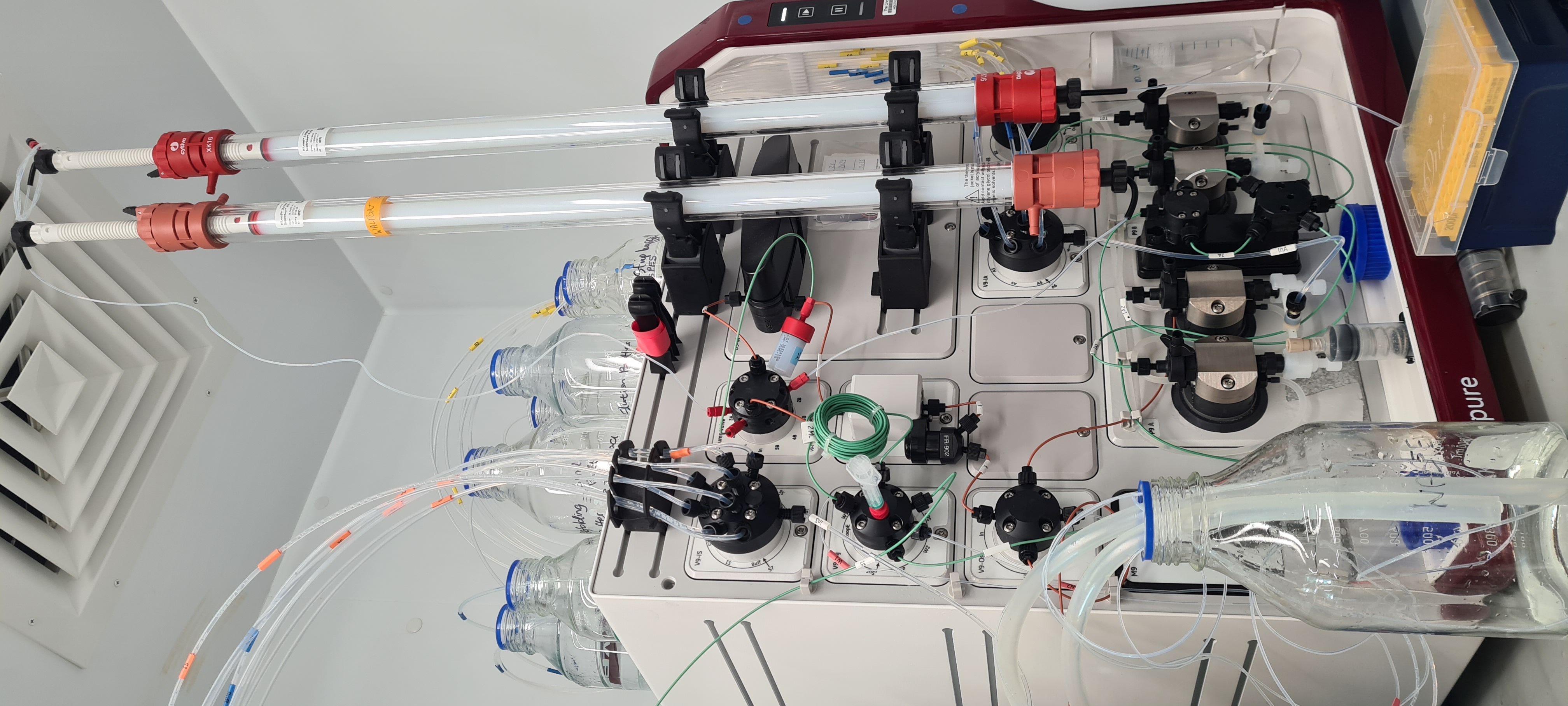 The protein production facility at the Molecular Sciences Research Hub enables the production of recombinant protein from different expression sources. It houses multiple variable temperature shaking incubators, a sterile hood, high speed centrifuge, cell disruptor and AKTA Pure system for protein purification. Each piece of equipment is booked separately for added flexibility.
How to access:
Contact Dr Anna Barnard (a.barnard@imperial.ac.uk) for details on training contacts for individual instruments. Upon completion, PPMS access will be granted and a PPMS account must be created by the user to enable booking.
The current charge is £0.70 per hour for Imperial staff and students.
External users can contact Dr Anna Barnard (a.barnard@imperial.ac.uk) for details on instrument availability and pricing.
Peptide Synthesis
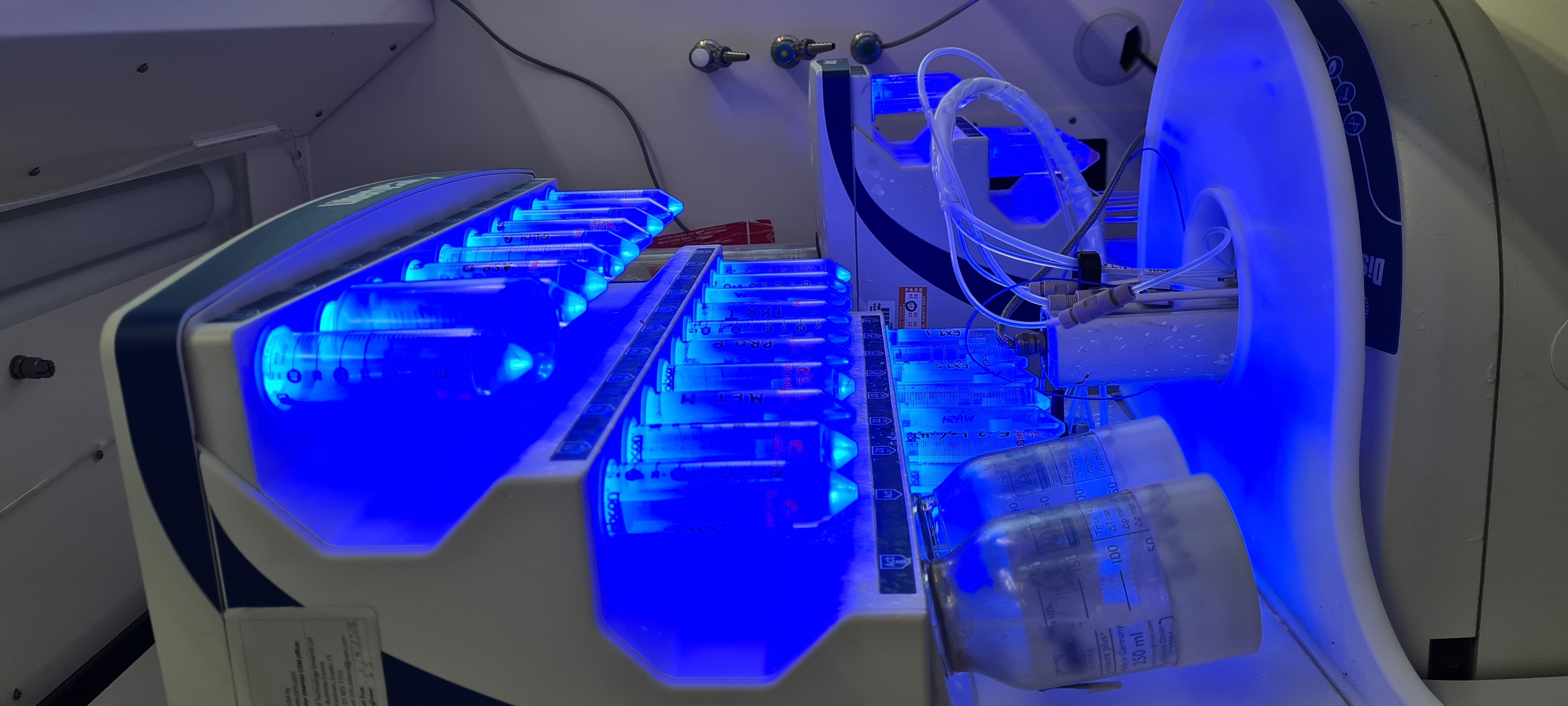 The peptide synthesis facility houses a state-of-the-art CEM Liberty Blue automated solid phase peptide synthesiser enabling the sequential synthesis of up to 12 peptides in a single run. We also have a multiplexed cleavage module enabling 12 sequences to be cleaved simultaneously. The facility also houses a Shimadzu Preparative HPLC for peptide purification and an Analytical HPLC with multiple wavelength detectors for fraction analysis enabling detection of fluorescent labels along with unlabelled peptides.
How to access:
Contact Dr Anna Barnard (a.barnard@imperial.ac.uk) for details on training contacts for individual instruments. Upon completion, PPMS access will be granted and a PPMS account must be created by the user to enable booking.
The current charge is £15 per hour for Imperial staff and students.
External users can contact Dr Anna Barnard (a.barnard@imperial.ac.uk) for details on instrument availability and pricing.
Work with us
We welcome requests from industry and academia to collaborate with us.