Participatory and live research success at The Great Exhibition Road Festival
by Sarah Webb

Imperial teams have shared their experiences of using participatory approaches and delivering live research at the Great Exhbition Road Festival 2025.
Forty teams took advantage of the Festival’s large, diverse and enthusiastic audience to find participants and collaborators. Case studies demonstrate a range of successful approaches, from co-creations with non-academic partners, to citizen science and audience involvement.
Designed to promote inclusive approaches to research, this year’s Festival featured the pilot of a new ‘Be a Scientist’ Zone, with activities incorporating public input into academic practice. Here, audiences were given the opportunity to design their own prosthetic, to feedback on health diagnostic tools, or explore interactions with sound in mixed reality spaces.
Angus Clark, Research Associate, Musculoskeletal Mechanics Group, Bioengineering, cited ease of recruitment as one benefit of participating in the new zone.
“Recruitment of children is particularly difficult for research and is an incredibly long and high-effort process. The Great Exhibition Road Festival gave us the opportunity to collect data at an unprecedented rate, speeding up interest in the research and recruitment significantly.”
For others, the opportunity to test out ideas was key. Rebecca Stewart, Associate Professor in Interactive Systems at the Dyson School of Design Engineering, said “The Festival gave us a lower-risk opportunity for testing out a study with a wider audience that we hope to take ‘on the road’ around the UK and Europe.”

Outside of the Be a Scientist Zone, teams across the Festival tried out participatory approaches, with many academics supported by the Public and Community Engagement team to engage visitors with their work. Whether utilising engagement seed funding or drawing on learning experiences from the Engagement Academy, Imperial staff were supported to simultaneously showcase and develop their research through public engagement at the Festival. Visitors were invited to become Citizen Scientists and conduct peer interviews into how they use and dispose of antibiotics (pictured below), or to co-design a dance with community partners (pictured above).
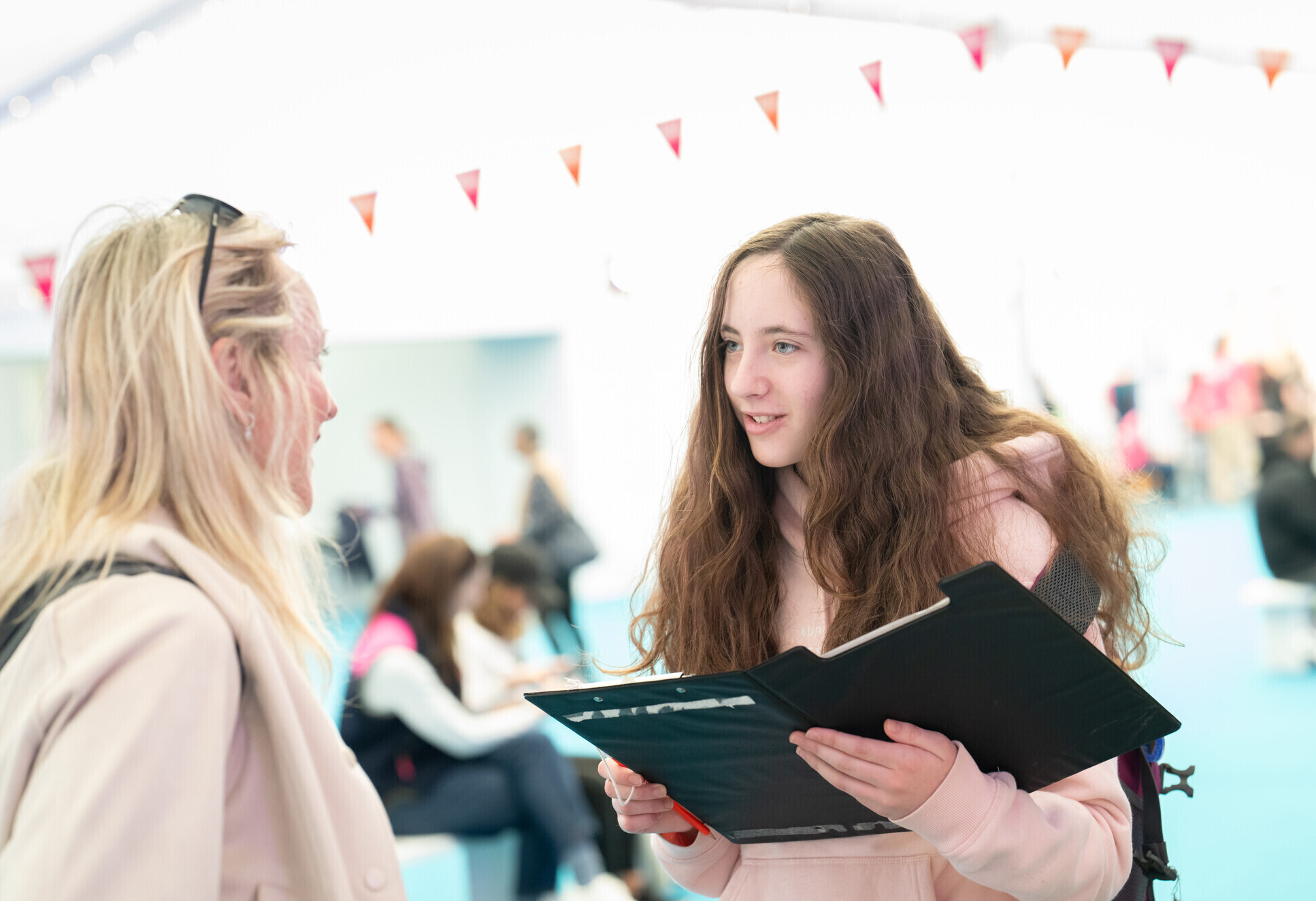
Public Engagement Participatory Research Lead Tom Morton said that the team wants to support a research culture that is participatory and inclusive of the diverse publics affected by Imperial research.
He said: “This year, we supported teams to use the Festival as a safe space to try out delivering live research as part of an engaging two-way dialogue that involves audiences as much more active participants, and uses their feedback to shape future research. This was an opportunity for teams to take steps towards participatory research and see the benefits of involving the public in their work.”
If you want to learn more about participatory approaches here at Imperial, and would like help or advice on how to incorporate them into your work, please get in touch with the Public and Community Engagement team.
Engaging audiences with research: participatory research highlights from the Great Exhibition Road Festival
Be a Scientist Zone
Healthy Movement Through Tech: Musculoskeletal Mechanics Laboratory
This team held two research activities. A ‘design your own prosthetic’ activity that aimed to gather public perceptions that could direct future research (consulting) alongside gathering skeletal measurements from attendees (data collection).
Easier Diagnostics and Smarter Healthcare: Health Tech Research Centre In Vitro Diagnostics
Having co-designed and co-delivered their activity with non-academic experts by experience, the team used live, guided explanations of digital tools to allow participants to directly experience applications designed for health diagnostics and support. Roundtable discussions were held with small groups to collaboratively explore ideas about usability, relevance, and impact.
Immersive Sound Lab: Dyson School of Design Engineering
The sound lab activity was co-designed and delivered with non-academic partners and aimed to gather data and feedback (data collection) from an augmented reality installation studying how humans localise and interact with sound in mixed reality spaces.
Across the Festival
ACE Citizen Science Project, Faculty of Medicine
This team asked Festival attendees to conduct peer-to-peer interviews with friends and family live at the Festival, collecting data to understand how people get antibiotics when they are needed, and how they dispose of them.
Health in Motion: Dance Party
Supported by the Participatory Research at the Great Exhibition Road Festival development fund, the team co-designed a dance flashmob with local community partners and young people based on dance for health and wellbeing.
Article text (excluding photos or graphics) © Imperial College London.
Photos and graphics subject to third party copyright used with permission or © Imperial College London.
Reporter
Sarah Webb
Office of the Provost
