
Science
by Jamie Taylor
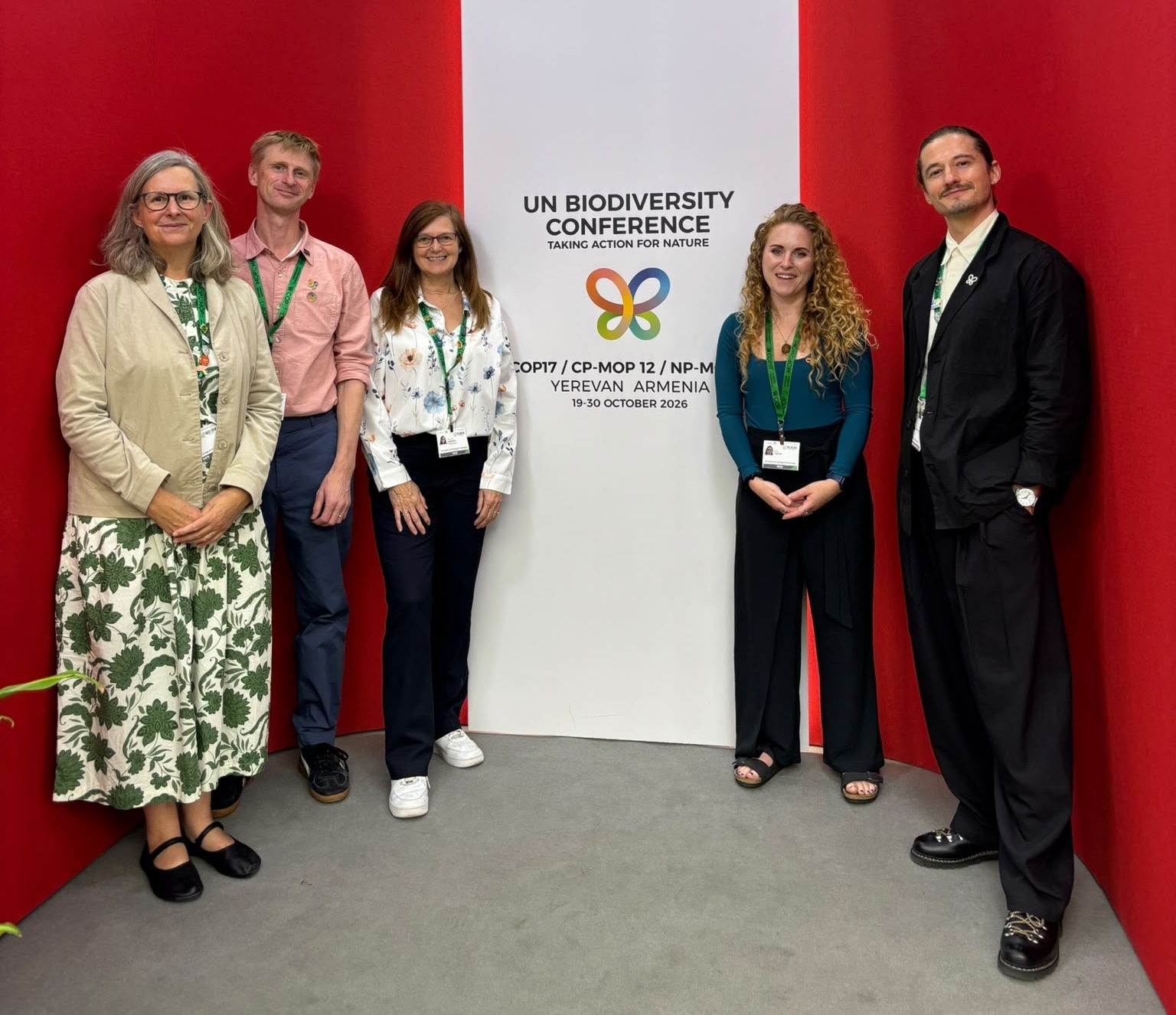
Over the last two weeks, countries have come together to decide how to protect the natural world at the UN Biodiversity Conference, COP17. Imperial College London sent a delegation to COP17 to share our collective expertise and understand more about the ways in which science can influence policy.
In Montreal in late 2022, governments agreed to an ambitious deal (the Kunming-Montreal Global Biodiversity Framework) to protect nature.
In October 2026, countries met again, in Yerevan, Armenia, to evaluate progress towards the goals and targets of the framework, including protecting 30% of land and sea for nature, reforming $500bn (£375bn) of environmentally damaging subsidies, and restoring 30% of the planet’s degraded ecosystems.
The State of Biodiversity Action report, published shortly before COP17, assessed the pledges and progress made by countries. It concluded that, while the deal has generated unprecedented momentum and significant progress has been made, the world is off track to meet the Framework's 23 targets by the 2030 deadline.
In response, countries at COP17 negotiated the Yerevan Pathway to get the world back on track. The pathway involves tackling nature-harmful subsidies, increasing financial support for developing countries, and strengthening implementation, monitoring, reporting and review mechanisms. 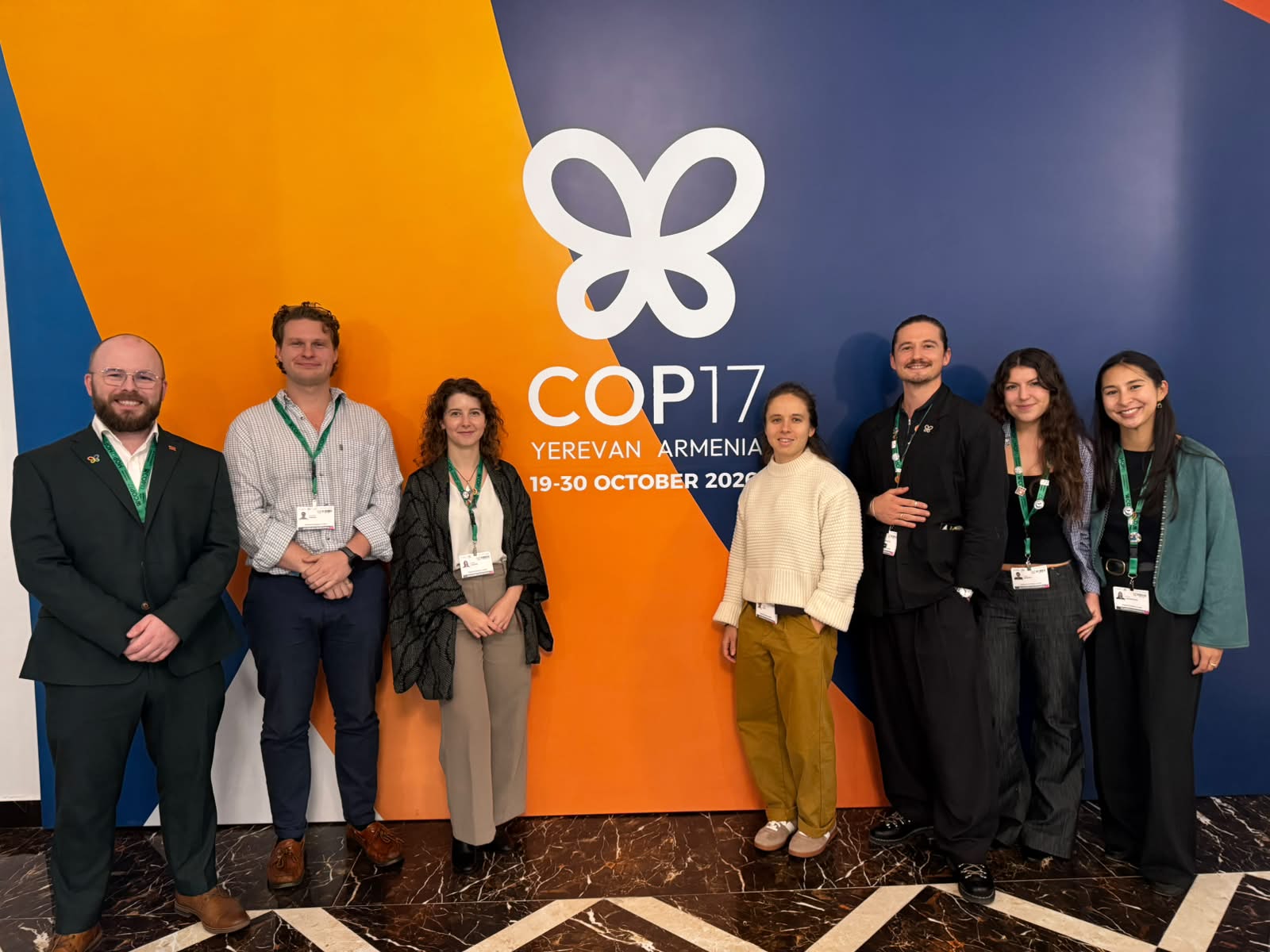
Imperial College London sent a delegation to COP17 to share our collective expertise and understand more about the ways in which science can influence policy. Here are their reflections.
Governments, philanthropists and investors announced around $1.8 billion in finance during the conference, far short of the “at least” $200bn per year by 2030 agreed in Montreal.
The Cali Fund, widely reported for receiving just $10,000 in commitments since its launch at COP16 in 2024, remains nearly empty. It was established so that private companies such as pharmaceuticals could pay local communities that protect and sustain their local habitats for Digital Sequencing Information (DSI), the genetic data derived from nature. Although a compromise text on DSI was agreed at COP17 to much relief, most details for discussion have been pushed back to COP18.
On biodiversity-harming subsidies, governments resisted making any further commitments but agreed to accelerate efforts towards reducing harmful incentives by at least $500 billion a year by 2030.
Countries also agreed on criteria to shape and resource a new, permanent financial mechanism to protect nature after 2030, with the decision on the mechanism’s institutional structure deferred to COP18.
Gail Sucharitakul, Research Postgraduate at the Centre for Environmental Policy and Grantham Institute PhD network member said:
“Finance for nature is scaling (slowly but surely), and we can (and should) finance nature in more ways than just using credits, which remain controversial and difficult to scale.
“We need to create the right enabling conditions to ensure that finance is redirected from nature-harmful activities to actions that support nature restoration and conservation, and importantly, this needs to be done using a human rights-based approach to ensure equity and justice.”
Read Gail’s full reflections on COP17 on her Substack.
At COP17, countries completed the first global review of their progress towards reversing nature loss by 2030, concluding that the world will miss this target without greatly accelerated action.
Despite unprecedented momentum for increasing synergies between biodiversity and climate action, including a strong decision on this topic at COP16 in Cali in 2024, negotiations remained fraught throughout COP17.
Ambitious language on the Advisory Opinion of the International Court of Justice on Obligations of States in respect of Climate Change was removed from the text in the final plenary, after firm objections from Russia and Saudi Arabia.
Audrey Wagner, PhD researcher at the Centre for Environmental Policy and Grantham Institute PhD network member, said:
“It will be crucial to watch what happens with the 'synergies' agenda at climate COP31 over the next couple of weeks, since we need all three Rio Conventions, especially the UNFCCC to send strong signals that enhancing synergies between Conventions is a priority in order for us to break down inefficient siloes and to tackle these interconnected crises together."
The conference made incremental progress on monitoring, with the final decision taking note of new indicators to improve biodiversity monitoring and accountability. COP17 also saw the creation of an ad hoc group to further operationalise its monitoring framework.
Rhys Preston-Allen, Research Postgraduate, Department for Life Sciences and Grantham Institute PhD network member said:
“The State of Biodiversity Action report found gaps in ambition and implementation. Target 2 shows why: the FAO restoration report counted 252 million hectares under restoration, but emphasised that the pace must roughly triple to meet targets, and that indicators must go beyond area alone to track progress.
“For COP18, the new monitoring expert group and the proposed World Biodiversity Research Programme are potential openings. This COP showed once again that researchers need to be more present, because evidence only counts if it is in the room.”
Jane Murphy, PhD Researcher in Ecosystems Science and Grantham Institute PhD network member, said:
“So much data, just get started!”, and “not enough data, proceed with caution” were two voices I heard echoed at this year’s COP. Proliferating eDNA, eco-acoustics, and remote-sensing technologies are generating data at unprecedented rates, so there is no longer much excuse for companies waiting to start monitoring their impacts and dependencies on nature.
“However, there is still much work to do. Harmonising different data streams is challenging, data gaps remain for some of the most biodiverse regions on Earth, and headline indicators are largely retrospective, rather than the predictive kind that can better inform policy.”
One of the fraught agenda items at COP17 was the one relating to the Intergovernmental Science-Policy Platform on Biodiversity and Ecosystem Services, commonly referred to as IPBES.
IPBES synthesises scientific evidence into assessments resulting in the best available science on particular topics, such as the nexus between biodiversity, climate, food, water and health.
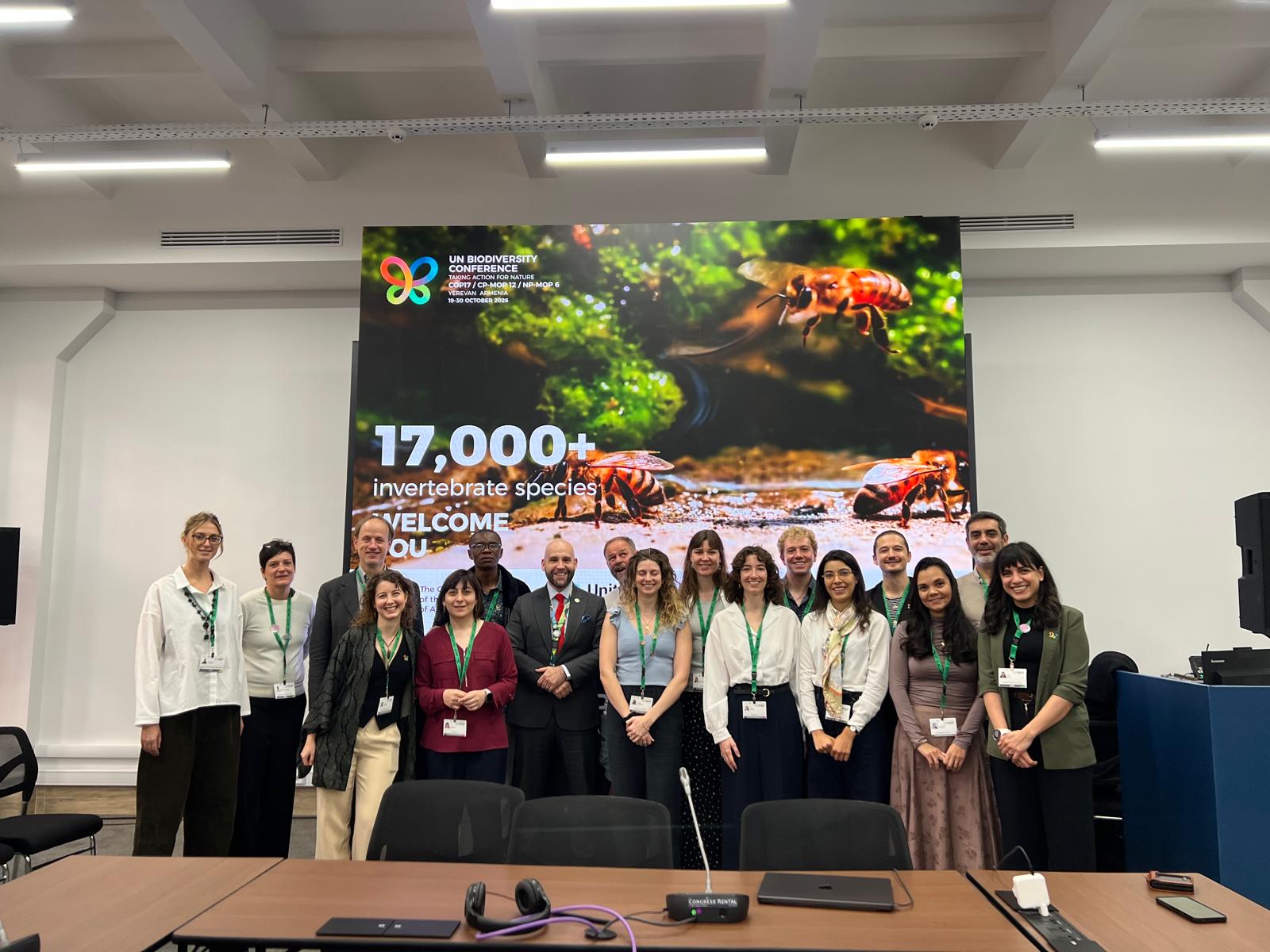
The Academia and Research (A&R) group, a platform supporting researchers, scientists and academics engaging in the CBD, signed on to a letter with other major groups urging Parties to ensure that the Convention remain evidence-based and to welcome the best available science contained in the IPBES assessments.
After tense negotiations that continued until the final plenary in the early hours of Saturday morning, Parties ended up accepting and welcoming the summaries of the latest IPBES assessments.
“At COP17 we saw the best available science being undermined by a handful of countries. There were attempts to politicise and disregard the science when the conclusions happen to be seen as inconvenient".
With four years remaining to achieve the world’s 23 biodiversity targets, attention increasingly turns to implementing the decisions and commitments made in Yerevan.
Benjamin Parker, Research Postgraduate, Department for Life Sciences and Zoological Society of London and Grantham Institute PhD network member also reflected on the significance of COP17 being held in Yerevan, Armenia:
"A COP can feel like a world unto itself, but even the most focused delegate must have felt the significance of being in the Armenian capital of Yerevan. Founded more than 2,800 years ago and continuously inhabited ever since, Yerevan is a fitting stage for negotiations about how we might better humanity’s role within the wider web of life.
"The region has a rich history of engaging with the natural world, beautifully preserved in its celebrated medieval manuscripts, whose subjects range from the characteristics of various Eurasian ecosystems and the myriad of uses for wild flora to changing climatic conditions. In our own ways, delegates at COP17 have been carrying the torch of this endeavour, albeit with the weight of a global scope and the pressure of sweeping declines in biodiversity.
"The region’s history is moreover deeply entwined with tragedy. Born of the failure of peoples and nations to respect one another, such tragedy serves as a powerful reminder of the better qualities we should exercise: not least, in the multilateral context, cooperation, compromise and the ambition to pursue the common good. But while these qualities emerged at times around the negotiating table; they’ll be required in far greater measure if we are to realise our ambitious goal of living in harmony with nature by mid-century.”
The next biodiversity COP (COP18) will be held in Quito, Ecuador in 2028.
Article text (excluding photos or graphics) © Imperial College London.
Photos and graphics subject to third party copyright used with permission or © Imperial College London.
Faculty of Natural Sciences


Engineering

Engineering

Campus and community

Science
Campus and community
Campus and community
Engineering
Discover more Imperial News
Search all articlesDiscover more Imperial News
Search all articles