Personalised immersive audio could help virtual socialising feel more real
by Press Office
/prod01/channel_4/imperial-news/media/images/landscape-3000X2000/6e1da720-9ef6-432e-9391-cc9e5e69e04a.jpeg)
Imperial College London researchers have won a €5.7million EU Horizon 2020 grant to develop AI-informed immersive audio techniques.
Imperial College London researchers have won a €5.7million EU Horizon 2020 grant to develop AI-informed immersive audio techniques.
The project, called SONICOM, will see researchers develop immersive 3D sound for virtual and alternative reality situations like online meetings, lectures, and gaming.
Our technology could help users have more real, more immersive experiences that convey the nuanced feelings and intentions of face-to-face conversations.
Dr Lorenzo Picinali. Dyson School of Design Engineering
Immersive audio creates sounds that are perceived as coming from different directions, to emulate how we experience audio in the real world. Although similar technologies are used in spaces like cinemas, virtual spaces like video chat, gaming, and doctor appointments lack this kind of technology.
During the COVID-19 pandemic where many are working from home, emulating real-life scenarios more accurately could help rebuild the conversational nuances and social cues that can be lost during online communication.
SONICOM will use artificial intelligence (AI) to make online spaces more realistic – by, for example, having colleagues sound like they are speaking to your right or left, possibly also at different distances, like in a real meeting space.
Lead investigator Dr Lorenzo Picinali, of Imperial’s Dyson School of Design Engineering, said: “Our current online interactions are very different to real life scenarios: social cues and tone of voice can be lost, and all the sound comes from one direction. Our technology could help users have more real, more immersive experiences that convey the nuanced feelings and intentions of face-to-face conversations.”
This is one of the first times AI will be used to personalise sound. Everyone perceives 3D, or spatial, sound differently thanks to the particular shape of their ears and head, and so high-quality simulations must be uniquely tailored to each individual.
The researchers will employ AI and a data-driven approach to link the physiological characteristics of the ear to the individual acoustic filters which allow people to hear where sound is coming from. This will provide personalised audio spatialisation from only a small amount of data acquired from users.
Imagine a virtual meeting space where you see colleagues to your right, left, and across from you. We want to make this possible in audio form.
Dr Lorenzo Picinali. Dyson School of Design Engineering
They will also alter spatial sound rendering depending on its context. Doctor and therapy appointments might sound ‘closer up’ for greater intimacy, whereas lecturers and talks could sound farther away to emulate the real-world lecture experience.
Once the personalised immersive audio techniques have been developed, the researchers will explore, map and model how their use influences listeners’ behaviour and physiology during social interactions.
Dr Picinali said: “Imagine a virtual meeting space where you see colleagues to your right, left, and across from you. We want to make this possible in audio form, using AI not only to improve and personalise sound, but also to the reactions of the listeners and predict how this could influence the conversation.”
They hope to have developed the techniques within three years and will make them and the accompanying AI available to researchers and companies who want to use them in new hardware.

The tech could help virtual meetings feel realer.
The project includes researchers from seven research and academic institutions and three companies across six European countries: Imperial (UK), Sorbonne University (France), Austrian Academy of Sciences (Austria), University of Milan (Italy), National and Kapodistrian University of Athens (Greece), University of Malaga (Spain), University of Glasgow (UK), Dreamwaves (Austria), Reactify (UK), and USound (Austria).
Dr Picinali and the SONICOM consortium will be part of a cross-collaborative initiative with three other projects awarded under the same EU Horizon 2020 call known as ‘Artificial Intelligence for extended social interaction.’ The aim is to identify synergies within their projects and refine a joint vision to maximise the impact of each project’s research in their respective emerging technological paradigms.
SONICOM builds on several previous Imperial research projects such as the 3D Tune-In Project, also funded by EU Horizon 2020 and coordinated by the Audio Experience Design team at Imperial. 3D Tune-In set the grounds for the development of advanced techniques and tools for immersive audio in virtual reality, and SONICOM is taking this initiative forward at a larger scale, engaging with most of the major players in the field within Europe.
A new immersive audio technology for virtual and augmented reality
by Press Office
/prod01/channel_4/imperial-news/media/images/landscape-3000X2000/CC005-Audio-3.jpg)
The immersive audio technology is developed by SONICOM, a new EIC Pathfinder project, which will revolutionize the way we interact socially within AR/VR environments and applications.
First published with the European Commission’s Newsroom (opens in a new window)
The immersive audio technology is developed by SONICOM, a new EIC Pathfinder project, which will revolutionize the way we interact socially within AR/VR environments and applications.
SONICOM is a 60-month project, which started in January 2021. It was selected among proposals submitted for FET Proactive Emerging Paradigms and Communities call (FETPROACT-EIC-07-2020), in subtopic A: Artificial Intelligence for extended social interaction.
With the help of Artificial Intelligence (AI) and data-driven technological paradigms, the SONICOM project will transform auditory social interaction and communication in Virtual and Augmented Reality (VR&AR). It focuses on immersive audio technologies, which could eliminate the different hearing experiences we feel between physical and remote communications. The SONICOM team presents the idea behind the project, as follows:
“Picture yourself being able to dynamically change the position of the various participants within a virtual conversation, modifying also the acoustical characteristics of the simulated environment. Then extend this to an interaction where some participants are present in person in the same environment, and some are accessing it remotely; imagine ‘blending’ the real and virtual so that it is not possible, from an auditory point of view, to distinguish between the two.”
Lead investigator Dr Lorenzo Picinali, of Imperial College London’s Dyson School of Design Engineering, said: “Our current online interactions are very different to real life scenarios: social cues and tone of voice can be lost, and all the sound comes from one direction. Our technology could help users have more real, more immersive experiences that convey the nuanced feelings and intentions of face-to-face conversations.”
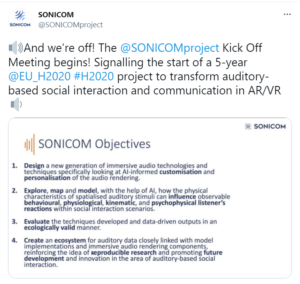
In the first phase, the SONICOM team of researchers and creative tech experts from across Europe will design a new generation of immersive audio technologies and techniques to transform social interactions, specifically looking at customisation and personalisation of the audio rendering. The researchers will explore and analyse behavioural, physiological, kinematic, and psychophysical reactions of listeners within social interaction scenarios, in order to develop appropriate hardware and software proofs of concept.
SONICOM is part of the paradigm of emerging virtual technologies. Over the five-year project, the team aim to release a comprehensive ecosystem for auditory data closely linked with model implementations and immersive audio rendering components, reinforcing the idea of reproducible research, and promoting future development and innovation in the area of auditory-based social interaction. Dr Picinali said:
“Imagine a virtual meeting space where you see colleagues to your right, left, and across from you. We want to make this possible in audio form, using AI not only to improve and personalise sound, but also to the reactions of the listeners and predict how this could influence the conversation.”
Alongside this work, the SONICOM consortium will be part of a cross-collaborative initiative with three other projects awarded under the same Horizon 2020 call known as ‘Artificial Intelligence for extended social interaction.’ The aim is to identify synergies within their projects and refine a joint vision to maximise the impact of each projects’ research in their respective emerging technological paradigms.
The SONICOM project brings together 10 experienced teams from 6 European countries (United Kingdom, France, Italy, Austria, Greece and Spain). The coordinating institution is Imperial College of Science, Technology and Medicine.
Background information
FET-Open and FET Proactive are now part of the Enhanced European Innovation Council (EIC) Pilot (specifically the Pathfinder), the new home for deep-tech research and innovation in Horizon 2020, the EU funding programme for research and innovation.
SONICOM officially kicks off with the inaugural annual meeting
by Press Office
With representatives from all partners present, the meeting provided a fruitful basis for discussions on delivering the project’s pioneering objectives over the next 5-years.
SONICOM officially kicks off with the inaugural annual meeting
With representatives from all partners present, the meeting provided a fruitful basis for discussions on delivering the project’s pioneering objectives over the next 5-years.
The SONICOM Kick-Off Meeting took place online on Thursday, 20th May 2021. With a lot to get through, the condensed agenda began with Coordinating partner and Principal Investigator, Dr Lorenzo Picinali from Imperial College London, chairing salutations and introductions. The consortium was fortunate to be joined by the Advisory Board and External Ethics Advisor who were introduced to partners and their teams involved in SONICOM.
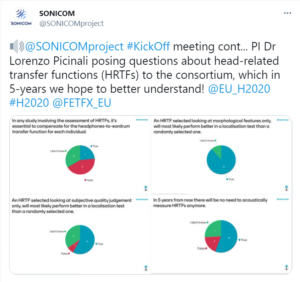
Despite the tight schedule, Dr Picinali had time to kick off the presentations with a quick pop quiz; posing a series of questions to the consortium on head-related transfer functions (HRTFs) which sparked interesting discussions exploring what answers SONICOM research is hoping to uncover in these areas.
Following this, the Work Package (WP) presentations were the focus of the remaining morning session – with each WP leader sharing a description of work they plan to achieve and research questions they hope to investigate. The penultimate session was dedicated to conversations with the Advisory Board which encapsulated the proverbial phrase, so many things to discuss, so little time. Nevertheless, the Board and the consortium covered a lot of ground in areas such as impact and identifying commercial collaborative partners.
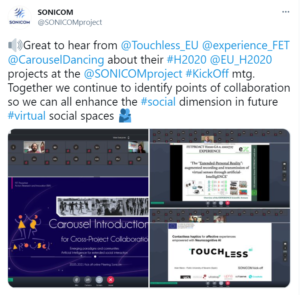 The last part of the meet held a series of bilateral meetings with the members of the TOUCHLESS, EXPERIENCE and CAROUSEL+ consortia, forming part of our commitment to the Cross-Projects Collaboration initiative set for all ‘FETPROACT-EIC-07-2020 – FET Proactive: emerging paradigms and communities’ projects. The projects honed in on prospective areas for collaboration and reciprocal activities to maximise each other’s research outputs including public outreach activities and technology integration.
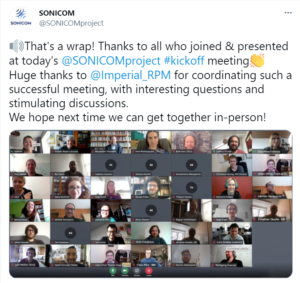
The meeting wrapped up Thursday early evening with a close and ‘next steps’ from Dr Picinali. Overall, the meeting was a huge success, and we look forward to collaborating with such an excellent consortium and the FETPROACT-EIC-07-2020 projects over the project’s 5-year lifetime.
Free binaural tools not just for the binaural researcher, for everyone
by Press Office
/prod01/channel_4/imperial-news/media/images/landscape-3000X2000/CC005-Audio-1.jpg)
SONICOM'S coordinator Dr Lorenzo Picinali (Imperial College London) in collaboration with the University of Malaga have developed a set of binaural software tools. The fruit of their labour was the 3D Tune-In Toolkit, and they have made it freely available for all non-programmer binaural enthusiasts
Original article published on Sound on Sound Magazine.
SONICOM’s coordinator, Dr Lorenzo Picinali (Imperial College London) in collaboration with partners, University of Malaga have developed a set of binaural software tools, for free. Originally developed as a research tool from 3D Tune-In Toolkit, a European Union’s Horizon 2020 research project, the people behind it have considered it such a useful bit of programming that they’re essentially giving it away for free!
The algorithm itself has been released as an open-source resource, and is available on GitHub, but non-programmer binaural enthusiasts can get in on the action too, thanks to a number of self-contained software tools that employ the same algorithm. For example, the Test Application programme is essentially a stand-alone spatialiser, into which you can load up mono WAV files and move them around a virtual space. Usefully, the Test Application speaks OSC (Open Sound Control), so using a phone, computer or tablet running one of the many freeware OSC apps around, you can perform real-time head tracking, and whizz your mono audio sources about in the virtual 3D space (see video below).
As well as performing immersive audio tricks, the Test Application also allows you to simulate the effects of hearing loss, or even of wearing a hearing aid:
What’s more, they’ve also packaged their algorithm into a Mac and Windows compatible VST plug-in, which they’re also giving away for free, as well as a Javascript version so that web and iOS developers can implement the tech into their own creations — again, with no restrictions as it’s all open source.
The Test Application, VST plug-in and Javascript versions can all be downloaded via 3D Tune-In’s GitHub, and this paper includes a browser-based demonstration that requires no additional software to run
Ethics and artificial intelligence
by Press Office
SONICOM researchers dive-in to understand more about the values and safety of using AI in the project.
SONICOM researchers dive-in to understand more about the values and safety of using AI in the project.
“Your scientists were so preoccupied with whether or not they could that they didn’t stop to think if they should.” The famous line from Dr Ian Malcolm (Jeff Goldblum) in Jurassic Park is a regular reference when discussing new scientific and technological frontiers, especially none more so in the context of artificial intelligence. As part of a recent workshop they participated in, SONICOM researchers did not exclusively tackle what Dr Malcom says, rather they assessed the ethical dilemmas around the tools and applications that will be developed in SONICOM over the 5-year project.
The “Ethics and AI in SONICOM” workshop was led by SONICOM’s external ethics advisor, Dr Catherine Flick; an ethicist and Reader in Computing and Social Responsibility at De Montfort University. It centred on completing ALTAI – The Assessment List on Trustworthy Artificial Intelligence tool which was developed only recently (launched in 2020) by the AI High Level Expert Group, or AI HLEG for short, who were appointed by the European Commission to provide advice on artificial intelligence strategy. The ALTAI tool is aimed to support projects such as SONICOM in assessing the trustworthiness of AI in their systems, and SONICOM’s researchers dived right in.
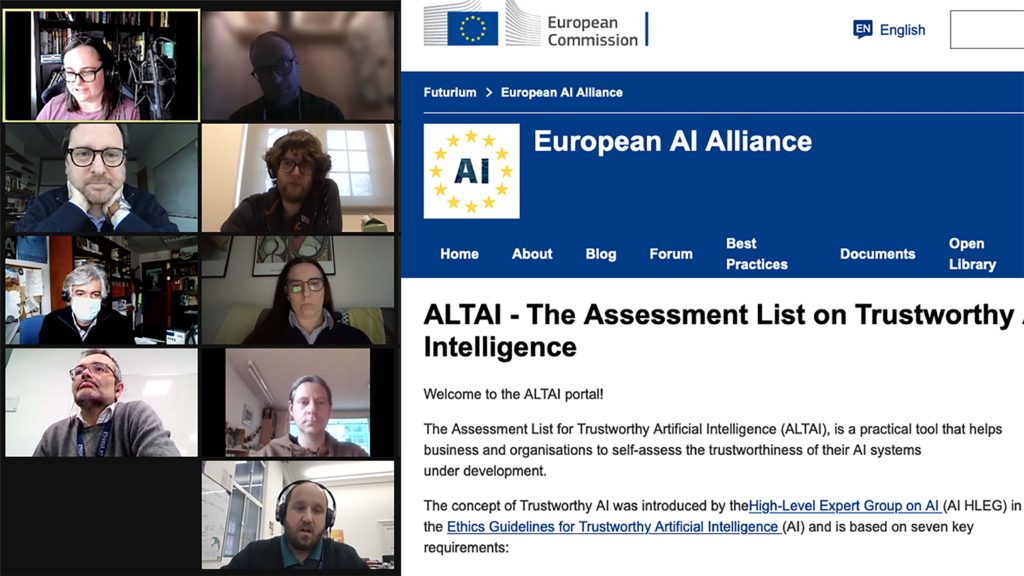
SONICOM researchers during the virtual workshop exploring the ALTAI tool
The consortium identified and evaluated the values and principles behind the way AI will be leveraged to design novel immersive audio technologies and techniques. In evaluating what risks the systems using AI might generate and the potential impacts on clusters such as society, the environment, the consumer etc, the workshop enabled SONICOM’s researchers to think about ‘responsible competitiveness’. SONICOM’s researchers considered through completing this tool the ways in which the design, development, and use of AI in the project can be trusted by end-users.
In speaking with Dr Flick, she notes that “the SONICOM team had a productive discussion around the AI systems being implemented within their project using the ALTAI self-assessment tool for trustworthy AI.” Also, engaging the consortium in thinking about minimising risk as the project progresses, Dr Flick said that “while the project is very sound in its risk mitigation strategies, a number of future tasks were identified to ensure the trustworthiness of their system with its end-users and the general public.” Overall, having trustworthy AI that is lawful, ethical, and robust.
The consortium will continue to assess AI and ethics as the project progresses.
More information on the ALTAI tool is available on the European Commission website.
More about Dr Catherine Flick’s work can be found on De Montfort University website.
The group bringing together scientists to understand human hearing
by Press Office
Learn about the Aural Assessment By means of Binaural Algorithms (AABBA) group, whose goal is to promote exploration and development of different models of human hearing and their applications.
Developing models of human hearing is an area of research with many applications, from improving hearing aids and implants to creating immersive audio for virtual reality, and connecting researchers working in this space from around the globe is vital to making progress.
Introducing AABBA – not the latest Swedish pop group, but a group of scientists that collaborate on the development and applications of different models of human hearing.
Set up in 2009 by Professor Jens Blauert as a way for himself and other acoustics research colleagues to discuss joint projects and work, the Aural Assessment By means of Binaural Algorithms network has since grown to nearly 30 regular members from across 14 countries.
SONICOM member Dr Piotr Majdak has since taken the reins from Professor Blauert on AABBA’s Executive Board.
“I’m very proud to be taking on the leadership [of AABBA],” said Majdak, “But I couldn’t do it without the help of my colleagues and friends.”
A space for making connections
A core pillar of AABBA is building networks and connections for people working in acoustics research.
AABBA members meet annually in Vienna for open discussions and presentations on their research. They especially encourage members to bring in students and young scientists associated with their projects to the meetings to present the research they’re working on, meet people, and exchange ideas.
Together, the network has resulted in in joint publications and special sessions at international conferences. Recently they have worked together to create a special issue in Acta Acoustica, where, despite an open call, almost all chapters have been contributed by AABBA members.
It has also provided validated (source) codes for published models of binaural and spatial hearing to our collection of auditory models, known as the auditory modelling toolbox (AMT). The AMT has since received an update to the AMT 1.2.0, and contains 60 models and over 40 GB of auxiliary data and cached modelling results are available for download on the fly.
If you are interested in getting involved with AABBA or joining the network, get in touch with Dr Piotr Majdak.
Upcoming session and International Congress on Acoustics 2022
AABBA will be putting on a Special Session titled “Spatial Hearing” at the International Congress on Acoustics (ICA) 2022 in Gyeongju, South Korea.
Find out more about the conference on their website.
UK Hearing, Audiology & Sciences Meeting 2022
by Press Office
Members of the SONICOM team attended and presented at the UK Hearing, Audiology & Sciences Meeting 2022.
Members of the SONICOM consortium had the pleasure of attending and presenting at the UK Acoustics Network (UKAN) sponsored Hearing, Audiology & Sciences Meeting this week on the 12 and 13 September in Southampton, UK.
The conference was open to anyone with an interest in the science of hearing, audio and audiology, with the aim of facilitating a friendly exchange of work and ideas.
Dr Lorenzo Picinali, scientific coordinator of SONICOM, chaired a session on spatial hearing and immersive audio rendering, which saw several members of Imperial College London’s audio experience design (AXD) team present their work in this space.
“It was an excellent venue for presenting some early results from our work, as well as some plans for future works, and get very valuable feedback in a very informal way!” said Dr Picinali.
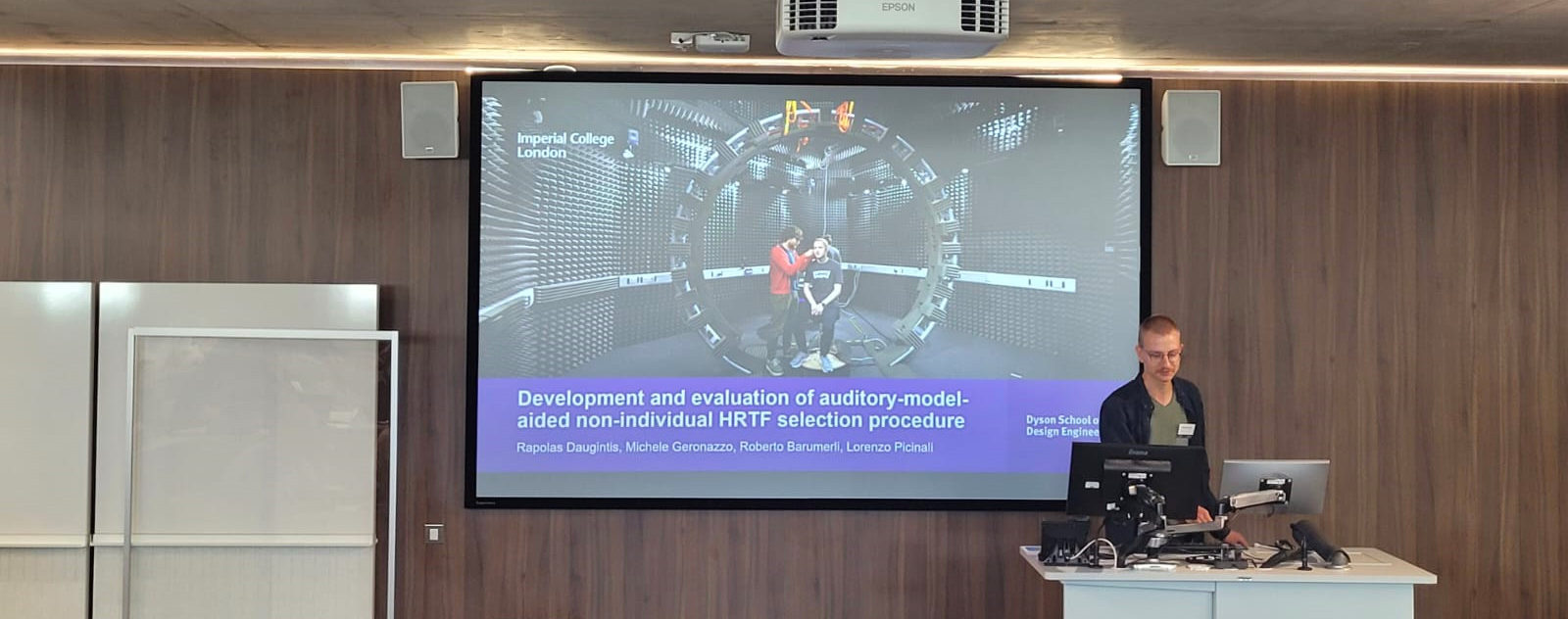
This session included a talk from Rapolas Daugintis, a PhD student in the team, who discussed his work on the development and evaluation of auditory-model-aided non-individual HRTF selection procedure.
“This was my first time presenting my work as a PhD student in an academic conference format. It was a good platform to develop my science communication skills in quite a relaxed environment and meet the academic community,” said Daugintis.
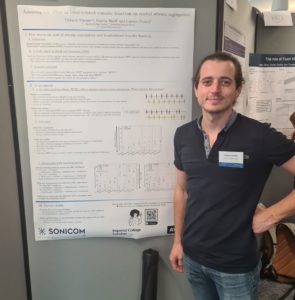
The meeting also had a poster session, which included Dr Thibault Vicente displaying work on assessing the effect of head-related transfer function on spatial stream segregation.
“This poster was a good opportunity to present our pilot study. It is always relevant to have feedback from other researchers at this stage, so that the protocol can be adjusted before the final data collection,” said Dr Vicente.
See the full programme from the meeting on the UKAN website.
New SONICOM-sponsored book tackles 3D audio for virtual reality
by Press Office
The book brings together experts in spatial audio for virtual reality to tackle the design of 3D spatial interactions in an audio-centred and audio-first perspective.
A new SONICOM-sponsored book titled “Sonic Interactions in Virtual Environments” has now been published.
Edited by SONICOM PI Professor Michele Geronazzo, University of Padova and Imperial College London, and Professor Stefania Serafin, Aalborg University, the book brings together experts in spatial audio for virtual reality to tackle the design of 3D spatial interactions in an audio-centred and audio-first perspective, providing the fundamental notions related to the creation and evaluation of immersive sonic experiences.
“The basic and most obvious assumption that motivates this volume is: it is hard to live in a world without sound and it is hard in virtual environments (VEs) too,” says Professor Geronazzo. “The good news brought by this book is that Virtual Reality finally sounds plausible. Advances in several fields are now able to provide an immersive listening experience that is perceptually indistinguishable from reality which means that immersive sounds could make interaction intrinsically natural.”
Since 2015, the editors have organised the IEEE Virtual Reality workshop series “Sonic Interactions in Virtual Environments (SIVE)” with the mission of increasing the awareness of the importance of sonic elements when designing immersive virtual environments among the virtual reality community and junior researchers.
This volume aims to provide an organised starting point on which to develop a new generation of immersive experiences and applications. Contributing authors include interdisciplinary experts from the fields of computer science, engineering, acoustics, psychology, design, humanities, and beyond. This was designed to give to the reader a broad view and a clear introduction to state-of-the-art technologies and design principles, and to the challenges that might be awaiting us in the future.
Through an overview of emerging topics, theories, methods, tools, and practices in sonic interactions in virtual environments research, the book aims to establish the basis for further development of this new research area.
User and system adaptation in binaural audio
SONICOM PIs Dr Lorenzo Picinali and Dr Brian FG Katz together wrote a chapter of the book titled “System-to-User and User-to-System Adaptations in Binaural Audio”.
The chapter concerns concepts of adaption in a binaural audio context (i.e. headphone-based 3D audio rendering and associated spatial hearing aspects), considering first the adaptation of the rendering system to the acoustic and perceptual properties of the user, and second the adaptation of the user to the rendering quality of the system.
Their discussions cover an overview of the basic mechanisms of human sound source localisation as well as more complex concepts and processes, such as HRTF selection (system to-user adaptation) and HRTF accommodation (user-to-system adaptation). The potential of these two approaches are discussed, considering their combined use in a practical context, as well as introducing a few open challenges for future research.
SONICOM’s sponsorship to the project also contributed to its full transition to open access, and the full book can be accessed for free on the Springer website.
SONICOM at the Royal Society’s Summer Science Exhibition
by Press Office
SONICOM took part in the Royal Society's Summer Science Exhibition, engaging hundreds of people with immersive audio across the week.
From 4-9 July, SONICOM exhibited at the Royal Society’s Summer Science Exhibition 2023, one of the largest science engagement festivals in the UK.
As the Royal Society’s flagship event, the Summer Science Exhibition attracts thousands of visitors every year, from families with 4-year-olds to school groups to eminent Fellows of the Royal Society.
The ‘Virtual Audio: Illusion or Reality?’ exhibit led by Lorenzo Picinali, a member of the Audio Engineering Society, featured research projects from Picinali’s Audio Experience Design team at Imperial College London, including SONICOM and the NIHR-funded BEARS project.
The exhibit focused on how people and technology can adapt to each other to enhance virtual and physical interactions.
Visitors to the exhibit got the opportunity to learn about SONICOM through chats with members of the team and hands-on activities, including having their own ears 3D scanned to learn about how morphology needs to be taken into account when personalising audio.
“It was a lot of fun chatting to the public about our research and meeting incredibly interested people from all walks of life,” says Dr Katarina Poole, a SONICOM researcher based at Imperial College London. “There were a lot of discussions on how immersive audio could be used – why it’s not used, why it should be – which was good to expand my thinking on how my and the lab’s research could be used.”
Find out more about the research featured at the Exhibition on our online portal.
You can also watch some of the highlights of the week in the video below:

SONICOM at Forum Acusticum 2023
by Press Office
Last month, members of the SONICOM team presented at the 10th Convention of the European Acoustics Association – Forum Acusticum 2023.
Last month, members of the SONICOM team from Imperial College London, the Austrian Academy of Sciences, Sorbonne University and the University of Malaga attended the 10th Convention of the European Acoustics Association – Forum Acusticum 2023 – in Torino, Italy.
Team members presented a variety of work being undertaken as part of SONICOM, including the new Spatially Oriented Format for Acoustics (SOFA) release, as well as research on HRTF individualisation, accommodation and upsampling.
“It was great to be able to showcase the variety of work going on within SONICOM,” said Dr Lorenzo Picinali, SONICOM lead investigator. “The SONICOM team continues to go from strength to strength, and the work we presented at Forum Acusticum is just a taste of what’s to come.”
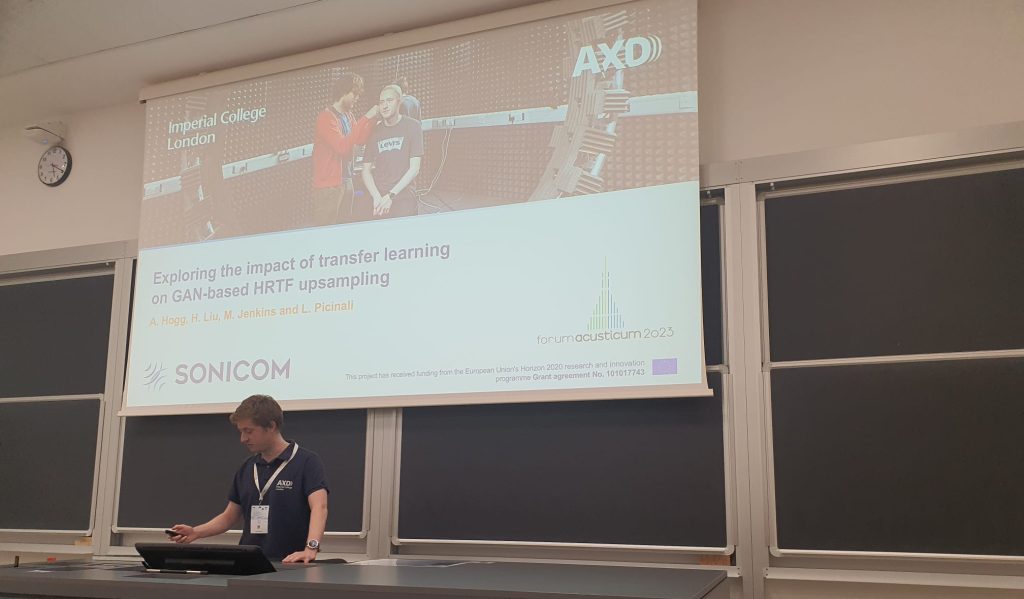
SONICOM researcher, Dr Aidan Hogg, presenting at Forum Acusticum 2023
Explore some of the research presented:
- Exploring the impact of transfer learning on GAN-based HRTF upsampling
- Comparison of deep-neural-network architectures for the prediction of head-related transfer functions using a parametric pinna model
- An experiment replication on dynamic 3D sound localisation using auditory virtual reality
- Initial evaluation of an auditory-model-aided selection procedure for non-individual HRTFs
Explore the full conference proceedings on the Forum Acusticum website.
Inspiring discussions at the SONICOM Research Sandpit
by Press Office
Members of the SONICOM consortium gathered with external researchers and stakeholders to exchange knowledge and ideas.
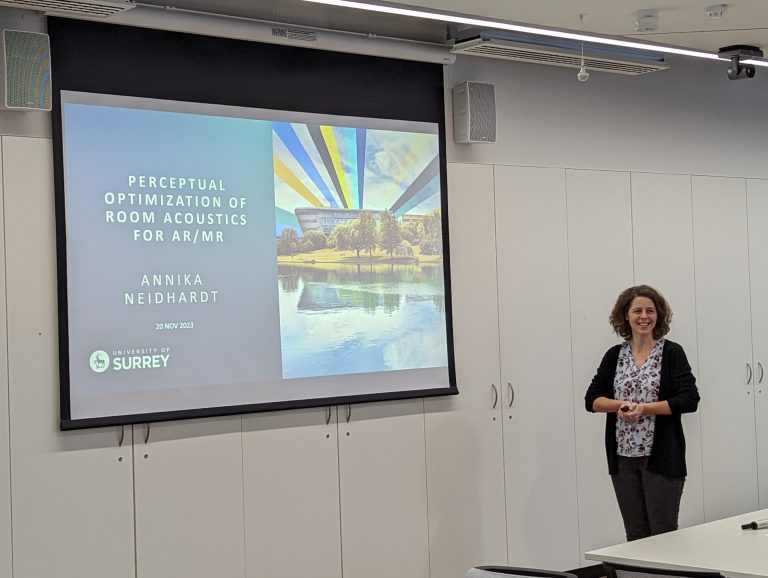
Representatives from across the SONICOM consortium gathered at the University of Glasgow on 20 and 21 November to take part in the SONICOM Research Sandpit – a chance to exchange knowledge and experiences between the project consortium and external researchers and stakeholders.
The SONICOM team were joined by four guest speakers who gave their insights into current challenges in auditory research, including head-related transfer function (HRTF) personalisation as well as augmented reality and acoustics simulation.
The guests included:
- Dr Fabian Brinkmann (Technical University of Berlin), who discussed how we can improve the realism of simulated HRTFs, including taking into account the impact of varying head-torso angle, as well as hair and skin.
- Dr Archontis Politis (Tempere University), who presented on his research in parametric spatial audio processing and spatial acoustic scene analysis.
- Dr Annika Neidhardt (University of Surrey), who presented her work on the perceptual optimisation of room acoustics for AR/MR.
- Dr Enzo De Sena (University of Surrey), who discussed real-time room acoustic rendering for AR/MR/VR.
The team took full advantage of being together in person along with our external guests to have some productive and insightful discussions on topics ranging from newly designed methods for assessing HRTF personalisation, to explorations on the impact of room acoustic processing choices on complex interactions.
After an initial overview of the achievements and future plans of the SONICOM project, the invited guests presented their research engaging in relaxed and informal discussions with the consortium members, looking at joint ideas for future research, possible collaborations, as well as common efforts for tackling the various open challenges.
“It was encouraging to see how researchers from multiple disciplines and from inside and outside the SONICOM project teamed up not only to discuss and tackle challenges of future immersive audio systems but also to make their work available to the scientific community and general public,” said Dr Brinkmann.
Plans for SONICOM’s Listener Acoustic Personalisation (LAP) Challenge were also further developed – keep an eye on our X/Twitter and website for updates on when the Challenge will be accepting submissions.
Workshop for early career researchers hosted at Imperial College London
by Press Office
The SECTG cluster joined together at Imperial College London for a transformative event designed for aspiring researchers.
On 23rd November, the SECTG cluster joined together at Imperial College London for a transformative event designed for aspiring researchers. The one-day workshop was focused on bringing the cluster together to foster collaboration, innovate, provide a platform to present work, exchange ideas, and network with fellow scholars from diverse fields.
The SECTG cluster is an alliance of five European sister projects funded under the Horizon 2020 FET PROACT-EIC-07-2020 call and subtopic “Artificial Intelligence for Extended Social Interaction”. The cluster includes SONICOM, EXPERIENCE, CAROUSEL, TOUCHLESS, and GUEST-XR.
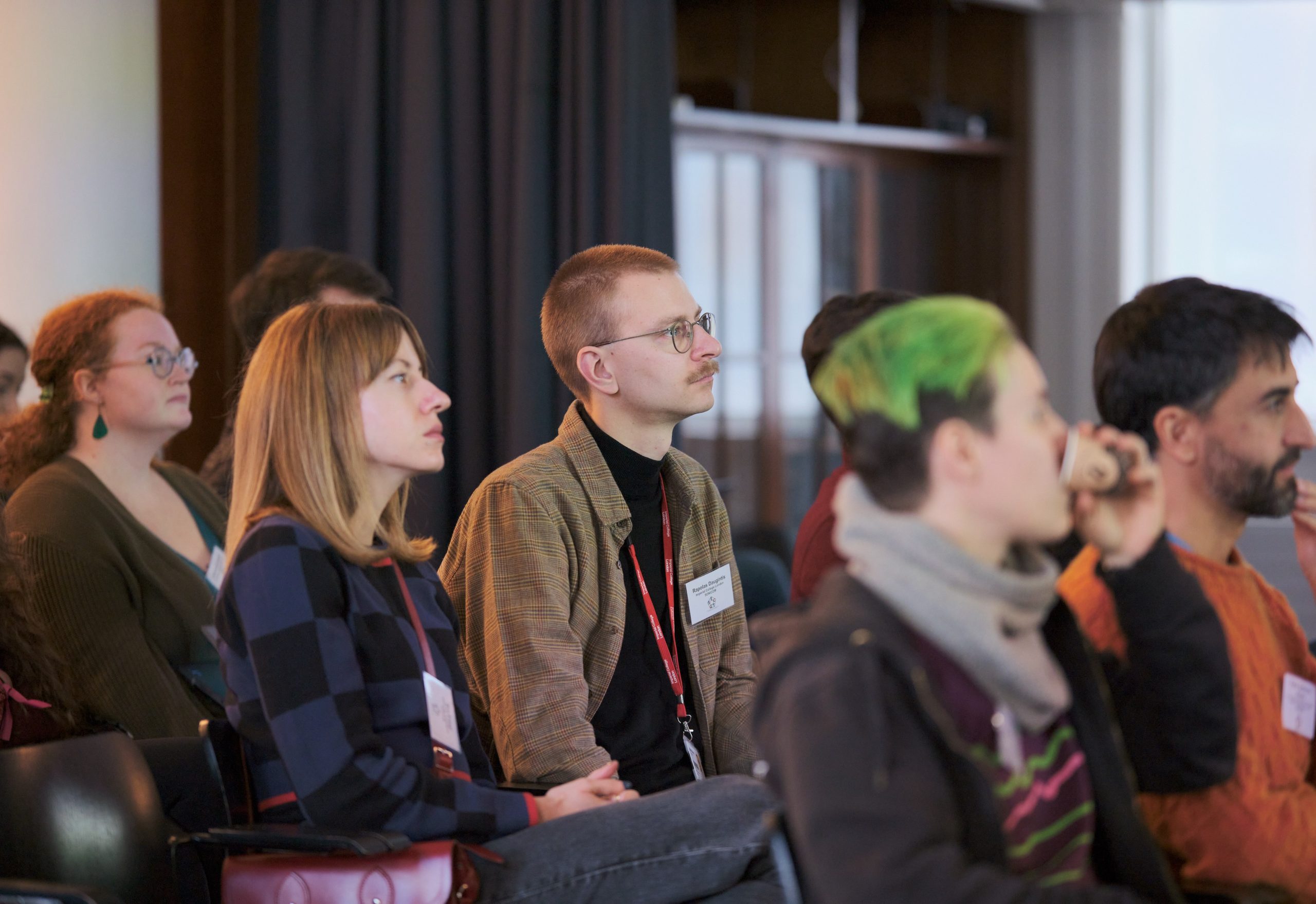
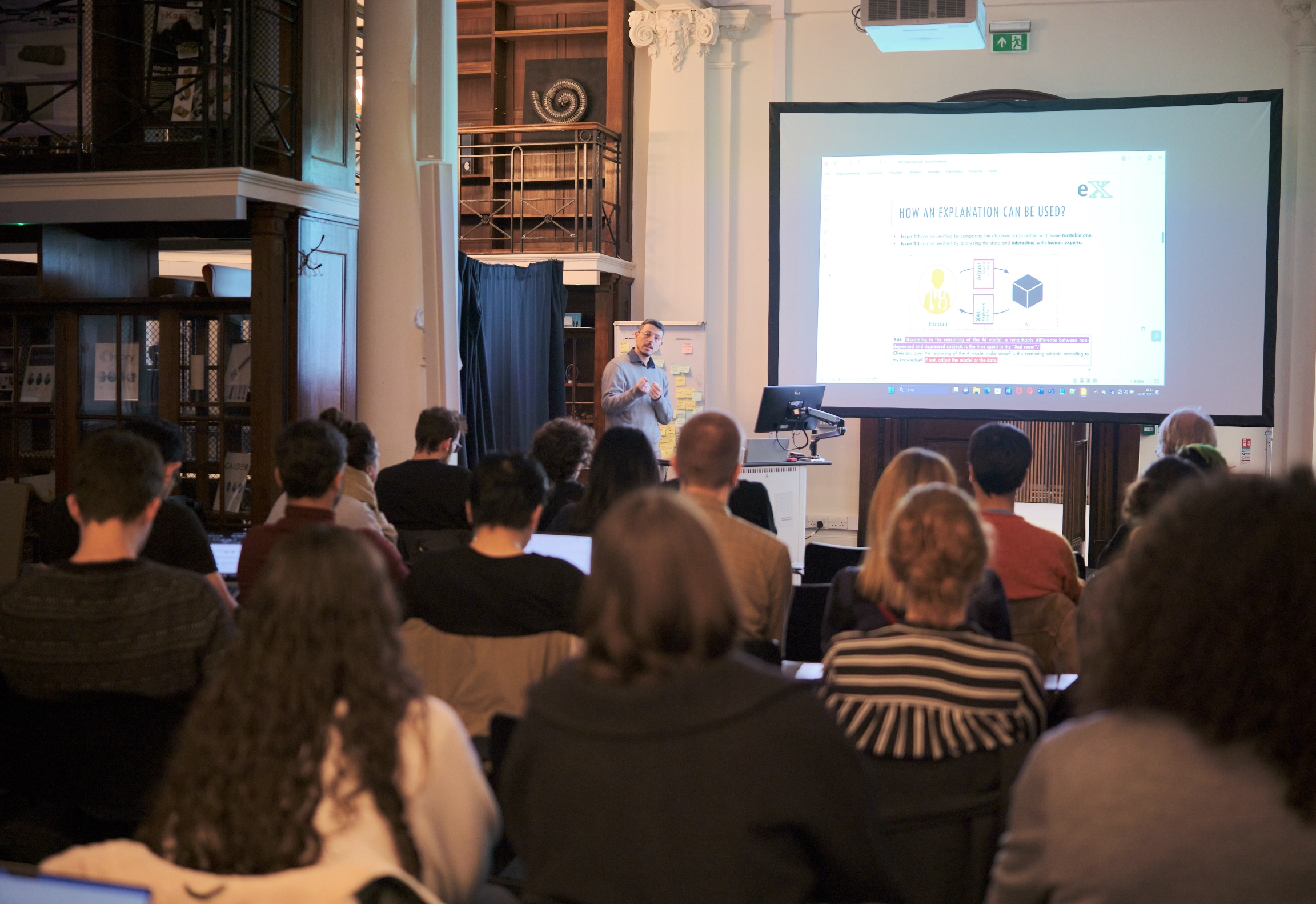
Three Early Career Researchers (ECR) from each of the five SECTG sister projects were invited to present. Work package leaders from each project and other ECRs were in attendance, where there was ample opportunity to ask questions, and participate in group discussions.
The day kicked off with an introduction and welcome from Coordinating partner and Principal Investigator of SONICOM, Dr Lorenzo Picinali from Imperial College London, which led into the first presentation of the day. The presentations covered a range of topics which included sharing the Binaural Rendering Toolbox-BRT (SONICOM), discussing emotional textile design through multisensory interaction design (TOUCHLESS), exploring the influence of prior acquaintance on the shared VR experience (GUEST-XR) and having a break from the screen to be led in a dance and social media workshop (CAROUSEL).
Katharina (Kathi) Pollack, PhD student and visiting researcher at Imperial College London said, “In academia, it is essential that fellow researchers are able to communicate with each other across disciplines. I loved the idea of this event, that the early career researchers presented already useable/published outcomes of their projects and practice to debate in an interdisciplinary way. The day sparked a variety of fruitful discussions that we’d otherwise never have had!”
The day was a fantastic example of the positive impact coming together to amplify research, expand networks, and broaden horizons can have.
SONICOM celebrates UK association to Horizon Europe
by Press Office
The SONICOM project were invited to join celebrations of the UK's association to Horizon Europe
On December 13th, Imperial College brought together over 200 members of the European and global science communities to celebrate the UK’s association to Horizon Europe. SONICOM is one of the international research projects funded under the former Horizon2020 scheme that was showcased at the reception.
The event was an opportunity for researchers, policymakers and partners and learn about some of the vital collaborations and science that EU programmes have supported at Imperial such as SONICOM. The project aims to leverage Artificial Intelligence to design a new generation of immersive audio technologies and techniques, specifically looking at personalisation and customisation of the audio rendering. SONICOM is led by Dr Lorenzo Picinali, Lead of the Audio Experience Design (AXP) research team with the Dyson School of Design Engineering at Imperial College.
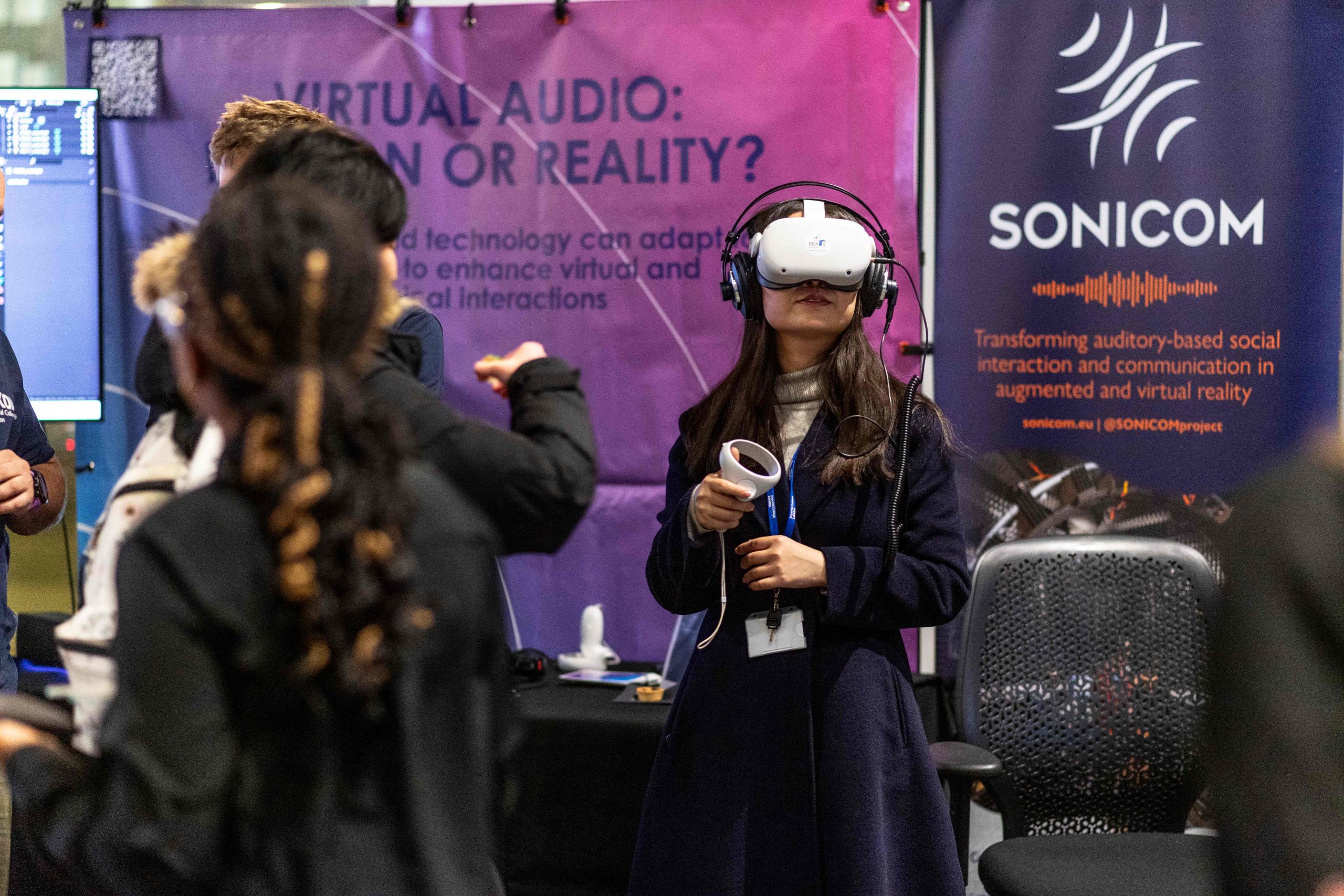
Attendees taking their turn to experience binaurally spatialised audio throughout the evening
In attendance on the evening were guests including EU Commissioners, Westminster lobbyists, members of the Biochemical Society and Ambassadors from several European countries. The attendees had the opportunity to speak with researchers about their work and experience binaurally spatialised audio for themselves.
The evening was filled with excitement and optimism for a bright future ahead with Horizon Europe. Make sure to follow SONICOM on X to keep up with the latest updates on the project.
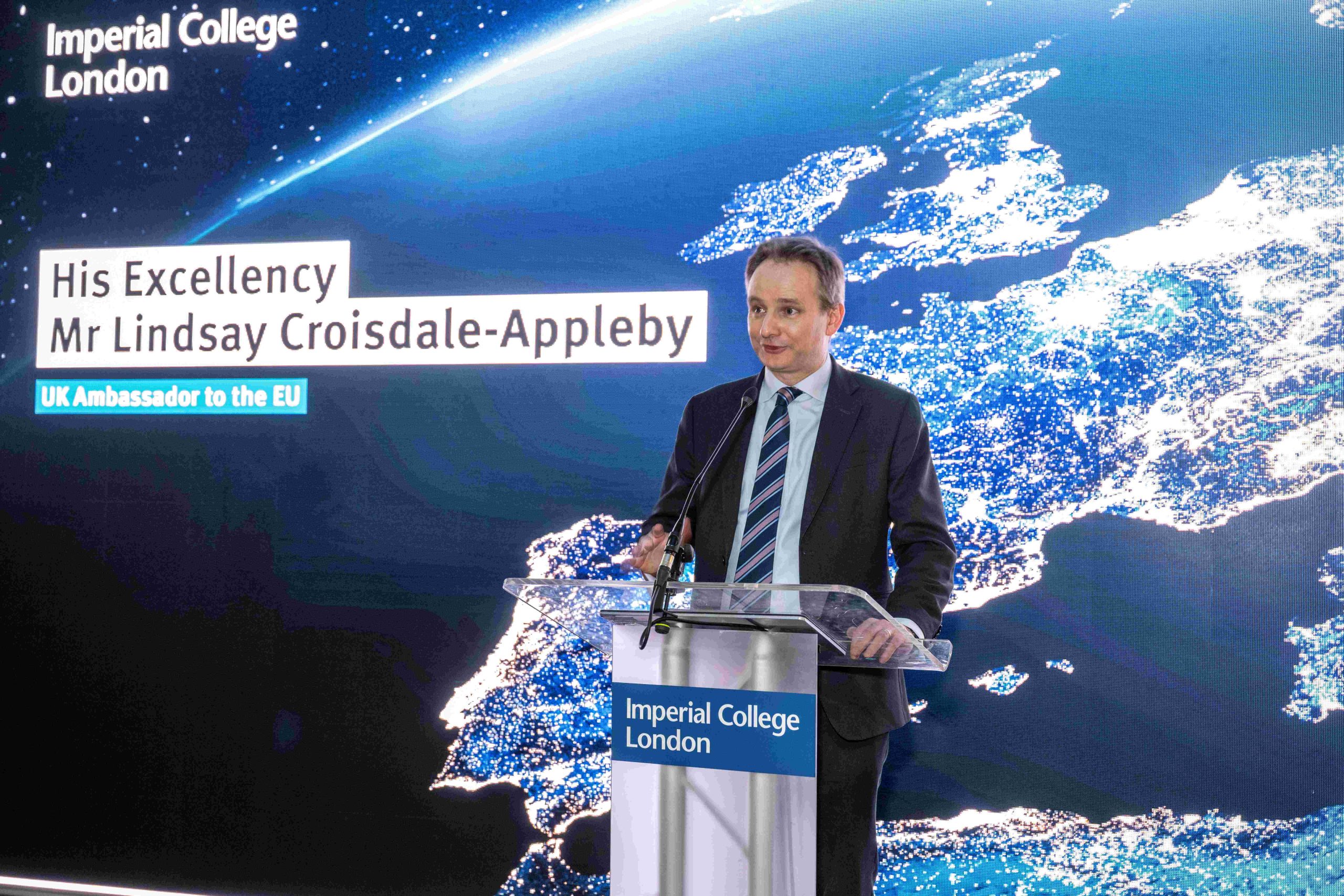
UK Ambassador to the EU, His Excellency Mr Lindsay Croisdale-Appleby
Article text (excluding photos or graphics) © Imperial College London.
Photos and graphics subject to third party copyright used with permission or © Imperial College London.
Article people, mentions and related links
Press Office
Administration/Non-faculty departments

Article text (excluding photos or graphics) © Imperial College London.
Photos and graphics subject to third party copyright used with permission or © Imperial College London.
Article people, mentions and related links
Press Office
Administration/Non-faculty departments
Article text (excluding photos or graphics) © Imperial College London.
Photos and graphics subject to third party copyright used with permission or © Imperial College London.
Article people, mentions and related links
Press Office
Administration/Non-faculty departments
Article text (excluding photos or graphics) © Imperial College London.
Photos and graphics subject to third party copyright used with permission or © Imperial College London.
Article people, mentions and related links
Press Office
Administration/Non-faculty departments
Article text (excluding photos or graphics) © Imperial College London.
Photos and graphics subject to third party copyright used with permission or © Imperial College London.
Article people, mentions and related links
Press Office
Administration/Non-faculty departments
Article text (excluding photos or graphics) © Imperial College London.
Photos and graphics subject to third party copyright used with permission or © Imperial College London.
Article people, mentions and related links
Press Office
Administration/Non-faculty departments
Article text (excluding photos or graphics) © Imperial College London.
Photos and graphics subject to third party copyright used with permission or © Imperial College London.
Article people, mentions and related links
Press Office
Administration/Non-faculty departments
Article text (excluding photos or graphics) © Imperial College London.
Photos and graphics subject to third party copyright used with permission or © Imperial College London.
Article people, mentions and related links
Press Office
Administration/Non-faculty departments
Article text (excluding photos or graphics) © Imperial College London.
Photos and graphics subject to third party copyright used with permission or © Imperial College London.
Article people, mentions and related links
Press Office
Administration/Non-faculty departments
Article text (excluding photos or graphics) © Imperial College London.
Photos and graphics subject to third party copyright used with permission or © Imperial College London.
Article people, mentions and related links
Press Office
Administration/Non-faculty departments
Article text (excluding photos or graphics) © Imperial College London.
Photos and graphics subject to third party copyright used with permission or © Imperial College London.
Article people, mentions and related links
Press Office
Administration/Non-faculty departments
Article text (excluding photos or graphics) © Imperial College London.
Photos and graphics subject to third party copyright used with permission or © Imperial College London.
Article people, mentions and related links
Press Office
Administration/Non-faculty departments
Article text (excluding photos or graphics) © Imperial College London.
Photos and graphics subject to third party copyright used with permission or © Imperial College London.
Article people, mentions and related links
Press Office
Administration/Non-faculty departments