The Departmental Lunchtime Lecture series began in 2017. The purpose of the series is to hear from some of the world's leading physicists about current research and to provide a forum for the undergraduate community to meet with fellow students and faculty. There is usually a lunch before or following the talk, providing an opportunity to meet the speaker and network with fellow students and academic staff.
UG Seminar Series
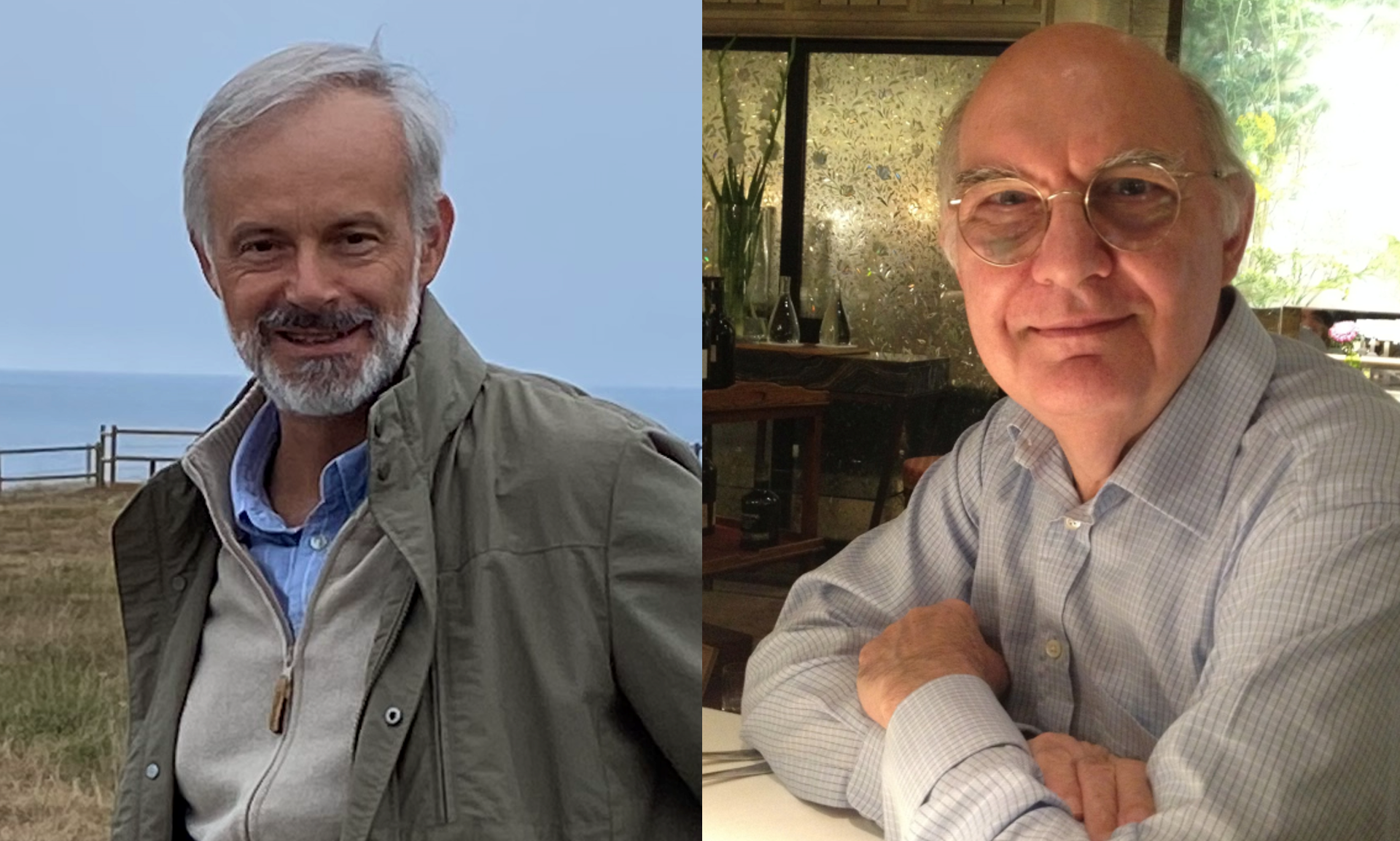 Talk Title: The Reinvention of Science: from invoking invisile entities to the dinosaur extinction debate
Date: 27 October 2025 at 13:00
Location: Blackett Lecture Theatre 2
Speakers: Prof Bernard Jones and Prof Vicent Martinez
Abstract: In this talk, two of the authors of “The Reinvention of Science. Slaying the Dragons of Dogma and Ignorance” explore the thrilling journey of scientific discovery. Throughout the history of science, different thinkers, philosophers and scientists postulated the existence of entities that, in spite of their not being visible or detectable in their time, or perhaps ever, were nevertheless useful to explain the real world. These included phlogiston to account for fire; the luminiferous ether for propagation of radiation; the homunculus to provide for heredity; and crystalline spheres to carry the wandering planets around the earth. Many of these erroneous beliefs had held up progress, just as dragons drawn on the edges of a map discouraged exploration. This pattern of science evolution continued through the centuries up to the present day. Sometimes, these invoked entities were eventually discovered. The planet Neptune, discovered in 1846, is probably the object that best illustrates the category of entities that were initially proposed to explain observations of the moment and then subsequently discovered. A few years later, and to explain the excess in the shift of the perihelion of planet Mercury, a planet inside Mercury’s orbit named Vulcan was proposed, but this supposed "dragon" was defeated by those who accepted Einstein's general relativity in 1917. In modern cosmology we invocate invisible entities such as "Dark Matter" and "Dark Energy”. Will these entities be "Neptunes" that will sooner or later be discovered or will they be "Vulcans" that will have to wither away unless they are nourished by cosmological observations?
In the second part of our discussion we will present a specific case of a paradigm shift that is on-going: the question of what happened at the end of the Cretaceous period 66 millions years ago to cause the rapid extinction of the dinosaurs. Subsequent to that event there was an explosion of mammals and flowering plants. This dramatic event is attributed to climate change and the consequent opening of new biological niches. In 1980 there was an unexpected discovery that threw the paleontology community into chaos: this transition was attributed to a 10-15km diameter, Shortly after that there was the announcement that evidence had been found for a huge underwater crater in the sea off the coast of Yucatan. The face of paleontology changed: ask anyone, adult or child, what killed the dinosaurs, and the instant response will be "a meteorite!" This became of those "science things" that everyone knows, including Hollywood filmmakers.
Except that it may not be true. Maybe it wasn't a meteorite, but extreme volcanism. There is no denying that an asteroid most probably did crash into the sea off the Yucatan coast, but there is now evidence that the impact was neither a necessary nor a sufficient condition to explain the mass extinction. This conclusion is largely the work of the Princeton paleontologist, Gerta Keller and her group. She was the quintessential model of a paleontologist, going to sites with her rock hammer and digging up evidence from the rocks. With her research group she showed that extreme volcanism started up in what is now the Deccan Traps of India at least 400,000 years prior to the meteorite strike and continued for some time thereafter. Life in the sea and on the land was already dying out long before the impact, thereby vacating biological niches for the evolution of new lifeforms: in particular mammals and flowering plants. The meteorite strike still dominates the public thinking, and the ideas of the supporters of the meteorite view dreaming up new schemes that include both a meteorite and lots of volcanoes.
Biography: Bernard Jones is Emeritus Professor at the Kapteyn Astronomical Institute of the University of Groningen in the Netherlands . His research has covered many areas of astrophysics, both theoretical and observational, with a strong emphasis on cosmology, where he is widely published and cited. He is the author of the recent highly celebrated book Precision Cosmology: the first half million years (CUP 2017) and "The Reinvention of Science: Slaying the Dragons of Dogma and Ignorance", co-authored with Vicent Martinez and Virginia Trimble (World Scientific 2023).
Bernard did his PhD at the Institute of Astronomy in Cambridge (UK) supervised by Dennis Sciama and Martin Rees. He then went on to work as a postdoctoral fellow at Princeton and Berkeley under James Peebles. Bernard has supervised and mentored the research work of over 50 postgraduates from all over the world and is highly regarded as a teacher, lecturer, and presenter of both popular and academic talks.
Vicent J Martínez is Professor of Astronomy and Astrophysics at the University of València, where he was the director of its Astronomical Observatory for eleven years. His research is focused on the large-scale structure of the universe. He is the author with Enn Saar of the book Statistics of the Galaxy Distribution published by CRC Press in 2002 and "The Reinvention of Science: Slaying the Dragons of Dogma and Ignorance", co-authored with Bernard Jones and Virginia Trimble (World Scientific 2023).
Vicent did his PhD in NORDITA and The Niels Bohr Institute, Copenhagen (Denmark) supervised by Bernard Jones. He received the Award for Teaching and Disseminating Physics from the Royal Spanish Society of Physics and the BBVA Foundation (2011).
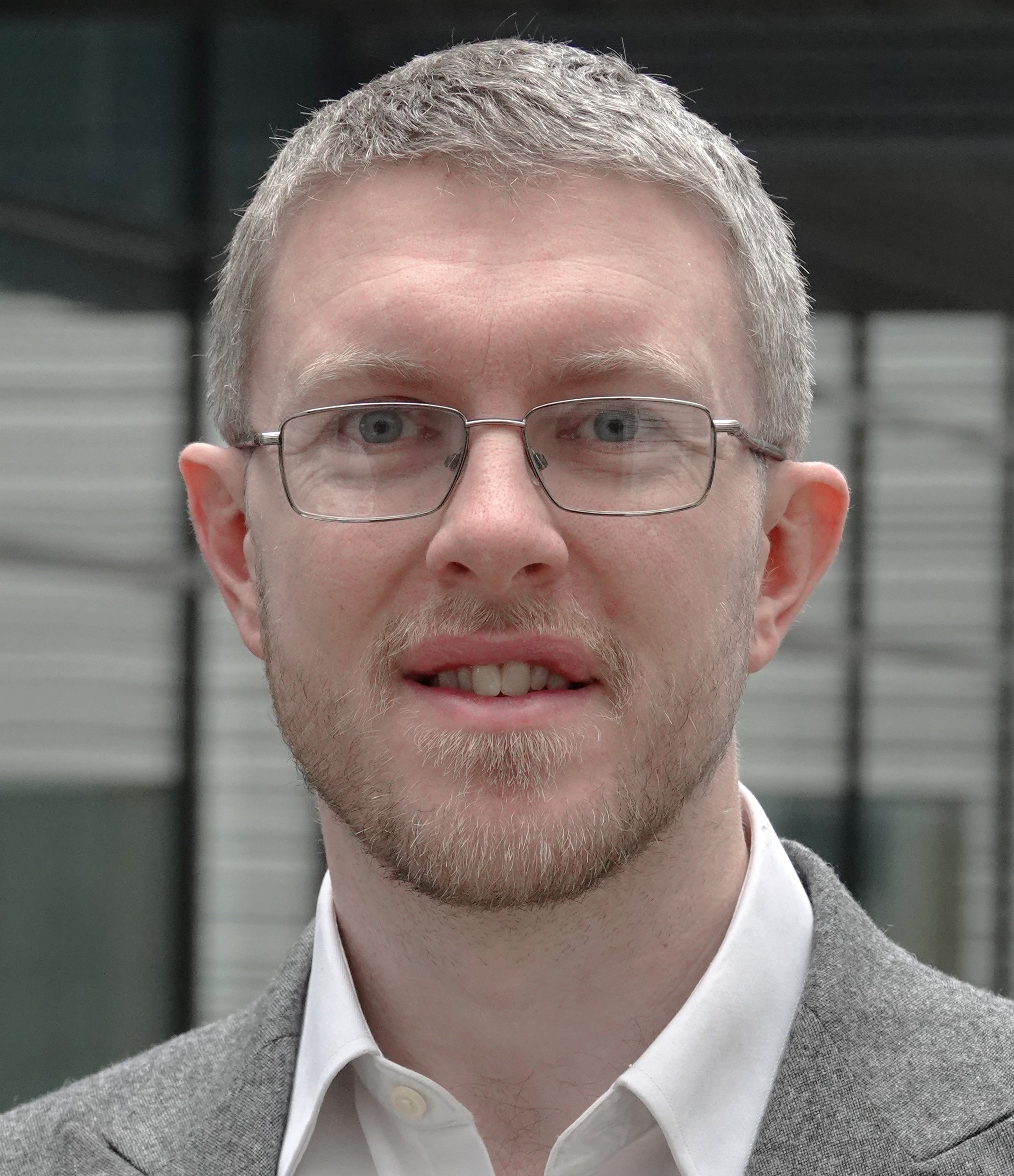 Talk Title: How to break things and get away with it
Date: 29 October 2025 at 12:00
Location: Blackett Lecture Theatre 1
Speaker: Dr Christopher Braithwaite
Abstract: This talk will discuss some of the basic physics of the mechanical and dynamic deformation and breakage of materials, and illustrate these principles with examples from research that the speaker had conducted. It will also touch on the variety of challenges, experiences and opportunities that are open to physicists as they progress through an undergraduate degree, and beyond into a career (with a focus on academia).
Biography: Born in Southport and attended a local state Catholic comprehensive school. Started Natural Sciences degree in Cambridge in 2000, graduating with a MSci in 2004. 2004-2009, completed a PhD sponsored by De Beers and Rio Tinto under the supervision of Dr Bill Proud (now of Imperial College) on the shock properties of geological materials. Subsequent to graduating from my PhD I have held a number of posts in the Cavendish Laboratory conducting a variety of postdoctoral research projects and undertaking teaching within the department. I am currently an Associate Teaching Professor and have particular responsibilities for the provision of undergraduate practical teaching.
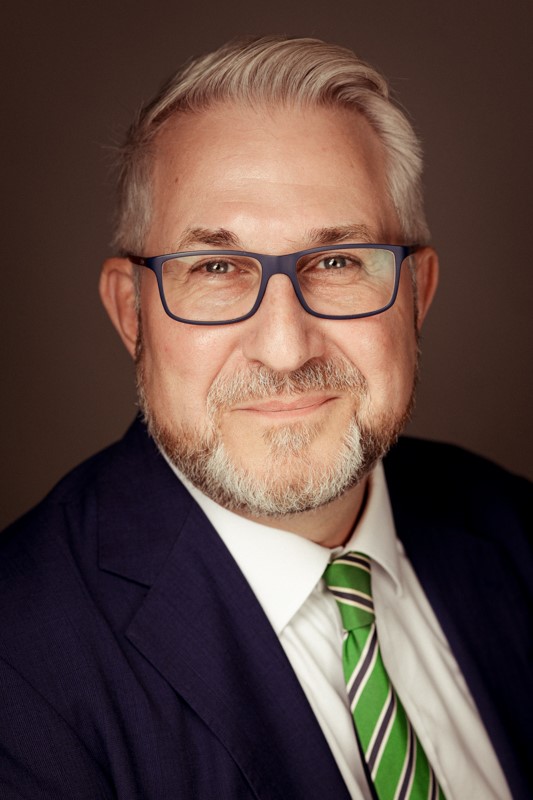 Talk Title: Fusion and Climate Change
Date: 19 November 2025 at 12:00
Location: Blackett Lecture Theatre 1
Speaker: Prof Ralf Kaiser
Abstract: The talk will start with a short recap of the key facts about climate change and show that energy production is by far the biggest factor. Fusion energy is expected to be commercialized and deployed in the 2030s. If it can be scaled up quickly, it has the potential to significantly mitigate the effects of climate change and meet the growing global energy demand. However, there is a typical shape to technological change that many change processes have in common. We will consider what this means for fusion. One of the key factors that will determine if fusion energy can be scaled up quickly enough is not technical, but concerns the legal and organisational frameworks - i.e. regulation and licensing. I will present a proposal for a 7-point plan for such a framework that would accelerate deployment. I look forward to lively discussions.
Biography: Prof Ralf Kaiser is an experimental nuclear physicist, former Head of the Physics Section at the IAEA and founder of an award-winning high-tech startup company.
Ralf studied Physics and Mathematics at the University of Münster, Germany, and Simon Fraser University, Vancouver. After a postdoctoral fellowship at the German National Laboratory DESY in Hamburg, he was appointed to a faculty position in the Nuclear Physics Group at the University of Glasgow in 2001. For almost 20 years his research was focused on the fundamental structure of matter and on the design and construction of the detectors required for this research.
In 2010 he joined the IAEA as Head of the Physics Section, responsible for the IAEA programmes on Nuclear Fusion, Accelerator Applications and Nuclear Instrumentation. In this role he represented the Agency on the ITER Council and was the main organiser of the IAEA Fusion Energy Conferences from 2012 to 2016. After the accident in Fukushima, he participated in a series of Missions to Fukushima, as leader and expert member, and he led the development of a drone-based radiation monitoring and mapping system for Fukushima Prefecture.
In 2016 he founded Lynkeos Technology as a spin-off from the University of Glasgow, to commercialise the use of cosmic-ray muon imaging for nuclear waste containers. Lynkeos has deployed the first CE-marked muon imaging system at Sellafield in the UK in 2018, and has won a series of awards including the 2018 Institute of Physics Business StartUp Award.
Since 2022 Ralf is Senior Coordinator for Programmes and Advancement at the International Centre for Theoretical Physics (ICTP) in Trieste. In this role he is responsible for about 70 conferences, workshops and schools with more than 6000 participants per year, graduate student programmes with 150 students, the Associates programme for more than 200 guest scientists from developing countries, IAEA partner institutes in Africa and South America and public outreach in basic physics and mathematics around the globe. Ralf is a Fellow of the Royal Society of Edinburgh since 2020.
Talk Title: Progress of ITER and some perspectives of fusion
Date: 30 January 2026 at 16:00
Location: Blackett Lecture Theatre 3
Speaker: Pietro Barabaschi, Director General of ITER
Abstract: This presentation by Pietro provides an overview of the recent progress and future perspectives of the ITER project, the world’s largest fusion experiment. In recent years, the project has overcome major technical and organisational challenges, including complex repairs to the Vacuum Vessel Thermal Shield and upgrades to key components. All major superconducting magnets have been completed or are in advanced stages of assembly, representing significant engineering milestones in high-field magnet technology.
The assembly of the Tokamak, ITER’s core device, is progressing rapidly, with several sector modules already installed. Supporting systems such as the power converters and cryogenics plant have reached important commissioning milestones, and new testing facilities are enabling more rigorous validation of components under operational conditions. Beyond its technical achievements, ITER serves as a global training ground for future fusion scientists and engineers, offering unique opportunities to engage with cutting-edge research, complex systems integration, and international teamwork. The project’s recent performance reflects a turnaround, with record rates of construction and improved cost and schedule control, positioning ITER as a cornerstone for the future of fusion energy and an inspiring example for students entering the field.
Biography: Pietro Barabaschi has served as the Director General of the ITER Organisation since 2022, overseeing the reforms and the construction of the ITER project. Prior to this role, he led an R&D Department in Fusion-for-Energy (F4E), the European Joint Undertaking responsible for delivering European components to the ITER and Broader Approach (BA) Fusion international projects. In this capacity, he was specifically accountable for the European contributions to the three projects implemented under the Broader Approach Agreement between Euratom and the Government of Japan: JT60SA, IFMIF/EVEDA, and IFERC. During 2015 and again in 2022, he acted as the Interim Director of F4E, managing the overall operations of the organisation, the project management infrastructure, and the implementation of reform measures within the ITER Management framework. Before joining F4E and until early 2006, Pietro was the Deputy Project Leader and head of the Design Integration Division of the ITER International Team at the Munich Joint Work Site and previously in San Diego, USA. Shortly after completing his university studies in Electromechanical Engineering, he joined the JET Project in Culham, UK, where he contributed to the machine development department.
Mr. Barabaschi has dedicated his career to Nuclear Fusion research, with a focus on developing and constructing the research infrastructures essential for advancing nuclear fusion as a viable energy source.
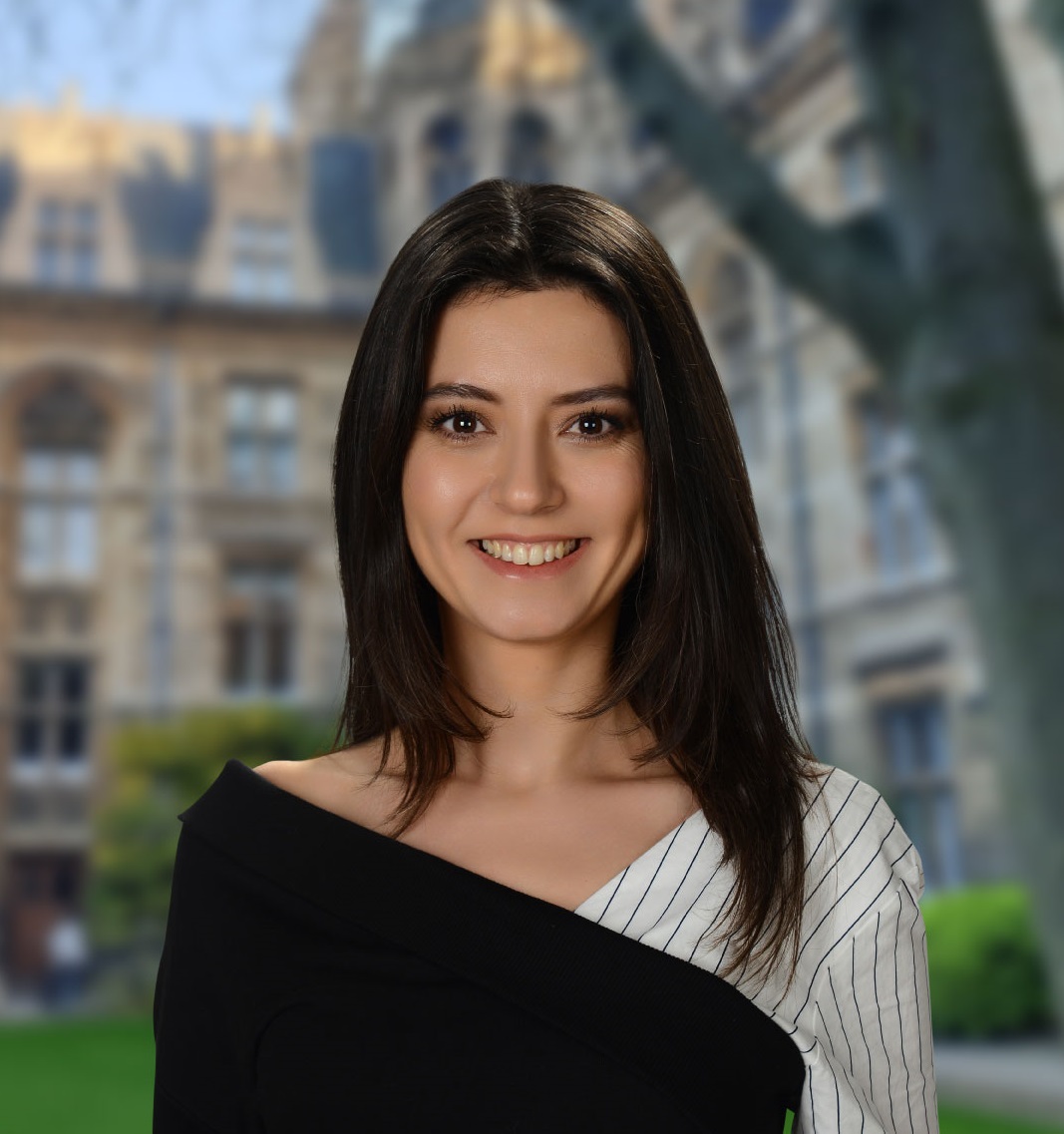 Talk Title: Quantum Simulations, Topology and Quantum Geometry
Date: 4 March 2026 at 12:00
Location: Blackett Lecture Theatre 1
Speaker: Prof Nur Unal
Abstract: Quantum simulators are artificial settings designed to study exotic quantum systems ranging from condensed matter to high energy physics, which often involve many degrees of freedom and particles, and hence are extremely hard if not impossible to reach in other means. Systems such as ultracold quantum gases provide a versatile platform with high degree of control, flexibility and scalability, allowing to explore various phenomena such as topologically protected phases of matter that have been attracting tremendous attention in recent years. Quantum mechanical wave functions can collectively tie knots in their abstract spaces, which are characterised by mathematical ideas known as topology and have revolutionised the way phases of matter are classified in physics. Ultracold atoms even provide the opportunity to observe these ‘knots’ wave functions tie in experimental settings. In this talk I will give an introduction to quantum simulations drawing a general picture. Introducing topology and how it enters our lives in condensed matter physics, I will elucidate some topological phenomena we have been discovering in the last couple of years, highlighting the role of quantum simulations in probing them both in equilibrium and far from equilibrium settings.
Biography: I am an Assistant Professor and Royal Society University Research Fellow at the University of Birmingham. Previously, I have held Marie Skłodowska-Curie and Royal Society Newton Fellowships at the University of Cambridge, postdoc position at the Max-Planck Institute PKS in Germany, and been an exchange student at Cornell University during my PhD obtained from the Bilkent University. My work revolves around condensed matter systems with a specific focus on quantum simulations with ultracold quantum gases, investigating various novel phenomena such as topologically protected states, out-of-equilibrium dynamics, Floquet systems, superconductivity, localization, synthetic gauge fields, fractional quantum Hall and non-Abelian physics. Although my work is mainly theoretical, I also collaborate closely with experiments to take full advantage of these state-of-the-art quantum simulators.
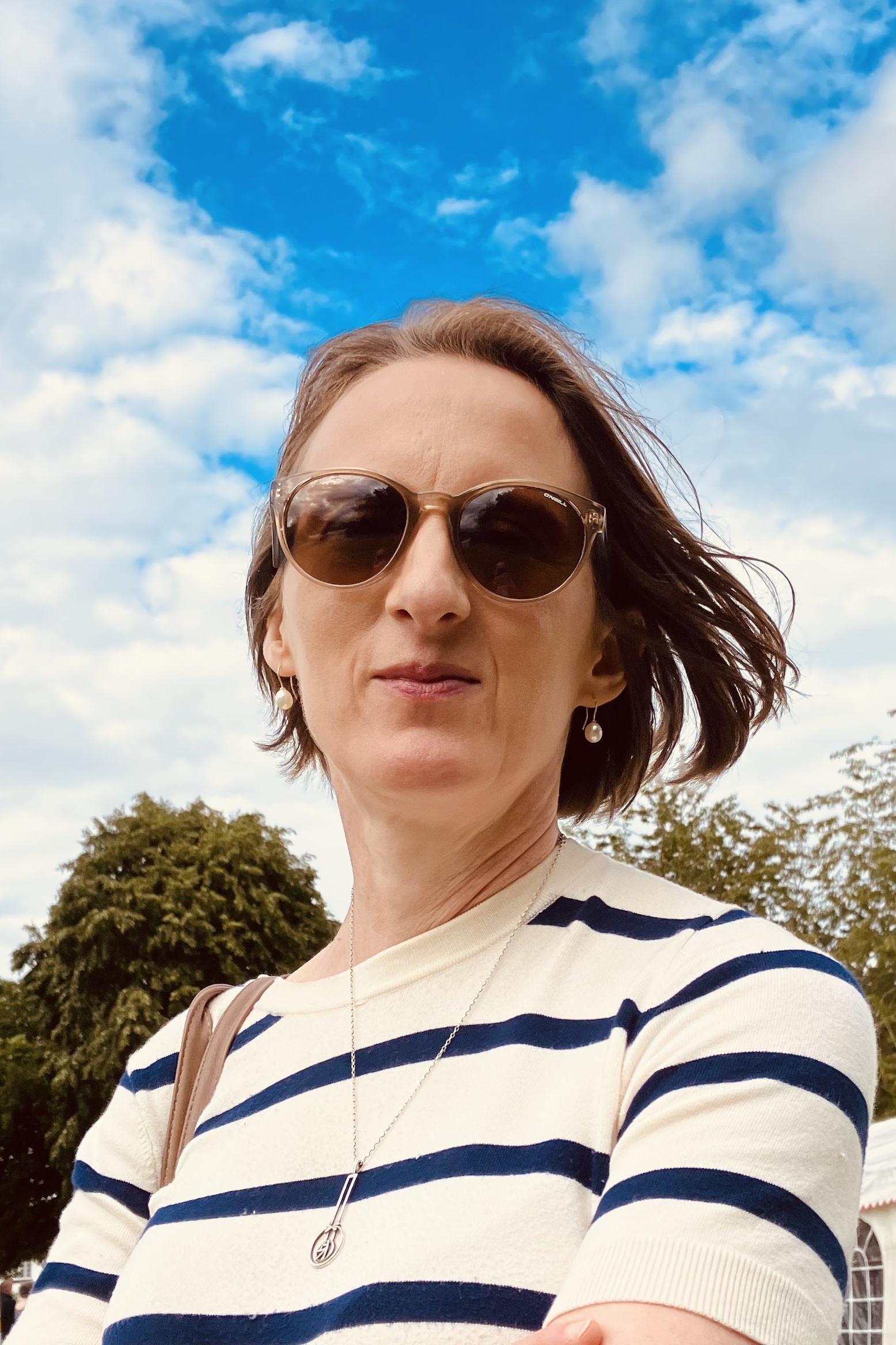 Talk Title: Is the atmosphere electric? Investigating planets, ionisation and lightning
Date: 30 October 2024 at 12:00 (GMT)
Location: Blackett Lecture Theatre 1
Speaker: Prof Karen Aplin
Abstract: Most of us have felt awe and wonder when experiencing - preferably, from a safe distance - the majesty of a thunderstorm. As well as its spectacular displays, lightning is a hazard, and affects atmospheric chemistry. It is associated with specific types of cloud and meteorological processes, as well as being implicated in the origins of life on Earth. For these reasons, lightning has long been seen as a significant phenomenon. However, there is more to atmospheric electricity than just lightning: its quieter and less well-known sibling exists in every planetary atmosphere as a continual flow of ions and electrons, and can form a global-scale electrical circuit with lightning acting as a “battery”. The iconic Voyager 1 mission was the first to photograph an extra-terrestrial thunderstorm at Jupiter in 1979. Since then, lightning has been detected on most other Solar System planets. On Earth, small currents away from thunderstorms can affect clouds, interact with particles from dust or pollution and even potentially influence the weather. Similar non-thunderstorm processes may also act in other planetary atmospheres, such as Titan and Venus. In this lecture I will provide the unifying scientific background and context for the study of atmospheric electricity, and describe past, present, and future observations.
Biography: Karen Aplin is Professor of Space Science and Technology at Bristol University, and Visiting Professor at the University of Reading’s Department of Meteorology. She previously worked at the University of Oxford’s Department of Physics and the Space Science and Technology Department at the Rutherford Appleton Laboratory. Her research programme seeks to understand and exploit electrical properties of atmospheres through novel instrumentation and experiments. She also works on space weather, dust and volcanic ash charging, and recovery of historical electrostatic data. Her bachelor’s degree was in Physics and Philosophy at Durham University, followed by a PhD in experimental atmospheric physics at the Department of Meteorology, University of Reading. She also has a classical performance diploma from Trinity College of Music.
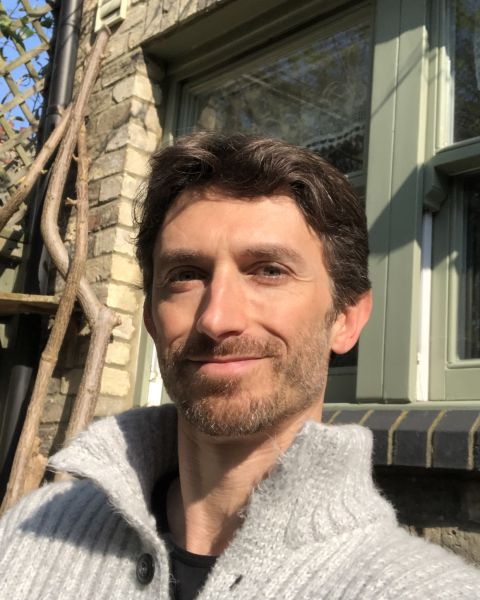 Talk Title: Dynamical fractals in magnetic crystals
Date: 27 November 2024 at 12:00 (GMT)
Location: Blackett Lecture Theatre 1
Speaker: Prof Claudio Castelnovo
Abstract: Fractals -- objects with non-integer dimensions -- occur in manifold settings and length scales in nature, ranging from snowflakes and lightning strikes to natural coastlines. Much effort has been expended to generate and study fractals in many-body physics, oftentimes underpinned by the presence of disorder. Here, we identify an emergent dynamical fractal in a disorder-free three-dimensional magnetic crystal. The phenomenon is borne out of constraints on the dynamics of the microscopic degrees of freedom imposed by the topological nature of the system and by its characteristic fractionalised point-like excitations, which at low temperatures become restricted to move on the fractal. This observation explains the anomalous exponent found in magnetic noise experiments on Dy$_2$Ti$_2$O$_7$, and it resolves a long standing puzzle about its rapidly diverging relaxation time. This is a case in point of the capacity of even simple topological many-body systems to exhibit striking phenomena in their cooperative dynamics, and of the promise they hold for further surprising discoveries.
Biography: Prof Claudio Castelnovo has broad expertise in the statistical mechanics and dynamics of constrained systems, quantum information, thermodynamics and equilibration properties of frustrated magnetic systems, classical and quantum spin liquids, slow dynamics in non-disordered systems, and out of equilibrium properties in systems with fractionalised excitations. Following an EPSRC Postdoctoral Fellowship started at the University of Oxford in 2009, he became a lecturer at Royal Holloway in 2010 and moved to Cambridge in 2012. He was co-recipient of the EPS Europhysics Prize (2012) and received the IUPAP C10 Young Scientist Prize (2013). With over 100 publications, including two book chapters and papers in Nature, Science, Nature Materials, PNAS, the Annual Review of Condensed Matter Physics, Nature Communications and Physical Review Letters, he received nearly 6,000 citations with an H-index of 29. He is a co-founder and organiser of the Advanced Working Group workshop series, and one of the organisers of TEMM and CMP in the City, in the UK. He has been a graduate lecturer at Les Houches Summer School (2019) and ICTP-MPIPKS Winter School (2020); and he co-organised and lectured at the ICTP Summer School on Collective Behaviour in Quantum Matter (2018) and the ICTP Summer School on Quantum Dynamics: From Electrons to Qbits (2022).
Talk Title: Shedding Light on Nuclear Spins: Through the looking-glass
Date: 23 Janaury 2025 at 17:00 (GMT)
Location: Blackett Lecture Theatre 2
Speaker: Prof Mete Atature
Abstract: Optically active spins in solids are strong candidates for scalable devices towards quantum networks. Semiconductor quantum dots set the state-of-the-art as single-photon sources with high level tuneability, brightness, and indistinguishability. In parallel, their inherently mesoscopic nature leads to a unique realisation of a tripartite interface between light as information carrier, an electron spin as a proxy qubit, and an isolated nuclear spin ensemble. The ability to control these constituents and their mutual interactions create opportunities to realize an optically controllable ensemble of ~50,000 spins. In this talk, I will present a journey from treating the quantum dot nuclei as an uncontrolled noise source limiting spin coherence to the observation of their collective magnon modes and eventually to their function as a quantum register, all witnessed via a single electron spin driven by light.
Biography: Mete Atatüre is a Professor of Physics and the Head of the Cavendish Laboratory, Cambridge. He completed his PhD at Boston University in 2002 working on multiparameter entanglement and quantum interferometry. He then worked as a Postdoctoral Fellow at ETH Zurich on solid-state quantum optics. He joined the Cavendish Laboratory in 2007 as an Assistant Professor and received his full Professorship in 2015. His research efforts straddle multiple material platforms for experimental implementations of quantum networks and quantum sensing.
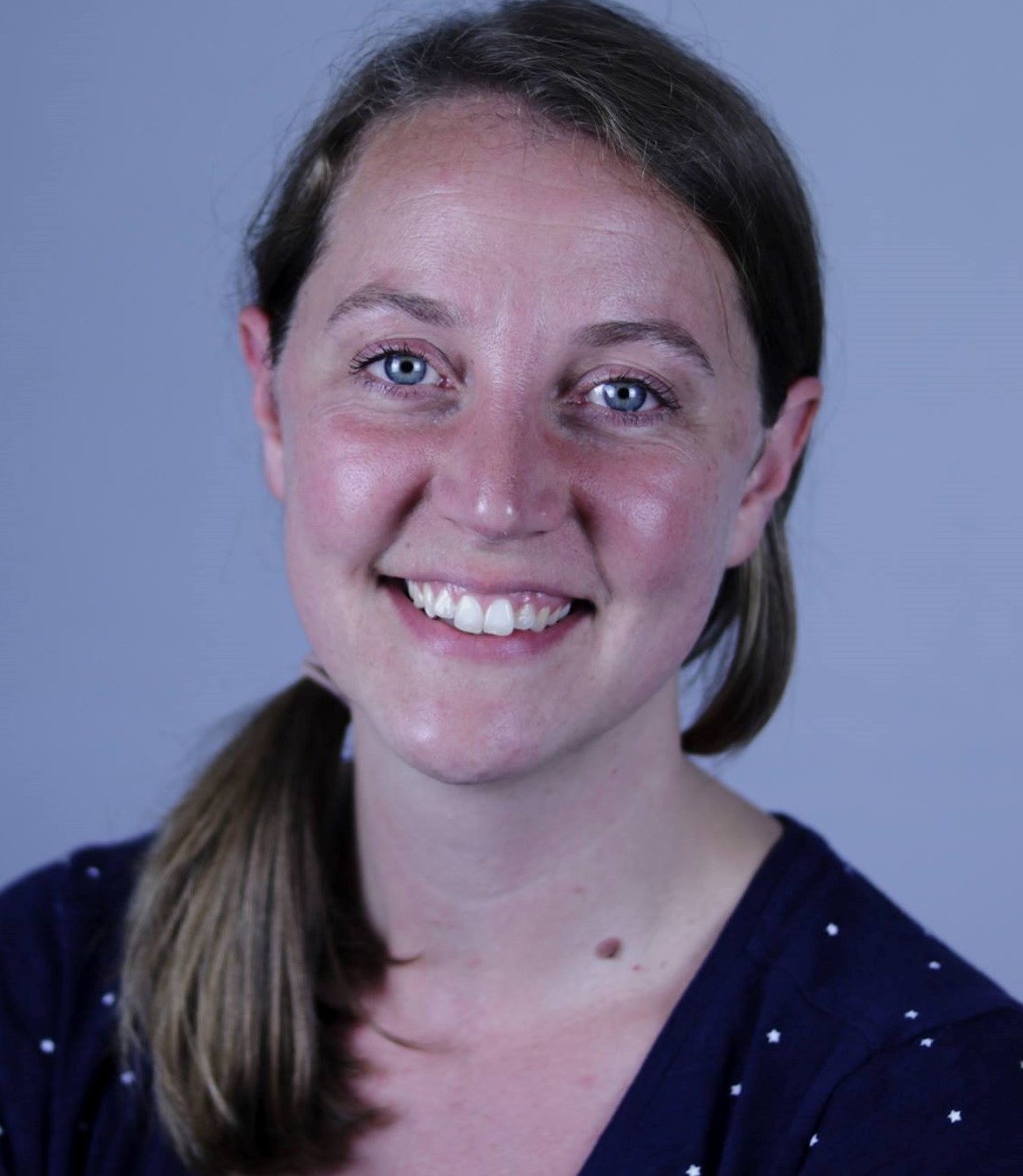 Talk Title: Exploring the world of ultra-intense laser plasma interactions
Date: 5 February 2025 at 12:00 (GMT)
Location: Blackett Lecture Theatre 1
Speaker: Dr Kate Lancaster
Abstract: Ultra-intense laser interactions with matter give us a route to produce some of the most extreme conditions on earth. When these lasers are focused onto solid material, the electric fields associated with the laser are so strong that the atoms in the material become readily ionised to create plasma. These intense lasers only penetrate a short distance into the material that they are striking, limiting the amount of energy that can be readily absorbed. Mega-Amp currents of fast electrons are driven into the target and these electrons transport energy deeper into the material. The fast electrons are the driver of much of the downstream physics and so the study of these electrons is of great interest. The potential impact of this work is broad and exciting from high-gain Inertial Confinement Fusion approaches to developing bright, ultra-short sources of radiation for non-destructive testing and medicine.
Biography: Dr Kate Lancaster is a senior lecturer based at the York Plasma Institute, part of the School of Physics, Engineering and Technology at the University of York. She received her PhD in 2005 in Advanced Fast Ignition Studies from Imperial College whilst based in Central Laser Facility at the Rutherford Appleton Laboratory. A post-doctoral position was followed by a permanent research position at the Central Laser Facility, before coming to the York Plasma Institute in 2012.
Her research expertise is in ultra-intense laser-plasma interactions and is based around understanding the absorption of those lasers and the subsequent transport of the energy. She specifically is interested in the role the electrons play in this and how we can manipulate and control them, which is relevant for alternative laser driven fusion schemes, laser driven sources, and physics at the intensity frontier.
She is the chair of the IOP plasma physics group, a member of the academic council for FuseNET, and reviews experimental proposals for a number of international laser facilities.
Kate has been very active in the communication of science for many years. She has spoken to tens of thousands of people at many events, festivals, and schools and has appeared as an expert on both television and radio, mainly speaking about lasers, plasmas, and fusion. She gave a prestigious Friday Evening Discourse at The Royal Institution in 2015 on “The Extreme World of Ultra Intense Lasers”, which has subsequently received over 700,000 views on YouTube. Recently Kate was a guest on the BBC Radio 4 show “in our time” talking about plasma. This show has a listenership of ~2.5 million with a further ~2 million podcast downloads.
 Talk Title: Physics at the poles: Ground truth measurements in support of satellite altimeters
Date: 5 March 2025 at 12:00 (GMT)
Location: Blackett Lecture Theatre 1
Speaker: Prof Elizabeth Morris
Abstract: Since pre-industrial times the mean annual global temperature has increased by around 1.4 °C. If we continue to emit greenhouse gases, this temperature could rise to 2.0 °C or even 2.4 °C and melting of the ice sheets could produce 1 m of sea level rise by 2100. Since 2004 satellite altimeters have been used to measure the elevation of the surface of the polar sheets in the hope that we can detect the changes that will ultimately lead to sea level rise. In this talk I will describe ground truth measurements that were made Greenland and Antarctica in order to help us interpret the satellite data. These included studies of radar penetration into snow and the physics of snow densification.
Biography: Prof Elizabeth Morris is a glaciologist and Emeritus Associate at the Scott Polar Research Institute, Cambridge University. Prof Morris completed her undergaduate and PhD degrees at the University of Bristol. Her research is currently focused on glaciology and climate change. She was among the first women scientists to work in Antarctica, where her research focused on the accumulation and loss of ice and snow from the continent. Prof Morris was appointed an OBE in the Millennium Honors List for servises to Polar Science and was awarded the Polar Medal in 2003.
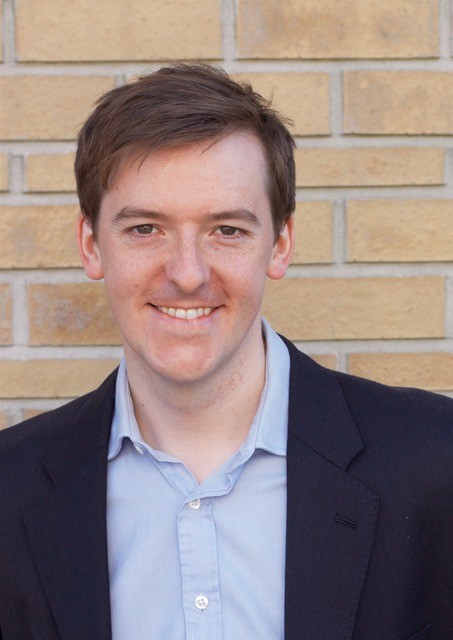 Talk Title: Hunting for dark matter: what role can theorists play?
Date: 1 November 2023 at 12:00 (GMT)
Location: Lecture Theatre 1, Blackett Lab
delivery by Dr Christopher McCabe
Abstract: Among the most prominent puzzles within physics today is to understand the nature of “dark matter”. The ubiquitous dark matter reveals its presence through numerous astrophysical and cosmological observations. Many of the properties of this dark matter remain unknown to us, but it accounts for about 27% of the matter content of the Universe. There is a rich tapestry of dark matter theories and remarkably, they generically predict that dark matter interacts with ordinary matter. This key insight has prompted the hunt for such interactions in laboratory experiments across the world. In this talk, I will briefly discuss two experiments where UK-based researchers are playing a world-leading role, and discuss how physicists with a background in theoretical physics can contribute to these experimental efforts.
Biography: Dr Christopher McCabe is a Reader at King's College London. He obtained his doctorate in Theoretical Physics from the University of Oxford and has held postdoctoral positions at the IPPP Durham University and GRAPPA University of Amsterdam. He has extensive experience across a broad range of dark matter phenomenology that relates directly to experiment: interpreting results and exploring the physics that could be achieved with present and future projects. He is a member of the AION and MIGDAL Collaborations, has served on the STFC’s Particle-Astrophysics Advisory Panel, is the Chair of the Dark Matter UK (DMUK) network, and is the Treasurer of the IoP Astro-Particle Physics group.
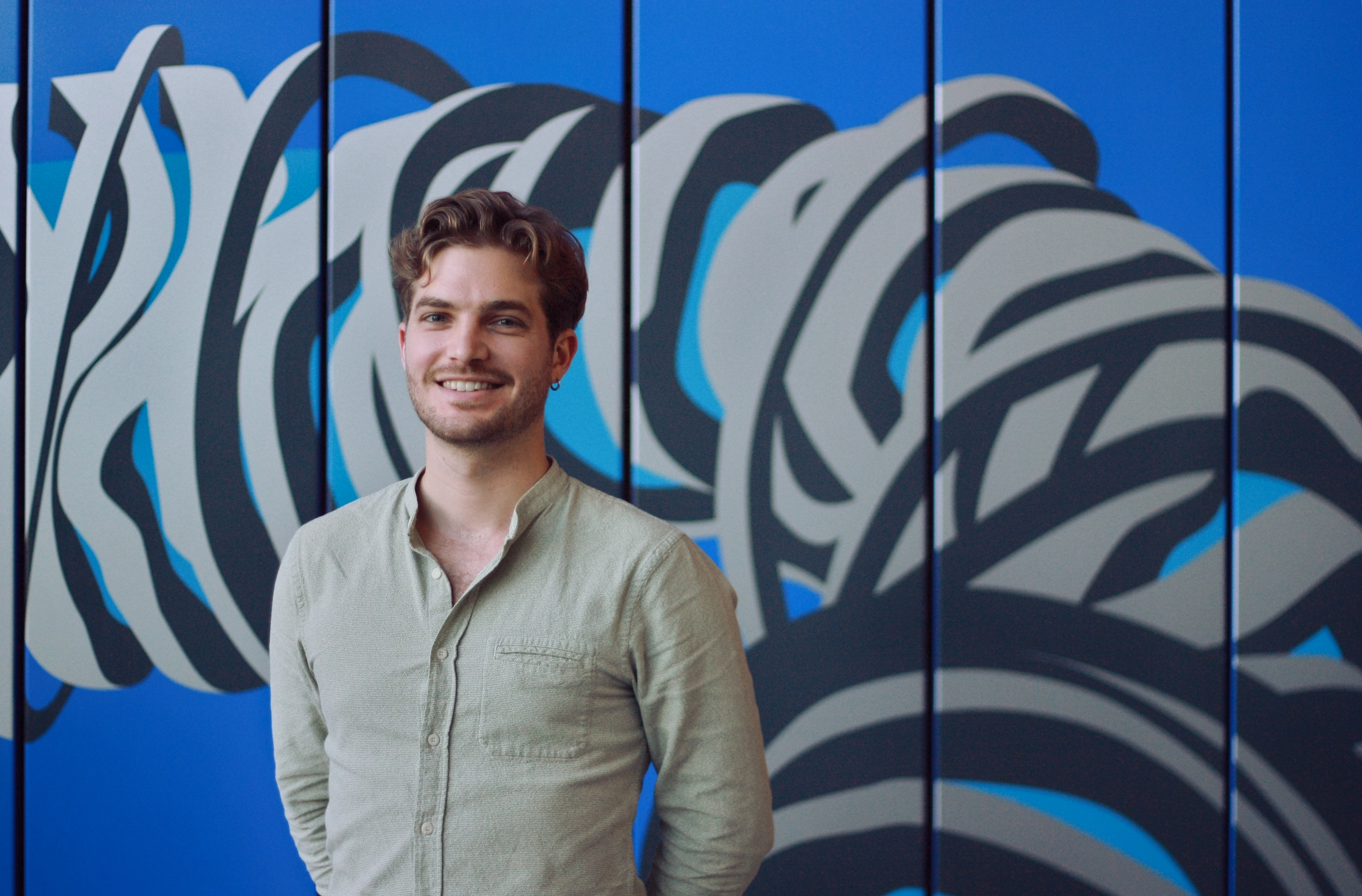 Talk Title: Plasma turbulence in the Wendelstein 7-X stellarator – a stumbling block on the path to stellarator fusion reactors
Date: 29 February 2024 at 17:00 (GMT)
Location: Lecture Theatre 1, Blackett Lab
delivery by Dr Jan-Peter Bähner
Abstract: Stellarators, alongside tokamaks, are one of the most promising concepts to achieve the commercial use of nuclear fusion energy. The Wendelstein 7-X stellarator in Germany is currently the largest and most advanced experiment in world demonstrating the immense progress in recent decades with record-breaking performance in experiments. The advances in stellarator research and the large scale of new experiments shift the focus to new remaining issues on the path to a reactor, which are similar to the challenges for tokamaks. One of these stumbling blocks is turbulence and the associated transport of heat and particles. However, the stellarator concept has an ace up its sleeve: there is the hope to reduce the negative impact of turbulence through optimisation of the magnetic field geometry – if we manage to understand turbulence sufficiently well in theory and experiment. This talk aims to briefly introduce stellarators and plasma turbulence on the example of Wendelstein 7-X and outline current research questions.
Biography: Dr Jan-Peter Bähner is a Postdoctoral Associate at the MIT Plasma Science and Fusion Center working on the Wendelstein 7-X stellarator experiment at the Max Planck Institute for Plasma Physics in Greifswald, Germany. He received a B.Sc. in Physics at the RWTH Aachen University in 2016 and a M.Sc. in Physics at Imperial College London in 2018. In 2019, he started his research on stellarator turbulence with a focus on the Phase Contrast Imaging diagnostic at the Max Planck Institute for Plasma Physics in Greifswald, where he received a PhD through the University of Greifswald in 2022.
 Talk Title: Update on The Spherical Tokamak route to compact fusion reactors
Date: 6 March 2024 at 12:00 (GMT)
Location: Lecture Theatre 1, Blackett Lab
delivery by Prof Michele Romanelli D.IC
Abstract: Following the achievement in 2022 of record ion-temperatures, ST40 has been enhanced with a new Thomson Scattering system, new bolometer, improved ECE system and several other new diagnostics. These, along with reduction of in vessel passive currents and development of an advanced control system has allowed to establish robust, well diagnosed double-null divertor scenarios for the study of H-mode confinement scaling, development of high beta plasmas, characterization of SOL and power loads on divertor target. This presentation will review the latest results and outline plans for future experiments aimed at progressing Tokamak Energy’s exploration of the ST reactor physics basis.
Biography: Prof Michele Romanelli, D.IC (Doctor of Imperial College) is the Plasma Theory and Modelling Manager and Principal Physicist at Tokamak Energy Ltd based at Milton Park, Abingdon. His primary research interest is plasma turbulence, transport and confinement in compact, spherical tokamak reactors. He is also interested in computational physics, and his work span activities ranging from analytic theory and advanced computing. Michele received his Bachelor of Science degree in Physics from the University of Torino, Italy, in 1995 and his PhD in Physics from the Imperial College of London in 1998. He then went on to hold several research / managerial positions at JET, ENEA and CEA, before becoming JET Deputy Task Force Leader and EUROfusion Leader for the Code Development Project.
Michele has co-supervised several PhD students from UK and international Universities. Michele joined Tokamak Energy Ltd in 2020.
Prof Dr Michele Romanelli | University of Oxford Department of Physics
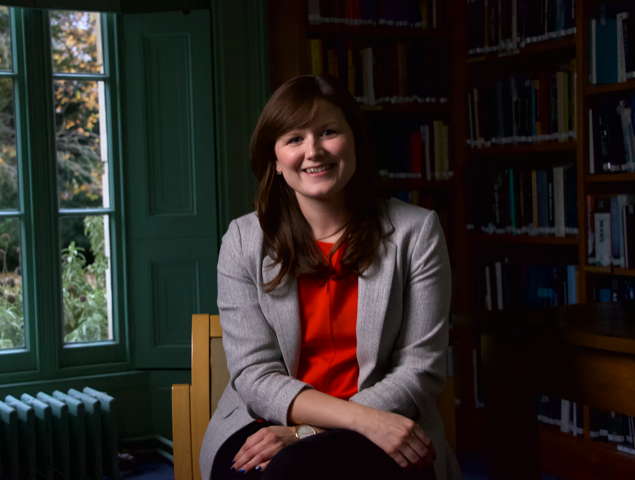 Talk Title: It’s not easy growing a supermassive black hole
Date: 30 November 2022 at 12:00 (GMT)
delivered by Dr. Rebecca Smethurst
Abstract: When we think of black holes, we often think of them as endless hoovers, sucking up anything around them. In reality though, it’s very difficult to grow a black hole; to get matter close enough to that point of no return. Instead, most matter will happily orbit a black hole. Just like the Earth orbits the Sun, the Sun orbits a supermassive black hole at the centre of the Milky Way over 4 million times more massive than the Sun itself. So if it’s difficult to grow a black hole, how in the universe did supermassive black holes like this get so big?
Biography: Dr Becky Smethurst is an award-winning astrophysicist and science communicator at the University of Oxford, specialising in how galaxies co-evolve with their supermassive black holes. She was recently awarded the Royal Astronomical Society’s Research Fellowship for 2022. Her YouTube channel, Dr Becky, has over 450,000 subscribers who engage with her videos on weird objects in space, the history of science and monthly recaps of space news. Her latest book, A Brief History of Black Holes is out on 1st September 2022.
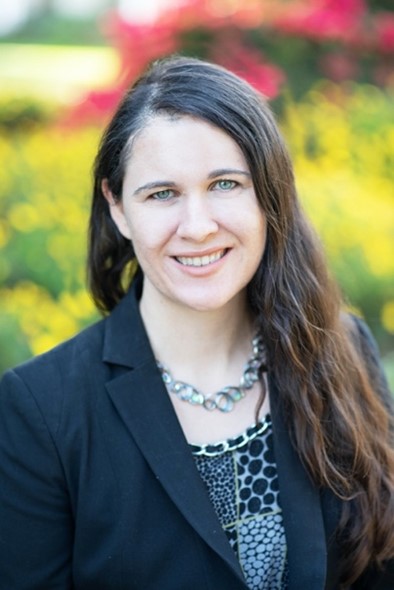 Talk Title: Negative Triangularity: the Final Frontier?
Date: 1st February 2023 at 15:00 (GMT)
Location: Live online via Zoom - joining details will be released nearer to the date
delivered by Dr. Kathreen Thome
Biography: Kathreen Thome is a General Atomics scientist that works on both the DIII-D and NSTX-U tokamaks. She received a B.S in Nuclear Science and Engineering from MIT in 2009 and her PhD in 2016 in Engineering Physics from the University of Wisconsin–Madison. At DIII-D and NSTX-U, she has participated in diverse research topics, including the development of steady-state plasma scenarios for fusion reactors, transport physics and modeling, and hands-on development of a high-frequency magnetic diagnostic for energetic particles. Dr. Thome is a co-leader of the DIII-D negative triangularity working group, part of the DIII-D Diversity, Equity and Inclusion panel, head of the NSTX-U scenario group, an executive member of the APS Division of Plasma Physics, and regularly participates in outreach and mentoring activities.
 Talk Title: Physics at the End of the Universe
Date: 8 November 2021 at 12:00 (GMT)
Location: Lecture Theatre 1
delivered by Dr Katie Mack
watch the lecture recording
Abstract: The Big Bang theory tells the story of the beginning of the Universe, our cosmic home for the last 13.8 billion years. But what is the story of its end? I’ll share what modern astrophysics tells us about the ultimate fate of the cosmos - whether it will end with a bang, or a whimper, or something entirely unexpected - and what each possible end would look like if there were people there to see it.
Talk Title: The Machine Learning revolution in Cosmology
Date: 24 November 2021 at 12:00 (GMT)
delivered by Prof Roberto Trotta
watch the lecture recording
Abstract: At the beginning of last century, the Nobel Prize Winning physicist Ernest Rutherford reportedly believed that "If your experiment needs statistics, you ought to have done a better experiment". And yet today, advanced astrostatistical methods belong to the toolbox of every cosmologist, and Machine Learning is poised to change how we look at the Universe and how we do science in the future. Such tools are increasingly valuable as the emerging picture of the cosmos becomes ever more puzzling: dark matter and dark energy account together for 95% of content of the Universe -- yet little is known of either. Shedding light on these mysteries requires combining large, complex data sets from space observatories, particle accelerators, underground detectors and giant telescopes. Understanding the reams of data produced will only be possible thanks to Machine Learning methods yet to be invented.
 Talk Title: The Spherical Tokamak route to compact fusion reactors
Date: 1st December 2021 at 12:00 (GMT)
delivered by Prof Michele Romanelli D.IC
watch the lecture recording
Abstract: During the past decades’ tokamak research has focused mainly on large aspect ratio devices where the vessel/plasma major radius is about a factor three larger than the plasma radius. The above research culminated in the design and construction of the International Thermonuclear Experimental Reactor, ITER. Spherical tokamaks (ST) with aspect ratio below two, represent an attractive alternative to large aspect ratio tokamaks as, in our opinion, they provide a faster, more economical and compact solution on the path to a fusion reactor. Spherical tokamaks are the focus of research at Tokamak Energy Ltd with its present device ST40 in operation and the first ST burning-plasma experiment reactor being designed, taking advantage of the high temperature superconductor (HTS) technology. HTS allow to design a spherical tokamak with magnetic field /comparable or exceeding that of present-day large aspect ratio tokamaks.
In this lecture we will explore the differences between conventional aspect ratio tokamaks and Spherical Tokamak plasmas, we will see examples of plasmas in ST40, the highest magnetic field ST in operation and we’ll see how the use of high temperature superconductor magnets can make compact reactors possible.
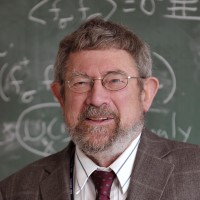 Talk Title: A Random Walk Through Physics To The Nobel Prize
Date: 2 February 2022 at 14:00 (GMT)
delivered by Prof Mike Kosterlitz
Watch the lecture recording
Abstract: The talk is the story of my random walk through physics via Cambridge, Oxford, Turin and Birmingham finishing up at Brown University. I describe my very crooked path through life including physics and my other life as a mountaineer. I also include a somewhat simplified version of my prize winning work.
Talk Title: The World According to Physics
Date: 16 March 2022
delivered by Prof Jim S. Al-Khalili CBE FRS
Watch the lecture recording
Abstract: Where does theoretical physics stand at the beginning of the third decade of the 21st century? Are we finally approaching the end of physics, when the rich tapestry of the universe will be revealed to us and we will finally understand the true nature of reality? If we are honest then we must admit that, while what we do know is dazzlingly impressive, there is much we have yet to grasp, from the nature of space and time to the meaning quantum mechanics. This whistle-stop tour of selected topics in modern physics is an appraisal of what we know and what we have yet to figure out.
2020-21 Lectures
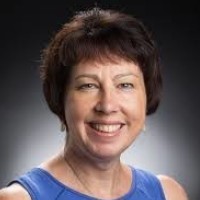 Talk Title: Journey to the Sun
Date: 21 October 2020, 12:00 (EST), 17:00 (BST)
delivered by Dr. Nicola Fox
Abstract: NASA Heliophysics research studies a vast system stretching from the sun to Earth to far beyond the edge of the planets. Studying this system—much of it driven by the sun’s constant outpouring of solar wind—not only helps us understand fundamental information about how the universe works, but also helps protect our technology and astronauts in space. NASA seeks knowledge of near-Earth space, because—when extreme—space weather can interfere with our communications, satellites, and power grids. The study of the sun and space can also teach us more about how stars contribute to the habitability of planets throughout the universe.
Mapping out this interconnected system requires a holistic study of the sun’s influence on space, Earth, and other planets. NASA has a fleet of spacecraft strategically placed throughout our heliosphere—from Parker Solar Probe at the sun observing the very start of the solar wind, to satellites around Earth, to the farthest human-made object, Voyager, which is sending back observations on interstellar space. Each mission is positioned at a critical, well thought-out vantage point to observe and understand the flow of energy and particles throughout the solar system—all helping us untangle the effects of the star we live with.
Biography: Dr. Nicky Fox is the Heliophysics Division Director in the Science Mission Directorate at NASA Headquarters in Washington, D.C. Until August 2018, Nicky worked at the Applied Physics Lab at Johns Hopkins University, where she was the chief scientist for Heliophysics and the project scientist for NASA’s Parker Solar Probe. She served as the deputy project scientist for the Van Allen Probes, and the operations scientist for the International Solar Terrestrial Physics program. Nicky received her bachelor of science in physics and doctorate in space and atmospheric physics from the Imperial College of Science, Technology and Medicine in London. She received a master’s degree in telematics and satellite communications from the University of Surrey.
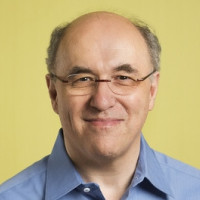 Talk Title: A Surprisingly Promising Approach to a Fundamental Theory of Physics
Date: 25 November 2020, 13:00 (EDT), 17:00 (GMT)
delivered by Dr. Stephen Wolfram
View the lecture recording
Biography: Dr. Stephen Wolfram is the creator of Mathematica, Wolfram|Alpha and the Wolfram Language; the originator of the Wolfram Physics Project, the author of A New Kind of Science and other books; and the founder and CEO of Wolfram Research. Over the course of more than four decades, he has been a pioneer in the development and application of computational thinking—and has been responsible for many discoveries, inventions and innovations in science, technology and business. A full biography can be found here; https://www.stephenwolfram.com/about/
Talk Title: Medical Physics and Nuclear Medicine
Date: 2 December 2020, 12:00 (GMT)
delivered by Tamar Willson
View the lecture recording
Download the lecture slides
Abstract: Many people will hear about nuclear medicine for the first time when they are referred for a test or treatment, and subsequently receive an administration of radioactive material in the form of an injection, a capsule, a gas they breathe in, or even mashed potato…
We will explore this versatile specialty, from the logistics of producing radioactive materials and processing them into useful forms, to the instrumentation involved in imaging radiation. We’ll go through a few examples of the wide variety of images which may be acquired, and what those images mean. We’ll also discuss the physicist’s role in the clinical environment, and the different routes into a medical physics role.
Biography: Tamar Willson completed her BSc in Physics at Imperial College London in 2012, and now works as a Nuclear Medicine Physicist at The Royal Free London NHS Foundation Trust. She provides scientific support for the extensive clinical activities carried out in the Nuclear Medicine department, including diagnostic nuclear medicine, radionuclide therapy and PET/CT. Research interests include hybrid imaging, image optimisation, and the radiation protection of both staff and patients.
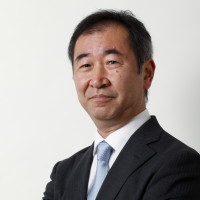 Talk Title: Neutrino studies in Kamioka
Date: 17 March 2021, 12:00 (GMT)
delivered by Prof. Takaaki Kajita
Abstract: Kamioka is a name of a local, small town in Japan. More than 30 years ago, the Kamiokande experiment began in Kamioka. Then Super-Kamiokande was constructed. In 1998, neutrino oscillation was discovered with the studies of atmospheric neutrinos in Super- Kamiokande. Since then, Super-Kamiokande has contributed to various neutrino studies. The next generation experiment, Hyper-Kamiokande, has been approved by the Japanese government in 2020. I will discuss the neutrino studies in these experiments.
Biography: Takaaki Kajita is the Special University Professor at theUniversity of Tokyo, and also the Director of the Institute for Cosmic Ray Research (ICRR) of the University of Tokyo. Kajita received his Ph.D. from the University of Tokyo School of Science in 1986, and has been researching at Kamiokande and Super-Kamiokande detectors at the Kamioka Observatory in central Japan. In 1998, at the Neutrino International Conference held in Takayama, Gifu, he showed the analysis results which provided strong evidence for atmospheric neutrino oscillations. In 2015 he shared the Nobel Prize in Physics for his role in discovering atmospheric neutrino oscillations. Currently, he is the project leader for KAGRA Project, aiming to explore the gravitational wave astronomy.
For his work he received the 2015 Physics Nobel prize; https://www.u-tokyo.ac.jp/en/whyutokyo/indpt_neutrino_017.html
2019-20 Lectures
Talk Title: Hairy Black Holes and Modified Gravity
Date: 27th November 2019 at 12 pm in Lecture Theatre 2
delivered by Callum Hunter, fourth-year theoretical physics undergraduate
Talk Title: Self-Organisation out of Disorder - L-H transition
Date: 5th February 2020 at 12 pm Lecture Theatre 1
delivered by Dr Eun-jin Kim, University of Sheffield
Talk Title: From Dawn til Dust: A perspective on early-career scientific research
Date: Wednesday, 18 March at 12 pm Lecture Theatre 3
delivered by Luke Simons, 4th-year Postgraduate Research student at Imperial College London working with Prof. Michael Coppins
2018-19 Lectures
Talk Title: The role of MHD in controlling impurity accumulation in tokamaks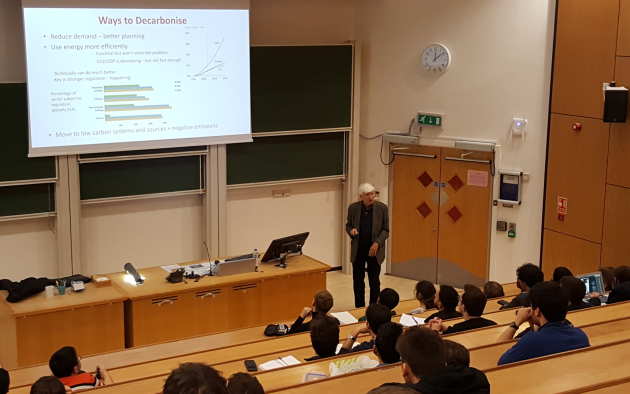
Date: Monday 29 October 2018 at 12pm in Lecture Theatre 2
delivered by Dr. Marco Sertoli, Culham Centre for Fusion Energy
Lecture Recording
Lecture Slides
Talk Title: The Energy Transition: How Can Physicists Help?
Date: Monday 26th November 2018 at 12pm in Lecture Theatre 2
delivered by Prof. Sir Chris Llewelyn Smith FRS, University of Oxford
Talk Title: Not All Those Who Wander are Lost
Date: Wednesday 6th February 2019 at 12pm in Lecture Theatre 1
delivered by Professor Dame Athene Donald, University of Cambridge
Talk Title: MEMS-based gravimeters. Applications include oil and gas prospecting, volcano eruption monitoring and sink hole detection
Date: Monday 18th February 2019 at 12pm in Lecture Theatre 1
delivered by Prof. Douglas J. Paul, School of Engineering, University of Glasgow
Talk Title: Spintronics: towards ultra-fast and low power computers
Date: Wednesday 20th March 2019 at 12pm in Lecture Theatre 3
delivered by Dr Chiara Ciccarelli, University of Cambridge
2017-18 Lectures
Talk Title: The JET Tokamak – past, present and fusion
delivered by Dr Ivor Coffey, Queen's University Belfast and CCFE
Talk Title: Solar flares – the most powerful explosions in the solar system
delivered by Prof. Philippa Browning, The University of Manchester
Talk Title: Fusion Energy - promises, progress and prospects
delivered by Prof. Kieran Gibson, The University of Yor
Talk Title: Liquid Crystals
delivered by Prof. Helen Gleeson, University of Leeds