To mark International Women in Engineering Day, we spoke with Johanna Barbaran, a graduate of the MSc in Soil Mechanics (now known as the MSc in Geotechnical Engineering) working at Klohn Crippen Berger in Canada. She shares how she found her passion in the mining sector, what it’s like working in the field, and why she’s committed to promoting female representation in STEM.
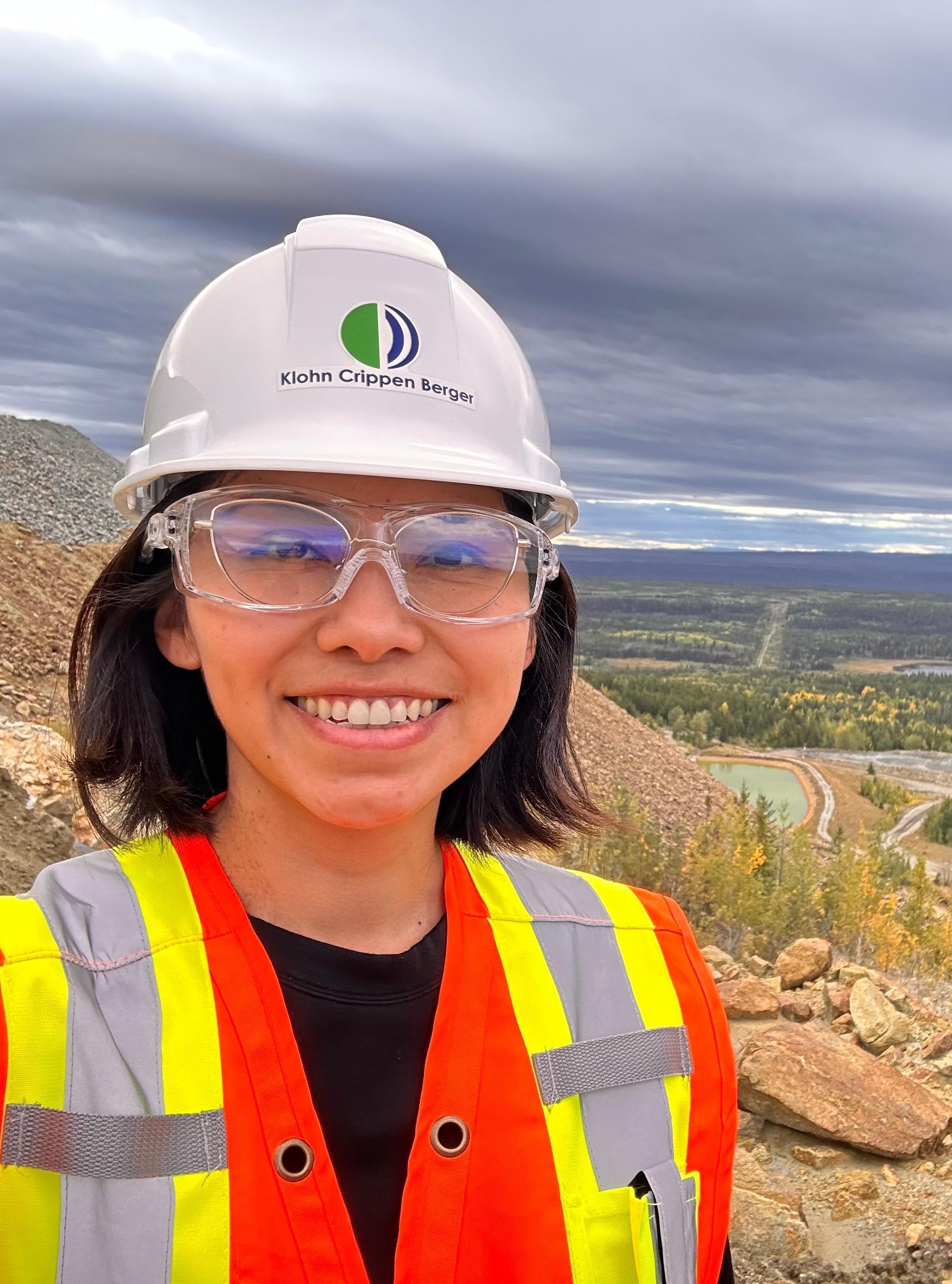 What inspired you to pursue geotechnical engineering, particularly in the mining industry?
I come from a civil engineering background—my father is a civil engineer and growing up I was fascinated by the stories he shared about his work. After university, I explored different industries and discovered geotechnical engineering in mining. What drew me in was how multidisciplinary it is—not just technically, but also in terms of environmental, economic, governance and social factors. That complexity made me realise this was the area I wanted to grow in.
Why did you choose to study at Imperial, and how did it shape your career?
I’d always dreamed of studying abroad, and Imperial stood out for its world-class reputation and its MSc in Soil Mechanics. My time there deepened my technical understanding, but it also opened my eyes to how much more there is to learn. I was exposed to fascinating research topics and a range of applications across industries. The friendships and professional relationships I built there were equally important—some of the most brilliant people I’ve met were my lecturers and classmates. Our cohort became close over the year, and those friendships have stayed with me ever since.
What does your current role as a geotechnical engineer involve?
It depends on whether I’m in the office or on site. In the office, I focus on design work, risk assessments, trade-off studies and planning lab testing for infrastructure like tailings dams, which are used to store the waste from mining operations. On site, the pace is very different. I usually work in two-week rotations, working 12-hour shifts. I supervise construction, carry out quality assurance, or log soil and install instruments. It’s physically demanding, but balanced by the time off afterwards.
Is there a project that stands out as especially memorable?
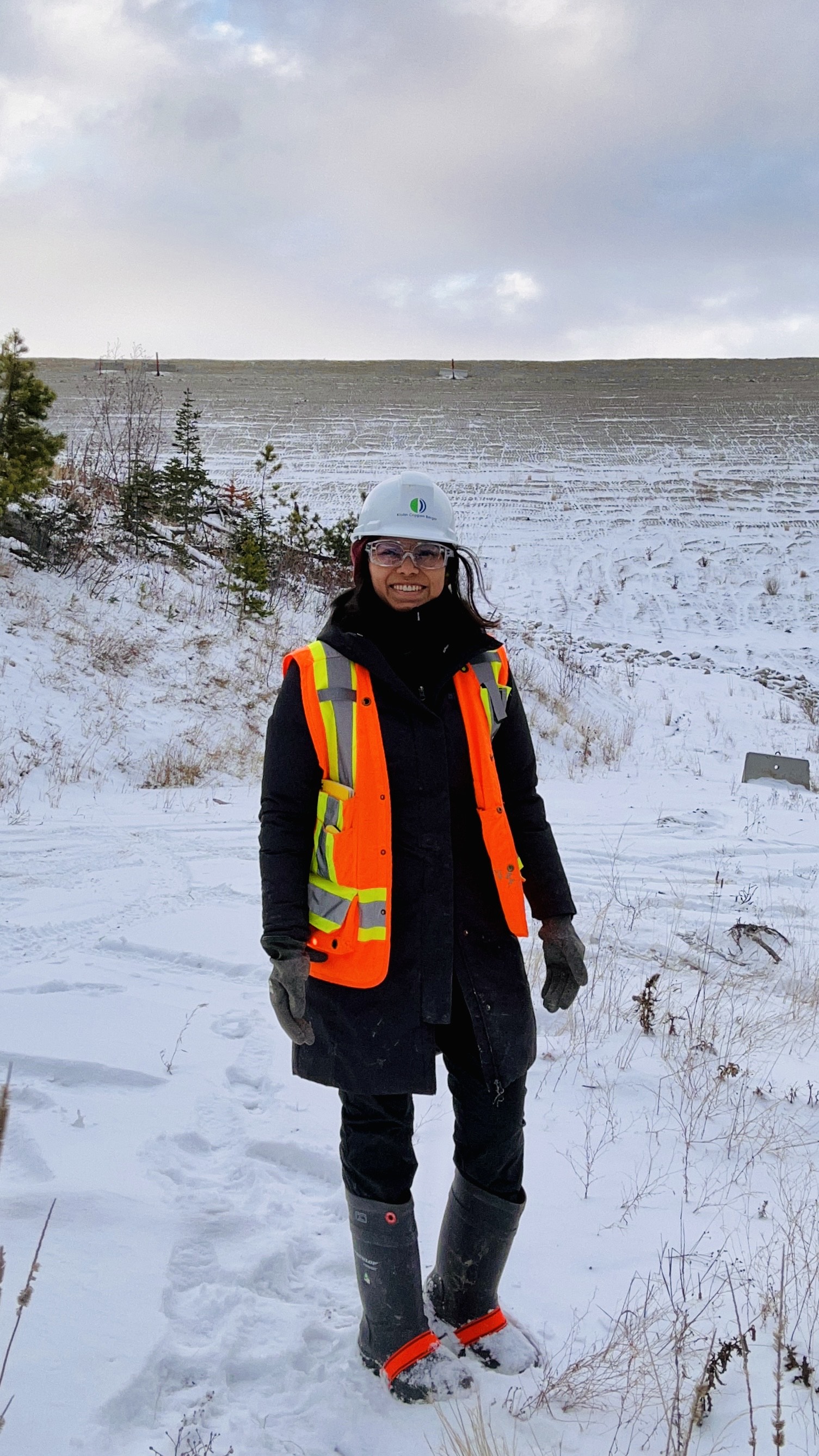 Yes—my first project in Canada. It was at one of the country’s largest open-pit copper mines, which produces over 120 million pounds of copper on average per year. I helped design a tailings storage facility life extension and took part in a major site investigation. I learned a lot about Canadian regulations, frozen tailings, and the challenges of working in winter. It was also a lesson in cold-weather driving—something totally new to me! It was eye-opening to experience different work cultures and collaborate with contractors in a new context.
What’s an aspect of your work that people might not see, but is important to you?
Mining comes with a huge responsibility—failures can have serious environmental and social consequences. I take that responsibility seriously. I always try to be aware of the limitations in our assumptions during the design or assessment process. I also prioritise continuous learning—through courses, conferences, and conversations with peers. No one can know everything, but building a strong network helps you see and address your blind spots.
How has your experience as a woman in engineering evolved over time?
During my studies, I never really thought about gender in engineering—I had my family’s full support, and it felt completely normal. That changed when I entered the workforce in 2016. I noticed a stark difference...I was one of only three women in a male-dominated office, and I didn’t see any women in leadership roles.
Throughout the years, I’ve seen encouraging progress. I now work with more female colleagues and know women who have moved into leadership. But the gender gap is still there, and closing it will take long-term, sustained efforts.
You founded Ingenia to promote female leadership in STEM. What inspired you to create it?
It started when my sister and her classmates were thinking about their future careers. I asked some of my engineer friends—all of whom happened to be men men—to give them some advice. Surprisingly, none of the female classmates were interested in engineering, even though some enjoyed science.
Engineering always felt like an option for me because I grew up with a father who was an engineer. Not everyone has that.
That led me to dig deeper into the reasons behind the gender gap in STEM. One key factor I discovered was the lack of visible role models. I grew up seeing engineering as an option because of my dad. Not everyone has that. So I started Ingenia as an online platform to showcase interviews and stories from women in STEM. The idea is to make those role models more relatable and accessible—because, as they say, “you can’t be what you can’t see.”
What are some of the key challenges women still face in the profession?
Gender-based salary disparities are a major issue. Women with the same qualifications and experience can earn up to 20% less than men, depending on the STEM field. There’s also the perception of motherhood as a barrier. Many companies still don’t offer inclusive parental leave or flexible working options.
There’s no single solution, but having more women in senior, decision-making roles is a good start. Mentorship, transparency and equity in pay, inclusive parental leave policies, and strong communication can make a real difference. When women are supported to develop their careers, they can become the role models that help the next generation succeed. I think that's how we begin to close the gap.
What advice would you give to young women considering engineering?
Engineering is an incredibly exciting and rewarding field. We get to solve complex problems and design solutions that prioritize both safety and sustainability, with real impacts on society and the environment. It’s a profession where you can make a meaningful difference—and you get to choose how.
Looking ahead, what are your hopes for the next generation of women engineers?
I believe the gender gap in engineering is a systemic issue, and organisations like Ingenia address only one part of the equation—providing visible role models for high school students. But broader change requires action across multiple levels, including education policies that promote science and technology through a gender-inclusive lens; university programs that prepare women for industry challenges and leadership; workplace policies that support inclusivity, equal opportunities, and career development for women; and ongoing training for engineers already in the workforce, who will be key to implementing and sustaining these changes.


.jpg)