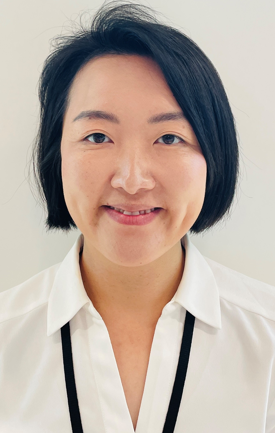
Meet Nicole Cai, a graduate of the MEng in Civil Engineering (2015) and now Associate Cost Consultant at Arcadis. Originally from Beijing, Nicole came to the UK at 18 and went on to build a career in engineering consultancy. Imperial also holds a special place in her personal life: it is where she met her now-husband, Bill, during their first year of the programme. Published to mark International Women in Engineering Day, Nicole shares what drew her to civil engineering, the mentors who inspired her, and why she believes diversity makes engineering better for everyone.
 What did you do before starting your degree at Imperial?
I am originally from Beijing, China. I came to the UK at the age of 18 and started with a language programme at a Quaker school near Leeds, then completed two years of A-levels in Surrey. The move to Surrey was largely my own choice because I wanted to be closer to London.
Why did you choose to study our MEng programme?
I chose the MEng at Imperial because I was attracted by the combination of the two disciplines, ‘civil’, and ‘environmental’ engineering. Many universities offered civil and structural engineering, but Imperial's programme stood out to me because it considered the wider environment. I wanted to learn how engineering could help protect the environment beyond everyday actions such as reusing plastic bags. Growing up in China, I saw rapid growth in real estate and infrastructure, and that inspired me to be part of creating important landmarks and leaving a positive legacy.
What attracted you to Imperial specifically?
The ranking was an important factor. Imperial is known as one of the top universities in the world, especially for civil engineering. What really attracted me, however, was the energy I felt from the staff, professors and students. Everyone seemed calm, focused and purposeful. It gave me the impression that they knew what they wanted to achieve and were working towards it. That made me want to become one of them.
The facilities were also excellent. The Skempton Building felt bright, inclusive and open, with plenty of space for collaboration. Having access to world-class laboratories encouraged us to dream bigger and aim higher.
What were the highlights of your time here?
I particularly enjoyed Constructionarium. Over one week, we worked in teams to build a real-life engineering project with our own hands, such as a structure inspired by the Gherkin. The sense of achievement was incredible, and because it was delivered in partnership with contractors from industry, we had the chance to work with practising engineers, which was very inspiring.
My Imperial qualification helped me at the entry point into the industry. More importantly, it gave me confidence.
The teaching also stood out. Each member of staff had their own unique style and personality. Professor Gardner, who taught steel structures, was always calm and had a good sense of humour. I still remember his opening questions from the first class. Professor Grimes brought great energy and efficiency, while remaining approachable. I never felt worried about asking what might seem like a simple question. I also valued the support from teaching assistants in tutorial sessions, who guided us through the work and gave us insight into life in research.
My favourite workspace was the departmental library. It was quiet, airy, bright and tidy, and gave me a strong sense of belonging.
What achievements from your time here are you most proud of?
My Imperial qualification helped me at the entry point into the engineering industry. More importantly, it gave me confidence. It helped me believe that I could succeed in any professional field I chose. Engineering happened to be the field I chose.
What does your current role involve?
Alongside project delivery, part of my role is to help grow and support our team. I help team members recognise their strengths, identify development areas, and build confidence in both technical and soft skills. I also recognise that people have different priorities at different stages of their career and life, so support needs to be flexible and practical.
I have also worked with a global team to translate online technical training material into Mandarin Chinese for rollout in mainland China. By using my technical knowledge and bilingual skills, I have helped make learning more accessible and supported a more inclusive engineering community globally.
For me, diversity is not only about representation. It also improves the quality of engineering and the impact it has on people's lives.
What does International Women in Engineering Day mean to you?
For me, it is about visibility and inspiration. Studying engineering and working in construction have shown me how important it is to see more women in the field, whether as lecturers, mentors or industry leaders. It reminds me that everyone should have equal opportunities to enter and progress in engineering, even though each person's journey and choices may be different
Have you had female role models or mentors who have inspired you?
As I moved into engineering consultancy, I have been inspired by female leaders in the business, particularly my mentor, Oliet. She has strong technical capability and a well-rounded leadership style. What stood out to me most was how she navigated a traditionally male-dominated environment with resilience and authenticity. One of the most valuable lessons I learned from her is the importance of making your voice heard.
Why do you think diversity in engineering is important?
Engineering is fundamentally about solving complex problems. Diversity helps teams bring different perspectives, experiences and ideas to the table, which can lead to more innovative and effective solutions. For me, diversity is not only about representation. It also improves the quality of engineering and the impact it has on people's lives.
What advice would you give to young women considering a career in engineering?
Stay curious, keep developing yourself and be patient when building your network. Your network often starts with the people around you, including classmates, colleagues, tutors and mentors. Over time, these relationships can become very valuable.
A strong network is not built overnight. It grows through shared experiences, trust and mutual support. Engineering can be challenging, but having the right people around you can make the journey more rewarding and sustainable.


