Why we launched the programme
Imperial's estate is large, complex and energy intensive. Our campuses contain laboratories, research facilities, teaching spaces, offices, residences, hospitality and fitness facilities, and other specialist equipment. Together, these spaces support world-leading education, research and innovation, but they also require significant amounts of energy every day.
As a university committed to tackling global challenges through science, technology and collaboration, we recognise the importance of reducing the environmental impact of our own operations. Achieving net zero energy emissions by 2040 is a key commitment within our ‘Sustainable Imperial’ Strategy 2026-31 and an important part of ensuring our campuses remain resilient, efficient and fit for the future.
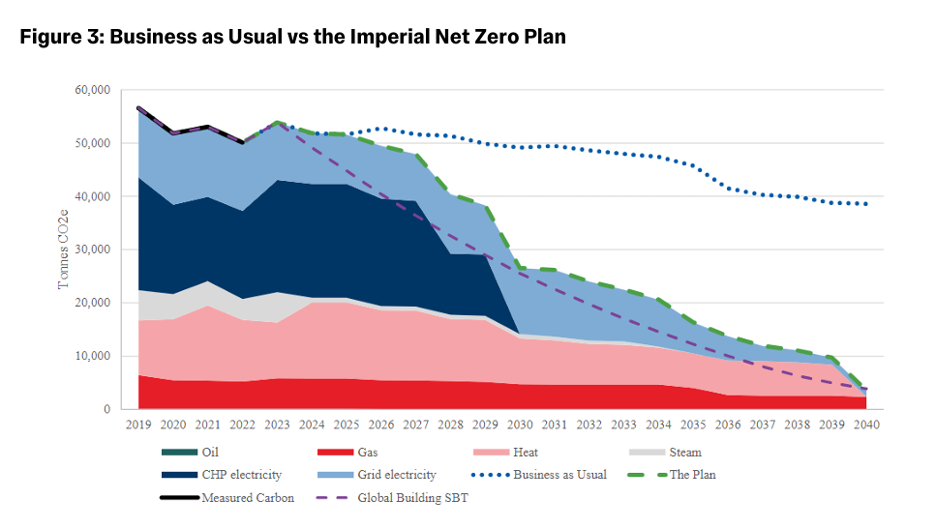
To understand how we could achieve this ambition, Imperial worked with sustainability and engineering specialists to assess more than 100 buildings across our estate. This analysis identified the most effective opportunities to reduce emissions while maintaining the high-quality environments that support our students, staff and researchers.

The result is the Carbon Net Zero programme: a long-term programme of investment that is transforming how our campuses are heated, powered and operated. Through projects across our estate, we are reducing energy demand, decarbonising heating, increasing clean energy generation and upgrading the infrastructure needed to support a net zero future.
Frequently asked questions
- What is the Carbon Net Zero programme?
- How will I know what progress is being made?
- How does the programme support Imperial's Sustainability Strategy?
- What does ‘net zero’ mean?
- What emissions does the programme focus on?
- Why is heating such a major focus?
- Why doesn't Imperial simply buy renewable electricity?
- Will the programme affect day-to-day campus activities?
- Why are retrofit projects important?
- How can staff and students contribute?
The Carbon Net Zero programme is Imperial's long-term programme of projects designed to reduce carbon emissions from campus buildings and infrastructure and support the university's commitment to reach net zero energy emissions by 2040.
We will continue to share updates on projects, milestones and carbon reduction achievements through Imperial's sustainability reporting, programme communications and project webpages.
The programme is one of the key ways Imperial is delivering the environmental commitments set out in its Sustainable Imperial Strategy 2026-2031, with a key focus on the goal of reducing the university's Scope 1 & 2 carbon emissions.
Net zero means refers to rendering Imperial’s carbon impact neutral. This is achieved as far as possible by through reducing the amount of Scope 1 & 2 carbon used in our operations through the employment of sustainable technologies.
The programme primarily focuses on Scope 1 and Scope 2 emissions. These are the emissions associated with fuels used on campus and the electricity we purchase to operate our buildings.
Heating currently accounts for a significant proportion of emissions across the estate. Moving away from fossil fuel-based heating systems is one of the most important steps we can take to reduce our carbon footprint.
Renewable electricity is an important part of the solution, but achieving net zero requires us to reduce energy demand, modernise our buildings and replace fossil fuel-based systems as well.
Some projects may involve temporary disruption while works take place, with contingencies planned accordingly. We work closely with departments and building users to minimise impacts and carefully plan activities wherever possible. Property Facilities Managers also support us in this regard by sending out local communications to building users throughout projects on a need basis.
Improving existing buildings can often deliver significant carbon savings while avoiding the environmental impacts associated with demolition and new construction.
Most emissions reductions will come from large-scale infrastructure improvements, but everyone can help by supporting sustainability initiatives, reducing energy waste and reporting maintenance issues when they arise. Our campus service providers like Taste Imperial are also trialling multiple new sustainability-related products and initiatives and you can also support these as a consumer.