Eighteen Light Emitting Diode (LED) upgrade projects have been successfully delivered during year two (August 2025 – July 2026) of Imperial's 17-year Net Zero Programme (NZP). Delivered ahead of the original plan, these upgrades are projected to generate approximately 1.5 million kWh of annual energy savings, equivalent to around 1,600 tonnes of carbon savings over their lifetime.
These projects form a critical part of Imperial’s wider decarbonisation strategy. LED lighting upgrades dramatically reduce the heat generated by our lighting, making them more efficient, reducing our energy demands and operational costs, and supporting compliance with legislative requirements.
From the perspective of our Net Zero Programme, LED lighting has a defined critical success factor to deliver over 41% reduction in energy demand per fitting. This target has generally been exceeded across the completed projects, evidence of the effectiveness of building-scale interventions.
Collectively, these eighteen upgrades are expected to contribute 43% of the total calculated annual energy reduction and 19% of lifetime carbon emissions savings forecast across the Net Zero Programme for year two, playing a central role in early-stage decarbonisation delivery.
Beyond carbon and energy outcomes, the LED roll-out is also delivering important ancillary benefits which support Imperial’s Great Environment pillar of the Enabling Roadmap. Improved lighting quality enhances teaching, research and study spaces, while reduced heat gain and improved controls contribute to more comfortable, consistent indoor environments. These benefits support staff and student wellbeing, while helping to create high-performing, low-impact buildings across the estate.
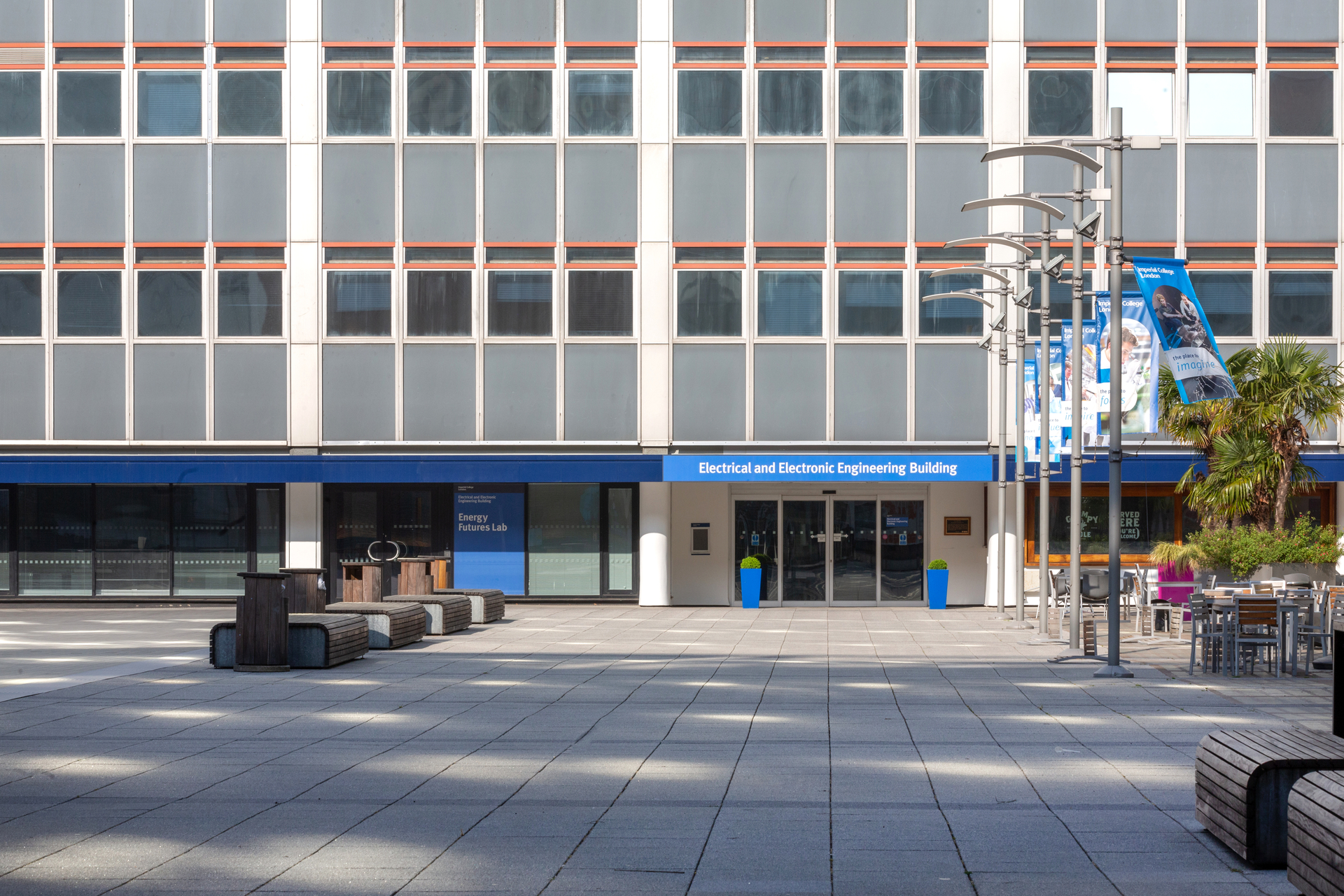
Delivery has spanned multiple campuses, with some of the most impactful upgrades taking place within major academic buildings on the South Kensington campus, including Flowers, City and Guilds, and Electrical Engineering. These projects were delivered in partnership with industry suppliers Zumtobel, Signify and Whitecroft.
In parallel, 14 smaller buildings at the Silwood Park Campus have been progressively upgraded through a collaborative delivery model between Imperial’s in-house maintenance teams and delivery partner Electro.
For larger and more complex buildings, Imperial commissioned Arup’s specialist lighting team to develop building-specific upgrade specifications, integrating estate-wide standards with individual building requirements. This included progressive sustainability measures, such as the assessment of embodied carbon in line with industry best practice, alongside robust performance and reporting criteria.
The LED roll-out programme demonstrates how decarbonisation can transition from a strategic programme into a scalable, repeatable “business-as-usual” activity, delivering lower operating costs and an enhanced environment for students and staff.