In April 2026, Imperial’s Property Division successfully implemented an Environmental Management System under the ISO 14001 accreditation. This article explores the efforts behind achieving that accreditation and what it means for Imperial.
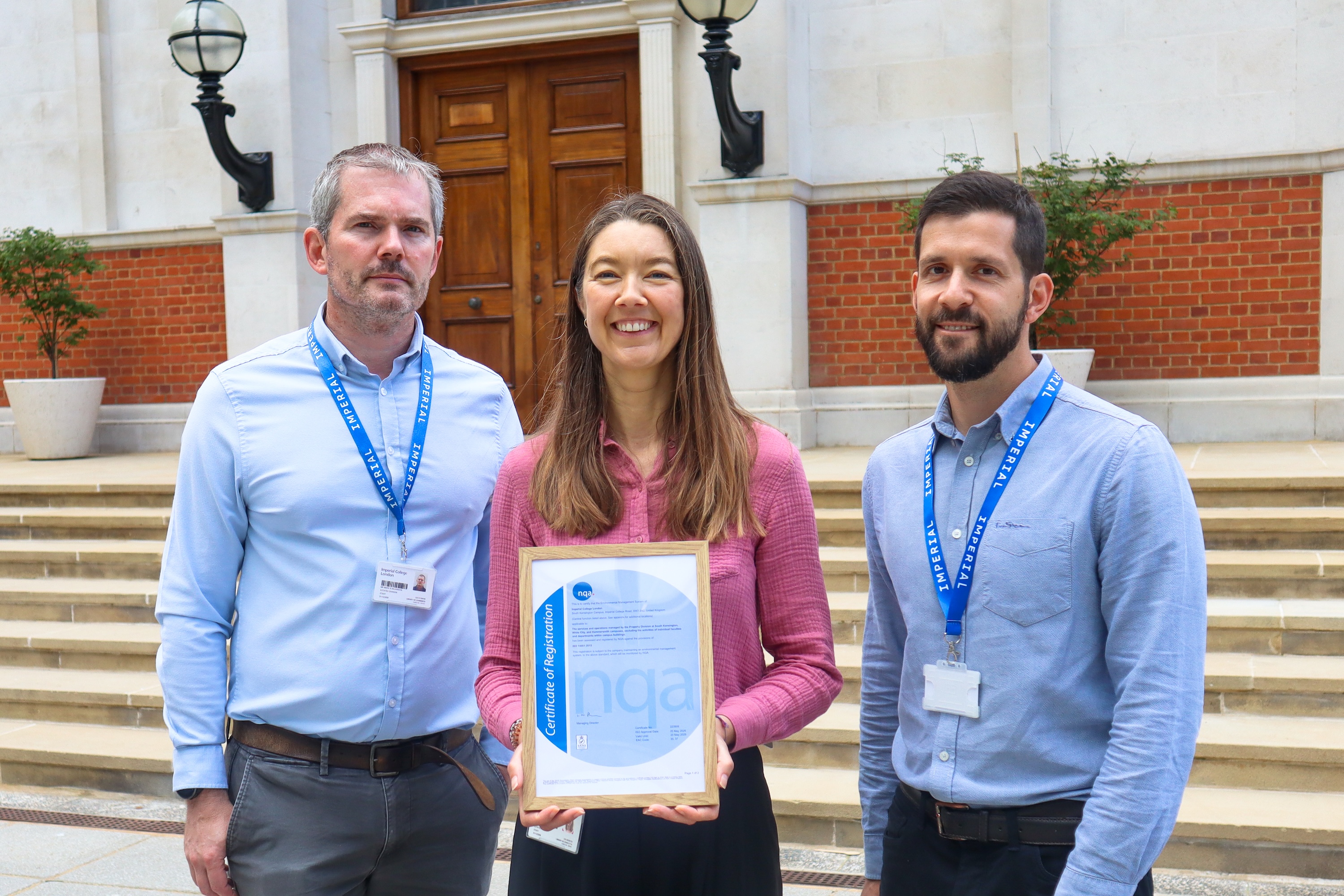
Mark Wilkinson, Lisa Holland and Alex Hobbins outside the Queen's Tower with Imperial's EMS certificate, June 2026.
For many years, colleagues in the former Estates world worked on putting a formal Environmental Management System (EMS) in place. There was a desire that Imperial should work towards ISO 14001 so that environmental work was not just good in parts but structured, consistent and auditable.
As Estates and Campus Services came together to form the Property Division, this provided the ideal opportunity to have one fully integrated EMS covering all the Division’s operational activities - including waste, maintenance, catering, construction and landscaping - with the various teams working together with the Divisional leadership to achieve this common goal.
Momentum on the project increased as sustainability moved to the centre of Imperial’s strategy and research partners began requesting formal evidence of an EMS.
As a result, Mark Wilkinson, Lisa Holland and Alex Hobbins, who had experience working together on previous energy and environmental issues, turned their efforts towards this certification as a key priority.
Getting started: gap analysis and EcoCampus
The formal process began in November 2024, when a gap analysis was carried out against the EcoCampus standard, which aligns with ISO 14001. EcoCampus takes organisations through four stages of development: Bronze, Silver, Gold and Platinum.
The gap analysis showed that Imperial already had a number of good practices in place, but that they were not always joined up or documented in a way that would stand up to external scrutiny; policies, procedures and responsibilities needed to be brought together into a single framework that covered the whole of the Property Division.
Working through the EcoCampus stages, Imperial achieved Bronze and Silver reaccreditation on 8 August 2025. This recognised that the basic building blocks were in place, including an environmental policy, clear objectives and a plan for managing key environmental aspects across operations.
Gold and Platinum audits followed in February 2026, looking in more detail at how the system was being implemented in practice and how performance was being monitored. Platinum is the highest standard available for this certification.
In April 2026, the external audit took place by NQA, a respected global certification body, and the Property Division was recommended for ISO 14001:2015 certification for its Environmental Management System.
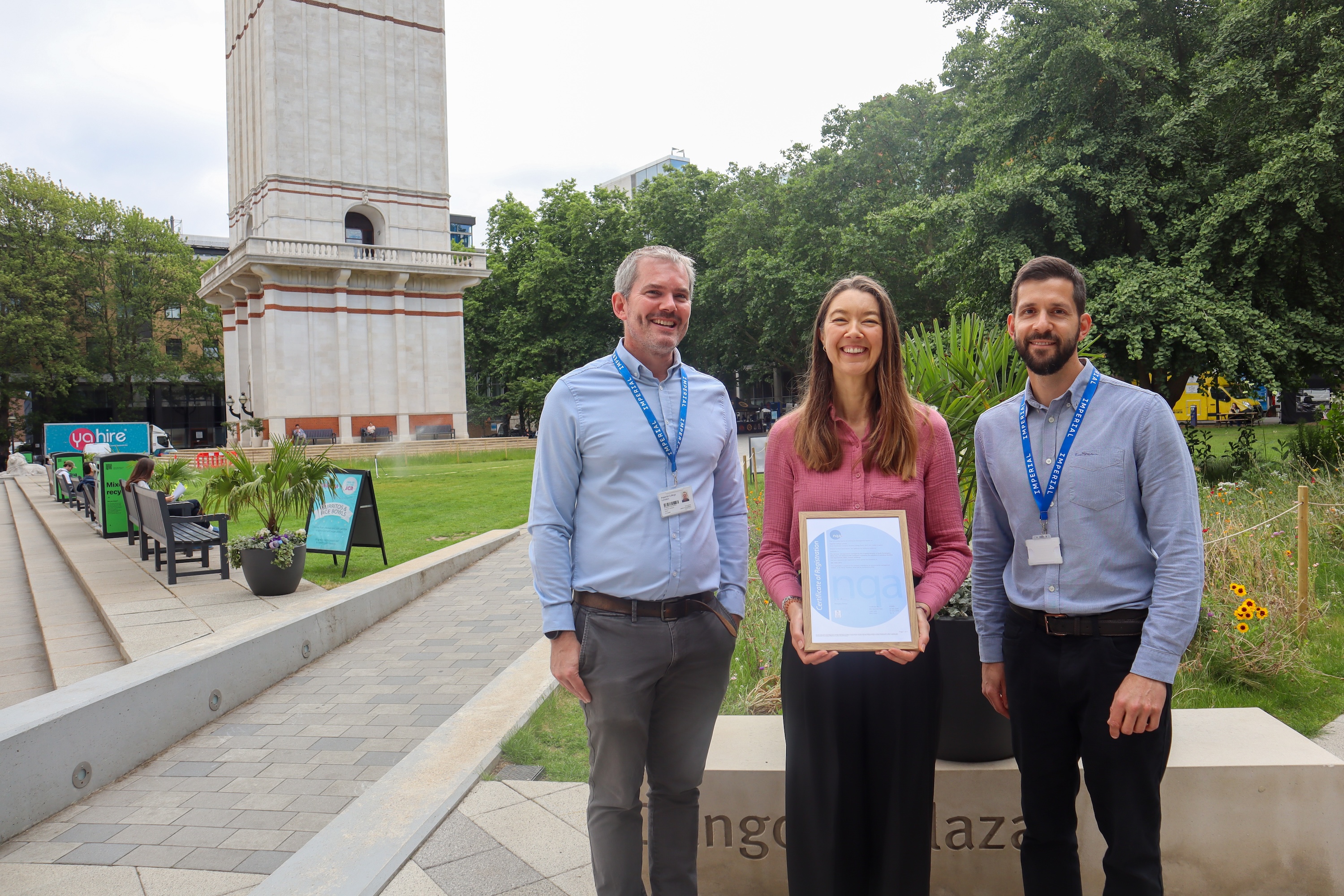
The team at Dangoor Plaza, June 2026.
What Imperial learnt along the way
The process took time and effort, and it was not always straightforward. Bringing together different teams and ways of working into a single system required extensive discussion and careful alignment. The Property Division had to demonstrate that activities were controlled in a consistent way, that responsibilities were clearly defined and that environmental considerations were integrated into daily operations.
Documenting existing practice, closing gaps and evidencing compliance helped clarify how environmental risks are managed across the estate. One of the most significant outcomes has been a clearer understanding of roles and responsibilities. Colleagues now have a better sense of who is accountable for particular activities, how issues should be reported and followed up, and how environmental performance is reviewed.
What ISO 14001 means for the Property Division
Achieving ISO 14001 means that the operations managed by the Property Division have been independently assessed and found to meet an internationally recognised standard for environmental management. It shows that Imperial:
- Manages key environmental risks and impacts in a structured way
- Complies with relevant environmental legislation
- Has appropriate governance and oversight in place
- Has a framework for continual improvement
Certification is not a one-off exercise. It comes with an ongoing commitment to maintain and improve the system, supported annual surveillance visits and a three yearly cycle of recertification audits. The Environmental Management System provides an important foundation for Imperial’s Sustainability Strategy and net zero work, and a framework for embedding future initiatives into everyday practice across the estate.