NIHR Doctoral Training Camp - Rachel Baldwin-Cleland
Clinical Research Fellow, Diagnostic Radiographer
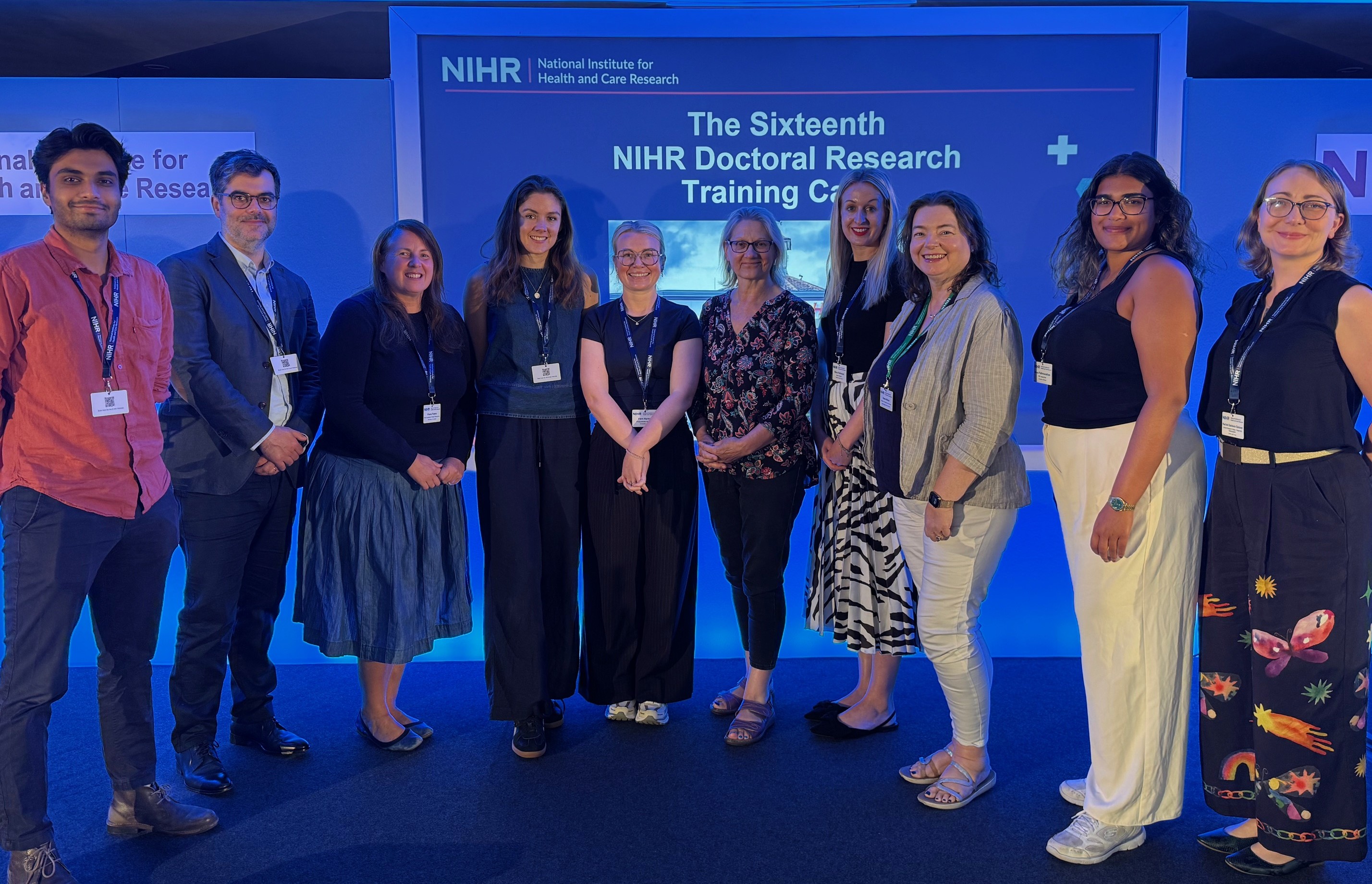
Team ViNKERS at the end of the training camp. Left to right, Sreejan, Tiago, Fiona, Emily, Fern, Mandy (our fabulous PPEE advisor), Ellice, Rowan (our NIHR group mentor) Anna, and myself.
Immersed, Inspired, and Intellectually Exhausted: Reflections from NIHR’s Doctoral Training Camp 2025
I wasn’t sure what to exactly expect when I signed up for the Sixteenth NIHR Doctoral Training Camp, held at the Leonardo Hotel Hinckley Island from the 7th to 9th July 2025. I had read the blogs on the Radiographer Incubator site but wasn’t sure if they were a true reflection as everyone experiences things in a different way. What I got was three days of intense learning, immersive teamwork, and some genuinely eye-opening insights into the world of NIHR grant writing.
Two weeks before the camp’s first day, I received NIHR’s welcome email: seventy-plus delegates, a packed schedule, and a grant-writing task judged by a mock panel—it was clear this wasn’t going to be a laid-back conference. The camp was framed around a simulated funding call from the fictitious NIHR Living and Aging Well research programme (LAWrp). With delegates from across the NIHR ecosystem—ranging from clinical researchers to social care specialists and public health advocates—it promised a multidisciplinary deep dive into everything that makes a compelling funding application. It’s designed for those in the latter stages of their PhD journey, or those who’ve just finished, looking to sharpen their edge in securing future research funding.
After arriving and registering, we were welcomed by leading figures in NIHR, including Professor Wendy Baird and Professor Marian Knight. The sessions set the tone for the camp—energising and insightful. All the first day’s talks, with Q&As, offered key tips to sharpen our research questions, sell our ideas, and speak the NIHR, PPI and funder's language. A standout for me was the talk by Professor Rebecca Kearney on how to sell yourself and your project—equal parts empowering and practical. I also loved the talk by the previous years (15th) training camp attendees, and I was lucky enough to network later with Catriona Hynes. They gave everyone insider tips on how to survive the next 48 hours.
We were then assigned into small, mixed professional groups, supported by seasoned mentors and public contributors, with two goals: create a compelling (and funding stream–relevant) research proposal to submit by the end of day two, and pitch and justify it to a mock expert panel on day three. It pushed us to think collaboratively, communicate under pressure, and pool our diverse skills to form a coherent proposal.
Despite initial jitters, our team gelled quickly, calling ourselves the ViNKERs after our project on changing vaping behaviour in 8- to 13-year-olds—Project ViNK (vaping is not Kool). We were lucky and had very few moments of creative friction (quite unexpected in a multidisciplinary task), but the team’s cohesiveness ultimately made our project stronger. We spent hours crafting our proposal, challenging each other, reshaping ideas, and racing to meet the submission deadline. We handed it in with minutes to spare—after our initial submission was rejected for missing essential financial details and an attachment!
After two intense days of learning, group work, and submission drama, we were ready—almost—to face the panel.
Day Three: Presentation Day
Our team was buzzing with nerves and determination as we entered the London Suite to pitch our project to the mock LAWrp panel. Each group shared their proposals, fielded questions, and hoped to impress. Presenting and justifying our work to the panel felt nerve-wracking—but incredibly validating. Team ViNKERs was definitely the nosiest team present in the room!
After closing remarks and panel deliberations, the winners were announced. Sadly, our group didn’t win, but having watched the other presentations and the panel’s grilling of the winning teams, I could see why they came out on top. Hearing directly from NIHR panel reviewers about what makes an application stand out was like peeking behind the curtain at a theatre.
Though I feel everyone walked away a winner—with strengthened grant-writing muscles, a clearer sense of what success looks like in research funding, new network connections/ friends and maybe a few more grey hairs!
Final Reflections
It was the most rewarding—and gruelling—three days. I would like to thank the Radiographer Incubator team for giving me the chance to attend this unique experience. If you're nominated to attend in future, say yes. The NIHR camp’s organisational team was impressively thorough, and I loved that they asked participants to hand back their lanyards at the end—a small but meaningful step towards environmental sustainability.
The two evening informal dinners provided great opportunities to network, unwind, and exchange early impressions. The food was excellent (although no free booze and the bar was a little pricey), but honestly, I was far too exhausted to stay up late anyway.
With just 70–80 participants selected nationwide, the camp felt like an academic microcosm of the UK’s most promising early-career researchers—all gathered to write, learn, and pitch under pressure. The camp wasn’t just about skills—it was about confidence, connection, and clarity. I walked away with sharper research instincts, new collaborators, and even a few new friends – go team ViNKERS!
My top tip for NIHR funding applications? Read the instructions—and then read them again.
My tips if you're lucky enough to attend a training camp: Bring comfy shoes, a clear mind, and a hunger to learn.
Useful links
Contact us
The CATO Team and Radiographers Incubator work on a Hybrid model, combining days in the office with days working from home – the best way to reach us is by email.