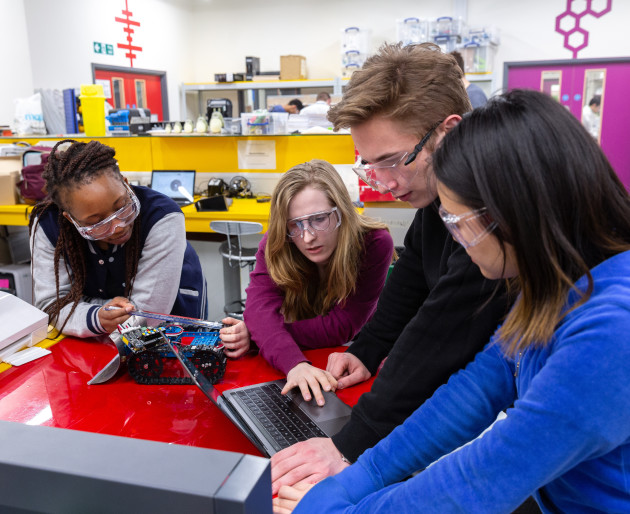
Entrepreneurship gives you the opportunity to turn your ideas into reality and become your own boss, but it takes dedication, creativity, and hard work. These skills are also greatly valued by many graduate employers across industries. Whether your business becomes a long-term venture or not, the experience can strengthen your CV while potentially providing income to help with living expenses during your studies.
During your time at Imperial, you’ll have access to a wide range of events and services to help you develop a business idea and foster your entrepreneurial skills. A great starting point to explore what’s available to you is the Imperial Enterprise Portal, which can help direct you to relevant resources.
There are an increasing number of competitions that offer you the chance to develop or practice your enterprise and innovation skills with the chance to win prizes, mentoring, funding and networking opportunities with like-minded individuals and experienced entrepreneurs. Visit our competitions page to view a selection of current competition opportunities.
Below is an introduction to some of the key considerations when starting a business, along with links to further sources of help. Please note that this information is most relevant to UK undergraduate or taught postgraduate students who plan to start a business in the UK. If you are an international student there is further information available below, in particular in reference to visa considerations.
I have an idea - what next?
- Business planning
- Funding
- Registering a business
- International students
- Postgraduate students
- Further resources
Firstly, you need a business idea. This may come from a hobby, your course, or from somewhere else entirely – such as the media or your friends and family. You then need to evaluate your idea according to three basic business principles: feasibility, demand and innovation.
- Feasibility - The most important aspect of your idea is that it must be feasible. This means making sure you have, or can have, access to the right technology, skills, funding, and time to make your idea a reality.
- Demand - An idea only turns into an opportunity if there is an unsolved problem, a need, or a real (perceived or actual) demand from a market. You will most likely need to do some market research to establish this.
- Innovation - A business cannot thrive if every other business is doing exactly the same thing. To stand out from the competition, innovation of some sort is fundamental. The innovation may be small, such as a new method of marketing or operating, or it could be large, such as an entirely new product or service.
Writing a business plan
A business plan is an essential requirement of a modern business. It is a document that you need if you want to approach banks and investors in order to start your business, but it also can be a useful exercise in helping you decide the short- and long-term strategies of the business and to fully realise any shortfalls in skills, funding or research.
A useful introduction for business plans is available on the GOV.UK website.
The Prince’s Trust has also produced an excellent guide and template from which to start.
Protecting your idea
You may need to make sure that no one else is able to copy your idea, especially if it is a brand-new product or invention. These processes, in particular patenting an invention, can be an expensive and lengthy process and you need to decide if protecting your idea or the speed in which you can get to market is more important to you in the long term. The GOV.UK website has some further reading to help you consider what kind of intellectual property protection is right for you.
Sourcing Funding
Money is the lifeblood to any business, whether the organisation is a charity or a large-scale corporate entity. You need to work out exactly how much money you have (from yourself, family, friends, loans and investors), how much money you will need and how you believe you will use the money. Business planning can help estimate these numbers and then keeping accurate records and receipts is vital, right from the beginning.
Registering your business
Registering a business is surprisingly easy once you have a bank account. There is lots of information available on the set up a business GOV.UK website, which will describe the differences between being a sole trader, limited company, or partnership, and you can decide which one is right for you.
Tax
Also, you should also familiarise yourself with your tax responsibilities as a business owner at the HMRC.
Starting a business as an international student
If you are studying on a student visa you are subject to various work rules during your studies which typically prevent you from being self-employed or engaging in business activity. It is important that you are aware of any restrictions placed on you and the International Student Support team at Imperial provide up to date information about working in the UK both during and after your studies and any restrictions placed on you.
Postgraduate students on a research course
If you are starting a business during (or after) your course which has in any way been inspired by your research, you may be affected by Imperial’s, or your funder’s, intellectual property policies. Speak to your academic supervisor if you are considering this route to discuss any restrictions that may be placed on you. Help is available if you want to create a business with your research. The best place to find out more is by approaching Imperial’s Research Office to discuss your particular circumstances.
Further resources available
There are many places you can seek help to pursue your business idea.
- Advanced Hackspace – Imperial’s innovation space at White City where students, staff and external innovators can access prototyping labs, expert mentors, courses and events.
- Imperial Innovation Portal - Explore entrepreneurship support on offer at Imperial and find the best resources most relevant to you.
- Entrepreneurship at Imperial - Imperial's portal for the latest news, events and opportunities for enterprising students.
- Imperial Enterprise Lab - Access to workshops, events, mentoring and resources to help you develop your entrepreneurial skills.
- Imperial Enterprise - Connects businesses, researchers and students with expertise, facilities and funding to support for science and technology startups.
- Imperial Entrepreneurs - Join Imperial’s student entrepreneurship society to take part in networking and information events, as well as challenges and competitions, to develop skills with like-minded students
- Online Courses - Develop the skills to help your business thrive through a variety of online learning. Imperial Online Courses offer creative thinking, while your access to LinkedIn Learning provides access to many thousands of courses covering a variety of topics.