Journeys into research: Yuxuan's story
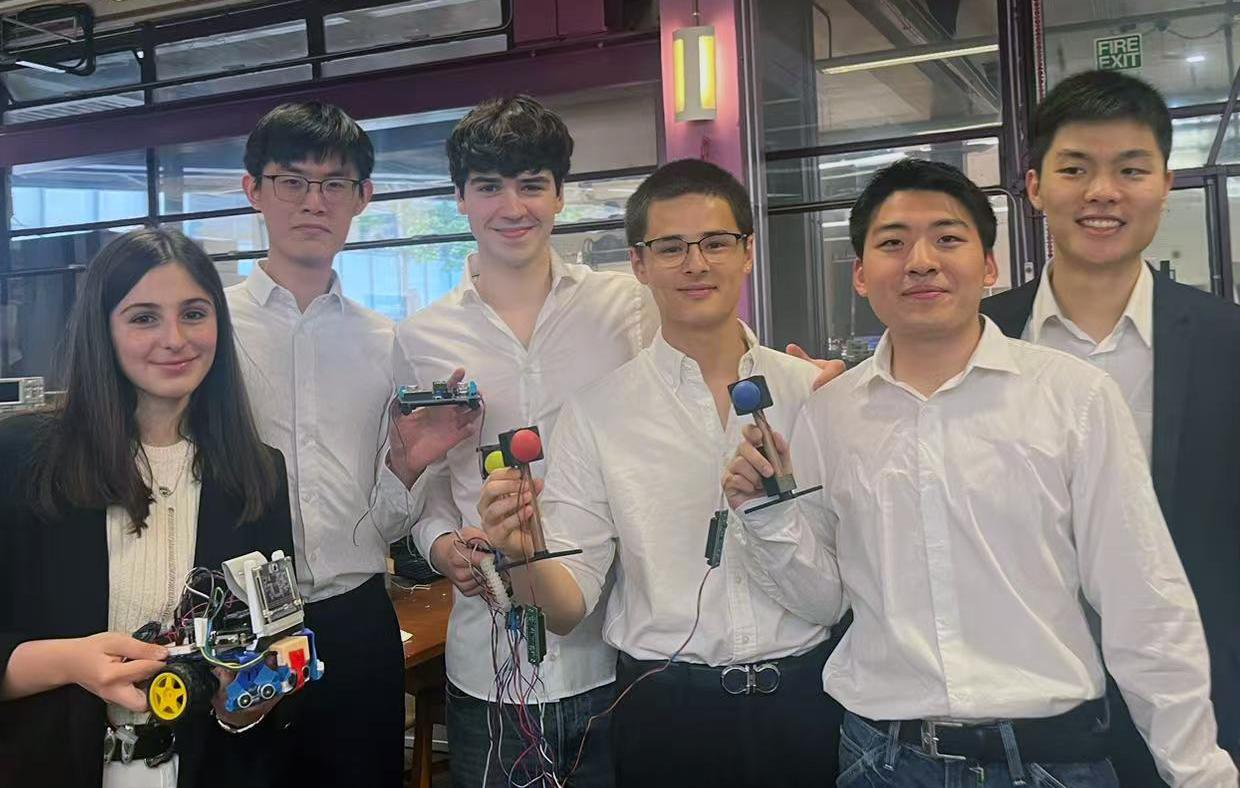
For students like Yuxuan, the journey into PhD study often begins with curiosity, the support of others who believe in your potential, and the freedom to try things that once felt out of reach.
“I hope my experience can inspire others to embrace challenges and pursue their own ‘north stars’ in the Department of Electrical and Electronic Engineering.”
Early spark
When Yuxuan joined our MEng in Electronic and Information Engineering programme, he had limited experience in technical research, or what a PhD might involve. What he did have was a growing curiosity about how AI could help solve complex, real-world challenges, and a desire to understand what it would take to contribute.
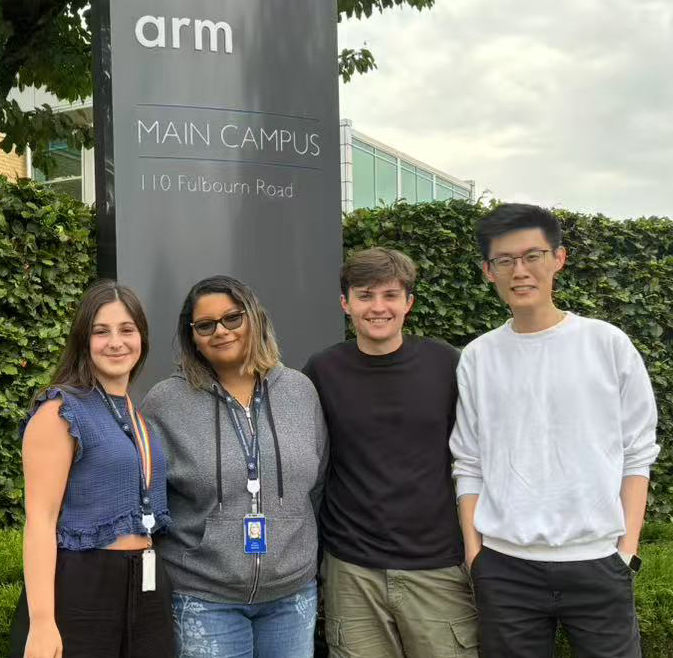
In his third year, he chose Electrical and Electronic Engineering’s industrial placement option, spending six months at Arm in Cambridge.
Working on the design of next-generation AI processors sparked his interest in efficient AI. He gained valuable experience in hardware-software co-design and learned how fundamental engineering decisions shape the performance and sustainability of AI systems.
Real projects, real impact
Yuxuan also took on a part-time research project working with an interdisciplinary team from I-X and Imperial's Department of Earth Science and Engineering on a graph neural network model to simulate multiphase fluid flow through porous media, such as soil and aquifers, to support safe and controlled underground carbon storage, a critical technology for climate change mitigation.
The project led to a first-author paper, accepted at the NeurIPS 2024 Machine Learning and the Physical Sciences workshop.
He returned to Imperial for his fourth year with a renewed focus. For his final-year undergraduate project, supervised by Professor Danilo Mandic, Yuxuan explored tensor algebra techniques for compressing large language models like Llama-2-7B. His approach not only reduced model size, but also enhanced reasoning ability, offering a route toward more efficient and deployable generative AI.
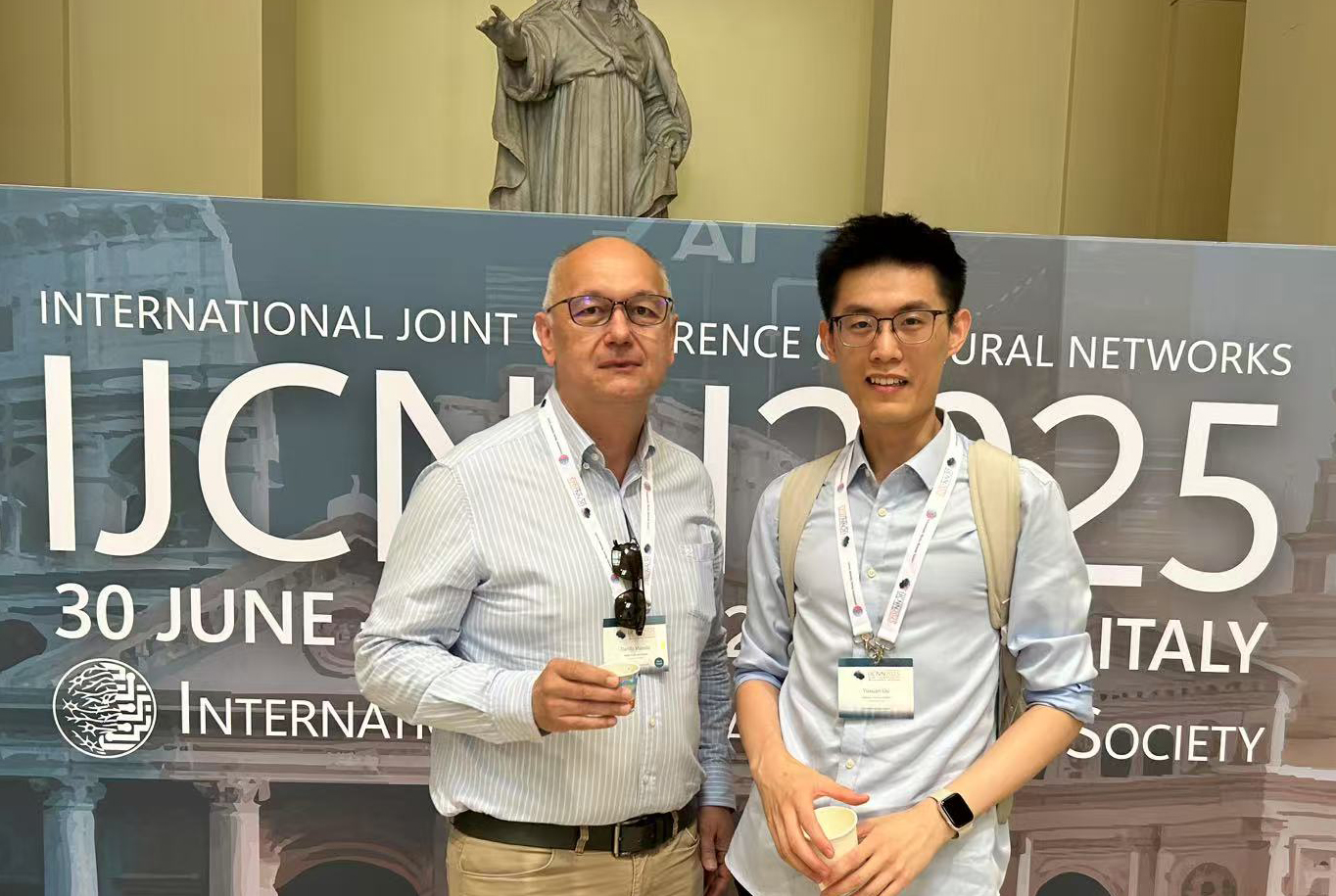 This project led to another first-author paper, presented at the 2025 IEEE International Joint Conference on Neural Networks in Rome.
“One of the highlights of my journey was presenting my Final Year Project at a premier neural network conference, something I could not have imagined in the beginning. This experience not only reflects my personal growth, but also the collaborative and supportive environment at EEE which enables students to push boundaries and confidently explore new fields.”
A culture of support
Throughout his student experience, Yuxuan has felt supported at Imperial. From encouragement to ask ambitious research questions, to guidance in publishing and presenting his work, he describes the environment as one that helps students grow into confident contributors.
“My experience in EEE throughout the past four years is truly amazing. I am very grateful for the supportive and inspiring community which encourages everyone to work hard and shine together.”
What’s next?
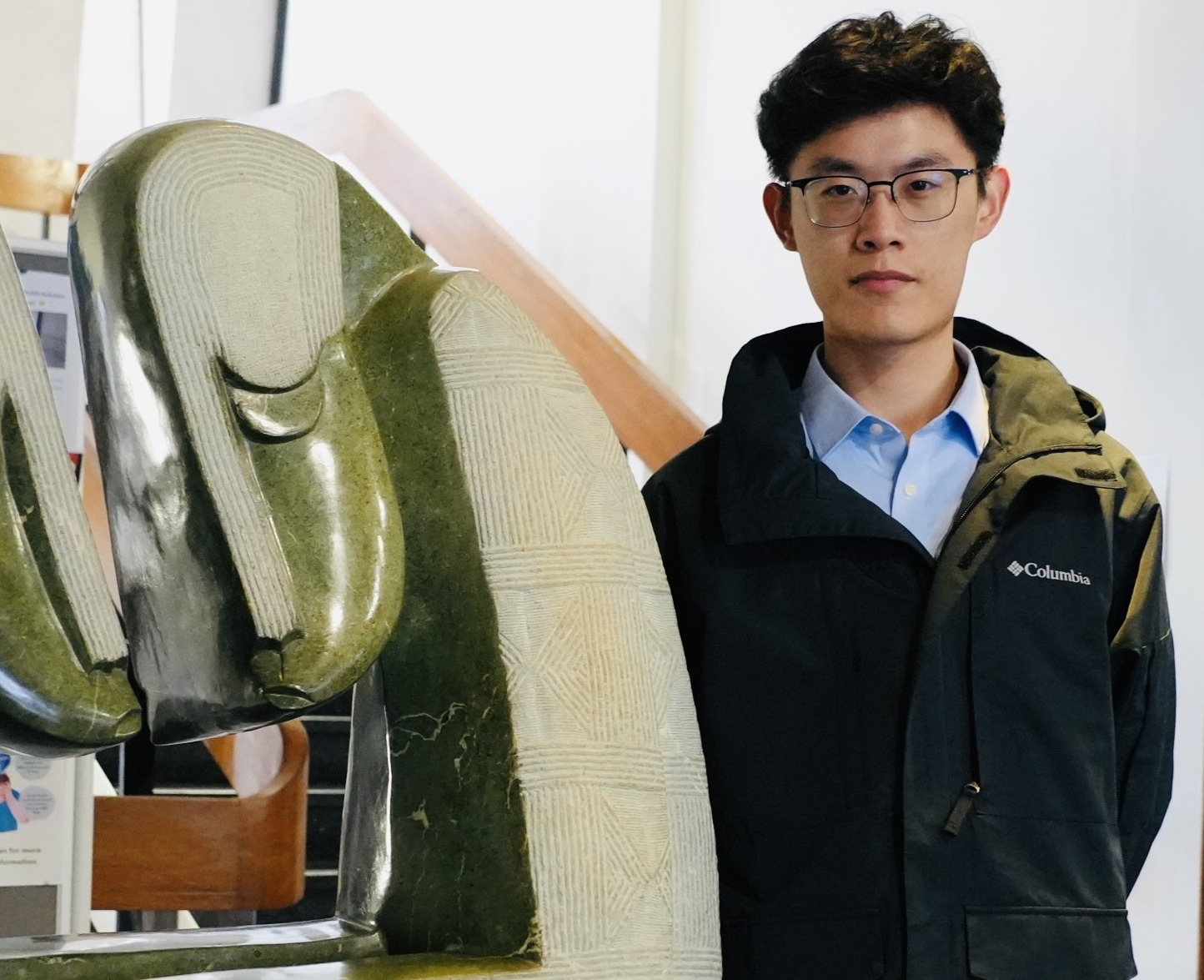 This autumn, Yuxuan begins a PhD in the department under the continued supervision of Professor Mandic. His research in the AIDA Lab, will focus on building generative AI systems that are interpretable, efficient and accessible, with applications in healthcare and finance.
Some of the most urgent questions in AI today are: how can we trust generative models with high-stakes tasks? How can we make them less resource-hungry, more transparent, and more ethically deployable? Yuxuan's project aims to address these questions with a combination of theoretical insight and real-world applications.
“Long term, I now aim to become an internationally recognised researcher, focused on developing interpretable, affordable, and sustainable generative AI systems for critical challenges in healthcare and finance.”
Yuxuan's advice to students considering a PhD:
“Stay curious, and make use of the resources around you. I had no idea where I’d end up when I started, but I kept asking questions following my interests. Imperial gave me not just knowledge, but more importantly, the confidence and supportive environment to take up open-ended challenges and pursue research. Don’t be afraid to explore new areas. With domain knowledge and an engineering mindset, you can make exciting and meaningful discoveries.”