Members of the 1960 expedition have recently self published a book of their experiences, read a preview of the entire book on Blurb.
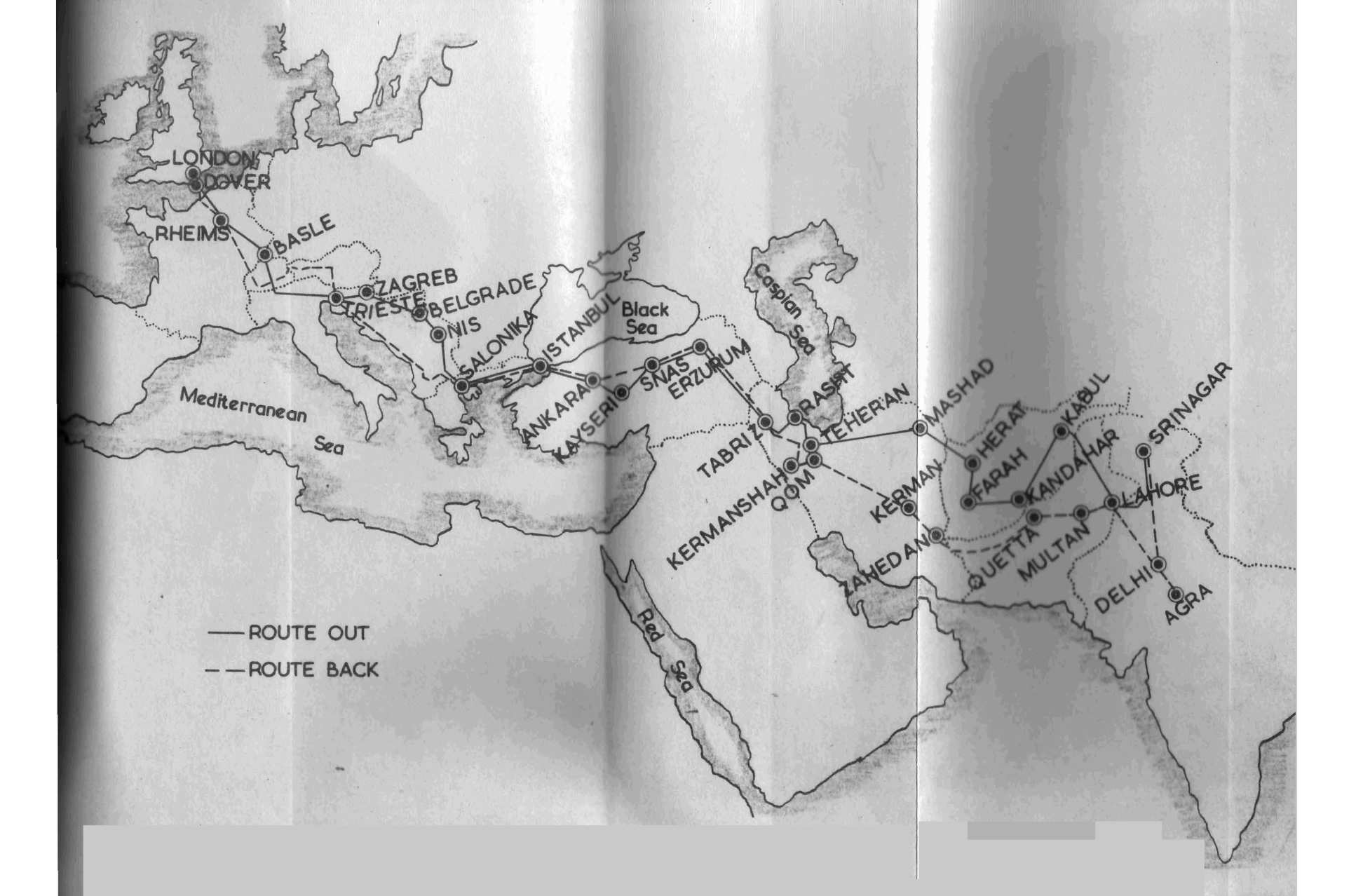
The 1960 Kashmir Expedition was carried out by five physics and aeronautics students. The aim was to demonstrate that the overland route from London to Kashmir could be completed in a standard production car, while documenting road conditions across Europe, Turkey, Iran, Afghanistan, Pakistan, and India.
The team departed London on 28 June and returned on 21 September, covering 16,560 miles over twelve weeks. Travelling via France, Central Europe, the Balkans, Turkey, and Iran, they reached Kashmir on 31 July. Their base camp was established at Sonamarg, 52 miles from Srinagar on the road to Leh. During a ten‑day stay they climbed small peaks, completed a three‑day pony trek, and later spent three days on a houseboat in Srinagar observing local crafts such as woodcarving and papier‑mâché.
The outward and return journeys were dominated by detailed assessment of road conditions. European routes were generally good, while roads in Yugoslavia, Turkey, Iran, and Afghanistan ranged from fair gravel to extremely poor, deeply potholed tracks. Some regions, particularly in Iran and Afghanistan, had long stretches of corrugated gravel, sand‑covered roads, and missing bridges over dry riverbeds. Pakistan and India offered mostly good asphalt with narrower road widths. Weather also affected progress, especially in Turkey and Greece where persistent rain and flooding slowed travel.
The expedition vehicle—a Standard Vanguard Estate Car loaned by Standard‑Triumph—performed impressively under harsh conditions, though tyre failures, a broken rear spring, and a burnt‑out dynamo required repairs en route. Petrol quality varied dramatically, with the poorest fuel encountered in Afghanistan.
Overall, the expedition demonstrated the feasibility of long‑distance overland travel to Kashmir and provided valuable road condition data across a vast transcontinental route.