Minas de Lipez expedition
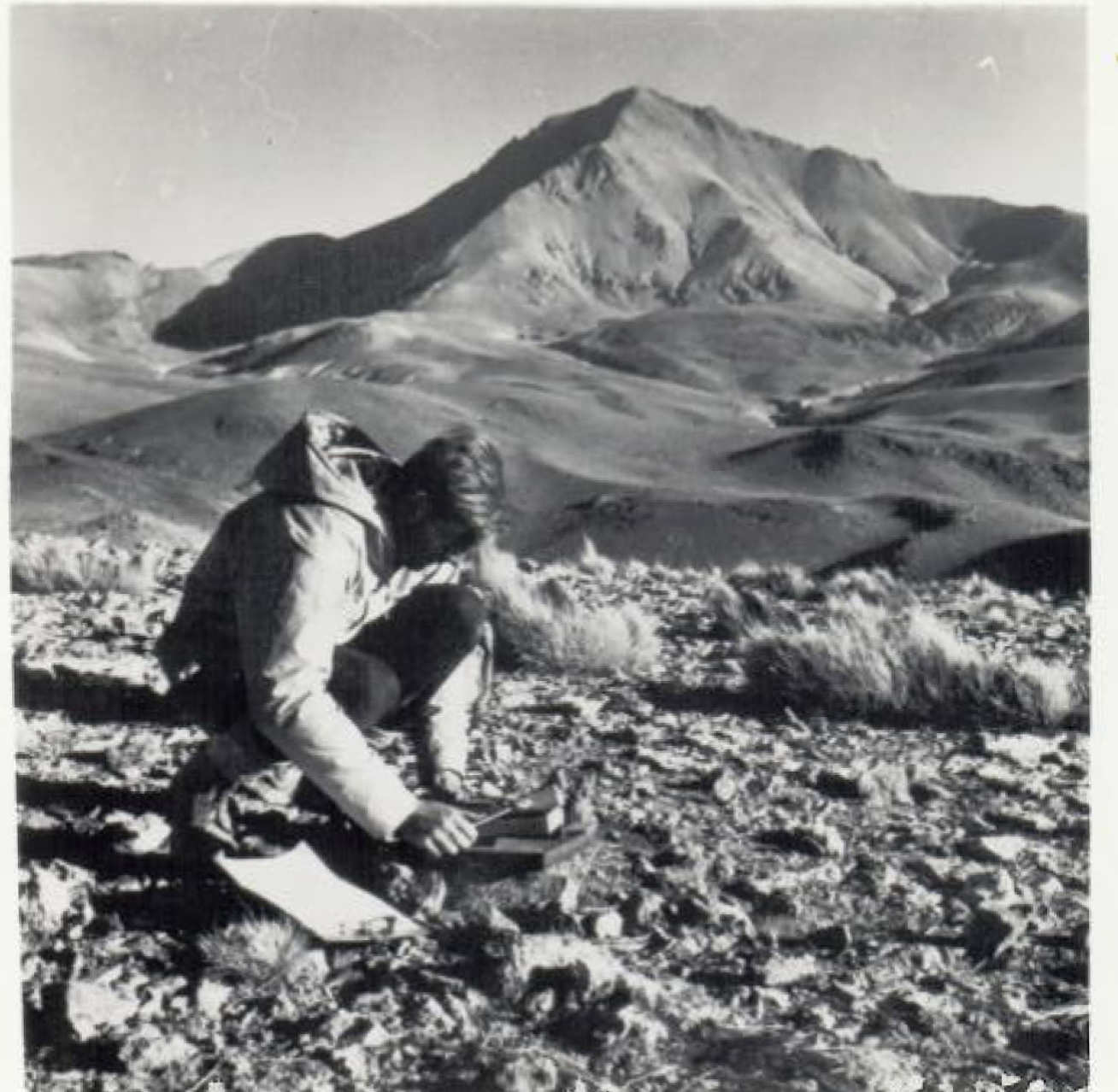
This expedition set out to investigate the abandoned Spanish silver‑mining district of San Antonio de Lípez in the remote Sud Lípez region of Bolivia. Inspired by accounts of the remarkably preserved 18th‑century ghost town of San Antonio and its surrounding mines, the four‑member student team spent three months conducting geological, archaeological, botanical and meteorological studies across altitudes exceeding 15,000 feet.
After overcoming significant logistical obstacles the team travelled by tanker to Peru, overland across the Andes, and finally to Uyuni and San Antonio de Lípez in a Land Rover equipped for high-altitude travel.
Fieldwork focused on two principal mining centres: San Antonio de Lípez, dominated by the extensive Mesa de Plata mine complex, and San Pablo, whose valley hosts three major mines (Buena Vista, San Juan, and Leoplan). The expedition documented elaborate underground Spanish engineering, including stone‑lined adits, donkey‑powered hoisting chambers, multi‑level stopes, drainage floors, and extensive spoil heaps. Geological observations showed mineralization dominated by galena, sphalerite, antimonite and minor silver, occurring in east–west trending veins within andesite and tuff formations. Sampling indicated that while high‑grade silver ores were largely exhausted, some deeper primary ores and economically interesting by‑products such as antimony and cadmium remained.
Additional excursions covered smaller or modern re‑worked mines (Bolívar, Escala, Mestizo, Santa Isabel), offering insights into ongoing small‑scale cooperative mining. Botanical surveys collected 39 species adapted to the extreme altiplano environment, while meteorological measurements documented strong diurnal thermal variation, low humidity, and intense solar radiation.