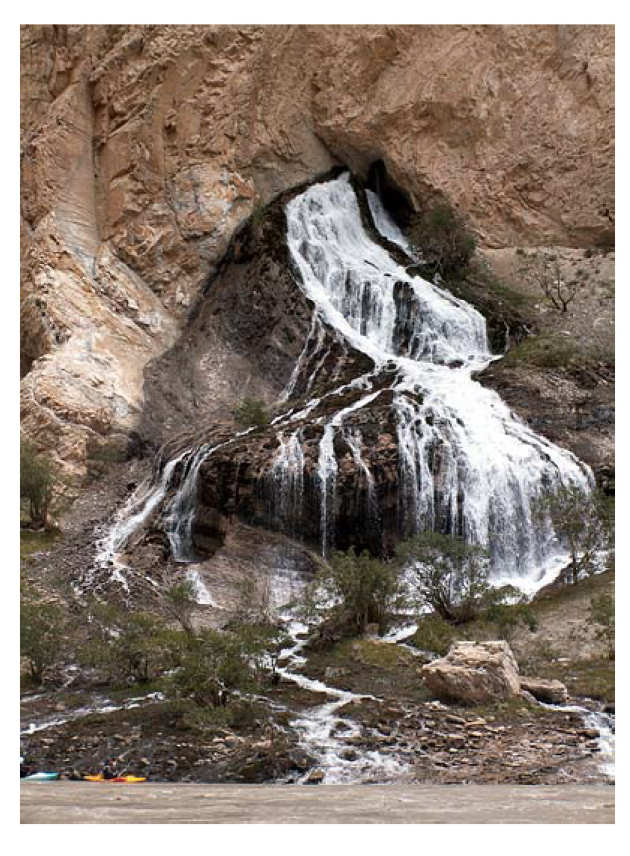
The 2006 Himalayan Kayak Expedition set out to complete one of the world’s greatest multi‑day, self‑supported river journeys: a full descent of the Tsarap Chu and Zanskar rivers in Ladakh, Northern India. Often described as the “Grand Canyon of Asia,” the Zanskar gorge offers 150km of continuous whitewater and remote wilderness, fed by the equally committing Tsarap Chu, which itself flows for 150km through steep gorges before the confluence. The six‑member team were highly experienced Grade IV/V paddlers with prior expeditions across Europe, North America, Kyrgyzstan and Africa.
After arriving in Delhi and travelling via Manali, the team prepared supplies and drove the high-altitude Manali–Leh road to the 5,500m Tsarap Chu put‑in, battling landslides, altitude symptoms, and deteriorating weather. The river began gently but soon presented major challenges: a difficult cataract, a hazardous 2km gorge of boils and undercut walls, and several strenuous portages made worse by altitude and heavy boats. A Grade V+ rapid forced the team to camp and portage at dawn. Further downstream, they passed through enormous gorges, eventually reaching the remote Phuktal monastery, where monks welcomed them with hospitality and ceremonial tea.
The final day on the Tsarap brought the hardest rapids of the entire descent, but the team reached Padum safely. After resupplying, they began the Zanskar section, enjoying easier whitewater but spectacular 50km canyon walls. After seven days on the river they reached the Indus confluence and hitch‑hiked back to Leh.
With Ladakh’s rivers in flood due to record rainfall, the team continued their expedition in Nepal. They paddled steep sections of the Beas, explored the Seti, and completed a high‑water, 300km descent of the Sun Khosi in only three days, paddling through jungle gorges and remote villages.