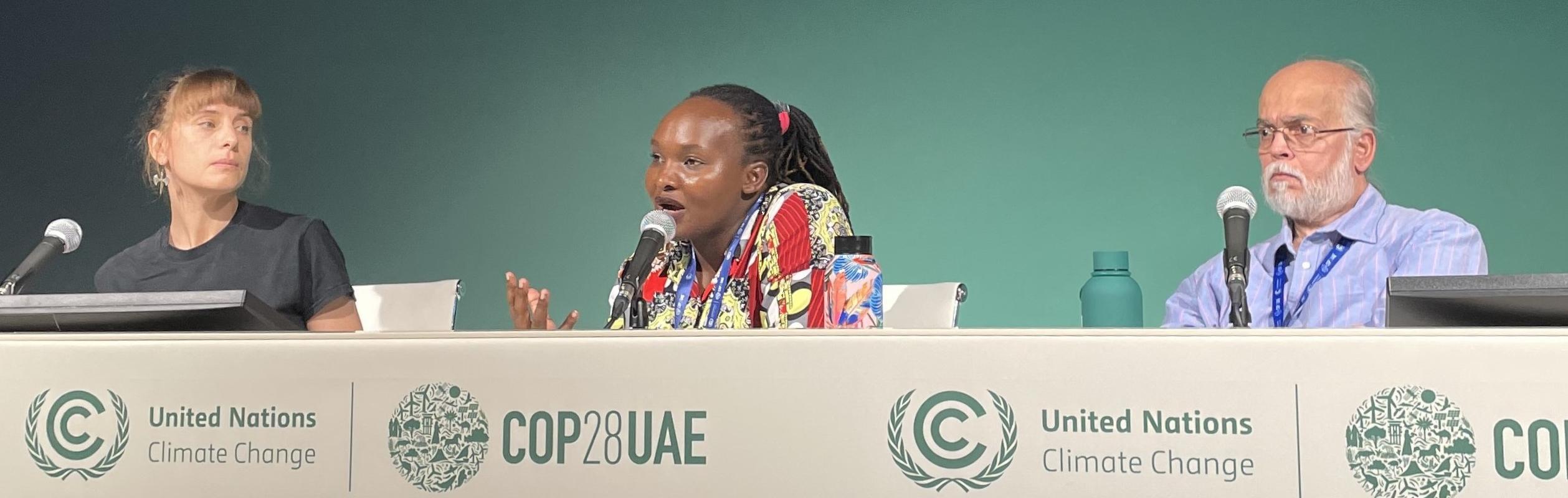
The world is still far off track to reduce emissions in line with the Paris Agreement, while extreme weather events fuelled by man-made climate change, including hurricanes, heatwaves, floods and wildfires, are having devastating impacts on communities across the world.
At the 30th United Nations Climate Change Conference of the Parties (COP30), which takes place in Belém, Brazil from 10 - 21 November 2025, countries must come together to take strong collective climate action. The 2025 UNEP Emission Gap Report, which included a contribution from Professor Joeri Rogelj, found that we are still on track for 2.3-2.5°C if countries fully implement their Nationally Determined Contributions.
Host nation Brazil has set out three priorities for the negotiations:
- Reinforce multilateralism and cooperation
- Connect climate change to individuals and the economy
- Accelerate implementation
Priority content

COP: the Fight for Loss & Damage
Through exclusive interviews, this film uncovers the human stories, the scientific breakthroughs, and the political courage that shaped a historic agreement on loss and damage funding.
Priority content


_-_Houses_the_International_court_of_Justice_-_the_principal_Judiciary_body_of_the_United_Nations_(34402091225).jpg)
Imperial voices on climate and environment
Net Zero: The inside story of the UK’s climate target
In 2019, the UK became the first major economy in the world to legally commit to net zero emissions by 2050. Our new film, featuring leading climate scientists and a former Prime Minister, reveals how it happened.

Net Zero: The inside story of the UK’s climate target
This film explores the pivotal moment behind the UK's decision to put net zero emissions into law.
In 2019, the UK became the first major economy in the world to legally commit to net zero emissions by 2050. Our new film, featuring leading climate scientists and a former Prime Minister, reveals how it happened.

Countdown to COP30: strengthening climate action
This event reflects on 10 years since the Paris Agreement and how to seize the moment of COP30.
At the mid-way point between the COP29 and COP30 climate conferences, the Grantham Institute at Imperial College London and the EU Delegation to the United Kingdom host a special London Climate Action Week event with diplomats, negotiators, policymakers and scientists.

Reclaiming Our Common Future: Grantham Annual Lecture
Dr Gro Harlem Brundtland reflects on the arc of global cooperation
In this keynote address, Dr Gro Harlem Brundtland – former Prime Minister of Norway, founding Member of The Elders, and “godmother” of sustainable development – reflects on the arc of global cooperation from the adoption of the SDGs and the Paris Agreement to the Pandemic Agreement and today’s fractured landscape.
Explore our evidence by theme
Briefing papers and reports:
- How does climate change affect people's health in the UK?
- What do the UK public think about policies that can deliver for climate and health?
- How can action to tackle climate change improve people’s health and save the NHS money?
- The impact of climate change on mental health and emotional wellbeing: current evidence and implications for policy and practice
Videos:
- Limiting temperature increase to 1.5°C above pre-industrial levels
- Phasing out 'unabated fossil fuels': the importance of defining 'abatement'
- Pledges and policies: are we on track to meet climate goals?
- Transitioning away from fossil fuels: delivering the transition in low- and lower middle-income fossil fuel producing countries
- Methane and global climate goals
- Why is achieving net zero necessary?