Download this background briefing as a PDF: Phasing out 'unabated fossil fuels': the importance of defining 'abatement'
Key points
- To achieve our climate goals, total global fossil fuel production needs to fall substantially, even in a scenario where 'abated' fossil fuels are permitted.
- The primary purpose of fitting fossil fuel plants and industrial facilities with Carbon Capture and Storage (CCS) is to almost entirely eliminate their carbon dioxide emissions. In practice, however, many applications fall short of this standard. The label 'abated' should properly refer only to this state of near-complete decarbonisation, as this is the level of performance necessary to meet the goals of the Paris Agreement. The critical issue is that 'abatement' lacks such a formal, internationally agreed definition. This ambiguity allows for inconsistent application, creating a significant risk that facilities with suboptimal capture rates are deemed compliant, thereby undermining the Agreement's core objectives.
-
To be Paris Agreement compatible, the label 'abated fossil fuels' needs to apply to CCS application with net-zero greenhouse gas emissions on a lifecycle basis. This requires four things:
1. Carbon dioxide capture rates of more than or equal to 95% of carbon dioxide emitted
2. Permanent geological storage of captured emissions, with adequate monitoring and verification
3. Reducing upstream and end-use fugitive methane emissions to less than 0.5% and towards 0.2% of gas production (and an equivalent for coal); and
4. Any remaining emissions to be counterbalanced through permanent carbon dioxide removal (CDR).
Why does the definition of 'abated' matter?
Ahead of COP28 (in 2023), several influential stakeholders — including the UK, G7 and European Council — called for the phase out of 'unabated fossil fuel'. This was different to calling for the phase out of fossil fuels (which refers to phasing out all fossil fuels) because it would have permitted some continued usage of fossil fuels, so long as they were 'abated'. The final COP28 text emphasised: “transitioning away from fossil fuels in energy systems in a just, orderly and equitable manner, accelerating action in this critical decade, so as to achieve net zero by 2050 in keeping with the science” as well as “accelerating efforts towards the phase-down of unabated coal power”.
The issue is that while 'abated' is generally understood to mean that some form of Carbon Capture and Storage (CCS) technology would be used to capture the emissions, there is currently no formally agreed definition of the standard to which this would be expected to operate either for coal or other fossil fuels. A clear definition is therefore needed for all fossil fuels to avoid ambiguities and to help guide international negotiations, policy development and investment decisions.
It might seem reasonable to assume that 'abated' fossil fuels would have no, or very minimal, levels of associated carbon emissions. But in fact, fitting CCS technology does not automatically achieve this. If the definition of 'abated' is left open to interpretation, there is a risk that it could inadvertently allow continued carbon emissions. This might happen in several ways:
- Facilities that capture only a proportion of emissions may be permitted. For example, plants that capture less than the maximum technically possible and economically effective rates, or situations where CCS equipment is only run intermittently.
- The technical and economic limits for carbon capture will evolve. Improvements in technological capabilities and reductions in operating costs are expected over time as part of the innovation process, therefore expectations of the fraction of carbon to be captured might also rise over time.
- Carbon usage or storage mechanisms that are not permanent might be permitted. Geological storage is thought to last for ten thousand years or longer but where the carbon that is captured is used in products, the storage timescales are shorter. Usage in cement and aggregates is considered to sequester carbon for centuries, plastics for decades while use in fuels stores carbon for only a few days or months.
- Additionally, upstream 'fugitive' emissions of methane associated with the extraction of fossil fuels may continue. According to the IPCC, emissions of methane that occur during the production and transport of fossil fuels currently account for around 18% of global greenhouse gas emissions from energy supply, and there is recent evidence and an accumulating literature that this is underestimated by at least 50-100%.
How should 'abated' be defined?
To be Paris Agreement compatible, abated fossil fuels need to be net-zero greenhouse gas emissions on a lifecycle basis. That is, there should be no net addition of greenhouse gases to the atmosphere.
To achieve this, fossil fuel plants must meet four criteria:
- the carbon dioxide capture rate must be greater than or equal to 95%;
- permanent geological storage must be used for captured emissions, with adequate monitoring and verification;
- the level of upstream fugitive methane emissions must be less than 0.5% and towards 0.2% of gas production (and an equivalent for coal); and
- any residual emissions must be counterbalanced through permanent carbon dioxide removal (CDR).
It goes without saying that facilities that do not comply with these criteria would therefore be considered as 'unabated', and hence they fall within the scope of the global commitment made at COP28 to transition away from unabated fossil fuels.
An important nuance, however, is that since CCS technology is still being developed and improved in certain applications, there may be circumstances in which policymakers might wish to permit a capture rate of below 95% so long as plants are designed to enable eventual full abatement through process learning.
Do we still need to reduce fossil fuel use or can we just rely on CCS to achieve net zero?
We cannot meet climate goals under the Paris Agreement without eliminating fossil fuels production almost entirely; abatement with CCS is not a get out of jail free card. We need to significantly reduce our fossil fuel production because delivering CCS facilities at scale is challenging for both technical and economic reasons. There are also limits to the amount of geological storage that is available.
The IEA’s Net Zero Energy Scenario sees significant cuts in demand for all total fossil fuel demand between 2022 and 2050:
- oil supply falls by 78%;
- gas supply falls by 78%;
- coal supply falls by 92%; and
- total fossil fuel supply falls by 83%.
From a technical point of view, the criteria set out in our proposed definition will not be easy to meet in the short term, but they are technically feasible:
- Our analysis found that there are already some commercially viable applications for capture of greater than or equal to 95%, including: removal of carbon dioxide from raw formation gas (carbon dioxide is an impurity found in natural gas that is removed before the gas is sold as fuel), ethanol, methanol and other chemicals production processes and autothermal production of “blue” hydrogen.
- Fossil fuel production practices in Norway, the Netherlands and the UK ensure fugitive methane levels of less than 0.5%, but this is not common practice.
The IEA’s assessment concluded that the current deployment rate of CCS is not on track to deliver its Net Zero Emissions by 2050 Scenario; even if all of the projects that are currently in development are delivered, this would still be “substantially below (around a third)” the required level in 2030.
There is a further question as to whether this is economically feasible; the costs of near total carbon capture may be unattractive compared with the cost of alternative fuels and direct electrification (where this is possible). For example, the cost of building a coal- or gas-fired electricity plant with CCS is almost double what it would be without (although new technologies are likely to bring costs down in future). The cost of CCS varies depending on the source of the carbon dioxide being captured. Industrial processes that produce concentrated carbon dioxide flows will be cheaper than those with more dilute concentrations.
The storage potential for geological storage of carbon dioxide is not unlimited; there are both physical and social factors that will limit the total volume of carbon dioxide that can be permanently stored in this way. This means that we cannot rely on using CCS as an alternative to cutting emissions; we must still achieve rapid near-term reductions to avoid the worst climate risks.
Abating emissions from industrial processes
While renewables provide a ready low-carbon alternative to burning fossil fuels in the power sector, it will be much harder to abate carbon emissions from other industrial sectors. For example, in cement and lime production, these are produced as a result of the chemical processes involved, not just from burning fuel. Similarly, the coke (a coal-based fuel) used in steel blast furnaces plays a role in the chemical process of transforming iron ore into steel as well as providing the very high temperatures required.
To achieve net zero, CCS will be needed to abate emissions from these sectors and the same definition of “abated” should apply.
Authors and contacts
This background briefing was written by:
- Dr Alaa Al Khourdajie, Chemical Engineering Department, Imperial College London
- Dr Chris Bataille, Columbia University, Center on Global Energy Policy (CGEP) & Institut du Développement Durable et des Relations Internationales (IDDRI.org)
- Jenny Bird, Campaign Manager, Grantham Institute, Imperial College London
Media enquiries: grantham.media@imperial.ac.uk
Research enquiries: a.alkhourdajie@imperial.ac.uk
Policy enquiries: j.bird@imperial.ac.uk
Further reading
- Bataille, C., Al Khourdajie, A.; de Coninck, H., de Kleijne K., Nilsson, L. J., Bashmakov,I., Davis, S. J., Fennell, P. S., 2025. Defining ‘abated’ fossil fuel and industrial process emissions, Energy and Climate Change, 6, p. 100203.
- Bataille, C., Al Khourdajie, A., de Coninck, H., de Kleijne, K., Nilsson, L.J., Bashmakov, I., Davis, S. and Fennell, P., 2023. A Paris Agreement Compliant Definition for “Abated Fossil Fuels”. Available at SSRN.
- Gidden, M.J., Joshi, S., Armitage, J.J. et al. 2025 A prudent planetary limit for geologic carbon storage.. Nature 645, 124–132 .
- Chan, E., Worthy, D. E. J., Chan, D., Ishizawa, M., Moran, M. D., Delcloo, A., & Vogel, F. (2020). Eight-Year Estimates of Methane Emissions from Oil and Gas Operations in Western Canada Are Nearly Twice Those Reported in Inventories. Environmental Science & Technology, 21, acs.est.0c04117.
- MacKay, K., Lavoie, M., Bourlon, E., Atherton, E., O’Connell, E., Baillie, J., Fougère, C., & Risk, D. (2021). Methane emissions from upstream oil and gas production in Canada are underestimated. Scientific Reports, 11(1), 1–8.
- Overview – Global Methane Tracker 2022 – Analysis. (n.d.). IEA. Retrieved November 14, 2023,
- Tyner, D. R., & Johnson, M. R. (2021). Where the Methane Is—Insights from Novel Airborne LiDAR Measurements Combined with Ground Survey Data. Environmental Science and Technology, 55(14), 9773–9783.
- Tyner, D. R., & Johnson, M. R. (2021). Where the Methane Is—Insights from Novel Airborne LiDAR Measurements Combined with Ground Survey Data. Environmental Science and Technology, 55(14), 9773–9783.
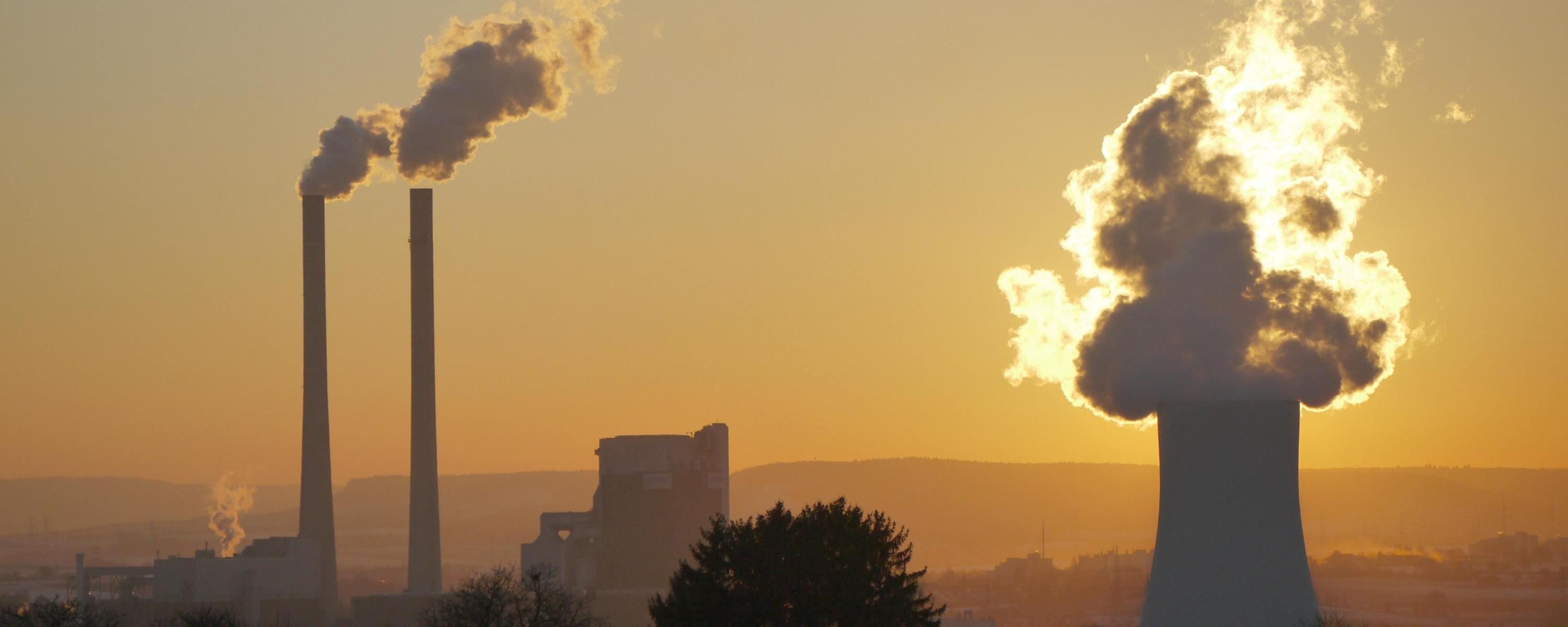
[Image is licensed under CC0 Public Domain]
Published November 2023. Last updated September 2025.
View publications by:
Topic
Climate Science
Earth and Life Sciences
Energy and Low-Carbon Futures
Resources and Pollution
Economics and Finance
Health
View all publications and browse by year
Publication type
Briefing papers and Briefing notes
Grantham Institute Outlooks
Evidence & submission papers
Infographics
Institute reports and analytics notes
Grantham notes
Collaborative publications
Discussion papers
Institute event overviews
Working papers