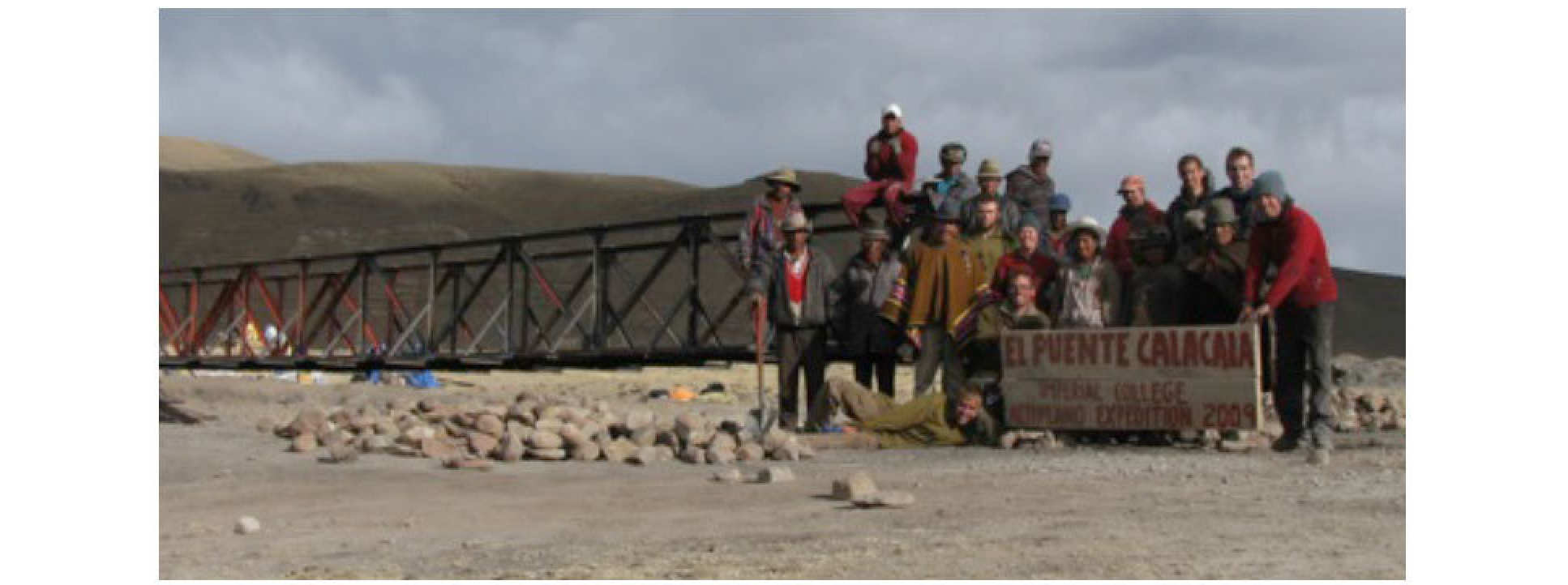
The 2009 Altiplano Expedition successfully delivered vital infrastructure to the remote Bolivian village of Calacala by constructing two new river crossings and initiating a solar‑shower project. A 24m steel truss footbridge and an 8m wooden bridge were completed, restoring year‑round access to school, healthcare and markets. Previously, villagers—particularly children—were cut off for weeks during the rainy season when the rivers became impassable.
The preliminary expedition began in late June, with six team members travelling to Bolivia to source steel and secure a workshop. Early progress was slow: steel was scarce, suppliers unreliable, and prices rising. After nearly two weeks of setbacks, a Bolivian civil engineer agreed to provide steel and workspace, though available steel sizes forced last‑minute redesigns. The remainder of the ten‑person team arrived in mid‑July.
The main construction phase took place in Oruro, where the team spent three weeks fabricating the steel bridge. Conditions were harsh—sub‑zero nights, rudimentary facilities, and limited tools. Over 8,000 holes had to be drilled by hand, requiring shift work from early morning until late evening. Meanwhile, a small advance party camped in Calacala, surveying both bridge sites and building the reinforced‑concrete abutments in −15°C temperatures and snow.
Once fabrication was complete, the steel bridge was transported to Calacala and assembled on site. Using temporary steel supports, wooden frames, hand‑operated jacks, ratchet winches, and counterweights—including a water tank—the team launched the bridge across the river over three challenging days. A community celebration followed, complete with dancing, llama roast and fireworks.
In parallel, the team prefabricated a wooden footbridge and demonstrated assembly methods to villagers. When two members returned three weeks later, the wooden bridge was nearly complete, and work on the solar shower was underway with ongoing support from NGO partner CEDPAN.