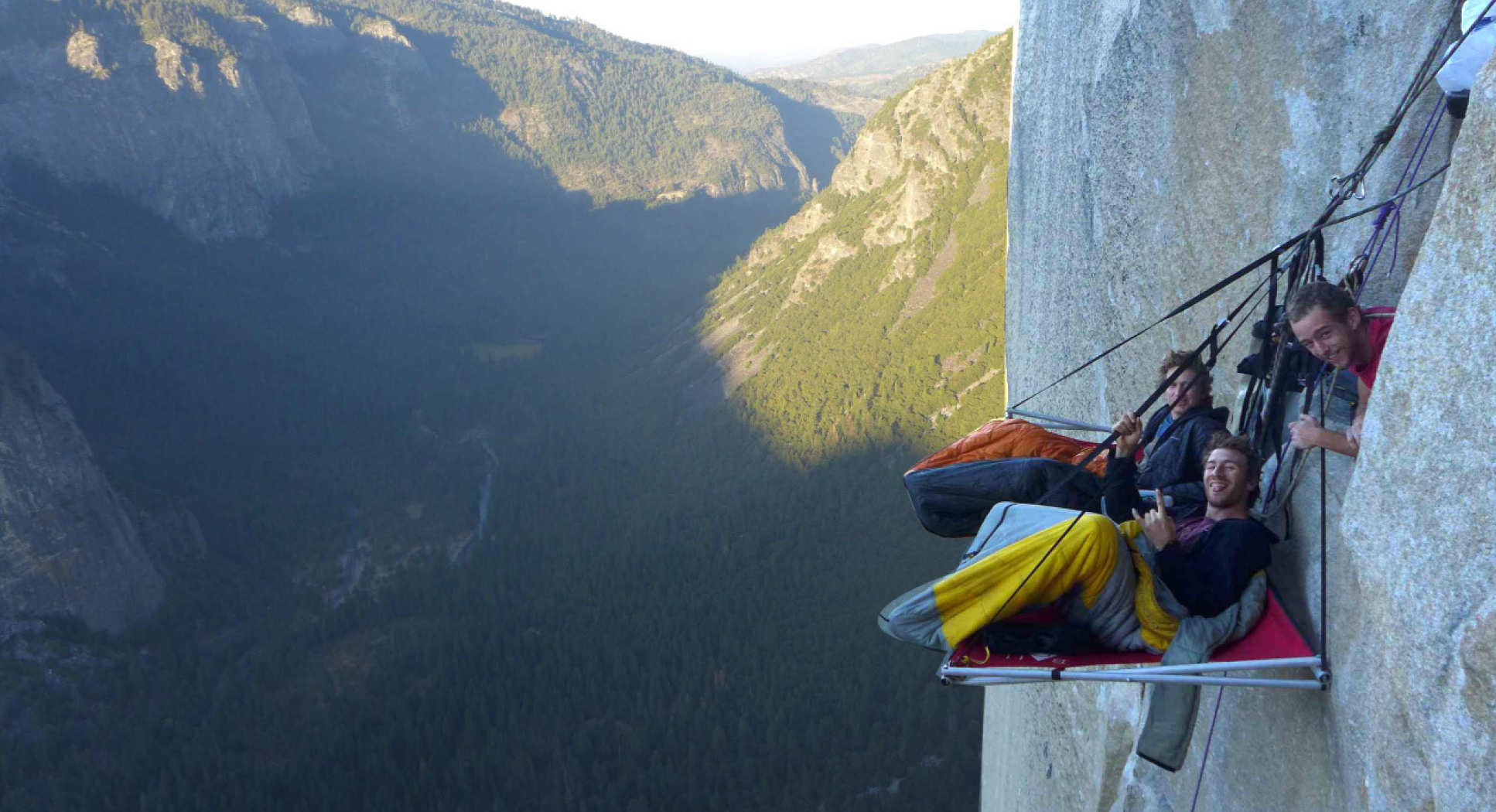
The primary aim was to spend six weeks from early August to mid-September 2013 climbing big walls in Yosemite National Park, California, especially three key routes: The Nose and Salathé Wall, both parts of El Capitan, and the Half Dome. A further significant object was to top the Washington Column. As well as producing a video blog of the expedition in order to encourage people to start climbing, the team also intended to increase their own knowledge of big wall and aid climbing.
Yosemite National Park is a UNESCO World Heritage Site, and possesses a large variety of rock climbing, some considered the best in the world in nearly all disciplines including bouldering, big wall, aid, sport and traditional climbing. The team was comprised of seven members, all Imperial students, three of whom were unable to stay for whole duration due to starting employment. For practical and safety reasons the climbs were conducted in pairs or as a threesome.
On first arrival at Yosemite National Park the team were presented with two challenges, to hone the skills required for a big wall climb, (cliff faces in excess of 1,200ft which require multiple days to climb and generally require artificial climbing techniques), and improve on the skills required to climb the granite cracks which comprise the majority of climbs in the Yosemite valley. In Britain, big wall and aid climbing are very inaccessible disciplines due to stringent UK climbing ethics coupled with generally short routes, as well as the difficulty of gaining the necessary skills. The advice given to the group by experienced members of the climbing community was to learn while out in Yosemite, and allow at least the first week of the trip to become accustomed to the rock and the style of climbing, guidance which was followed by the expedition.
The granite walls surrounding the Yosemite Valley trap heat, with August being particularly hot and making climbing quite draining. Although the heat resulted in the climbing routes being relatively quiet, this also meant carrying more water to prevent dehydration, especially when climbing in direct sunlight all day. A vast majority of the climbing was south facing and the heating effect on the rock made climbing more difficult. In September the climate cooled which provided much better climbing conditions.
The regular North-West face of Half Dome was reached after a walk up the “Death Slabs”, and the route was completed in an impressive 18 hours, whilst El Capitan was completed in four days. Other key climbs achieved included the Manure Pile, (difficulty 5.8), Reed’s Pinnacle (5.9), which involved negotiating a tight tunnel, Nutcracker (5.8), ‘Church Bowl Tree’, ‘New Diversion’ (5.10a.), Energizer (5.11b).
Many of the climbs were multi day accents, requiring the climbers to bivouac for the night on a portaledge, or natural ledges along the route. Other difficulties the team endured included hoards of squirrels constantly invading the campsite in search of food, and also being besieged by raccoons during one night. Bears and big cats were briefly sighted, and wolves were heard, but posed no problems to the expedition.