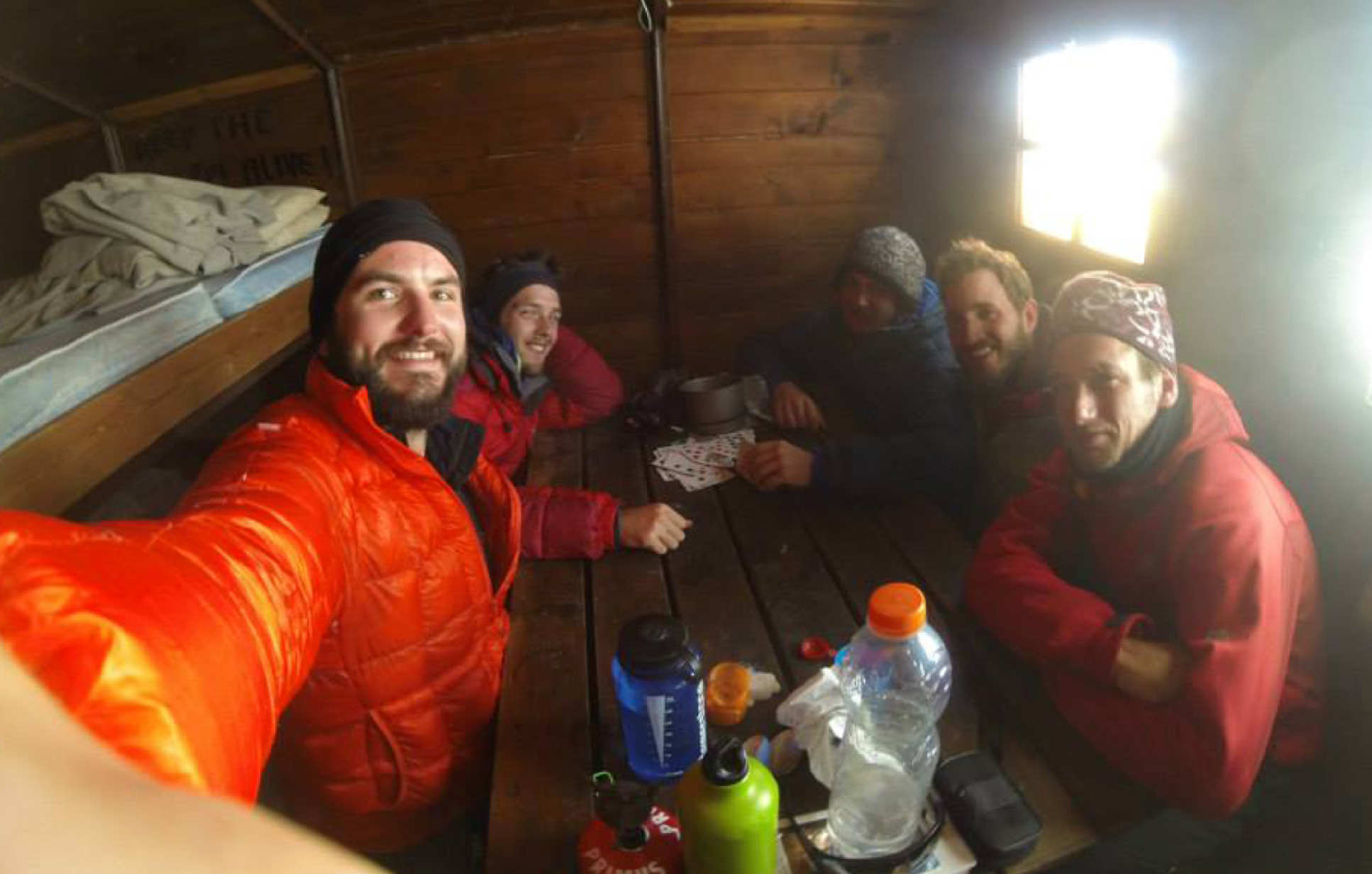
A team of six students spent a month climbing in and around the Monte Rosa Massif region of the Valais Alps, Switzerland. By planning to explore these more remote regions of the Swiss Alps, the aim was to provide longer more challenging climbs for the group, with the intention of improving alpine climbing skills, gaining experience in moving in higher altitude environments, and as preparation for a larger expedition to a more remote location in the future.
The Monte Rosa area has the highest density of 4,000m peaks in the Alps with many requiring a day’s walk in. For the expedition, which took place in June which was early in the season, the team were based in Täsch in the Zermatt valley. However, they faced poor weather conditions consisting of almost unprecedented hot weather, with intermittent heavy snowfall, which led to dangerous climbing conditions and a high risk of avalanches. This curtailed the team’s ability to climb the number, remoteness and difficulty of routes that were initially envisaged.
Despite this, the climbs completed included Breithorn (4,164m), Alphubel (4,206m), Monte Rosa Massif Traverse, Dufourspitze (4,634m, the 2nd highest mountain in Europe), Signalkuppe, Pollux South West Ridge, and Triftjgrat. These climbs, and those that were aborted, included several glacier crossing and having to cross a number of crevasses.
The group gained much valuable experience especially from the decisions that they constantly had to make in respect of route planning, and whether to proceed further or turn back during difficult climbs. These decisions were heavily influenced by the weather, snow and ice conditions, crevasses and other objective dangers and timings.