Expedition Report
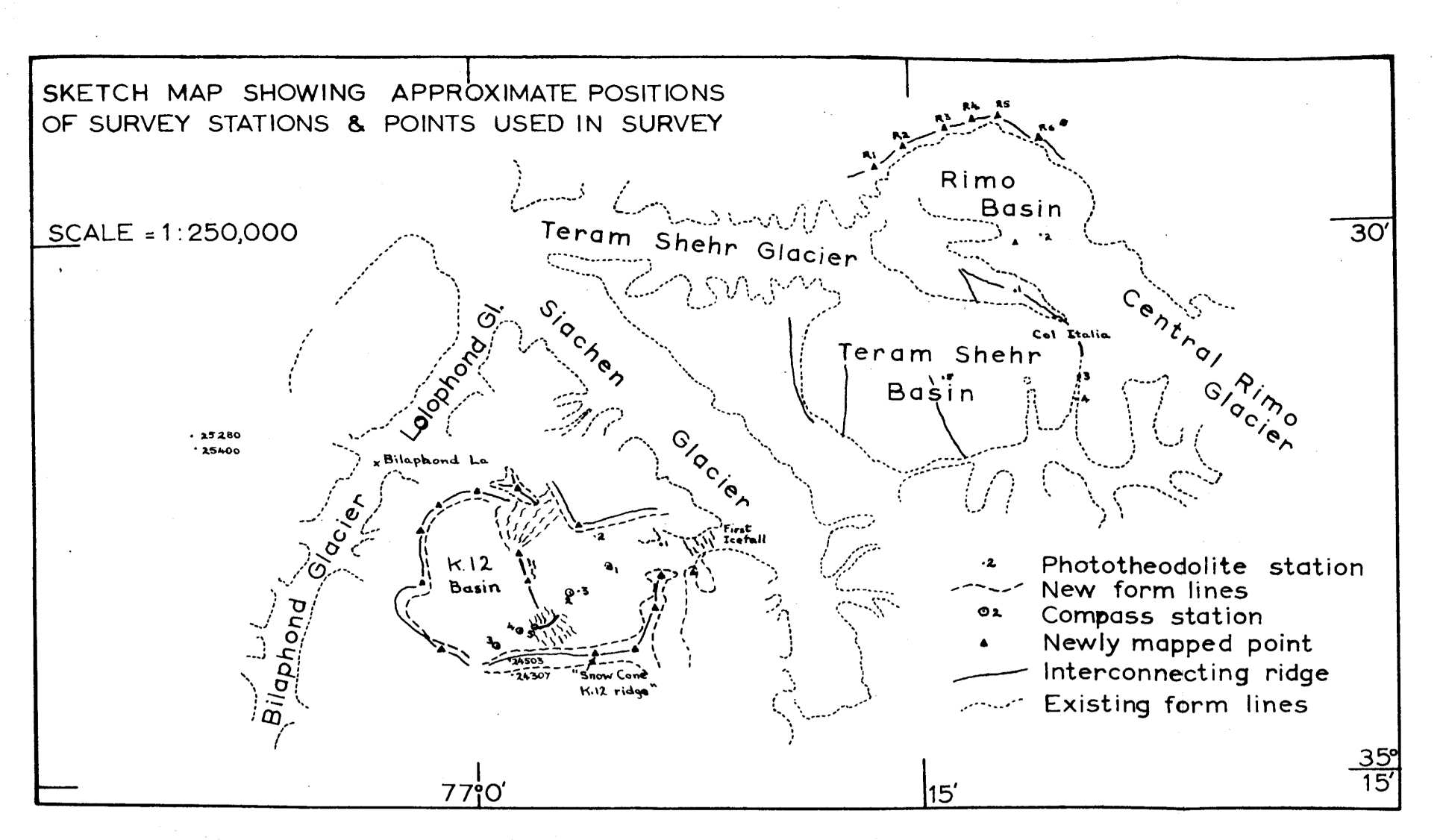
The 1957 Karakoram Expedition was a major mountaineering and scientific venture into one of the world’s most remote and challenging mountain ranges. The team’s primary objective was to explore and climb previously unscaled peaks in the Karakoram, while conducting geological, glaciological, and meteorological studies. The expedition targeted the Hispar Glacier region, a vast and complex glacial system surrounded by towering peaks.
Mountaineering goals included reconnaissance of unclimbed summits and mapping routes across glaciers and high passes. The team achieved several first ascents, contributing to the growing body of knowledge about the Karakoram’s geography and climbing potential. Scientific work focused on studying glacial movement, ice formation, and the impact of altitude on weather patterns. Geological investigations involved collecting rock samples to understand the composition and structure of the range, which is part of the greater Himalayan system.
The expedition faced extreme challenges, including severe weather, difficult terrain, and logistical constraints in transporting supplies through remote valleys. Despite these obstacles, the team successfully completed its climbing and research objectives, returning with valuable data and specimens for analysis in London. Their observations provided insights into high-altitude glaciology and the geological evolution of the Karakoram.
This expedition combined rigorous field research with mountaineering skill, offering participants unparalleled experience in planning, teamwork, and survival in one of Earth’s harshest environments. The achievements of 1957 laid the groundwork for future Himalayan and Karakoram expeditions, reinforcing the importance of interdisciplinary exploration in advancing both science and human endeavor.
In addition to funding provided by the Exploration Board this expedition was supported by the The Mount Everest Foundation, and the English Electric Company.