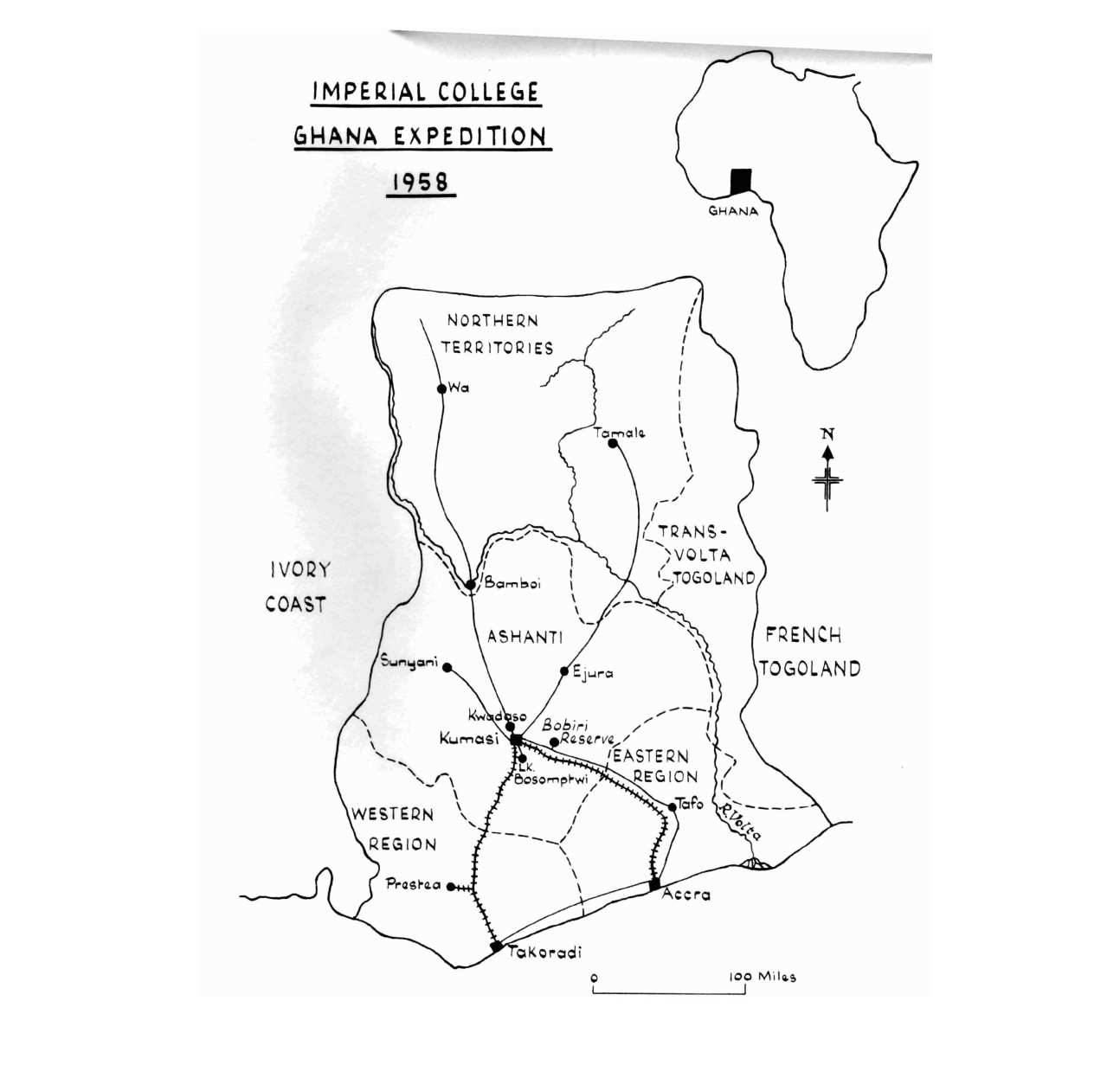
This expedition was a multidisciplinary scientific venture aimed at studying the ecology, geology, and cultural aspects of the region. The team, composed of students and staff, established its base in the Volta Region, focusing on areas around Ho and the Akwapim-Togo ranges. The expedition’s objectives included geological mapping, soil analysis, and biological surveys, alongside ethnographic observations of local communities.
Geological work concentrated on identifying rock formations, mineral deposits, and structural features, contributing to a better understanding of West African geology. Soil studies examined fertility and composition, providing insights into agricultural potential and land use. Biological investigations involved cataloging plant species, assessing forest ecology, and studying insect populations, particularly those affecting crops and human health. The team also explored freshwater ecosystems, collecting samples of fish and aquatic invertebrates.
Cultural research complemented scientific efforts, documenting traditional farming practices, crafts, and social structures. This holistic approach highlighted the interdependence between natural resources and human livelihoods in Ghana. The expedition faced challenges such as difficult terrain and limited infrastructure but overcame these through collaboration with local authorities and communities.
Specimens and data collected were later analyzed in London, contributing to academic knowledge and supporting future research in tropical ecology and geology. The expedition underscored the value of fieldwork in fostering scientific skills, cross-cultural understanding, and teamwork among participants. Its findings enriched the scientific literature on West Africa and laid the groundwork for subsequent studies in the region.