Expedition Report
The aim was to cross Tasmania, venturing from sea to summit using only human power. This was to be achieved by a combination of trekking, cycling and kayaking. The team comprised two members each with different skills. Therefore the additional challenge was for each member to support the other by the exchange of expertise and the transfer of skills. The team also expected to explore the island’s diverse ecosystems as part of their traverse.
Tasmania is an island located of the south east coast of Australia, and at 360km by 310km, is an ideal size for a triathlon style crossing. It is sparsely populated and is a mixture of mountainous regions, temperate rain forests, lakes and rivers. The crossing was planned for May, outside the main tourist season, when temperatures are between 7 and 14 °C, although conditions can be windy as the island lies in the path of the ‘Roaring Forties’.
The team arrived in Devonport docks on the overnight ferry from Melbourne, and after stocking up on provisions, caught the bus to Cradle Mountain, the start of their trek. The scenery was spectacular in the national park, especially in late autumn when the deciduous trees were turning golden. The trekking route offered a number of simple huts providing shelter for preparing food and sleeping, and also meeting other travellers.
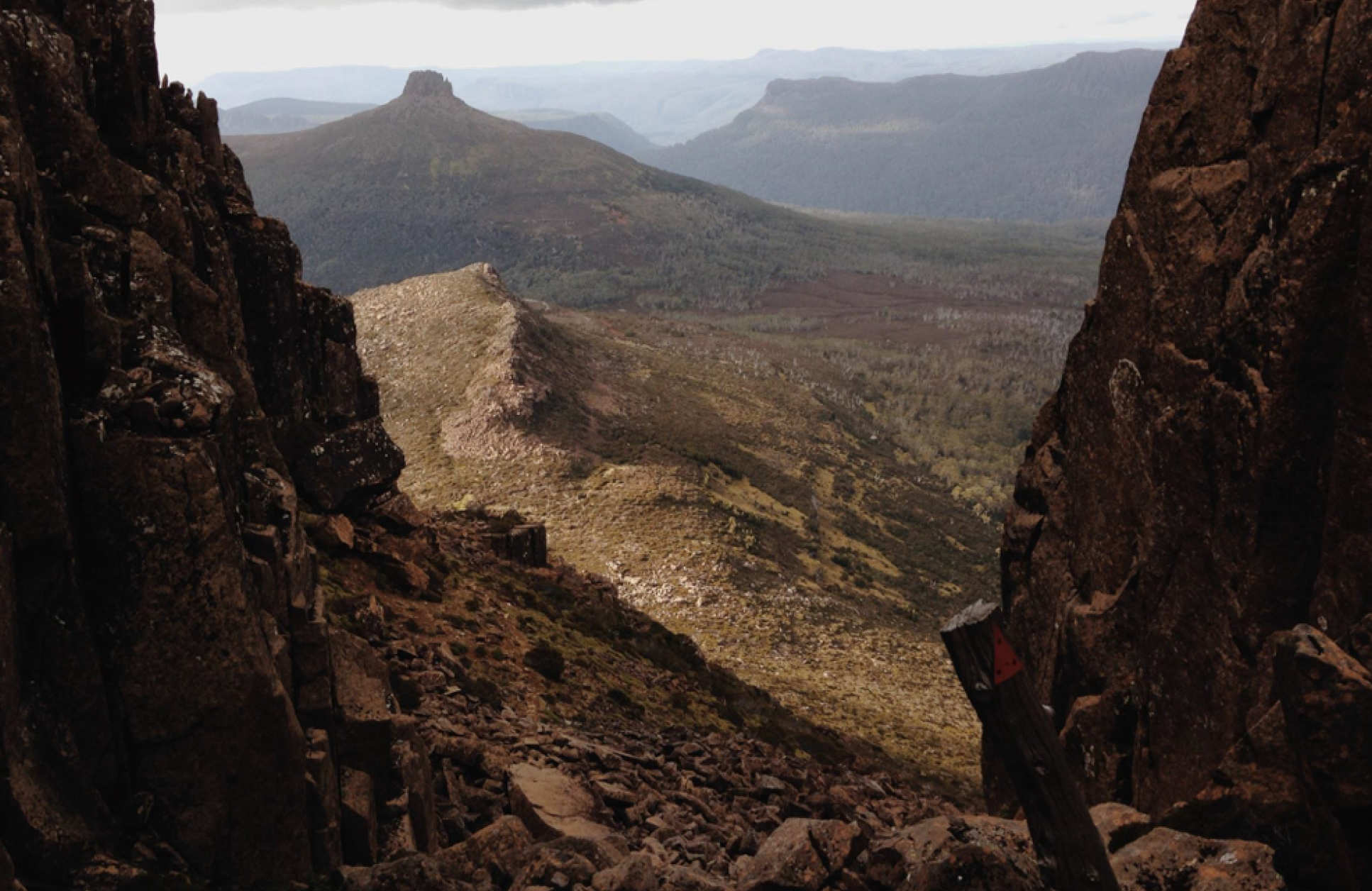
On the fourth day in, the team ascended mount Ossa, which at 1,617m is Tasmania’s highest peak. After having to negotiate leech infested pools, rock gullies and a giant scree slope, the mount summit afforded breath-taking views of the central Tasmanian mountain range. Some days were wet and windy, and made it difficult for the trekkers to keep their feet dry, whilst a further difficulty were the leeches which were drawn to the team when they stopped to take photos. Having reached the Narcissus River, and camping by Lake St Claire, the final days trekking was through Australian bush of huge eucalyptus trees and giant ferns, appearing as a primeval forest. Over the seven days trekking, the team covered 93km.
The cycling stage from Lake St Claire to Hobart involved covering a distance of 180km over three days. Despite cycling with sore knees, having to negotiate climbs, keeping a safe distance from the huge logging trucks, and whilst camping being woken up at night by Tasmanian Devils, the team arrived at Hobart on schedule. The surrounding area was explored including Wineglass Bay and Binalong Bay, which offered some of the best recognised beaches in the world, before travelling to Coles Bay for the kayaking leg.
The team used a tandem kayak, and in 2.5 hours had reached Cooks Beach. The following day saw a crossing to Schouten Island before heading back to Cooks Beach. However just before reaching their destination, the team experiences a full storm, (squall), which resulted in near loss of control of the kayak. After a struggle, the kayakers managed to beach temporarily on a rocky islet before making an emergency landing on the beach. This was a terrifying moment for the team, and thankfully for the next day the sea was calm for the journey across Hazards and back to Coles Bay.
In addition to funding provided by the Exploration Board this expedition was supported by the Lord Mayor's 800th Anniversary Awards Trust.