Expedition Report
The Mekong is the 10th largest and 12th longest river in the world and is one of the most bio diverse - home to over 20,000 species of plants, 1,200 bird species, 800 species of reptiles and amphibians and 430 mammal species. In addition 60 million people live in the lower Mekong Basin – many of whom rely directly on the river system for their food and livelihoods. The aim of the two students were to be the first female only team to travel the lower length of the Mekong basin by bicycle, to report on conservation efforts to protect the river and highlight the challenges that relevant Non-Government Organisations face, and to raise awareness of the incredible biodiversity of the region.
The expedition from mid-November to mid-December started in Ho Chi Minh City, where the team met the Chief Executive of Wildlife at Risk. This involved having to cycle through one of the world’s most congested cities, where drivers overlook many of the traffic rules. They did also venture into the city’s alleyways where life was more laidback and peaceful. The journey to My Tho and then Sa Dec included cycling along one of the Mekong’s tributaries, while the route to Tram Chim National Park provided many sightings of wildlife in their natural habitat. The tour of Ramsar wetland site allowed sightings of egrets, kingfishers, pond herons, cormorants and jacanas.
Crossing the Mekong by boat to Cambodia, the cyclists found that there were now less people in a more rural landscape. The two journeyed to Phnom Penh, the capital, spending three days meeting a representative from Fauna and Flora International, seeing students on the conservation MSc course at the Royal University of Phnom Penh, and viewing Angkor Wat and other temples. At Siem Reap it was possible to visit the facilities of the Angkor Centre of Conservation of Biodiversity in Phnom Kulen National Park.
The towns of Kampong Cham, Chhlong and Kratie involved more temple visits, meeting staff from the Cambodian Rural Development Team, and a chance to see the Irrawaddy River Dolphins, an extremely endangered species. The next visit was to the Mekong Turtle Conservation Centre at Sambour, which was set in the grounds of the 100 pillar pagoda. Here conservationists work alongside the monks to protect the Giant Cantors Soft-shelled Turtle.
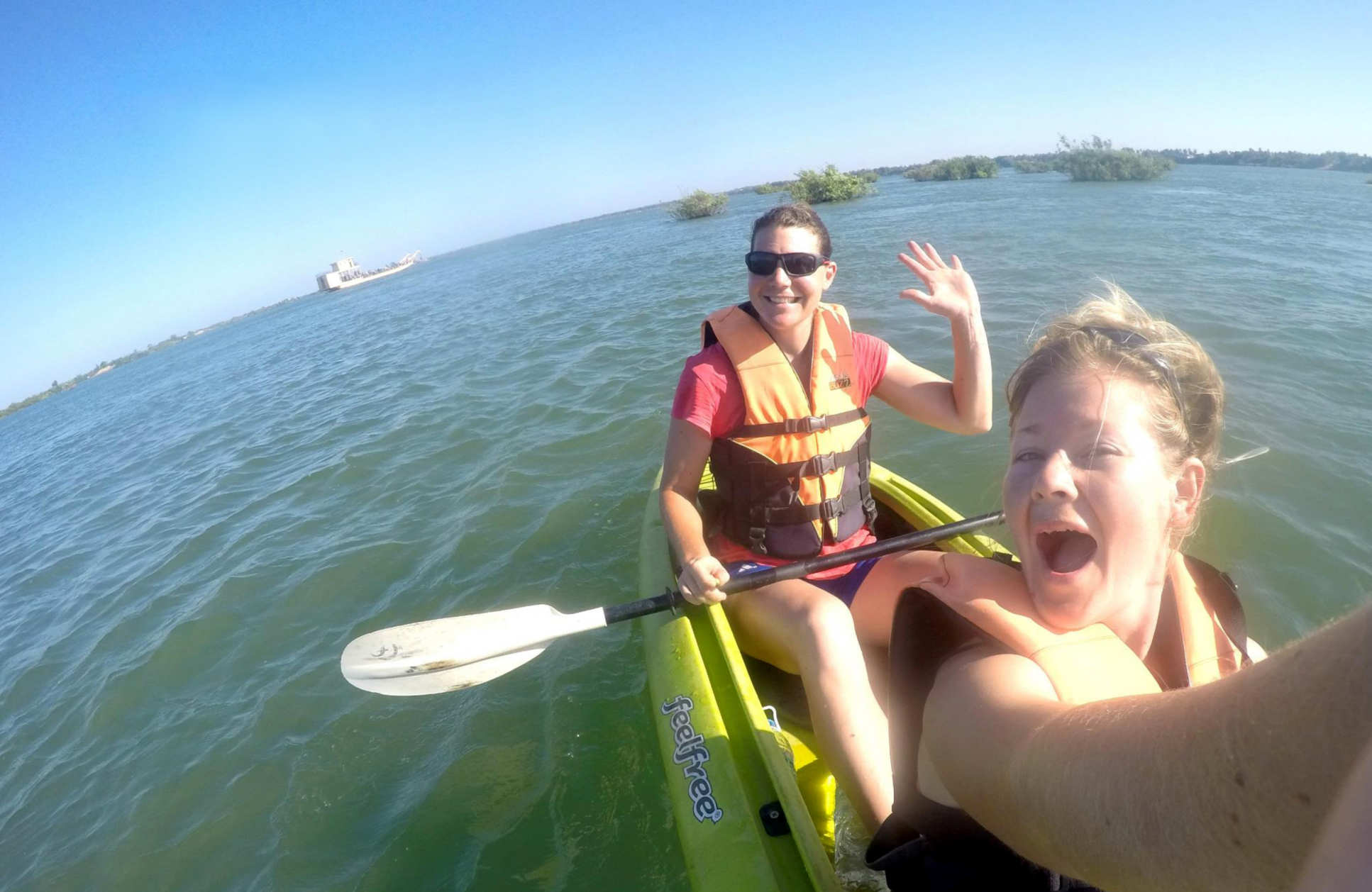
The Mekong Discovery Trail on the longest island on the Mekong at Koh Phdau followed, before pressing onto Koh Niai, Stung Treng and Osvay, where the two kayaked on the Mekong and dined on fried crickets that evening. The way to Laos the next day, included stops at the Khone Phapheng Falls, the largest in Southeast Asia by water volume, and to Don Khong, the largest of the four thousand islands. The route to Champasak in Laos enabled a stop at Wat Phu, a UNESCO world heritage site and a vestige of the Khmer empire, before continuing onto Thakhek, Vieng Kham, Thabok and the journey’s end at Vientiane.
The team cycled 2,000km, predominantly along roads thronging with traffic, water buffalo, and individuals on scooters/motorbikes transporting all manner of goods to market. Also on many occasions locals would welcome the team for lunch or dinner and to stay the night.