
Women leading in finance: ranking first at Imperial in the Bloomberg Global Trading Challenge

You have five weeks and a $2 million portfolio. How would you maximise returns and outperform competitors around the world?
For five MSc Financial Technology students, their strategy, skills and teamwork set them apart, ranking first at Imperial and in the top 15% globally in the Bloomberg Global Trading Challenge. University teams across the world participate in the real-time simulation where they manage a virtual multi-asset portfolio using Bloomberg Terminal tools, competing to outperform a benchmark index using real market data. The all-female group delivered a 1.46% return and generated a 7.4% annualised excess return over the Bloomberg WLS Index in just five weeks – a strong result in a short, highly competitive trading period. This group’s victory represents much more: the growing presence of women in technical areas of finance, and the value in supportive spaces to apply their knowledge in real-world contexts – from quantitative modelling and risk management to leadership and strategic decision- making.
Team captain Georgia Pringuer-James shares how they tackled the Bloomberg Global Trading Challenge. Her teammates also reflect on what this success means to them as an all-female group, and what they were able to learn along the way.
Meet the team

Georgia Pringuer-James
Programme: MSc Financial Technology
Nationality: British
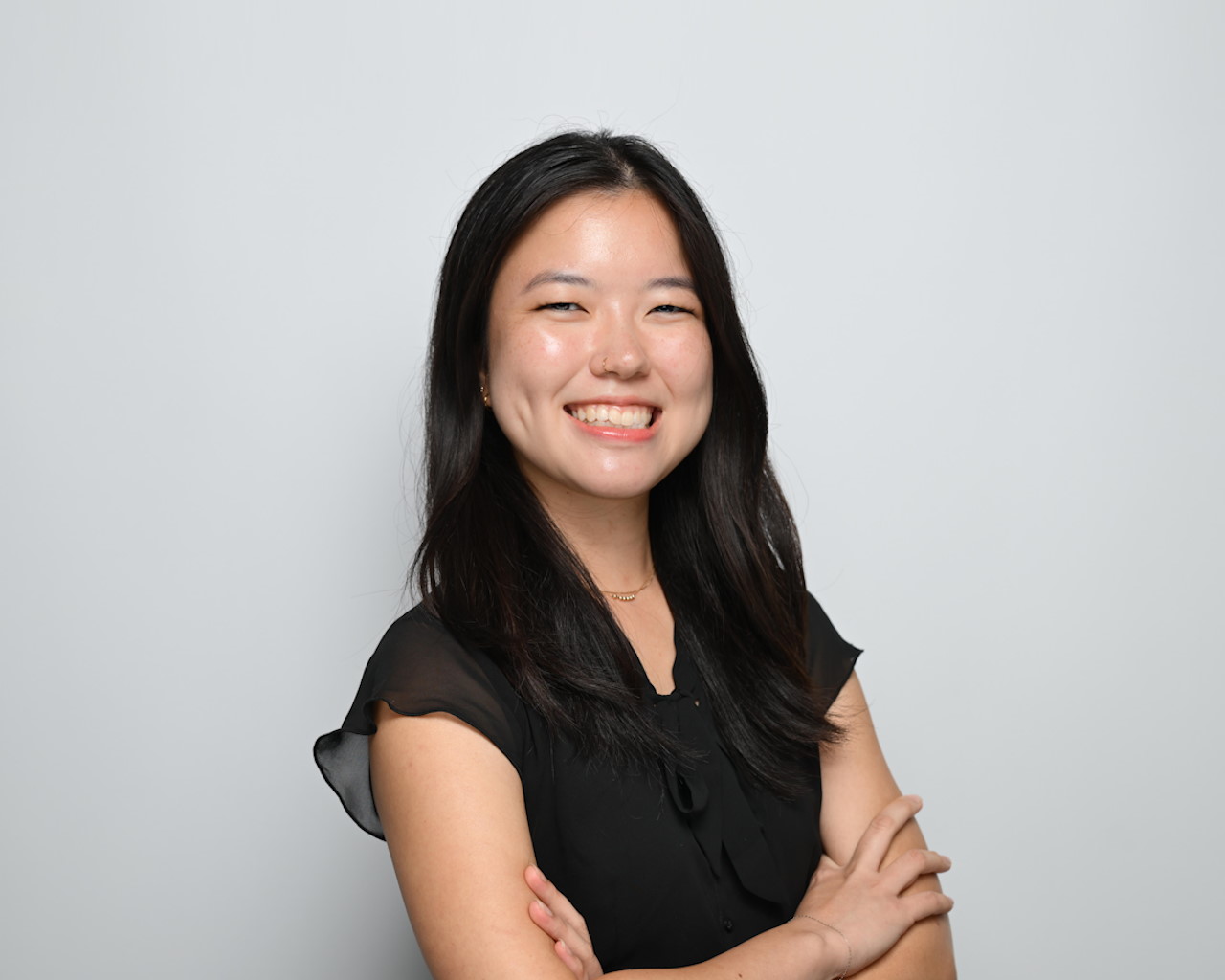
Azumi Soh
Programme: MSc Financial Technology
Nationality: Singaporean

Nicolle Chuquilin
Programme: MSc Financial Technology
Nationality: Peruvian
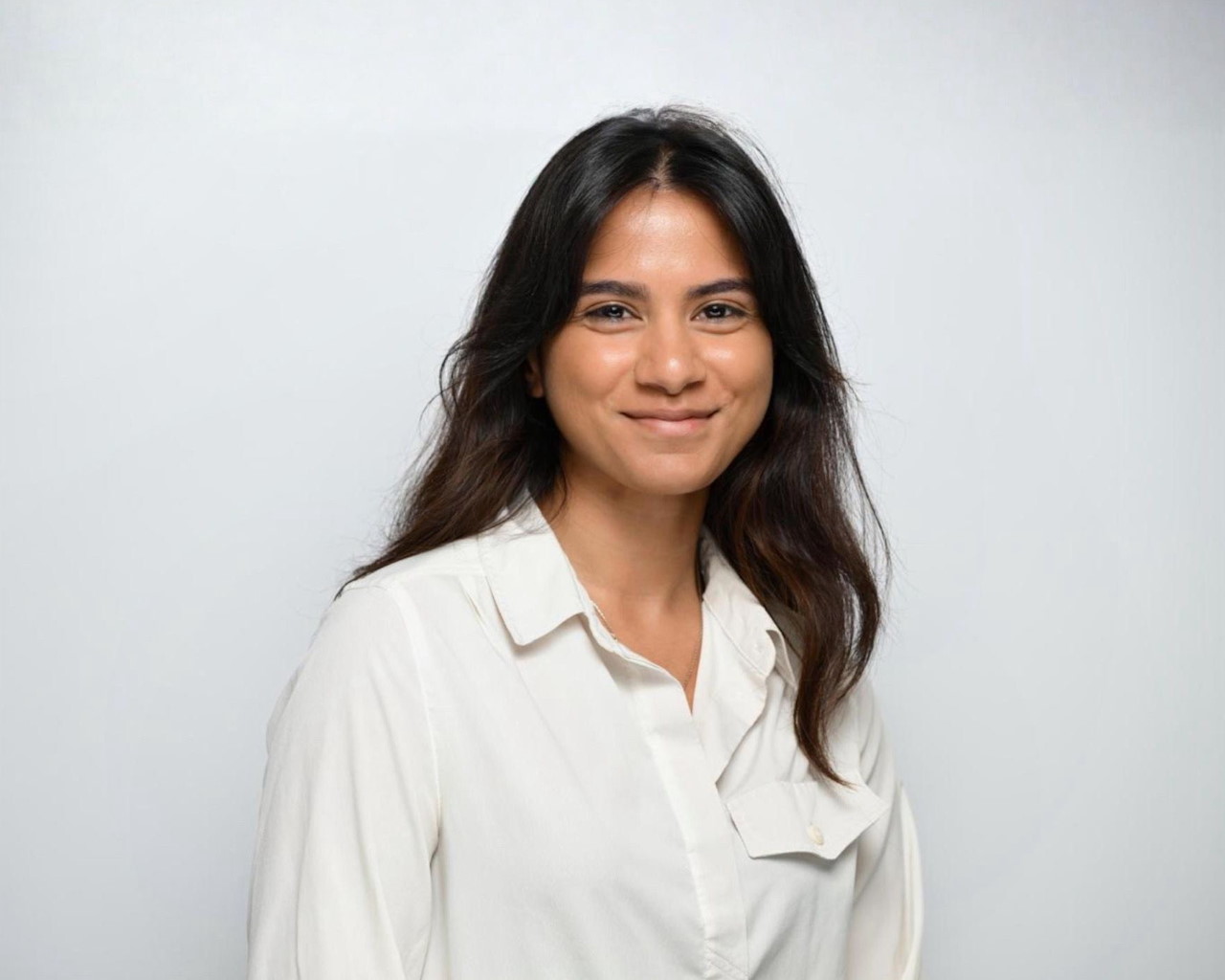
Teanna Kilia Puthucheary
Programme: MSc Financial Technology
Nationality: Malaysian
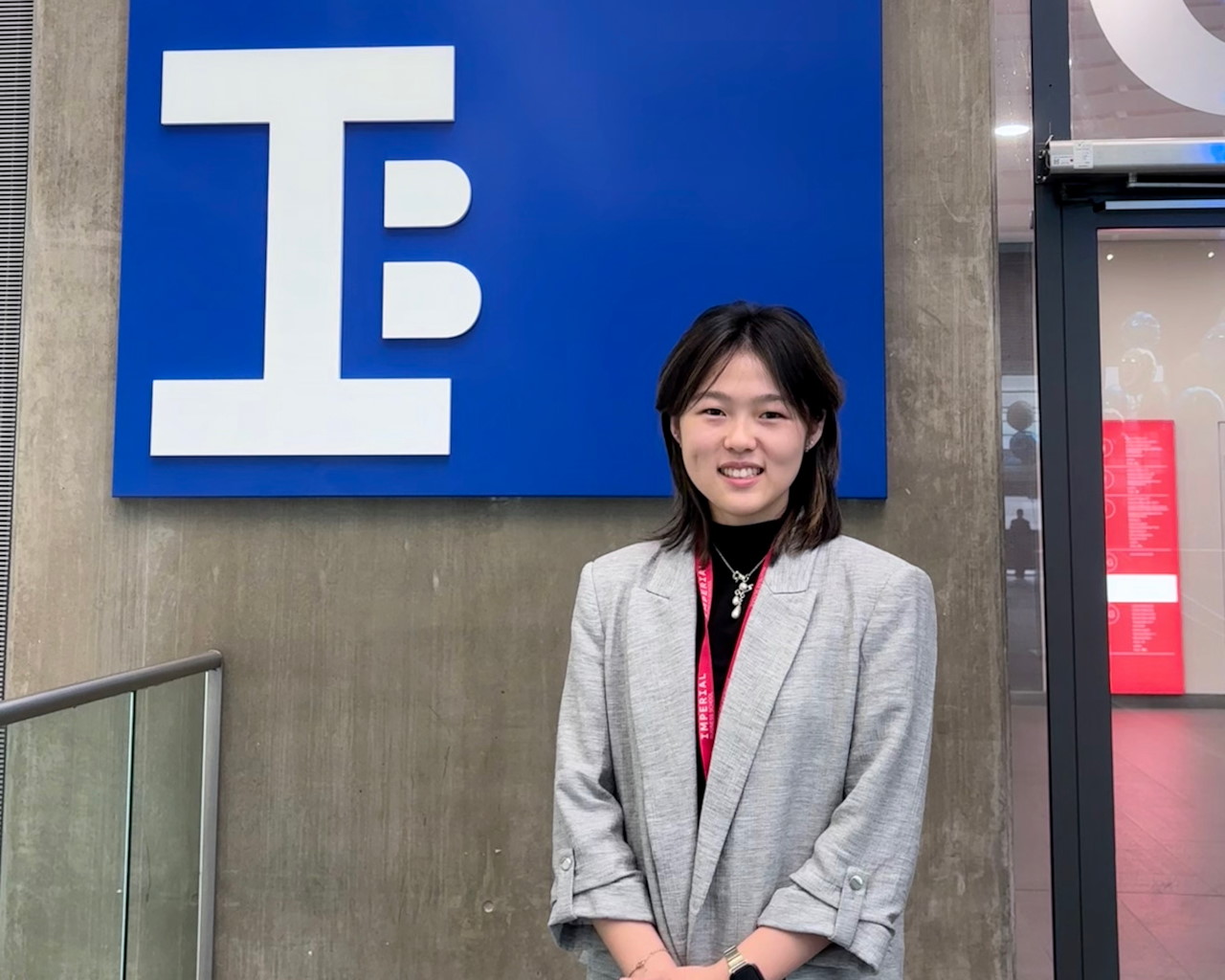
Zola Zhan
Programme: MSc Financial Technology
Nationality: Chinese

Robert Kosowski
Professor of Finance
Team's Faculty Supervisor
Competing in the Bloomberg Trading Challenge
The Bloomberg Global Trading Challenge puts students from top universities across the world up against each other to maximise returns on a $2 million portfolio relative to the WLS (Bloomberg World Small-Large Cap) index using long only trades. I entered to gain insight into trading and risk management, as well as learning to use the Bloomberg Terminal. The experience required rapid problem-solving, structured thinking and the ability to remain agile when market conditions shifted, all of which are directly applicable to roles in trading, risk and asset management. Our success was a great confidence boost and is something I can now discuss in interviews to highlight my skills and professional achievements.

Zola Zhan
Joining the trading challenge was a quick, unanimous decision. When Nicolle first introduced the idea, our shared ambition and intellectual curiosity immediately aligned the group. Despite initial hurdles, the guidance from faculty and our unwavering collective commitment allowed us to navigate the complexities of the market. I feel incredibly proud of how we transformed those early challenges into a successful, cohesive strategy.

Azumi Soh
I entered to work with like-minded people from my programme. Having a shared competitive experience meant that we could bond not only as a team, but as friends. Additionally, I wanted to use what I had learned in class and see tangible results in a simulated market.
How leadership, team structure and faculty support shaped our winning strategy
As the team captain, I executed all trades for us, with some people focusing on literature reviews and strategy, and others focusing on data analysis, backtesting and risk management. Our faculty supervisor, Robert Kosowski (Professor of Finance at Imperial), also supported us by suggesting literature reviews and shaping our approach. We all worked on the initial research into strategies and brainstormed how we could merge them for the strongest approach – we eventually decided on a quality momentum systematic trading strategy. This involved selecting highly liquid small and large-cap stocks with strong recent performance. We then filtered them by fundamentals such as ROE and debt levels, rebalancing daily to keep trading costs low.
Guiding the group taught me that leadership is about bringing people with different talents together to maximise the group’s success. Imperial Business School’s rigorous, yet collaborative, academic environment made that possible. With many Finance Master’s students participating, especially from MSc Financial Technology, the experience brought together people with diverse technical and analytical skillsets. It also created a competitive atmosphere on campus with teams exchanging ideas and elevating each other’s ideas.
Zola Zhan
The Business School provided the vital infrastructure that made our participation possible. Access to Bloomberg Terminals not only allowed us to enter the competition but also enabled me to construct the datasets required for our Dynamic ARP framework. This combination of high-level guidance and industry-standard resources was the key catalyst that led us to first place.

Nicolle Chuquilin
Imperial’s teaching emphasises analytical depth and practical application, which translated naturally into the experience. The programme encourages building strategies from first principles, stress-testing assumptions, and justifying decisions quantitatively rather than intuitively.
Applying financial theory to real-world trading
As part of the challenge, we submitted trades on Bloomberg Terminals, which was a great learning experience. These Terminals are widely used in industry and can be hard to come by. Having access to them at Imperial is extremely valuable and will allow me to develop my capability early in my career in a supportive environment.
The competition was a great opportunity to directly apply classroom theory to live market decisions. The Data Structures and Algorithms in Python and Applications of R for Financial Technology modules supported us in building and backtesting trading strategies. Although it was taught in R rather than Python, the underlying thought process was directly applicable. We developed and backtested our strategy in Python, using data pulled from Bloomberg and YFinance (using an API). While the Investments & Portfolio management module gave us insight into the market, different strategies and possible risks associated with our chosen approach. Together, the theory and experience strengthened our quantitative expertise, resilience and approach to uncertainty.
Zola Zhan
The Financial Econometrics module was fundamental, specifically the lecturer’s insights into the statistical characteristics of financial time-series. This knowledge directly informed how we handled volatility clustering in our data, leading us to apply GARCH concepts and correlation dynamics from the programme. This allowed me to build a more sophisticated covariance matrix for our portfolio optimisation. This ensured that our risk-adjusted returns were not just a result of luck but were built on a solid econometric foundation.
Nicolle Chuquilin
The quantitative rigour of the programme trained us to focus on disciplined implementation, risk control and avoiding behavioural biases.
Challenging expectations and being a woman in finance
Visibility of women succeeding in finance competitions builds confidence, and when coupled with a supportive environment, acts as a springboard for further success. I came into the competition sceptical about our chances, as others had more experience and knowledge. Our win demonstrates that working hard as a team is vital and hopefully inspires other women to go for it.

Teanna Kilia Puthucheary
Being a woman in finance has made me more deliberate and results-focused. We were often underestimated, even when we ranked highly. Rather than letting this discourage us, this reinforced our drive to prove ourselves in the competition.
Nicolle Chuquilin
I’m proud to have been part of an all-female team. The trust within the group allowed us to challenge each other’s ideas constructively and make decisions under pressure. This strengthened my confidence in competing in male-dominated environments alongside capable, driven women.
Shaping a career in finance
Participating in the Bloomberg Global Trading Challenge was pivotal in shaping my career aspirations. When I started at Imperial, I knew I wanted to go into the mathematical finance space, but this experience made my path clearer. The competition exposed me to trading and quantitative finance, which I love and decided to pursue. Being able to talk confidently about developing a systematic trading strategy, the risks and outcomes, were crucial when interviewing, and allowed me to demonstrate a passion for trading. Following this, I have secured multiple offers across risk management and trading.
Competitions like the Bloomberg Global Trading Challenge are not just about results, but about the process behind them. Pushing participants to work collaboratively to problem solve and trust in their strategy even when they're under extreme pressure. For these students, the competition sharpened their quantitative expertise, strengthened their leadership skills and decision-making capability, and reinforced disciplined risk management. As an all-female team, experiences like these are especially powerful for supporting women in finance. Creating spaces where women can take calculated risks and lead under pressure will support them in building confidence, visibility and representation in an industry where female talent is still underrepresented at senior levels. The Finance Master's programmes prepare students for real-world business issues by providing industry-standard facilities and opportunities to practice their skills, ensuring they have the confidence and experience to thrive in a competitive job market.
Share


Alumni Q&A: Florence Perramond, Climate Change, Management & Finance 2022
After building experience across venture capital investments, impact asset management and fundraising, Florence Perramond developed a strong focus on connecting capital with high-impact opportunities.

The career case for doing less this Summer
Summer break often gets framed as downtime: a pause before the "real" work resumes. It is important to prioritise rest and consider it as part of your professional development.

Lessons, insights and early career advice from Imperial Business School Master’s alumni
We recently caught up with some of our Master’s alumni, who reflected on their early careers after graduating from Imperial Business School. In this blog, they draw on their own experience to offer advice to those who are about to enter the job market.