
An opportunity for medical, dental and veterinary students to gain an in-depth understanding of multisystem disorders and therapies
Key Information
Duration
1 year full-time
Start date
21 September 2026
Application deadline
Extended until Friday 06 March 2026 for external applicants
Main Teaching Campus
Hammersmith Hospital Campus
Enquiries
Course Administrator
Claire Wade
MSDT@imperial.ac.uk
Application Process Enquiries
feo.bsc@imperial.ac.uk
Introduction
The BSc in Medical Sciences with Multisystem Disorders and Therapies (MSDT) is directed at all students with an interest in the scientific basis of medical practice. The course focuses on a wide array of disorders including cardiovascular diseases, cancers, autoimmune diseases, metabolic disorders and allergies. In addition, with recent advances in our scientific understanding several new pioneering therapies have emerged that are/will transform patient care.
This course has a particular focus on a panel of these therapies, including gene therapy, targeted antibodies, bi-specific antibodies, BiTEs & CAR T-cells. The course also provides skills and transferable knowledge that are important for nearly every medical discipline (including, but not limited to cancer biology, cardiovascular science, pharmacology, cell biology, immunology and autoimmunity).
The Course Director is Professor Jim Crawley (j.crawley@imperial.ac.uk)
Aims and objectives
After taking this course students will be able to:
- Analyse data and critically review scientific articles
- Explain the principles of a wide variety of state-of-the-art research techniques
- Discuss and explain the scientific basis of selected malignant transformations, cardiovascular diseases (e.g. thrombotic disorders), autoimmune and metabolic disorders.
- Explain how recent research has transformed our understanding of these disorders and how scientific advances have influenced the diagnosis, the development of novel therapies and the management of patients with these disorders.
- Relate the underlying science and the results of recent research to the clinicopathological features of multisystem disorders and their management.
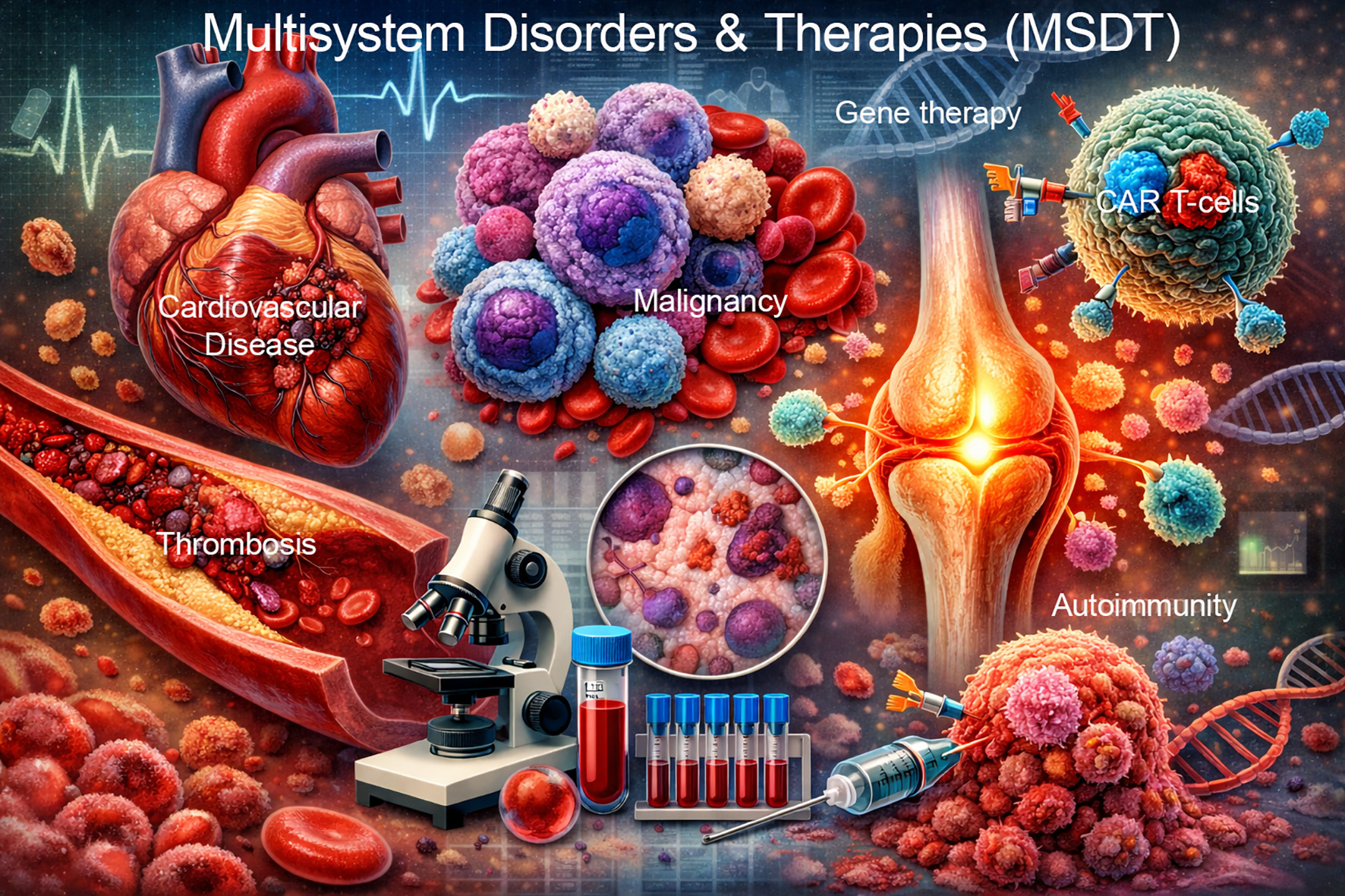 Seminars will be given by experts in these areas from Imperial. You will also receive training in research techniques, data analysis, science communication and presentation skills, discuss current and future research and clinical challenges in multisystem disorders and therapies, and gain research experience via a clinical or laboratory-based project within an active research group.
Eligibility
This is a one-year intercalated BSc. To be eligible to apply you must:
- Be registered on a recognised Medical, Dental or Veterinary course at a UK or Irish university or at one of our recognised International Partner institutions.
- Have completed at least one year of that course before you apply to Imperial College. i.e. you must be at least in Year 2 in 2025/26.
- Have at least one year of your degree left when you return to your home institution after completing your intercalated BSc.
Application Process
This is a new BSc for the 2026-27 academic year.
Selection is based on your application form and the supporting documents you will upload with your application. Please find further information about the application process in the Imperial Intercalated BSc Guide for 2026-27 Entry (PDF).
Applicants should expect to receive the application outcome by the end of March.
If you have any queries about the application process, please email the BSc Programmes Team at feo.bsc@imperial.ac.uk.
Second Round of Applications
Unsuccessful or wait-listed applicants will be given the opportunity to make a second round application to any of our BSc programmes with space remaining.
Tuition Fees
Tuition fee rates are the same as the Imperial College London MBBS Course. Further information can be found here.
Programme Structure
The BSc Multisystem Disorders and Therapies (MSDT) will run from Monday 21 September 2026 until Friday 21 May 2027. The provisional term dates can be found in the Provisional BSc Dates and Course Structure 2026-27 (PDF). The programme comprises three modules.
Multisystem Disorders and Therapies Course Structure
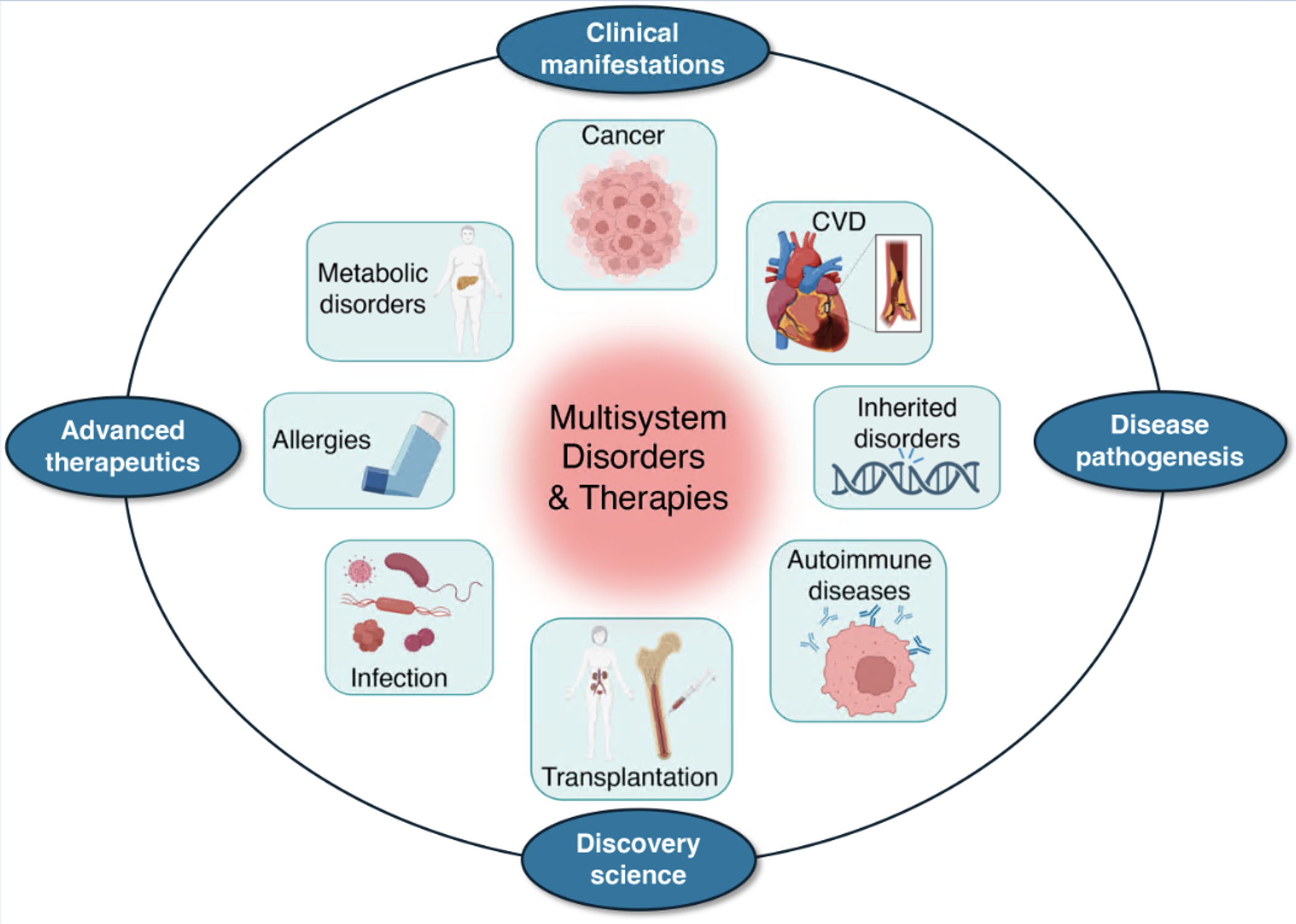 Module 1 is a 12-week taught module that takes place in the Autumn Term. Students will receive interactive, engaging sessions from leading experts in the field of multisystem disorders research. Module 1 comprises three core teaching blocks:
- Block 1 – Cardiovascular & Immunity
- Block 2 – Autoimmunity & Metabolic disorders
- Block 3 – Malignancy & Therapies
Module 1 Assessment
Module 1 is assessed via three pieces of in-course assessment which account for 30% of the overall BSc mark:
- Oral Task (15% of Module 1)
Students will give a 10-minute presentation critically evaluating an area of cardiovascular research followed by 5-minutes of questions from assessors. - Written Task (15% of Module 1)
Students will write a 1,000-word commentary article which will appraise a recent topical or controversial area of autoimmunity research. - Data Management and Interpretation (70% of Module 1)
Students will perform some laboratory research and produce their own flow cytometry results. Each student will also be supplied with an additional flow cytometry dataset to process and interpret. Students will submit a short report-style paper analysing and interpreting the data, along with a scientific abstract and a lay summary.
How is this Module Taught?
Module 1 provides a blend of face-to-face teaching on campus, lab work and a small amount of online teaching. We aim to make our teaching as interactive as possible to promote student engagement and cohort building.
The module includes 3 consolidation weeks without teaching, where students can work on assessments, associated self-directed learning, on-line modules and group work. The consolidation weeks will also provide an opportunity to meet with the Course Lead to discuss progress, issues and receive feedback on course work and progress.
Module 2 is a 5-week block which takes place in the Spring Term. It provides students with a collaborative experience of working with their peers to provide a critical synthesis of a scientific problem. Students will also work independently on a clinical case study involving a real patient, where they will investigate the science underpinning the patient's diagnosis and/or treatment.
Module 2 Assessment
Module 2 is assessed via two pieces of in-course assessment which account for 25% of the overall BSc mark:
- Group Literature Review (60% of Module 2)
Students will work in groups of 4-5 to develop their team working, communication, critical appraisal and clinical translation skills through a literature review assignment that focusses on translation of basic understanding of cancer into patient-orientated research. - Science in Context (40% of Module 2)
Students will attend a cancer and autoimmunity clinic led by an NHS consultant/clinical facilitator. From this, students will obtain details of a clinical case that forms the basis for an in-depth scientific exploration of the current and emerging evidence for either the underlying cause of the disorder or current treatment options. Students will be assessed via a scientific poster and poster presentation.
How is this Module Taught?
Module 2 is self-directed learning so there are fewer taught sessions. For both Module 2 assessments, students will be supported by an academic supervisor who is an expert in the field of study.
 A 14-week supervised research project (clinical or lab-based) to explore/test novel hypotheses basic or clinical research. Module 3 takes place in the Spring and Summer terms. Students will choose from a range of current and topical research projects. Examples of past projects include:
Clinical Projects
- Changes in depth of response after autologous stem cell transplantation in multiple myeloma and their importance for clinical outcome.
- Concordance of Outcomes Between Kidney Transplants from the Same Donor.
- Determining the impact of multi-system inflammation on progression of HTLV-1-associated myelopathy.
Laboratory Projects
- Tissue factor pathway inhibitor (TFPI) defining the mode of action of an essential anticoagulant.
- Innate immune detection of a group of extracellular pathogens by cytosolic sensors.
- Investigating the role of XCR1-XCL1 signalling in a mouse model of systemic lupus erythematosus (SLE).
- Impact of epithelial-pathogen interactions on lung tissue remodelling.
Module 3 Assessment
Module 3 is assessed via two pieces of in-course assessment which account for 45% of the overall BSc mark:
- Project Report (78% of Module 3)
Students will produce a 5,000-word project report. - Oral Presentation of Project (22% of Module 3)
Students will give a 10-minute oral presentation reflecting on their individual research journey and future research directions, followed by 5-minutes of questions.
How is this Module Taught?
All students will have a dedicated project supervisor who will be a senior academic at Imperial. The supervisor will provide guidance and support throughout the research journey.
Additional support will be provided by the Module Lead, who will run regular project support sessions. Students will give a project progress presentation with their BSc MSDT cohort at regular intervals.
Student Support
We know that joining a new university can be daunting. We will do all we can to welcome you to Imperial and help you to get to know your cohort.
Our Imperial School of Medicine Student Union (ICSMSU) run fantastic welcome events for new intercalating students and the Multisystem Disorders and Therapies team will run activities to help students get to know one another. We also run a buddy scheme called Cohort Connect, which you can join to be matched with internal Imperial students.
Each student will be assigned an Academic Tutor who will provide support with both academic and pastoral matters throughout your BSc. We have a wide range of student support provisions and services designed to assist you throughout your studies. Please find further information in the Imperial Student Support Zone.
Frequently asked questions
- How many places are available on BSc Multisystem Disorders and Therapies?
- How competitive is the application process?
- When will I receive the outcome of my application?
- How can I learn more about the programme?
- I have a question about the application process. Who can I contact?
- What are the Tuition Fees for the programme?
We set 10 course spaces aside for intercalating students from other universities.
As this is a new BSc for 2026-27 entry, we do not yet know how competitive the application process will be. We will always try to offer as many appropriately qualified applicants a place on the programme as possible.
If the programme is over-subscribed, there will be a waiting list. Wait listed students will be advised of their position on the waiting list and kept informed if they move up the waiting list.
We aim to respond to applicants by the end of March at the latest.
Please contact the BSc MSDT Course Administrator, Claire Wade (c.wade@imperial.ac.uk), who will be happy to assist with any queries you have about the programme.
Detailed guidance about the application process can be found in the Imperial Intercalated BSc Guide for 2026-27 Entry (PDF).
If your question is not answered in the guide, or you require support with an aspect of the application form, please contact the School of Medicine Faculty Education Office (FEO.BSc@imperial.ac.uk)
Tuition fee rates are the same as the Imperial College London MBBS Course. Further information can be found here.