
Welcome to the Medical Biosciences Offer-holder Hub
Dates for your diary
- Check your application for your personal UCAS deadline to respond to your offer
- 6 July - IB results published
- 18 July - Deadline to submit mitigating circumstances claim
- 18 July – Accommodation Application Deadline. Read more here
- 14 August - A-level results published
Congratulations on your offer to study BSc Medical Biosciences (BMB) at Imperial!
On this page you will learn about upcoming events. There will also be opportunities for you to hear from staff and current students to find out more about the BMB and what life at Imperial is really like.
Offer Holder Events
Online Teaching Experience 2nd April 14:00 – 15:30 (UK time).
During this event, offer holder had the chance to experience an example of how one of our Medical Biosciences (BMB) teaching sessions could look like with both teaching fellows and current students present. They had read this online module before joining the event.
This event has now taken place. Please see a recording of it here.
Offer Holder Day 25 April, 11:00 - 13:00 (UK Time)
Our Offer Holders Event took place on Friday 25th April, here at our South Kensington campus. It was great to see so many of you in attendance, taking part in talks and tours and learning more about the BMB programme and Imperial itself.
Online Q&A 14 May, 14:00 - 15:00 (UK time).
At this event offer holders had the chance to ask all your questions to our current Student Union BMB President as well as current BMB students in different years. Please click here to watch a recording of the session.
Campus Tour on 4th June 13:30 - 14:30 (UK Time)
NOTE: this tour has now taken place.
This tour is for you if you would like to visit our South Kensington campus and see the BMB teaching spaces here. During this tour, run by our current students from the Medical Biosciences course, you have the opportunity to ask questions directly to them. Our labs are on Hammersmith campus and as such not included in the tour, so you can instead see that online here. If you wish to take a general in person tour around Imperial, then you can also sign up for that here.
Please sign up for the June BMB tour here by 23 May midday.
Student Profiles
Meet Rosanne, an international year 1 student on our BMB programme
Meet Trinity who is a current year 1 BMB student from the UK
Anwen is one of our year 1 BMB students who have moved to the UK to study here
James is a year 2 UK student studying the BMB here at Imperial
Iulia is a year 3 BMB overseas student
Year 2 Overseas student Leo shares his experiences
Course Details
- What can I study on this course?
- How will I study on this course?
- What is Flipped Classroom?
- What are LabPods?
Our unique degree provides the potential for you to become one of tomorrow’s leading scientists. Medical Biosciences is an exciting and innovative programme, which features a fully ‘flipped’ curriculum. The modules blend self-directed study, including e-learning activities with interactive teaching and learning sessions in which you will explore the science underpinning medicine and its related fields, and learn how this is applied in research, policy and industry.
You can also take a look at BMB programme specification 2022-23 entry – this is the most up-to-date version available for this course. It may change for your year of entry. You can find an overview of the Course Structure on our main BSc Medical Biosciences course information webpage.
We also offer this degree with Management, which includes a fourth year in Imperial College Business School, designed to complement your scientific and clinical skills with business acumen. You can read more about this option on the BSc Medical Biosciences with Management programme information webpage.
Teaching methods will include team-based learning, group projects, discussion forums and guided field trips. These activities will develop your analytical and interpersonal skills as well as your scientific knowledge and empower you to succeed in a changing world. You will also be immersed in cutting edge scientific research from your first teaching week: our Lab Pod modules offer an opportunity to test real scientific hypotheses in a research laboratory-like environment and guest lectures from world-leading researchers will enable you to contextualise your learning to real-world scientific developments.
Project Opportunities
Your final year project will be an opportunity to explore a biomedical science research topic in greater detail by joining one of Imperial’s research teams, or through a work placement or dissertation. This extended project will allow you to consolidate your learning from the Medical Biosciences programme and will provide invaluable experience and preparation for a successful scientific career after graduation.
To hear more about the teaching methods used on this course, check out our video guide with Dr Kirsty Flower, one of the Medical Biosciences team.
Teaching Methods with Dr Kirsty Flower
--t_1520349688907_x2--tojpeg_1532951154867_x2.jpg)
We have a very strong focus on practical laboratory work throughout the course starting with Lab Pod 1, your first year Lab Pod module. You mirror an authentic research lab - answering real scientific questions, designing and performing experiments to test hypotheses as well as experience first-hand the process of scientific research.
In the Spring and Summer terms you will complete your Lab Pod 1 modules in person, with some introductory Lab Pod 1 sessions in the Autumn term.
You can also learn more about Lab Pods from a student point-of-view by watching the video on YouTube here. This is made by two of our students, Ni and Akeefa, who joined BMB October 2021.
Tutor Profiles
- Professor Alison McGregror
- Dr Kirsty Flower
- Professor Niamh Martin
- Dr Elizabeth Want
- Professor Vania Braga
- Dr Jacqueline Dickson
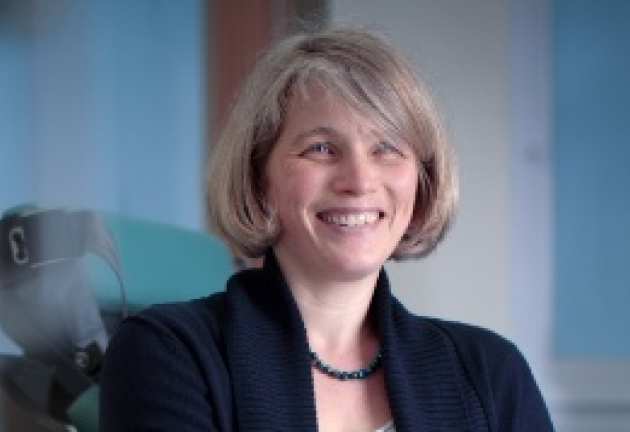 What do you teach on the Medical Biosciences course?
Director of Undergraduate Science and Course Lead.
What has been the highlight of teaching the course so far?
Watching students growing and learning in science and blossoming into our future scientists.
What can students expect from the course and do you have any tips for getting the most out of the course?
Students can expect to be challenged and taken out of their comfort zones but to grow from this in skills and knowledge, learning to question and conduct their own scientific projects and to do their own scientific studies from the start of the course, not just watch or hear about it. My tip is to embrace uncertainty and enjoy the challenges.
Where did you work/study before coming to Imperial?
I studied Biochemistry as an undergraduate at the University of Sussex, where I continued for my PhD. I then joined Imperial as a postdoctoral researcher, before becoming a Teaching Fellow
What are your research interests?
During my PhD and postdoctoral research, I was interested in epigenetics, specifically DNA methylation. During my PhD, I studied a viral transcription factor which had an important role in activating latent/dormant Epstein Barr Virus by binding to methylated (silenced) viral DNA. I went on to work on DNA methylation in breast and ovarian cancer, looking at whether epigenetic patterns could predict pathogenicity of genetic mutations in breast cancer, and identifying epigenetic changes associated with ovarian cancer.
Since becoming a teaching fellow, I have developed educational research interests related to the use and impact of active learning techniques, how students study in flipped classroom environments, and how student identity might affect experience of active learning, specifically for LGBTQ+ students.
What do you teach on the Medical Biosciences degree?
Currently I am Module lead for the Statistics module in year 1, and a member of the Lab Pod 1 team, where I focus on team dynamics, collaborative working and the use of feedback. I have previously taught on the Molecular and Cellular Biology module, and Lab Pod 2. I am also the head of Academic Tutoring for BMB, where I oversee the academic development of our students through the Academic and Personal Tutoring system, alongside the Senior Tutors who oversee student welfare matters.
Why did you choose to teach Medical Biosciences at Imperial?
I was inspired by the innovative ways of teaching that were being developed and I wanted to be a part of a degree that used evidence-based learning techniques to support student progression. It was an exciting opportunity to be part of the team designing and developing the programme. I was especially excited to teach Statistics, as we include basic R coding as part of this module, a skill I wish I had been able to learn at a much earlier timepoint in my own academic career!
What has been the highlight of teaching the course so far?
There are so many! One highlight I am lucky enough to experience every year is hearing from students who had never coded before finding a passion and a skill they didn't know they could have, and asking me for additional study materials to further improve. I also particularly like attending graduation and hearing where students are going after they complete this degree.
What can students expect from this course, and do you have any tips about getting the most out of the course?
Students can expect a challenging but supportive environment to explore the fascinating world of medical biosciences. My advice would be to come with an open mind, a willingness to experiment with the ways you have previously studied, as well as enthusiasm (and patience!) for working in a team.
 Where did you work/study before coming to Imperial?
I studied undergraduate medicine, with an intercalated BSc in Physiology, at the University of Liverpool. I came to London after graduation to start my clinical training and undertook my PhD in appetite regulation with Professor Steve Bloom's at Imperial College in 2000.
What are your research interests?
I'm a Clinician Scientist, so I enjoy applying my research skills to clinical problems. I have a particular interest in pituitary disease and thyroid disease.
What do you teach on the Medical Biosciences degree?
I am Head of Year 1.
Why did you choose to teach Medical Biosciences at Imperial?
Medical Biosciences is a really innovative and exciting course. I remember feeling quite ill prepared for my PhD in terms of the techniques that I needed to learn in the laboratory and it was a very steep learning curve. I love the way that this course focuses on very practical ways to prepare future scientists right from the start.
What has been the highlight of teaching the course so far?
I really enjoy working with the teams of people involved in delivering the course, not just Year 1 but across the years.
Do you have any other tips about getting the most out of the course?
Students should expect to receive high quality, innovative teaching. I would recommend that students regularly consolidate their learning by reviewing their learning materials. It makes preparation for assessments so much easier if you keep on top of your notes!
 Where did you work/study before coming to Imperial?
Undergraduate degree at University of Bath, PhD at Kings College London, Postdoc at the Scripps Research Institute, La Jolla, CA.
What are your research interests?
My research focuses primarily on the development and application of novel mass spectrometry (MS) based techniques for metabolomics and on the fusion of mass spectrometric methods with chemometric analysis. My research at Imperial College has involved the development, optimisation and application of the UPLC-MS methodologies for the analysis of biological samples, largely in the context of metabolic phenotyping: serum, urine, tissue, amniotic fluid and microdialysates. I am applying these methods to biomedical research areas including burn injury, glioblastoma, and neurological diseases.
What do you teach on the Medical Biosciences degree?
I am Head of Year 2.
Why did you choose to teach Medical Biosciences at Imperial?
I was asked to become Head of Year 2 and was pleased to accept the role as I was interested in becoming more involved in undergraduate teaching/management.
What has been the highlight of teaching the course so far?
Seeing how well the students are responding to the flipped learning and how successful the projects and placements have been for the Year 3 students.
Do you have any other tips about getting the most out of the course?
Expect an innovative and exciting course. Be prepared to work independently for the online modules. Become an important part of a team - be proactive and ask questions where and when you can. The Module Leads and BMB Team are there to help!
Where did you work/study before coming to Imperial?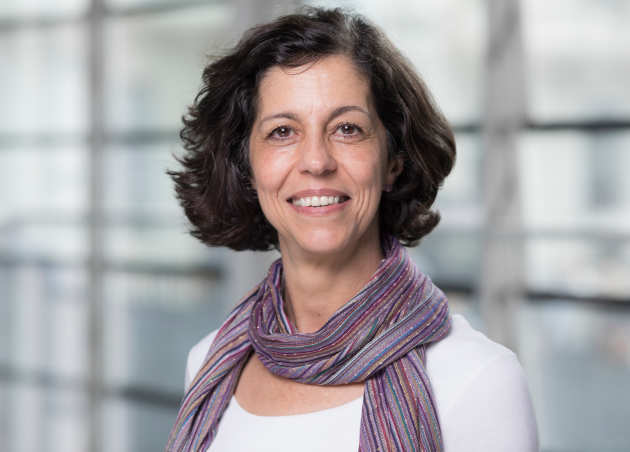
I started my own independent group at the MRC Laboratory of Molecular and Cell Biology at University College London.
What are your research interests?
My lab investigates the signalling necessary to maintain tight cohesion between cells. This is an essential property of multicellular organisms and responsible for maintaining tissue structure and architecture. We focus on epithelial cells and how disregulation of cell-cell contacts underpins a number of pathologies, from chronic inflammatory conditions to tumour cell detachment and metastasis.
What do you teach on the Medical Biosciences degree?
I am the Head of Year 3 of the Medical Biosciences degree. I oversee the smooth running of all activities in Year 3, teaching of the short modules and coordination of the supervisors and students at project placements at Imperial and external providers.
Why did you choose to teach Medical Biosciences at Imperial?
What attracted me in the Medical Biosciences degree is the innovative aspects of the teaching methodology and the unique training the students receive as a spectrum of soft skills and professional preparation. It is very exciting to be part of the team.
Where did you work/study before coming to Imperial?
University of Edinburgh
What are your research interests?
Cancer biology, epigenetic and personalised medicine
What do you teach on the Medical Biosciences degree?
Lab Pod 2 and Stem Cells and Reproductive biology. I have also previously taught on the Cancer Biology, Pharmacology and Toxicology, and Genetics and Genomics modules.
Why did you choose to teach Medical Biosciences at Imperial?
The innovative teaching style. The new, focused curriculum and extensive laboratory skills training.
What has been the highlight of teaching the course so far?
As a teacher on Lab Pod 2, I particularly enjoy hearing from 3rd year lab supervisors about how impressed they are with our student’s laboratory abilities. I love seeing our students flourish in their year 3 and hearing from their placement supervisors about how well they are doing.
What can students expect from this course, and do you have any tips about getting the most out of the course?
A biomedical science education designed around the concepts and challenges of 21st century health science. An opportunity to experience professional scientific research and to apply knowledge to real world problems. TIP: Trust in the teaching style and your own abilities, you'll be surprised.
Find out more with our video guides

Learn more about the course from Professor Alison McGregor
Learn more about the course from Course Lead, Professor Alison McGregor
Learn to pipette - in VR
Learn to pipette - in VR
Year One Lab Pods
Second year students describe what year 1 LabPods are
Second year students describe what year 1 LabPods are
Tips for settling in
BMB year 1 student, Ellie, shares her tips for settling in
BMB mythbusting video
Rosanne, a current BMB student, made this mythbusting video
BMB year 2 student Isabella shares her experiences
Year 2 BMB student Isabella explains why she chose to study BMB at Imperial and how she's finding it
Year 2 BMB student Isabella explains why she chose to study BMB at Imperial and how she's finding it
Teaching Methods
Dr Kirsty Flower talks you through the various teaching methods that will be used on the course
Teaching methods will include team-based learning, group projects, discussion forums and guided field trips. These activities will develop your analytical and interpersonal skills as well as your scientific knowledge and empower you to succeed in a changing world.
Welfare Admissions Video
Lilia Evans, ICSMSU Welfare Chair 2023-2024, talks you through welfare aspects
Lilia Evans, ICSMSU Welfare Chair 2023-2024, talks you through welfare aspects
BMB course - a student's perspective (Caitlin Davies Yr 3)
Year 3 BMB student Caitlin Davies gives her perspective on the course and life in London.
Year 3 BMB student, Caitlin Davies presents her experience of the BMB course and life in London.
Student Support
Director of Student Support at Imperial College London
College life
More information about student life at Imperial College


