The Good Science Project
The Good Science Project is a College-wide initiative aiming to promote debate about contemporary research culture. We celebrate the ideals which brought us into science, and by which we hope to work. And we look with a critical eye at the way Imperial can best support our own good practice. No doubt good science is both a personal matter, and a responsibility of our institutions.
The Good Science Project is a collaboration between the Office of the Vice-Provost (Research and Enterprise) and the Science Communication Unit, and is funded by Research England.
What is ‘good science’?
What is ‘good science’? And what is ‘good practice’? These phrases are interesting because they point in two directions. On the one hand there is the ‘headline’ success of institutions: high impact research results; grants won; league tables scaled; top journals stormed; media time guaranteed, parliamentary questions asked. We know too that ‘good science’ suggests also something quieter, less public, more intimate. ‘Good science’ may be the moments of reflection where you have time to consider the direction your work is taking. It may be those conversations with colleagues that are both trustful and creative. Good science may be the style of work where collegiality is valued above straight ambition. Undoubtedly good science is linked to the steady and secure development of your skills. We need our institutions to be successful: otherwise, there can be no science. But for the ideas to flow, researchers need time and they need autonomy. How can we get the balance right, and so produce the research culture that helps us all flourish?
None of these issues are easy to get right. None attract instant solutions. But to be confident of progress in research culture, one of the foundations will be the time we give ourselves for reflection and for conversation. This is the ethos of the Good Science Project.
The Good Science Project in 2025/26
Writing Science Workshop now in progress
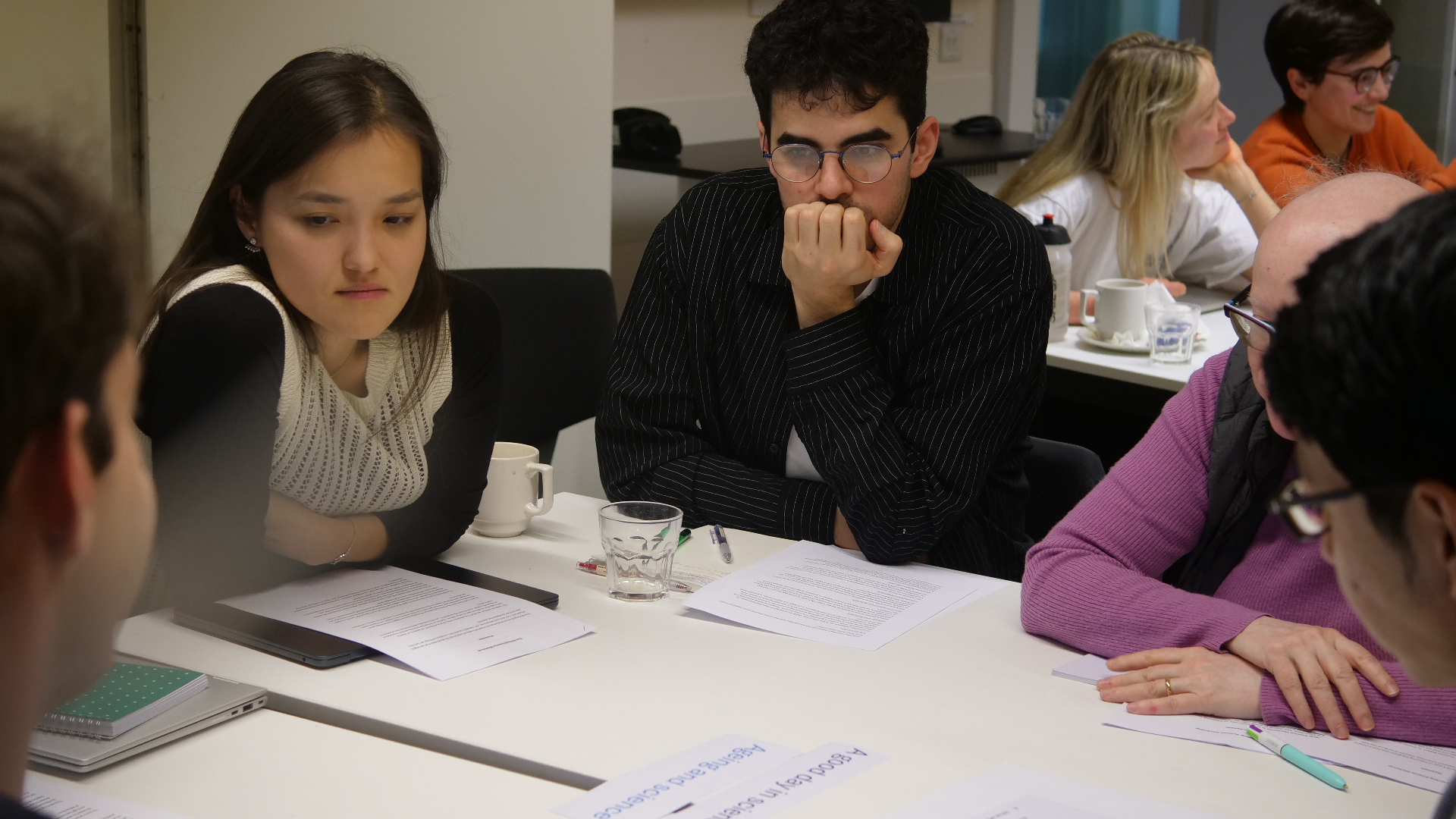
Once each month, on a Friday lunchtime, between 20 and 30 research students and staff are meeting to discuss ideas, practice their writing, and work towards a book provisionally titled ‘The Good Science Book’. Our aim is to see how ‘creative science writing’ can give us a good sense of the contemporary research environment and help us understand better the ideas behind our research. As part of the Writing Science Workshop we also go on various ‘school trips’: to Imperial’s animal facility; to the Linnean Society; to the KCL Museum of Pathology; and to the Nature offices.
‘I Scientist’ animation now released
You can now view the Good Science Project film ‘I Scientist’, here. Under the expert instruction of animator and artist-in-residence Litza Jansz, for more than a year a group of Imperial researchers have drawn, rotoscoped, photographed and voiced – all in the service of a participatory project that aims to capture artistically the key concerns and pleasures of the research life. As Litza Jansz put it ‘These Imperial scientists were great to work with and showed real skill as artists. But what was just as impressive was the way, over many afternoon sessions, they could discuss their differing perspectives on science and find just the right artistic expression’.
I Scientist

Friday Forums
Four Friday Forums have taken place so far this year: on the meaning of ‘socially responsible science’; on the future of the animal experiment; on the impact of security science on university research culture; and on the ‘humanity’ of robotics and AI. The next Friday Forum is at the start of the 2026/2027 academic year, and features Sir Chris Whitty, Chief Medical Officer, and the Deputy Mayor of London for Environment and Energy, Mete Coban. Chris and Mete will be discussing ‘The ethics of air pollution’ in a Friday Forum chaired by Professor Frank Kelly CBE, director of the Environmental Research Group.
Friday Forums are congenial in-person lunchtime discussion focusing on a particular aspect of research culture. Brief intervals in our busy day, Imperial’s Friday Forums give scientists, other staff and students the opportunity to step back for a short hour, to consider wider perspectives on their craft.
The Good Science Project’s 2026 research culture conference ‘Failure in Science’, April 16th 2026
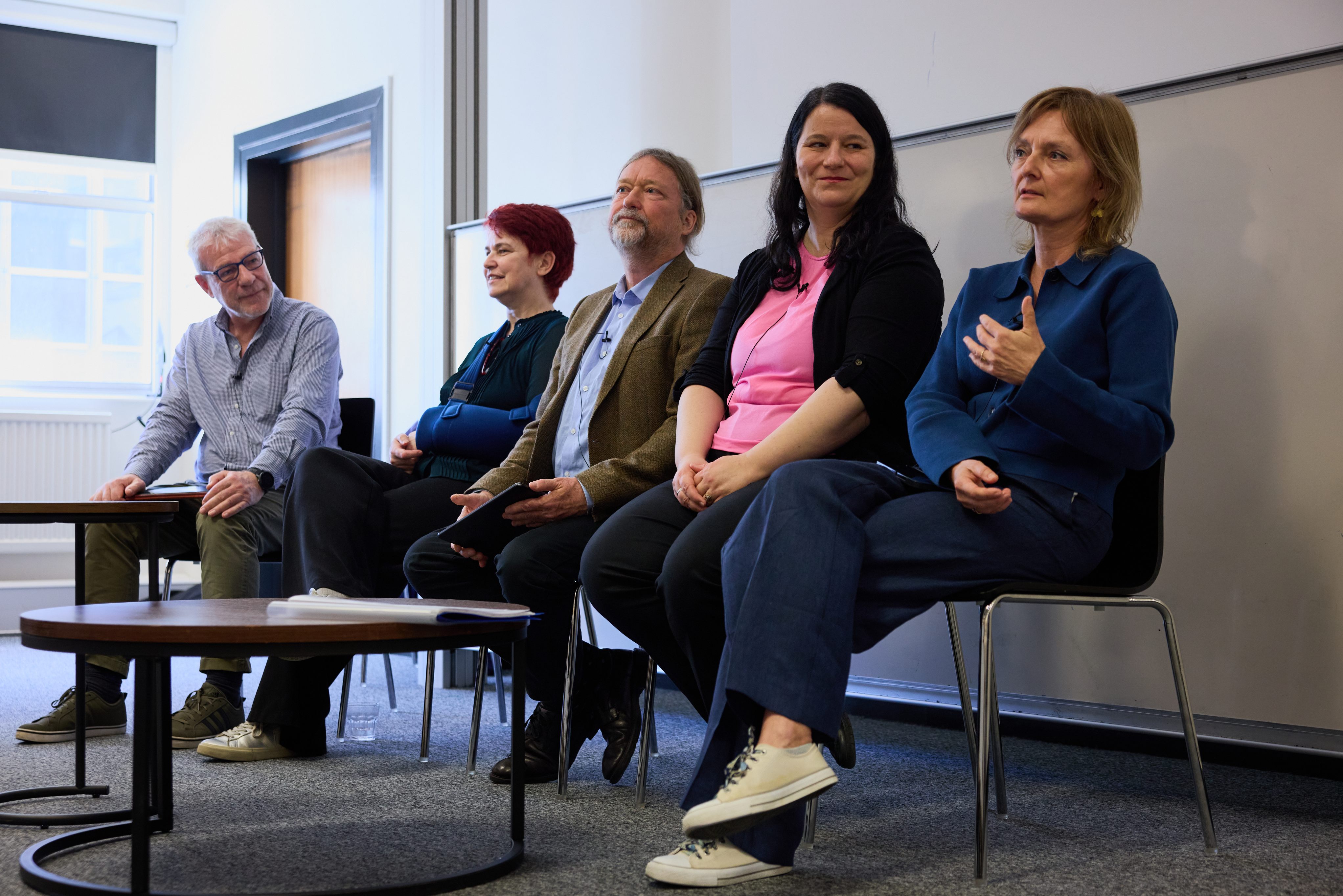
Co-convened with Dr Magdalena Skipper, editor-in-chief of Nature, our conference this year was a collaboration with Nature magazine and looked at the many faces of failure in science. As a participant said in a recent focus group ‘We are better at describing success than we are at describing failure’. Yet scientists are united in their opinion that failure must be accepted as an inevitable, perhaps valuable aspect of the research process. How should scientists view the delays and diversions of failure, and how should institutions ‘manage’ this important element of the life scientific? To what extent is failure unfairly distributed, and what advice can we give each other about resilience and hope? Furthermore, can science itself fail, ethically or simply in terms of unfulfilled promises? With speakers from academic research, from industry, from the arts and from the other professions, the conference was a unique insight into a rarely discussed aspect of all scientific careers. A Nature editorial ‘We Need to Talk About Failure in Science’ followed, along with Imperial's news article covering the event.
Good Science Project Advisory Panel
- Dr Sam Cooper, Reader in Machine Learning for Materials Design, Dyson School of Design Engineering.
- Dr Andrea Fantuzzi, Advanced Research Fellow, Department of Life Sciences.
- Professor Frank Kelly, Battcock Chair in Community Health and Policy. Director of the Environmental Research Group, School of Public Health.
- Ehsan Masood, senior editor and Bureau Chief (Africa and India), Nature magazine.
- Dr Felicity Mellor, director of the Science Communication Unit.
- Dr Alex Richardson, Research Associate, Environmental Research Group, School of Public Health.
- Emily Roche, Head of Research and Enterprise Strategic Projects, Office of the Vice-Provost (Research and Enterprise).
LOOKING BACK
2023 Autumn Conference, September 27th, ‘Day of Doubt’
The Day of Doubt examined and affirmed the importance of doubt as a resource for good science. 280 members of the College filled the Sir Alexander Building, with the day introduced by Professor Mary Ryan (Vice-Provost, Research and Enterprise), Sir Paul Nurse FRS, director of the Francis Crick institute, and Professor Ian Walmsley FRS, Provost of Imperial College. The day was structured to be as conversational as possible, with ample opportunity to discuss such features of research culture as excellence, public engagement and interdisciplinarity. The day was filmed and you can view the different sections of the conference on YouTube.
2025 Spring Conference, April 2nd, ‘Prism of Research’.
I30 college members discussed the kaleidoscope of research culture, led by Dr Magdalena Skipper, editor-in-chief of Nature magazine, Professor Mary Ryan, Vice-Provost (Research and Enterprise) and Professor Peter Openshaw, professor of Experimental Medicine. The conference schedule, and the Imperial news article provide an overview of the topics addressed at the conference.
Art project 2023/2024: The Tapestry of Science.
The Tapestry of Science, a work of art about the life of science, is permanently on display on the 4th floor of the Abdus Salaam library. As part of the Good Science Project we ran for 12 weeks in Summer 2024 an arts project involving ten scientists, research managers and science communicators, working under the guidance of artist-in-residence Ella Miodownik. The project culminated in July 2024 with an exhibition and Private View, called ‘Experiment’. The Tapestry of Science can also be viewed online.
The project brief was to represent vital aspects of the life scientific, especially those central to daily laboratory practice. Three concepts form the animating principles of the art piece, ‘time’, ‘balance’ and ‘emotion’, aspects of research familiar to all scientists.
The group met weekly, on Fridays, and worked both jointly and independently on the final artwork. The final exhibition was curated by Mikayla Hu and included a Q and A with the participants, and a video documentary of the project by Madisson McKone.
Upcoming events
View full calendar
Good Science blog
More from Good Science blog-
Research Culture, defence research, security science
Security science and university research culture: a Friday Forum
It’s Friday lunchtime, 23rd January 2026, and the SAFB mezzanine is buzzing with life and conversation. Undergraduates, postdocs, managers…
-
Ethics, Research Culture
Aristotle on the campus
It was in the lift of the Faculty Building, descending from the heights of the fourth floor, that George Constantinides let me know that he too…
-
European collaboration, Research Culture, Science and art
Celebrating RIMO
It was a pleasure last month to join the Research Impact Management Office (RIMO) for their anniversary celebrations. RIMO has been going strong…
-
Ethics, Research Culture
The role of the social sciences at Imperial, part II
Recently I was invited to give the keynote lecture at the annual summer symposium of the London Interdisciplinary Social Science DTP, and I was…