Liv Carroll (MSc Mineral Project Appraisal 2001) says AI could help us change the way we manage precious natural resources.
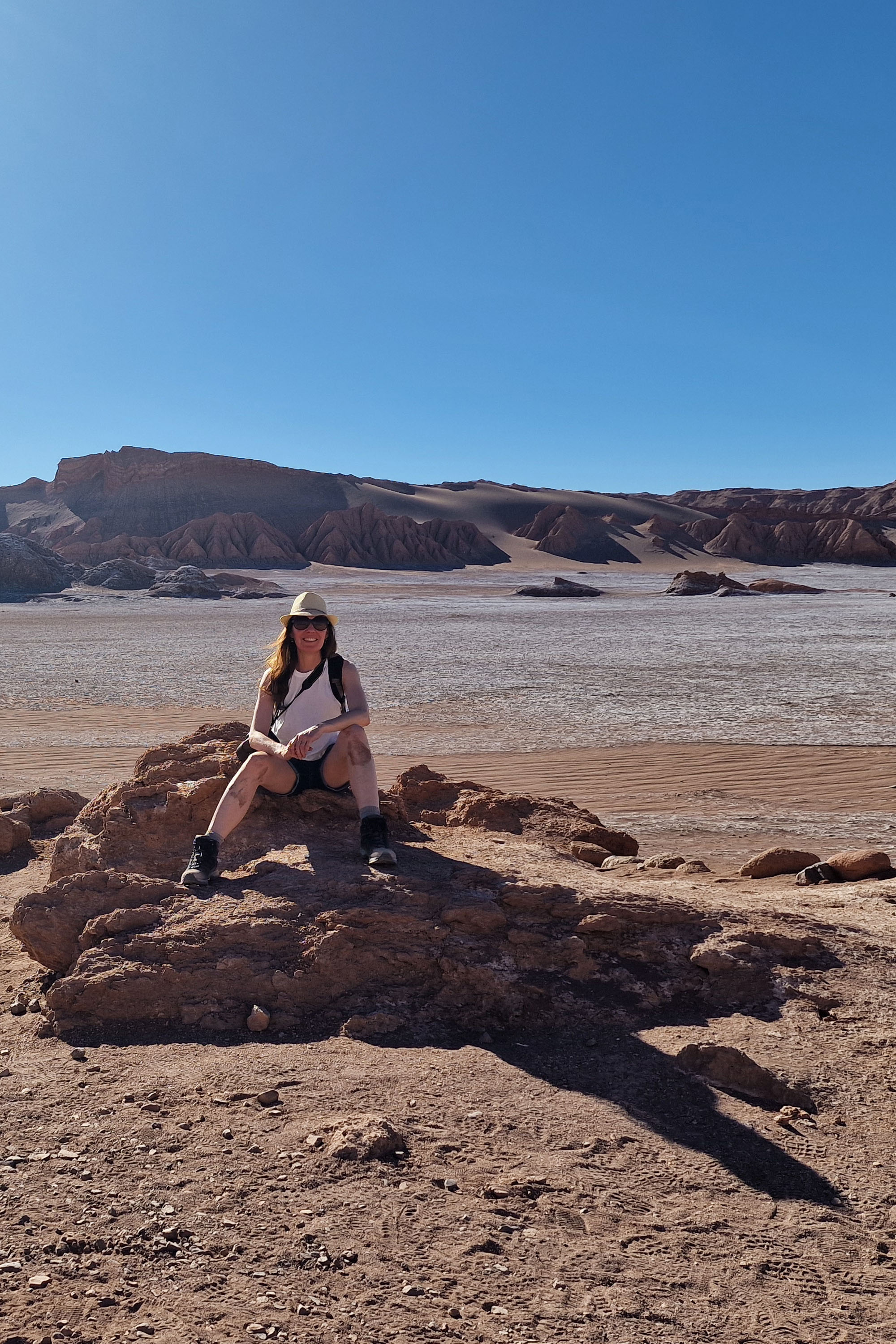
When I was about nine, my godfather gave me a copy of the Gaia Atlas of Planet Management – and it sowed a seed in my mind. While my school years had me on a path to study medicine, at 17 I changed all my A-Levels so that I could study Geology at university instead.
Something about that book must have been nagging at me: “We’re not using our natural resources very well and we need to do something about that.” I’ve always loved being outside and looking at the landscape – my granny, who lived in a formerly glaciated valley outside Dublin, remembers me searching for quartz and amethyst as a child – and I was drawn to geology because of that. After completing my Master’s degree in Mineral Project Appraisal at Imperial, I knew it would be important to get boots on the ground, so I took a job as a minerals consultant involving a lot of traipsing around quarry sites. Then, I spent a year as an exploration geologist in Türkiye, working on a flagship gold project. I’ve subsequently visited numerous mining sites abroad, including in Kazakhstan and across Africa.
The pace of change in the minerals sector is unprecedented, but so are the waves of innovation; it takes courage to drive progress, especially in an industry that’s fairly hierarchical and male dominated. We’re only about 15 per cent female, and there are pros and cons to that – it certainly makes me stand out! Earlier this year, I joined the board for Women in Mining UK – I think it’s important to have that representation and to build a network of female champions who support each other and the next generation.
At Accenture, I wear two hats: I’m the Mining Lead for EMEA but I’m also in charge of growing our understanding of data and AI in a natural resources context. That means asking questions like: what does the business need, why might it be underperforming and how can we use digital information to unlock potential? AI can help diagnose the root cause of problems: for example, if you have to respond reactively every time a haul truck breaks down, you may end up with a lot of the fleet out of use, whereas if you use AI, you can figure out why the breakdown is happening and whether it can be prevented. Aggregated data might show, for instance, that a truck’s fuel pump is likely to fail after six months of use, so you’ll know to replace it before it gets to that point.
When I’m not travelling for work, I’m usually at my desk very early or late because I’m liaising with teams in different time zones. What keeps me motivated on long days is the feeling of camaraderie – this is a small industry so people look out for each other – and a sense of purpose. Changing the way we manage our natural resources to decrease our impact on society and the environment remains my fuel.
Liv Carroll is the EMEA Mining Lead and Global Natural Resources Lead for Data and AI at Accenture, and a director on the board of the Global Mining Guidelines Group.