Meet the co-chairs of the newly formed AI Alumni Network, leveraging Imperial minds to harness AI for good.
Interviews: Megan Welford
How do you leverage the Imperial community’s hivemind? The AI Alumni Network, launched in June 2025 and run by a team of alumni volunteers, aims to do just that, by enabling collaboration between alumni, industry leaders and academics working in AI, and uniting alumni professionals interested or working in AI, to share knowledge and expertise.
We caught up with the Network’s co-chairs, Sachin Jogia (BSc Physics 2008), an experienced commercial and technology executive, currently portfolio Non-Executive Director at DEFRA, HMRC, Buckinghamshire Healthcare NHS Trust and City Year UK, and Lola Aworanti-Ekugo (MBA 2018), CEO of AfriBorder, Non-Executive Director at TradeMark Africa, SWIT (Odu’a), AI in Nigeria, and Computer Aid International UK.
So, what do they hope to bring to the Network, and what are their hopes for the future?
What is the potential impact of the Network?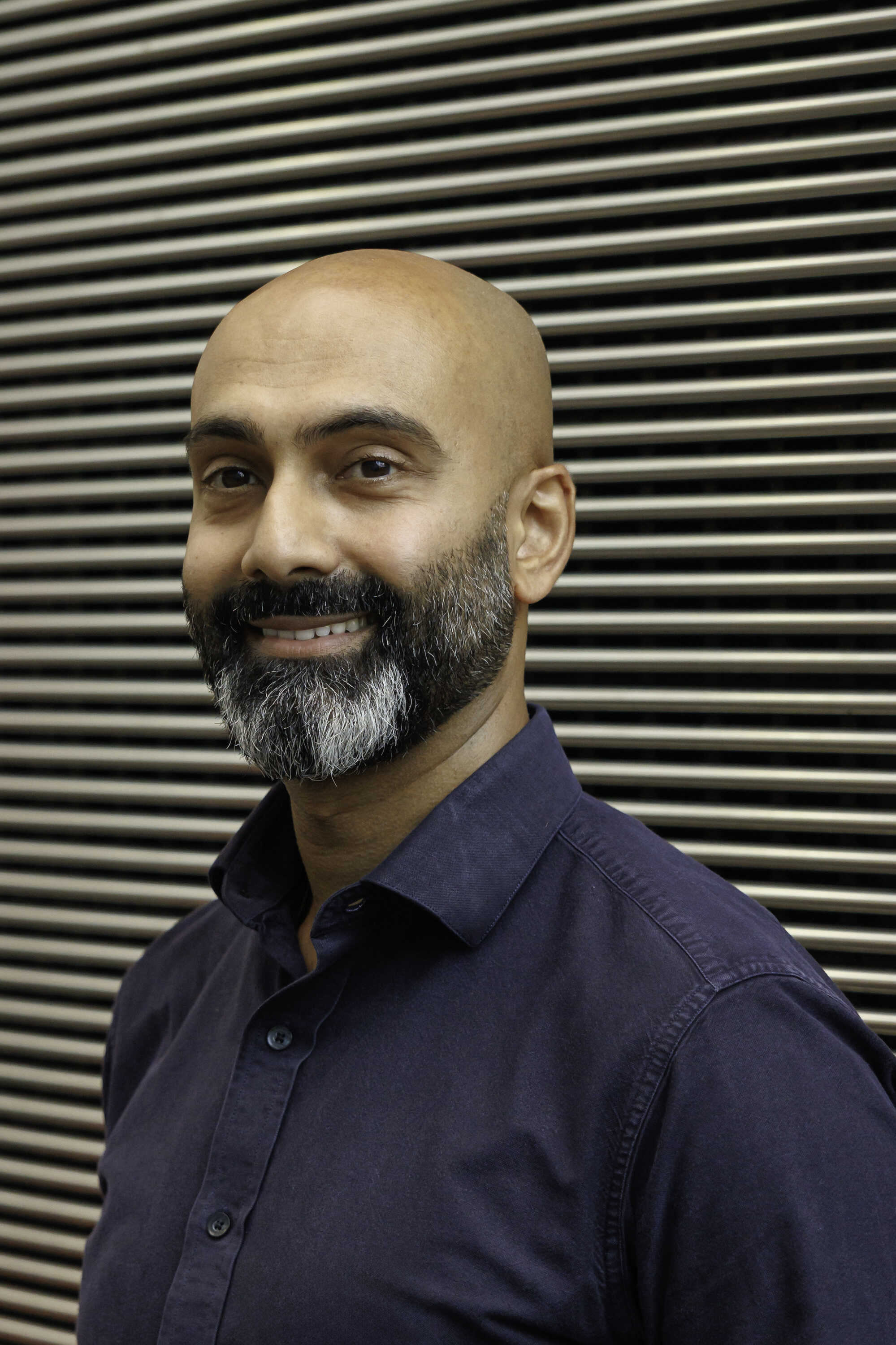
SJ: I think it’s about creating a culture of collaboration, enabling industry partnerships and identifying tangible improvements in ways of working. The opportunities are endless, because AI touches so many different industries, but the first step is starting those conversations. The launch event was virtual and open to all, but going forward we think it would be great to hold regular in-person events. But it’s not just for the committee to decide – we want an active, not passive, network.
LAE: For me it’s about showcasing what’s going on in the industry – sharing knowledge, connecting people virtually and globally to create new, innovative initiatives. I was a software engineer 20 years ago when it was a geek thing and no one wanted to do it, especially not girls. It’s amazing how it’s evolved. Imperial has the brightest minds, so this is an opportunity to be at the forefront of tech innovation. Finally, we’re the cool club!
What do you think the challenges might be?
LAE: One challenge is that right now it feels like there is a Team AI versus a Team Not AI – people worry about it taking their jobs and the impact on the environment. We’re in a change revolution, so it’s about ensuring people are aware of the potential good, and are able to actually utilise those benefits. The Network can help build positive, strong communities across different sectors. I want the Network to be the first to hear about what’s happening in industry and know how they can get involved. When we talk about technology, really we’re talking about people; the solutions are for people. I would like our network to be a strong community and the voice of AI for good.
SJ: One challenge will be to make sure the Network is not an echo chamber. The committee is diverse, from consultants to angel investors. But it’s not just about the committee – we need everyone to get involved. We want people who are doing exciting things in AI, but also those just starting out. Our aim is that it is a safe space to share thoughts and learning between generations and across industries.
How has your experience brought you to this point?
SJ: I studied physics at Imperial, but then went into digital advertising, content and media. As general manager for Alexa Smart Home International, I worked a lot with Alexa businesses, using natural language processing to improve life at home. I became interested in how tech can do things for specific groups of people – disabled people, or people who’ve had surgery, getting it to turn off their heating, for example. I’m focused on using tech for good to directly benefit people. Most recently, I’ve been working as a non-executive director for HMRC, NHS and DEFRA, exploring how we can use technology to help society more broadly.
LAE: For the past 20 years, I’ve worked across the UK, Europe, and Africa, exploring how digital technologies can transform the way we work and live. Through my current company, AfriBorder, I collaborate with the private sector and governments to deliver digital solutions, research and advisory services for a digitally connected, inclusive and innovative Africa. For example, exploring how seamless payments can enable cross-border trade, how self-driving vehicles could reshape logistics, and how drones might transform the delivery of small goods.
And what are your hopes for the future?
SJ: Imperial is very focused on healthcare, medtech and AI. They are making digital twins of the brain and heart – it’s going to completely change the way we do things. Areas from construction to medicine are going to change radically. We’re going to be augmenting humans to do things better, in surgery for example. Imperial alumni are working in all these industries, and if we can bring just five per cent of these people together, we can have some serious impact!
LAE: Technology is central to driving economic prosperity. I’m also part of AI in Nigeria, an initiative focused on developing critical skills for a nation with a vibrant, youthful population. It’s about empowering the next generation and identifying practical use cases that enable industries to truly transform lives. There’s a lot of buzz around emerging technologies, but the real question is: what are the tangible applications that certain sectors are still missing, and how can we leverage these to scale impact? I believe this kind of insight should inform research – and vice versa – by connecting Imperial with industry to create real-world impact.