Perfect forum
Want to meet the very best people in artificial intelligence right now? Join the AI Society.
Words: Peter Watts
The Imperial community is not afraid of asking the difficult questions, so when students need somewhere to get the very latest on AI developments, where do they turn? To the university’s AI Society, a dedicated forum where members can meet entrepreneurs and engineers, and improve their understanding of the ways AI will shape the future of work and education.
“The things you can’t get direct from courses, students will always get from somewhere else,” says Adithya Narayanan (Maths and Computer Science, Third Year), co-chair of the AI Society with founder Shafi Maahe (MEng Mechanical Engineering, Fourth Year). “The curriculum has adapted quickly but it can only fill a tiny gap about what is needed to understand AI, and that’s only really in computer science. But the implications of AI go far wider. So for many students, the society is essential.”
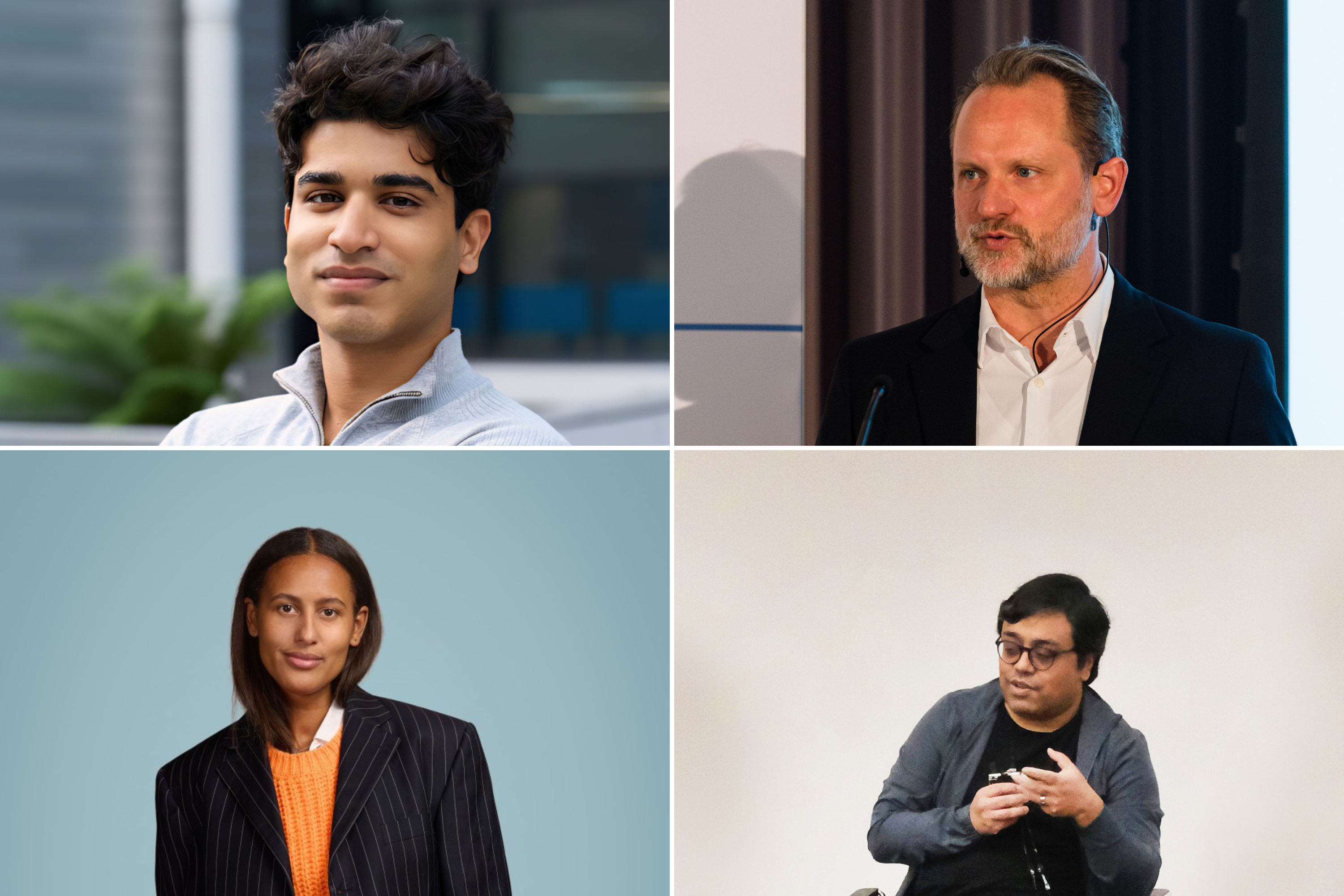
The AI Society attracts students from across every subject at Imperial, but is largely drawn from two overlapping audiences: those with a maths or tech background who want to learn how to build AI programs, and non-tech specialists who want to discover how to use AI more effectively. The society tries to cover everything, offering lectures on natural language processing as well as hackathons, conferences and networking opportunities. Recent event speakers have included the serial tech entrepreneur Charlie Muirhead, Intelligent Internet founder Emad Mostaque and Jasmin Thomas, Venture Partner at Ada Ventures.
“It’s no longer a niche for programmers and engineers, we cater to everybody,” says Narayanan. “As well as those who want to build AI, we want to promote entrepreneurship so that students can become their own boss. The possibilities are huge. There is something fascinating in seeing a computer ‘think’.”
To help further the debate about the implications of AI, the society hosts lectures on the latest research and develops networking events with tech firms. This includes conferences attended by pioneers from the tech world, venture capitalists, entrepreneurs and politicians. Particularly popular are incubation-style hackathons such as AI Agents, Europe’s largest month-long hackathon, which attracted more than 600 participants to the last event.
With the buzz around AI showing no sign of abating, Narayanan hopes the AI Society will hold even bigger events in the coming year, and collaborate with other university organisations that have a stake in the developing technology. “We keep an eye on other things happening at Imperial around AI so we can work together,” says Narayanan. “We would like to collaborate with any other groups that are interested.”
With almost 700 members, the AI Society is already one of the largest at Imperial, testament to the huge interest among students who believe that AI will be the defining technology as they enter the workplace. “The exponential rate at which AI is advancing is pushing us towards a future with unprecedented uncertainty,” says Maahe. “What this looks like depends on our generation. This is one of the main reasons why we started the AI Society – to build the future we want to see.”
Read next: Education / Coco Nijhoff