Polaron co-founder Dr Isaac Squires is in a rush to get his technology into the hands of engineers.
Words: Frances Hedges
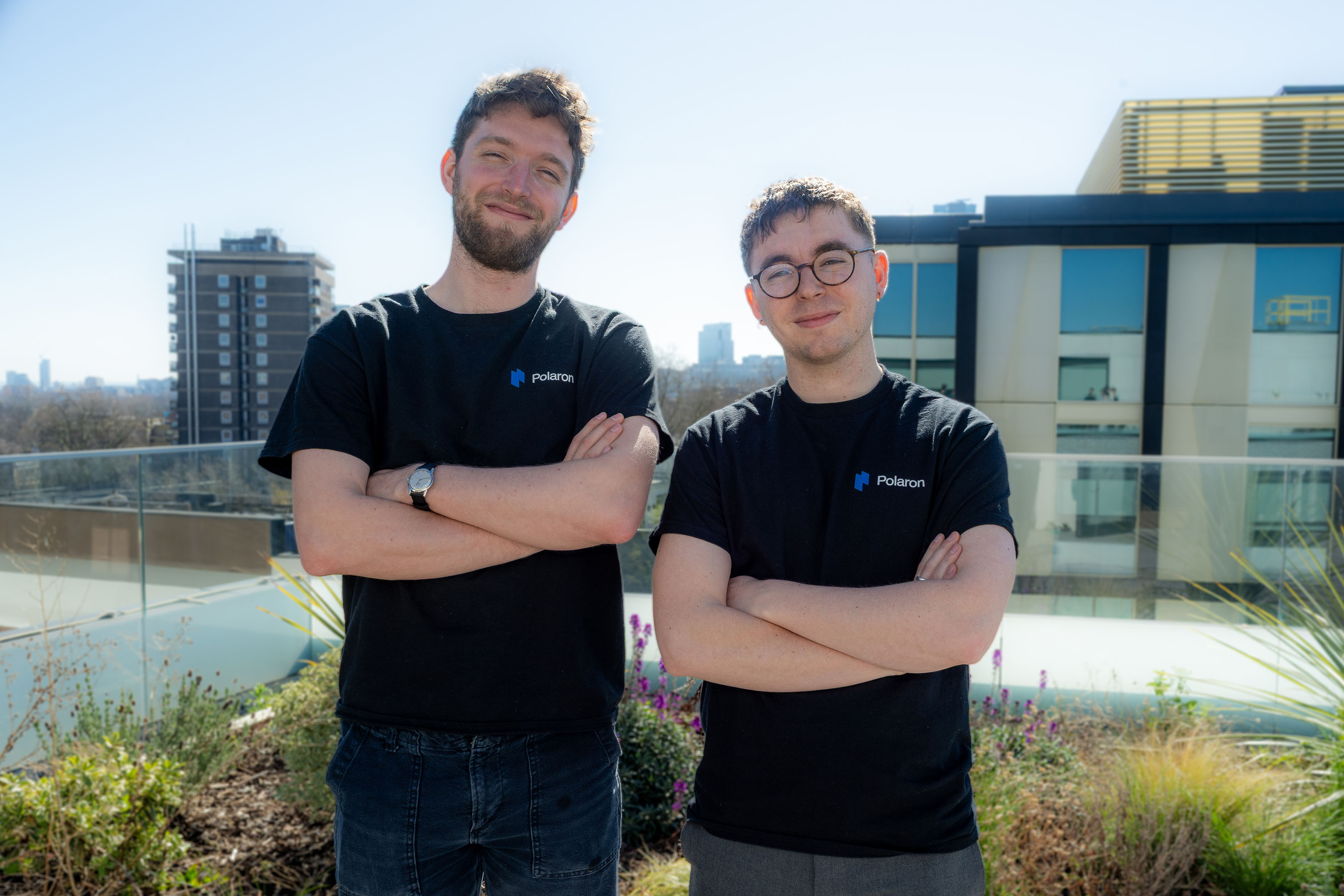
Isaac Squires (PhD Dyson School of Design Engineering 2024), pictured right, has the brain of a scientist – and the mindset of a born entrepreneur. As the co-founder of Imperial spinout Polaron, Squires is deploying AI to revolutionise the design of advanced materials, some of which are already – literally – turbocharging electric vehicles.
By the time he’d completed an undergraduate degree and then a Master’s, Squires was impatient to translate his knowledge into real-world impact. “I didn’t really enjoy lab work, but I was very interested in the computational side of things,” he explains. “So I decided to step out of academia and work as a machine learning engineer.” At the Connected Places Catapult, he cut his teeth on a series of highly practical research projects in sectors ranging from autonomous vehicles to smart cities.
But Squires was surprised to find there were not many scientists working in energy storage solutions, despite it being one of the biggest bottlenecks in making the transition to an electrified economy – just for starters, battery life is a major barrier to increasing the take-up of electric vehicles, for instance.
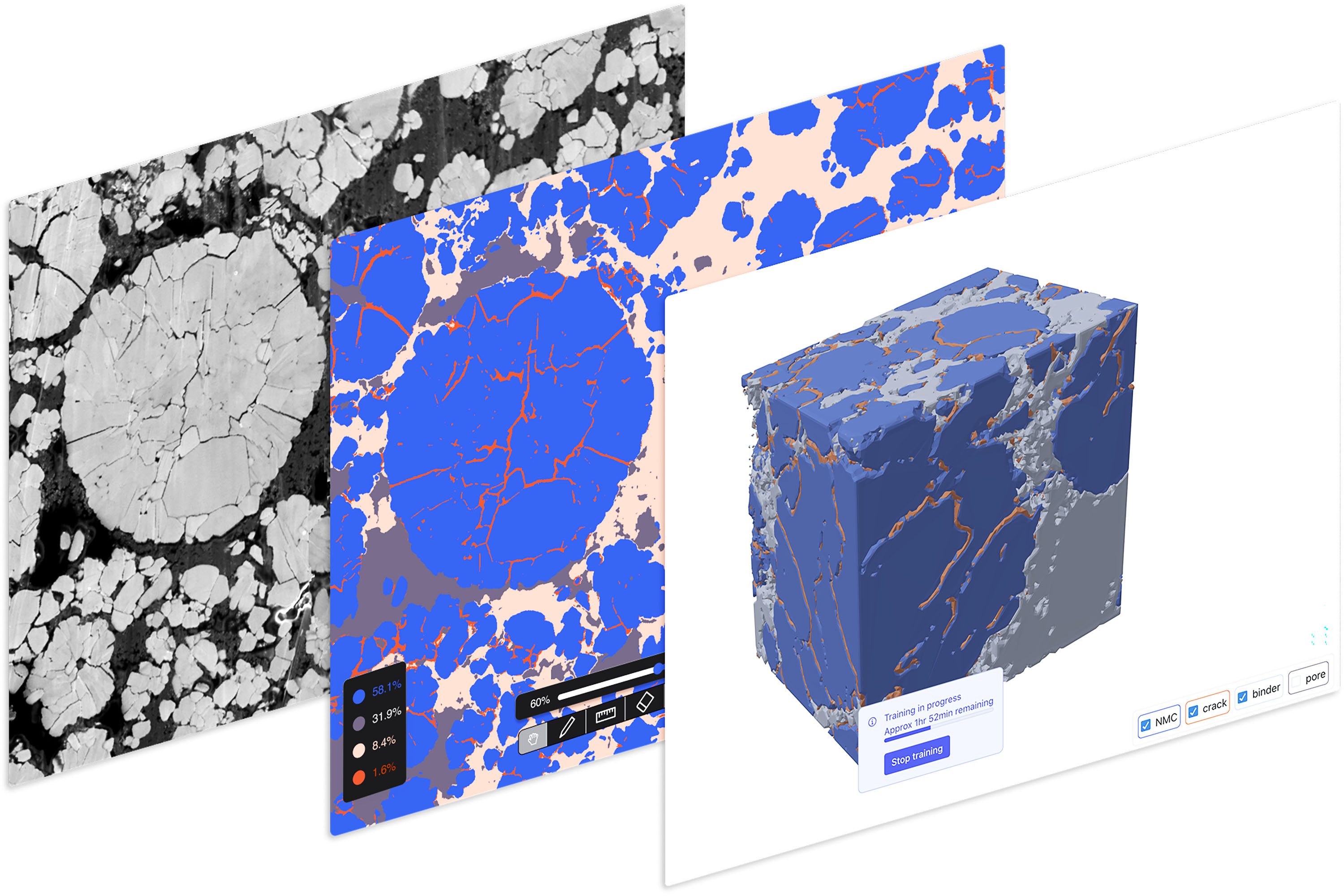
Meanwhile, at the Dyson School of Design Engineering, researchers were using generative machine learning to design battery materials. “I applied for a PhD, and that’s where it all began,” says Squires, who met his Polaron co-founders Steve Kench and Sam Cooper on the course. “One of the great things about the group was how collaborative it was – we came together as a unit to solve complex problems.”
With Kench and Cooper, he shared an urge to develop entrepreneurial rather than academic responses to their subject matter. “We knew the technology we were building could make a serious impact on how materials are designed – and the way to bring that to the world wasn’t going to be through publishing more papers, but by taking it to market and putting it in the hands of engineers.”
We knew the technology we were building could make a serious impact on how materials are designed.
Polaron’s rapid growth – the company has already expanded to a team of ten since its launch last year – owes much to the support of Imperial’s strong founders’ network. “Being able to sit down with other people who had been through the process of starting a business, and had the scars to show for it, was important,” says Squires. So, too, was the experience of participating in the Venture Catalyst Challenge, Imperial’s flagship entrepreneurial competition, which Squires describes as both a source of strategic development and a significant confidence boost.
Further validation came when Polaron received the Manchester Prize, a government-run award given to businesses using AI for the public good. “They were looking for teams with the ambition to think big,” says Squires, adding that Polaron’s mission to deepen understanding of materials through its state-of-the-art AI technology can be applied to almost any sector, from automotive to wind turbines.
“While we’re currently selling mostly to electric vehicle manufacturers, our ultimate goal is to be industry-agnostic. Polaron’s success feels like the way I can maximise my usefulness in society.”
Explore the benefits for alumni entrepreneurs and find out more about Polaron.